Award-Winning College Physics Tutors
serving Des Moines, IA
College Physics
Tutors in Des Moines
Private 1-on-1 tutoring, weekly live classes for academic support, test prep & enrichment, practice tests and diagnostics, and more to elevate grades and test scores.
Based on 3.4M Learner Ratings
UniversitiesSchools & Universities
DeliveredHours Delivered
ProficiencyGrowth in Proficiency
Who needs tutoring?
No obligation. Takes ~1 minute.
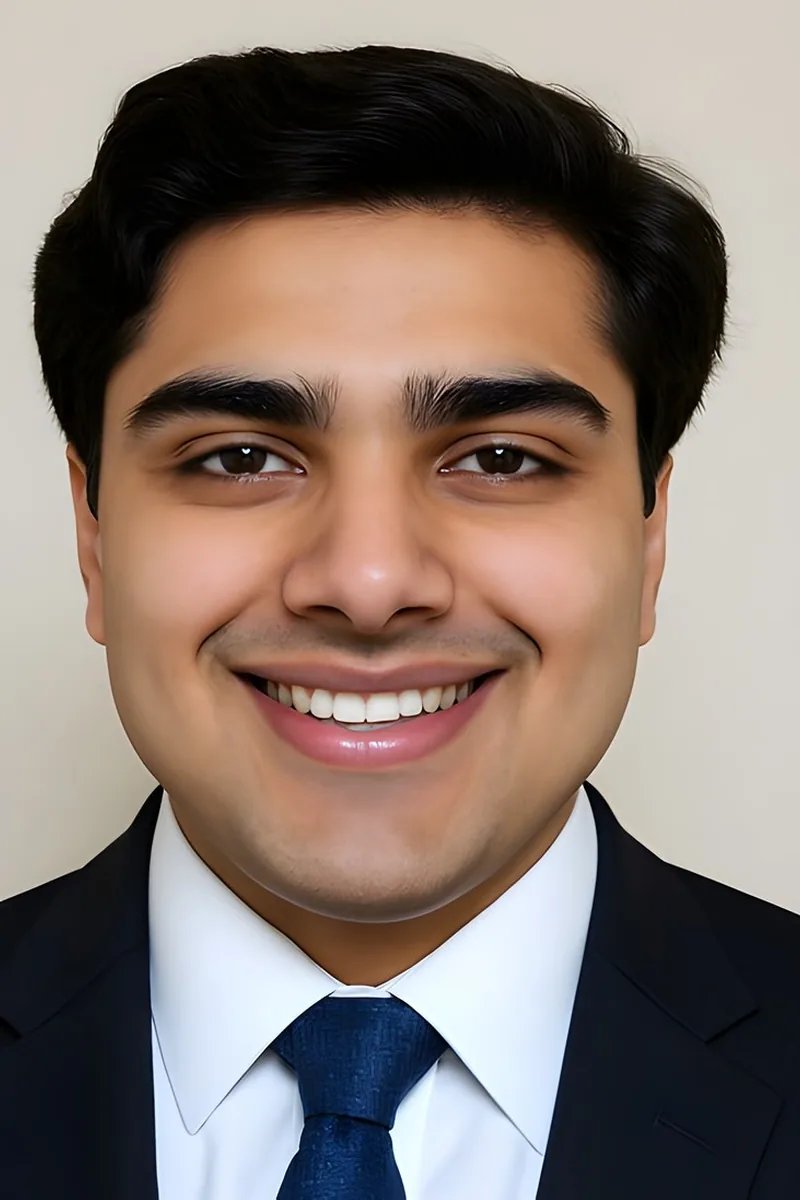
College-level physics ramps up quickly, especially once calculus-based mechanics and electromagnetism enter the picture. Richard's time as a course assistant in Harvard's math department gave him deep comfort with the calculus underpinning topics like electric flux integrals and differential equations of motion. He teaches the physics and the math simultaneously, so students aren't left wondering where a derivation came from.

Thermodynamics is where Rahul lights up — it was his favorite corner of Cornell's chemical engineering program, and that enthusiasm shows when he's walking someone through heat engines, entropy, or the first and second laws in a college physics context. His engineering training means he treats every problem as a physical system first and an equation second, pushing for the conceptual reasoning behind each step rather than formula-matching. Rated 4.9 by students.
Biomedical engineering at Johns Hopkins means Christine solves physics problems daily that most students only see in textbooks — fluid dynamics in blood flow, pressure gradients across membranes, mechanics of prosthetic joints — giving her a concrete, application-heavy lens for the material. She's particularly strong on the thermodynamics and mechanics portions of college physics, where her coursework overlaps most directly with standard problem sets. Holds a 5.0 rating.
College-level physics demands more than plug-and-chug — problems in electrodynamics, rotational mechanics, or thermodynamics often require combining multiple principles in a single solution. Pranav digs into these multi-step problems as a Biomedical Engineering student at Johns Hopkins, where physics underpins much of his coursework. He walks through derivations and problem-solving strategies that build real fluency with the material rather than surface-level familiarity.
Environmental engineering is essentially physics with consequences — Kate's master's work required her to model fluid flow, heat transfer, and pressure systems in real infrastructure, which means she's solved the same types of problems that show up on college physics exams but with actual design constraints attached. That applied perspective makes her particularly effective at teaching students to set up force balances and energy equations from a physical scenario rather than reverse-engineering from a formula sheet. Rated 4.9 by students.
Three science-focused bachelor's degrees — including biology — meant Garrett sat through the full calculus-based physics sequence and kept coming back to it in physiology and physical chemistry, where concepts like fluid dynamics, pressure gradients, and energy transfer show up again and again. That repeated exposure across disciplines gives him an intuitive feel for when to apply conservation of energy versus momentum, or how to reason through a thermodynamics problem without getting lost in the formalism. His 1530 SAT speaks to the quantitative sharpness he brings to each session.
Between earning a mechanical engineering bachelor's and pursuing his master's, Aaron has taken calculus-based physics from every angle — statics, dynamics, thermodynamics, fluid mechanics — and now applies those principles daily in graduate-level research and coursework. He breaks down problems by teaching students to sketch the physical situation first, identify constraints, and only then select the right conservation law or force equation. Holds a 5.0 rating.
Graduate work in Chemical and Physical Biology at Vanderbilt meant Dennis spent years applying thermodynamics, fluid dynamics, and electromagnetism to biological systems — the same core physics concepts that fill college problem sets, just in a research context where getting the physics wrong meant failed experiments. He breaks down force, energy, and field problems by connecting them to the physical intuition behind the math, which is especially useful for pre-med and life science students navigating calculus-based physics for the first time. Holds a 5.0 rating.
Chemical engineering at Georgia Tech means Aimee's spent years solving problems that blend thermodynamics, fluid mechanics, and energy balances — the same physics concepts that make college-level courses demanding, except she's applied them to reactor design and process optimization. Her biosystems engineering graduate work adds another layer, connecting classical mechanics and heat transfer to biological systems in ways that make abstract problem sets feel more concrete. Rated 4.9 by students.
Neuroscience gave Julie a deep working knowledge of the physics that governs biological systems — membrane capacitance, electrical potentials across ion channels, fluid dynamics in neural vasculature — so she brings a concrete, applied lens to college physics topics that other tutors treat purely abstractly. Her strong quantitative background (1480 SAT, dual B.S. in Neuroscience) means she's comfortable walking through the calculus-based derivations in mechanics and E&M without losing sight of what the physics actually describes. Rated 5.0 by students.
College-level physics demands more mathematical rigor than high school — suddenly, problems involve calculus-based derivations and vector analysis alongside conceptual reasoning. As a Johns Hopkins biomedical engineering and applied math student, Nicholas lives in that intersection of advanced math and physical modeling every semester. He walks through topics like rotational dynamics, electric fields, and wave optics with the precision college courses require.
A chemistry degree from Yale means Zosia spent years in courses where physics does the heavy lifting — thermodynamics driving reaction spontaneity, quantum mechanics explaining atomic structure, electrostatics governing molecular interactions — so she knows these concepts from the inside out. She's particularly effective at teaching students to translate word-heavy problem statements into clean free-body diagrams or energy bar charts before touching an equation. Rated 4.9 by students.
Testimonials
Because the right College Physics tutor makes all the difference.
Average Session Rating – Based on 3.4M Learner Ratings
Nearby College Physics Tutors
Other Des Moines Tutors
Related Science Tutors in Des Moines
Frequently Asked Questions
Your first session is about understanding where you stand and what you need most. A tutor will assess your grasp of foundational concepts, identify specific pain points (whether that's kinematics, energy, or circuits), and learn about your course goals and exam timeline. This helps create a personalized plan that targets your biggest challenges rather than generic review.
College Physics demands conceptual reasoning, not memorization—tutors help you build mental models by connecting abstract ideas to real-world applications and visual representations. For example, understanding why momentum is conserved in collisions, not just plugging numbers into equations, makes the concept stick and transfers to new problem types. This deeper understanding also prepares you better for exams that test reasoning, not just formula recall.
Students often struggle with visualizing abstract forces and motion, converting between unit systems, and setting up problems correctly before calculating. Tutoring addresses these by breaking down problem-solving into manageable steps, using diagrams and simulations to build intuition, and practicing the scientific method so you learn to think like a physicist. Regular practice with feedback also builds confidence with multi-step problems that combine several concepts.
Yes—tutors can help you understand the physics principles behind your experiments, design proper procedures, analyze data correctly, and communicate your findings clearly. Whether you're learning to use equipment, troubleshoot unexpected results, or write lab reports, a tutor can bridge the gap between theory and hands-on application, helping you see how real-world data connects to the concepts you're learning in lecture.
Starting 4-6 weeks before a major exam gives you time to build understanding of weak topics and practice problem-solving under timed conditions. However, even a few weeks of focused tutoring can boost your performance if you concentrate on the highest-impact topics. Ongoing tutoring throughout the semester is ideal for staying on track and preventing last-minute cramming, but tutors can adapt to your timeline and intensity needs.
Look for tutors with strong backgrounds in physics—ideally a degree in physics, engineering, or a related field, plus experience teaching or tutoring at the college level. They should be able to explain concepts clearly, ask questions that deepen your thinking, and adapt explanations to your learning style. Varsity Tutors connects you with expert tutors who have proven success helping students master College Physics concepts and improve exam performance.
Problem-solving is a skill that requires practice and strategy, separate from conceptual understanding. Many students know the physics but struggle with translating word problems into equations, choosing the right approach, or organizing multi-step solutions. Tutoring helps you develop a systematic problem-solving framework—identifying given information, drawing diagrams, selecting relevant equations, and checking your answer—so you can tackle unfamiliar problems with confidence.
Varsity Tutors connects you with expert tutors who understand College Physics curriculum and can personalize instruction to your needs and schedule. The process is straightforward—share your goals and availability, and you'll be matched with a tutor ready to help you master the material. Whether you need help with specific units or consistent support throughout the semester, tutors work with you to create a plan that fits your learning pace.
Let’s find your perfect tutor
Answer a few quick questions. We’ll recommend the right plan and match you with a top 5% tutor.