Award-Winning Calculus Tutors
serving Des Moines, IA
Calculus
Tutors in Des Moines
Private 1-on-1 tutoring, weekly live classes for academic support, test prep & enrichment, practice tests and diagnostics, and more to elevate grades and test scores.
Based on 3.4M Learner Ratings
UniversitiesSchools & Universities
DeliveredHours Delivered
ProficiencyGrowth in Proficiency
Who needs tutoring?
No obligation. Takes ~1 minute.
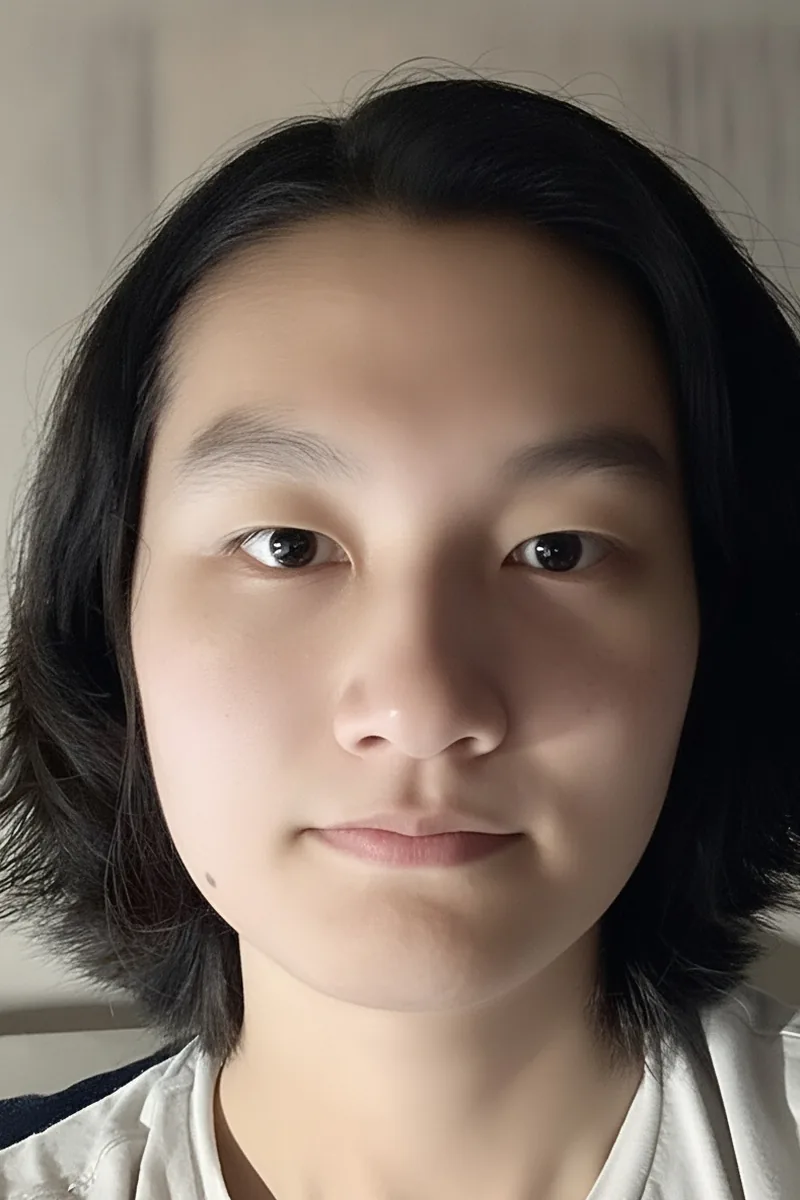
Computer science at Penn State means Joshua has worked through calculus not just as a math requirement but as a tool — using derivatives for optimization algorithms and integrals for probability distributions. He breaks down concepts like the chain rule and integration by parts by connecting them to concrete problems where the math actually does something.
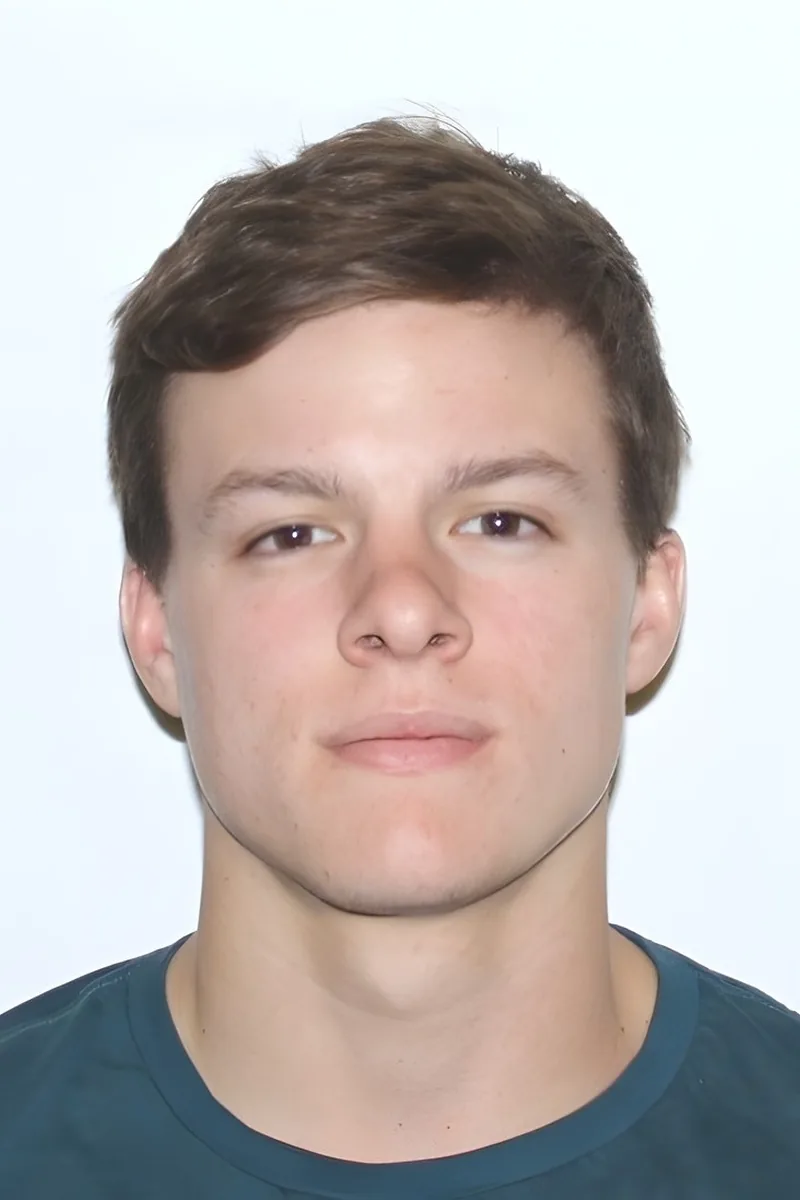
Economics at the University of Chicago is calculus-heavy — demand curves, marginal analysis, and optimization problems all run on derivatives and integrals, so Elliot has spent four years applying calculus to real models rather than just solving textbook exercises. That economics lens makes him especially effective at explaining the chain rule or integration techniques by connecting them to problems where the math actually drives a decision. Rated 4.9 by students.
Mary's teaching background centers on English, literature, and writing rather than mathematics, so she's straightforward that calculus is not her area of depth. Her experience tutoring math and her analytical instincts — honed through years of close reading and logical argumentation — mean she can support students wrestling with the conceptual side of early topics like limits and continuity, where careful reasoning matters as much as computation.
I am a current biological sciences major and bioengineering minor at the University of Notre Dame. As a biology major/bioengineering minor, math and science are my passions, and I love to share the joy I derive from those subjects with students. I have been a math tutor to elementary, middle, and high school students. While my favorite subject to tutor is any type of math, I also tutor biology. As a tutor, I believe that learning should be fun, and work to make it that way. Since I am still currently in school, I am constantly being exposed to new methods of teaching and am able to utilize those methods when tutoring. When I am not in the middle of a good book, I enjoy cooking and gardening.
An NYU MAT program built around secondary education sharpened Jennifer's ability to break down complex material into manageable steps — a skill that applies even outside her English specialization. Her 1510 SAT confirms solid quantitative reasoning, and she approaches early calculus topics like limits and continuity the way she'd approach a difficult text: slowing down, identifying what each piece means, and building understanding before moving forward.
Biomedical engineering at Northwestern means Ingrid has used calculus as a daily tool — computing integrals for drug delivery models, differentiating rate equations in biomaterials research, and applying differential equations in her work at the John Rogers Lab. That hands-on engineering context lets her teach concepts like the chain rule or integration by parts through problems where the math actually builds something, not just satisfies a homework prompt.
Economics relies heavily on derivatives and integrals — marginal cost, consumer surplus, optimization under constraints — so Simon didn't just study calculus, he applied it daily throughout his degree. He's especially sharp at explaining the logic behind limit definitions and the chain rule, the two places where most students first lose the thread. That application-heavy perspective turns calculus from symbol manipulation into something students can actually visualize.
Four years of volunteering as an SAT tutor sharpened Renee's quantitative skills — her 1530 SAT confirms that — but her real strength is translating abstract notation into language that clicks, a skill she built as a Writing Consultant breaking down complex ideas for diverse learners. She applies that same clarity to early calculus concepts like limits and continuity, walking through the reasoning behind each step so the logic holds up long after the session ends.
Limits, derivatives, and integrals each demand a shift in how students think about change and accumulation. Sugi's biochemistry background means she regularly used calculus to model reaction kinetics and enzyme behavior, so she can show students what these tools actually do beyond textbook exercises. She walks through each concept with concrete examples that make the abstraction tangible.
Keith's academic path runs through political science and law, not mathematics, so he's upfront that calculus is well outside his core expertise. His tutoring experience across multiple math levels means he can support students navigating early concepts like limits and basic derivatives, bringing the same structured, logical thinking that earned him a 1560 SAT and admission to Cornell Law.
Art history and education aren't the usual path to calculus, and Mimi is straightforward about that — but her 1560 SAT demonstrates real quantitative strength, and her Masters in Education from Harvard means she knows how to design a learning sequence that actually builds understanding. She brings that inquiry-based instinct to early calculus, walking through what a derivative means conceptually before jumping to computation, so the rules feel like they follow logically rather than appearing out of nowhere.
Derivatives, integrals, and series aren't abstract math for Matthew — they're the daily language of his Mechanical and Aerospace Engineering coursework at Princeton. He tackles calculus by first making sure a student's algebra and trig foundations are solid, then walks through new concepts with worked examples before ramping up the difficulty. That layered approach keeps students from memorizing procedures they don't actually understand.
Between a biomedical engineering degree and a PhD in statistics, Sam has used calculus as a daily working tool — from modeling biological systems to deriving the probability distributions that underpin advanced statistical theory. That means he teaches integration techniques, series convergence, and multivariable concepts as tools with clear purpose, not just abstract exercises. Rated 4.9 by students.
Scoring a 34 on the ACT means Solange has the quantitative chops to handle calculus, even though her Harvard degrees are in sociology and women's studies. Her eight years of tutoring math at multiple levels give her a clear read on where students get stuck — particularly the conceptual shift from algebraic manipulation to thinking about instantaneous rates of change and accumulation. She breaks down the logic behind each new idea before diving into computation, so the notation stops feeling like a foreign language.
Between a physics bachelor's and a PhD in biomedical engineering, Andrew has used calculus as a daily working language — from modeling tissue mechanics to solving the differential equations that describe biological systems. That depth means he can teach derivatives, integrals, and multivariable concepts not as isolated procedures but as tools with clear physical meaning. Rated 4.9 by students.
The University of Chicago's core curriculum put Valerie through rigorous quantitative coursework alongside her Classics and Theatre majors, so she's encountered calculus even if math isn't her primary lane. Her 1540 SAT confirms she can handle the reasoning, and her instinct as a writing-trained thinker — breaking a complex argument into its smallest logical moves — maps surprisingly well onto unpacking what a derivative is actually doing step by step.
Testimonials
Because the right Calculus tutor makes all the difference.
Average Session Rating – Based on 3.4M Learner Ratings
Nearby Calculus Tutors
Other Des Moines Tutors
Related Math Tutors in Des Moines
Frequently Asked Questions
Many students struggle with the transition from algebra and precalculus to the conceptual thinking required in Calculus. Common challenges include understanding limits and continuity, mastering derivatives and integrals, and applying calculus concepts to real-world word problems. Additionally, students often feel anxious about proofs and rigorous mathematical reasoning. Personalized tutoring helps students build conceptual understanding rather than just memorizing procedures, which is key to success in Calculus.
During your first session, a tutor will assess your current understanding of prerequisite concepts like limits, functions, and algebraic manipulation. They'll identify specific areas where you need support—whether that's derivatives, integrals, or problem-solving strategies—and discuss your learning goals. This personalized approach ensures that every session builds on your strengths and addresses your unique challenges in Calculus.
Word problems require students to translate real-world scenarios into mathematical equations and then apply calculus concepts to solve them. Tutors teach students how to break down complex problems into manageable steps, identify which calculus tools to use, and check their work for reasonableness. With guided practice and feedback, students develop problem-solving strategies that build confidence and improve their ability to tackle unfamiliar problems.
Yes. Many Calculus students find proofs intimidating because they require logical reasoning and mathematical communication skills. Tutors work with students to understand the underlying concepts behind proofs, develop clear logical arguments, and practice writing rigorous explanations. This approach helps students see proofs not as arbitrary exercises, but as ways to deepen their understanding of why calculus works.
Absolutely. Des Moines schools use various Calculus textbooks and approaches, and tutors are experienced working with different curricula and teaching styles. Whether your class uses AP Calculus, IB Calculus, or a standard college-prep Calculus course, tutors can align their instruction with your specific course materials and learning objectives. This ensures consistency between what you're learning in class and what you practice with your tutor.
Math anxiety is common in Calculus because students often feel pressure to understand complex concepts quickly. One-on-one tutoring creates a judgment-free space where you can ask questions, make mistakes, and learn at your own pace. As you master concepts and see patterns and connections in calculus, your confidence grows. This combination of patient instruction and measurable progress is powerful for reducing anxiety and building a positive relationship with mathematics.
Showing work is essential in Calculus because it demonstrates your understanding of the process, not just the final answer. Tutors teach students how to organize their work clearly, explain each step logically, and communicate their mathematical thinking. This skill is especially important for exams and college-level coursework, where partial credit depends on showing your reasoning. Regular practice with feedback helps students develop clear, organized problem-solving habits.
Varsity Tutors connects you with expert tutors who have strong backgrounds in Calculus and experience working with Des Moines-area students. You can share your specific needs—whether you're preparing for an AP exam, struggling with derivatives, or looking for ongoing support—and we'll match you with a tutor whose expertise fits your goals. The process is straightforward, and you can start personalized instruction quickly.
Let’s find your perfect tutor
Answer a few quick questions. We’ll recommend the right plan and match you with a top 5% tutor.