Award-Winning AP U.S. Government & Politics
Tutors
Who needs tutoring?
FEATURED BY


TUTORS FROM
- YaleUniversity
- PrincetonUniversity
- StanfordUniversity
- CornellUniversity
Award-Winning AP U.S. Government & Politics Tutors

Certified Tutor
Erika
Constitutional principles like federalism and judicial review can feel abstract until you see how they play out in real policy debates. Erika earned her Master of Public Policy, which means she teaches AP Gov concepts — from the mechanics of congressional committees to the impact of interest groups ...
Harvard University
Master of Public Policy, Public Policy

Certified Tutor
Molly
AP Government asks students to think like political scientists — comparing constitutional principles, analyzing Supreme Court cases, and constructing arguments about democratic legitimacy. Molly's history background at Columbia gave her deep familiarity with the foundational documents and institutio...
Northwestern University
Master of Science in Education
Columbia University in the City of New York
Bachelor in Arts, History
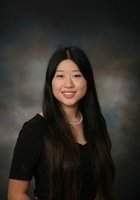
Certified Tutor
9+ years
Sarah
Sarah's economics background at Northwestern gives her a practical angle on AP Gov concepts that are often taught in the abstract — she can explain why the Commerce Clause matters by connecting it to real economic policy, or show how budget fights between Congress and the executive branch reveal the...
Northwestern University
Bachelor of Economics, Economics

Certified Tutor
4+ years
Nathan
Supreme Court cases, the mechanics of federalism, the electoral process — AP Gov covers a lot of ground, but the exam ultimately tests whether students can apply foundational concepts to unfamiliar scenarios. Nathan tackles this by walking through real policy debates and court decisions, training st...
Rice University
Bachelor in Arts, History

Certified Tutor
6+ years
Lauren
Lauren's primary expertise is in STEM — she's a neuroscience major at Duke with a 35 ACT — but her broad tutoring across writing-intensive subjects like AP Biology and college essays means she knows how to coach the argumentative reasoning AP Gov's FRQs demand. She's strongest helping students struc...
Duke University
Bachelor of Science, Neuroscience

Certified Tutor
Ethan
Understanding federalism, judicial review, or the mechanics of congressional legislation means nothing on the AP Gov exam if a student can't apply those concepts to unfamiliar Supreme Court cases and policy scenarios. Ethan studied public policy at the undergraduate level, so he brings real fluency ...
Harvard University
Bachelor in Arts, Environmental Science and Public Policy

Certified Tutor
Timothy
Currently in medical school with a political science degree already under his belt, Timothy has an unusual dual fluency — he knows AP Gov content like federalism, civil liberties, and the policy-making process from his undergraduate major, and he knows how to break down dense material from years of ...
Drexel University College of Medicine
Current Grad Student, M.D.
University of California Los Angeles
Bachelors, Political Science and Government

Certified Tutor
A PhD in American Studies means Tom has spent years tracing how constitutional principles, political movements, and institutional power actually evolved together — the kind of deep historical context that makes AP Gov's required foundational documents and Supreme Court cases click instead of blur to...
Boston University
PHD, American Studies
Harvard University
Bachelors

Certified Tutor
9+ years
Molly
Editing for multiple newspapers taught Molly how to read critically and build tight arguments from evidence — exactly what the AP Gov free-response questions demand when students have to link a Supreme Court case or foundational document to a broader constitutional principle. Her communication studi...
University of Pennsylvania
Current Undergrad Student, Communication, General

Certified Tutor
Catherine
Foundational documents like Federalist No. 10 and Brutus No. 1 aren't just reading assignments in AP Gov — they're the backbone of free-response questions that trip up even strong students. Catherine's PhD-level training in historical analysis translates directly to teaching students how to dissect ...
Stanford University
PHD, History
Princeton University
Bachelor in Arts
Top 20 Social Studies Subjects


Meet Varsity Tutors Experts
Connect with highly-rated educators ready to help you succeed.
Kevin
AP Statistics Tutor • +47 Subjects
I am currently a rising Junior at the University of Pennsylvania, majoring in Philosophy, Politics, and Economics and minoring in Science, Technology, and Society. From early on, the intellectual development of others has been very important to me. In high school, I developed my school's first summer tutoring program to ensure that students retained information and were prepared for the upcoming year. I am most passionate about tutoring Political Science, History, and Math, with significant experience in helping students in each of these subject areas. In my spare time, I enjoy reading and playing the bass. Hobbies: art, reading, writing, books, music
Patrick
Calculus Tutor • +41 Subjects
I'm a graduate of Duke University where I received a JD and an MA in History. I received my undergraduate degree from Emory University also in History. My legal experience includes working as a summer law clerk for two appellate judges and as a summer associate at a large law firm in New York City. In college and in law school I tutored for a variety of subjects and enjoy working with students one-on-one to tackle and master difficult concepts. In my spare time, I enjoy taking in all that New York has to offer including biking in the park, cooking, and golfing.
Richard
AP Calculus BC Tutor • +70 Subjects
I am a rising senior at Harvard College pursuing an AB in Government. Academically, I have diverse interests, including history, language, math, physics, philosophy, music, and politics. In high school, I tutored elementary, middle, and high school students in music, math, ACT and SAT prep, and Spanish. At Harvard, I spent a year as a course assistant in the math department, helping to teach introductory undergraduate calculus. Currently, I volunteer with the Leadership Institute at Harvard College (LIHC) as part of its Social Outreach Committee. This work involves teaching a weekly course called "Fundamentals of Leadership" to a class of middle school students. Overall, I have found my experiences tutoring math to be the most rewarding.
Deirdre
Pre-Algebra Tutor • +23 Subjects
I am currently living and working in Boston, where I grew up. I received my BA in History of Science from Harvard University, completing coursework in history, government, social sciences, biology, chemistry, and physics. I recently graduated with First Honors from National University of Ireland, Galway with my Masters in Gender, Globalization, and Human Rights. I was just accepted to medical school at the University of Massachusetts Medical School and will begin there in the fall of 2018. Hobbies: reading, music, writing, art, sports, books, traveling, travel
Vivian
Calculus Tutor • +66 Subjects
I am currently pursuing a Master's degree in violin performance at the Juilliard School. I have tutored privately and through Chegg Tutoring, Varsity Tutors, PrepExpert, and iLearn World throughout high school and college, with most of my experience being in standardized test prep and English. The most fulfilling moments that I have with my students are when I see them applying previous lessons and skills to new challenges. I believe that a good teacher not only helps a student tackle specific, formulaic kinds of questions, but also imparts the skills necessary for adapting to the diverse intellectual challenges that life presents. My goal is always for my students to leave their sessions having learned something that will be useful for years to come, not just on the next test that they are preparing for. After all, education is a lifelong process!
Kristin
Calculus Tutor • +32 Subjects
I am a current Bachelor of Science in Nursing and Master of Science in Nursing accelerated student at the University of Pennsylvania School of Nursing. I graduated from the University of Chicago in 2016 with a BA in Biological Sciences and minor in Philosophy. I have always had a deep and lifelong love of learning that I wish to impart to other students. My goal is to help students achieve their learning needs by utilizing a passionate, creative, and fun teaching approach. I have extensive experience in the subjects of Biology, Life Science, U.S. History, and the Social Sciences.
Finley
Calculus Tutor • +35 Subjects
I am a junior at Harvard University where I study History and Economics. I maintain a 3.9 GPA while playing on a varsity sports team. I understand the challenges that students today face because I too have experienced them. I have plenty of tips to help you stay organized and on top of your work. But most importantly I love to learn and to help others learn. I look forward to working and learning together.
Kyle
Calculus Tutor • +28 Subjects
I am a current student at Yale University pursuing a degree in English. Since I was little, writing and storytelling has been one of my biggest passions. Though back then, I often told stories to my friends and family as though they were truth, once they helped me find the page I've had much, much more success. I have been tutoring kids since I was in high school, but I've also spent many hours working with kids on the baseball diamond as a coach, as well as as a camp counselor. My philosophy is that I know how hard and difficult (and sometimes annoying) high school English and History classes can be, and my goal is to try and bring a little fun back into the material while making sure we do what it takes to master your craft as a budding young writer, whether in a rhetorical analysis of Pride and Prejudice or in your CommonApp personal essay.
Alissa
Calculus Tutor • +44 Subjects
I am passionate about the importance of education and hope to be able to help my students attain their goes. I am particularly passionate about and experienced with helping in all levels of reading, writing, editing, English, public speaking, and political science. Additionally, as a law school graduate and someone that was successful on the LSAT, I am experienced with helping students effectively prepare for the LSAT.
reid
Calculus Tutor • +23 Subjects
I'm a recent graduate from Hobart College where I double majored in political science and philosophy.
Top 20 Subjects
Frequently Asked Questions
Students typically struggle most with understanding the nuances of federalism, the separation of powers, and how policy actually gets made through Congress. The civil rights and civil liberties unit also trips up many students because it requires synthesizing multiple court cases and understanding how constitutional interpretation has evolved. Additionally, the policy-focused units on the economy, foreign policy, and social policy demand that students connect abstract political theory to real-world examples—something that takes targeted practice to master.
The key to strong FRQ performance is understanding the specific command words the College Board uses—explain, describe, compare, and analyze each require different approaches. Many students lose points by providing examples without connecting them back to the concept being tested. Tutors can help you develop a consistent structure for each FRQ type: identify the main concept, provide relevant examples (cases, policies, or data), and explicitly explain how your evidence supports your argument. Practice under timed conditions is essential—you have about 20 minutes per FRQ, so pacing and clarity matter as much as content knowledge.
You have roughly 72 seconds per multiple-choice question (55 questions in 80 minutes), but the reality is that some questions are much faster than others. Straightforward definition or process questions might take 30 seconds, while scenario-based questions testing your ability to apply concepts could take 2-3 minutes. The strategy is to move quickly through easier questions, flag the tougher conceptual ones, and come back to them if time allows. A tutor can help you identify which question types you tend to overthink and teach you to recognize when a question is testing recall versus application—that distinction alone can save you significant time.
Rather than memorizing case names and dates, focus on understanding the constitutional question at stake and how the Court's decision shaped policy or rights. For example, knowing that Marbury v. Madison established judicial review is less useful than understanding why that power matters for the separation of powers system. Create a framework for each case: the constitutional issue, the Court's ruling, and the real-world impact. Many students benefit from organizing cases by theme (federalism cases together, First Amendment cases together) so they can compare how the Court's reasoning evolved. This thematic approach also helps you answer synthesis questions that ask you to compare how different cases address similar constitutional questions.
Start by taking a full-length practice test under realistic conditions and analyzing your results by unit—not just your overall score. Look for patterns: Are you missing questions on a specific topic like Congress or the bureaucracy? Do you struggle more with scenario-based questions or definitional ones? Once you've identified weak areas, use targeted review rather than re-reading the textbook. A tutor can create mini-quizzes focused on your specific gaps, explain the concepts you're misunderstanding, and then have you practice similar questions until you're confident. This focused approach is far more efficient than generic test prep, especially in the final weeks before the exam.
Test anxiety in AP Government often stems from feeling unprepared for the breadth of content or uncertain about how to approach the FRQs. Building genuine confidence through repeated practice with real exam questions and timed conditions is the most effective antidote. Knowing your pacing strategy (how long you'll spend on each section, when you'll flag difficult questions) removes uncertainty on test day. A tutor can also help you develop a pre-exam routine and teach you to recognize when you're overthinking a question versus when you genuinely need to reconsider your answer. Finally, remember that the AP Government exam rewards clear reasoning and evidence more than perfect recall—if you can explain your thinking, you'll earn points even if you're not 100% certain.
Score gains depend on your starting point and how much time you invest. A student scoring in the 2-3 range (struggling with foundational concepts) might realistically improve 1-2 points with focused tutoring on core topics and test-taking strategies. A student already scoring 4s who wants to reach a 5 typically needs to master the most challenging synthesis questions and eliminate careless errors—this often requires fewer sessions but more intensive practice. The national average on the AP Government exam is around 2.9, so reaching a 4 (which colleges often accept for credit) is an achievable goal with consistent effort. Most meaningful improvement happens when students combine tutoring with their own practice between sessions.
An effective AP Government tutor should understand not just the content but the exam itself—how the College Board phrases questions, what each FRQ prompt is really asking, and which topics appear most frequently. They should be able to explain abstract concepts like federalism or checks and balances clearly and connect them to real examples students recognize. Look for someone who emphasizes active practice (working through actual AP questions) rather than passive review, and who can diagnose why you're missing questions—is it a content gap, a misunderstanding of the question format, or a pacing issue? Finally, they should help you build a personalized study plan based on your strengths and weaknesses, not a one-size-fits-all approach.
Connect with AP U.S. Government & Politics Tutors
Get matched with expert tutors in your subject