Award-Winning Middle School Math Tutors
serving Colorado Springs, CO
Middle School Math
Tutors in Colorado Springs
Private 1-on-1 tutoring, weekly live classes for academic support, test prep & enrichment, practice tests and diagnostics, and more to elevate grades and test scores.
Based on 3.4M Learner Ratings
UniversitiesSchools & Universities
DeliveredHours Delivered
ProficiencyGrowth in Proficiency
Who needs tutoring?
No obligation. Takes ~1 minute.
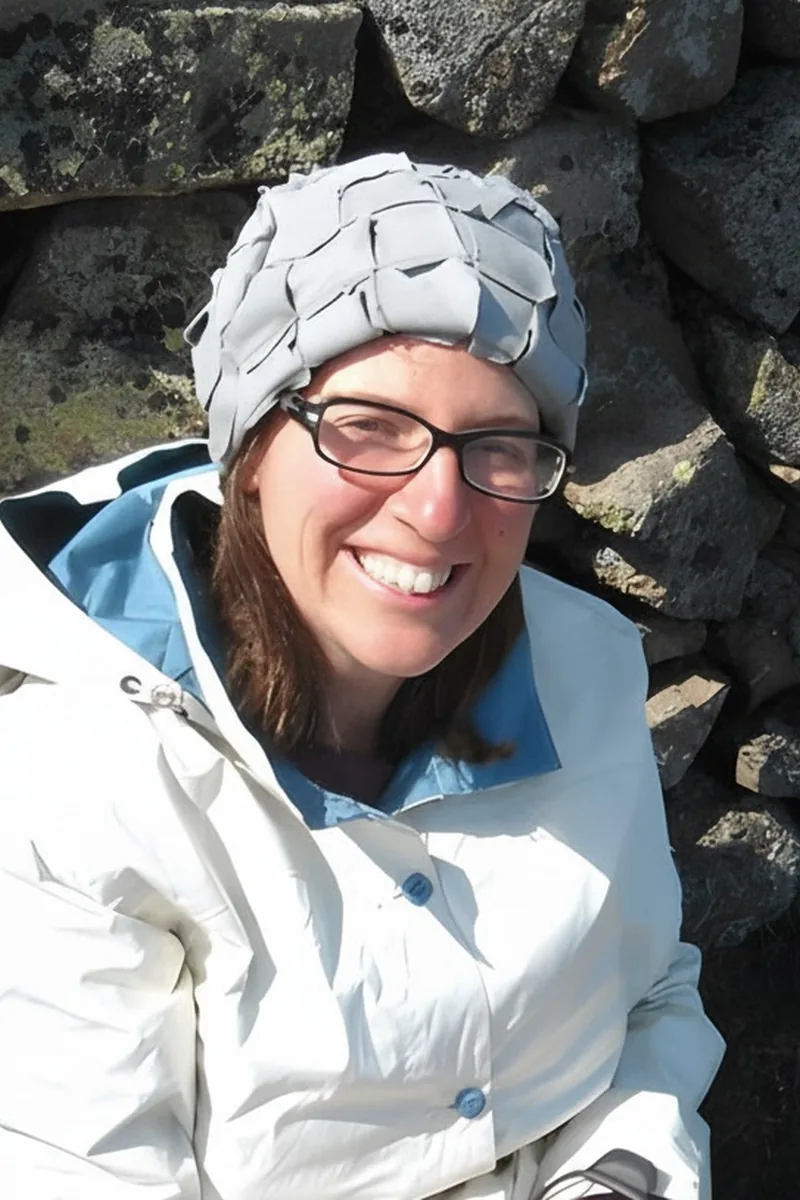
Fractions, ratios, and proportional reasoning are where middle school math starts demanding real number sense — not just memorized procedures. Tara makes these concepts click by connecting them to tangible, real-world scenarios, drawing on the same creative problem-solving she honed through her anthropology training. She's genuinely enthusiastic about this level of math and brings that energy into every session.

The jump from elementary math to middle school math often trips students up not because the content is harder, but because it demands a different kind of reasoning. Lacey's background as a high school science teacher means she regularly sees where middle school gaps — in fractions, proportional thinking, or basic geometry — create problems later. She addresses those gaps early by making the logic behind each concept visible.
Most middle schoolers don't need more practice problems — they need someone who can explain why the fraction rules work or what a variable actually represents. Oliver digs into those foundational questions, using visual models and real-world examples to make concepts like order of operations and basic equation-solving stick. His biochemistry and biology background at CU Boulder reflects someone who genuinely enjoys understanding how things work from the ground up.
Mechanical engineering at Oklahoma Christian means Christian lives in the math that middle schoolers are just starting to encounter — variables, proportional relationships, and the logic of multi-step problem solving show up in his coursework daily. His 34 ACT and 5.0 student rating back up what matters most at this level: he can break down the jump from basic arithmetic into early algebraic thinking in a way that actually makes sense to a sixth or seventh grader.
Before diving into EMT training, Lena built a strong track record teaching math across every level from elementary through calculus — so she knows exactly which middle school concepts (like operations with negatives or setting up basic equations) tend to trip students up later if they're glossed over now. Her 1470 SAT and 31 ACT back up that quantitative fluency, and her 5.0 rating suggests she makes the material click without overcomplicating it.
The jump from arithmetic to middle school math — proportional reasoning, integer operations, basic geometry proofs, and early equation-solving — is where many students decide whether they're "math people" or not. Colton's approach uses gradual build-up and real-world shortcuts to keep that confidence intact, backed by hands-on tutoring experience across elementary and secondary levels. Rated 4.7 by students.
Getting proportions, fractions, and basic equation-solving to click in middle school sets the trajectory for every math class that follows. Jude turns these sessions into back-and-forth problem-solving conversations where the student does most of the thinking — he just asks the right questions at the right moments. It's an approach that earns him a 4.9 rating and keeps younger learners genuinely engaged.
Fractions, proportions, and integer operations trip up a lot of middle schoolers — not because the math is impossibly hard, but because earlier gaps quietly compound. Emma's elementary education training means she knows exactly where those gaps tend to hide and how to close them before they snowball into bigger problems. Rated 5.0 by students, she makes the jump from arithmetic to pre-algebra feel manageable.
I am a student at the Georgia Institute of Technology studying Chemical Engineering. For the past several years, I have worked with students extensively. Through hosting events for younger kids to learn about STEM and for older teens to practice empathetic design, I know the importance of teaching students in ways that engage them rather than frustrate them, which I apply to my teaching. I have tutored high school students in a drop-in resource center in various subjects including math of all levels, chemistry, and English, making me adequately equipped in a variety of topics. I have also tutored several students long-term. Establishing relationships with students and exploring their unique learning styles is my favorite part of tutoring. I prioritize helping students discover HOW to learn in a manner that is the most effective for them, so they can begin to use those skills on their own throughout their education. Learning is a lifelong skill that requires practice for improvement; I strive to help my students gain confidence in their ability to learn.
Through the Denver Math Fellows program, Marcus has spent concentrated time delivering small-group math instruction to middle schoolers — not as a side gig, but as his primary professional focus after graduating from Arizona State with a degree in biological sciences. That daily repetition with sixth through eighth graders means he knows exactly which concepts (negative numbers, two-step equations, ratios) tend to unravel and how to re-anchor them using what a student already understands from elementary arithmetic.
The jump from fifth-grade arithmetic to pre-algebra concepts like ratios, proportions, and negative numbers can feel enormous to a middle schooler. Ed's energetic teaching style turns that intimidating leap into manageable steps, connecting each new idea — whether it's fraction operations or basic graphing — to something concrete the student already understands.
The jump from elementary to middle school math piles on new ideas fast — ratios, proportions, negative numbers, and early algebraic thinking all land at once. Hannah tackles each concept by connecting it to concrete examples students can visualize, making abstract reasoning feel less like a leap and more like a logical next step.
At the middle school level, math shifts from straightforward arithmetic to proportional reasoning, integer operations, and early algebraic thinking — and that transition can shake a student's confidence fast. Rosemary uses concrete examples from science and everyday life to make concepts like ratios, percentages, and coordinate graphing tangible. She's patient with the messy middle stage where students are still building number sense alongside new abstract skills.
Two years volunteering at an elementary and middle school gave Jalonna a firsthand sense of how students in this age group think about ratios, proportions, and introductory geometry. She connects abstract ideas to real-world examples so that concepts like fraction operations or percent problems feel less like memorization drills. Her patience with this age group is one of her biggest strengths.
The jump from basic arithmetic to proportional reasoning, negative numbers, and introductory equations can feel enormous for a middle schooler. Austin approaches these topics with patience and a relaxed style, breaking multi-step problems into smaller pieces so students can see exactly where their thinking went off track. He's rated 5.0 by students and emphasizes understanding the 'why' behind each procedure, not just the steps.
The jump from elementary arithmetic to middle school math catches students off guard when fractions, decimals, and negative numbers all show up in the same problem. Anthony tackles these sticking points one at a time, using visual models and real-world scenarios to make ratios, proportions, and basic geometry intuitive rather than intimidating. His background spans math through calculus and engineering, so he knows exactly where each concept leads.
The jump from arithmetic to proportional reasoning, basic geometry, and early equation-solving is one of the biggest shifts in a student's math life. Annie has been tutoring math since high school and uses creative, hands-on techniques to make concepts like ratios, percentages, and coordinate graphing feel intuitive rather than intimidating. Her 5.0 rating speaks to how well she connects with younger learners.
A physics major who scored well on the ACT Math section, Evan brings a scientist's instinct for breaking problems into manageable pieces — exactly what middle schoolers need when fractions suddenly become equations and numbers go negative. He's especially sharp at rebuilding a student's self-belief alongside their skills, turning 'I can't do this' into genuine confidence with new material. Rated 5.0 by students.
Fractions, proportions, and early equation-solving are the concepts that shape whether a student feels confident or anxious about math for years to come. Kathleen is especially good at diagnosing the specific gap — maybe it's place value, maybe it's negative numbers — and addressing that root issue rather than just re-explaining the current homework problem. Her four years of tutoring students across all ages give her a sharp sense of how younger learners think.
Biology majors do more math than most people realize — Joseph spent his UCLA undergrad calculating dilution ratios, analyzing statistical datasets, and working through quantitative models, all of which map directly onto the proportional reasoning and equation-solving middle schoolers are tackling for the first time. His public health master's at Yale keeps him knee-deep in data interpretation daily, so he teaches these concepts as practical skills with real stakes rather than abstract exercises. Rated 4.9 by families.
Julie is pursuing a certificate in Statistics and Machine Learning alongside her philosophy degree at Princeton — a combination that means she thinks about math both computationally and conceptually. For middle schoolers tackling pre-algebra and proportional reasoning, she breaks down each problem's logic so students understand the *why* before memorizing the *how*. Rated 4.9 by families.
Fractions, decimals, and proportional reasoning are the concepts that either build a student's confidence in math or quietly undermine it for years. Valerie's background spans subjects from classics to emergency medicine, and she channels that range into finding the analogy or explanation that makes a tricky middle school concept land for each learner.
The jump from elementary arithmetic to middle school math trips up a lot of students, especially when ratios, proportional reasoning, and negative numbers enter the picture. Jean tackles these sticking points by linking new concepts to real-world scenarios that make the logic click. Her patient, structured teaching style keeps students from falling behind during these critical bridge years.
The jump from elementary to middle school math introduces ratios, proportional reasoning, and early algebraic thinking all at once, which can feel overwhelming without the right support. Mary's engineering background gives her a knack for showing students how these concepts connect — why understanding fractions deeply, for instance, makes proportions and percentages click naturally. She holds a 5.0 client rating and genuinely enjoys working at this level where curiosity about math can really take root.
From fractions and ratios to early equation-solving, middle school math covers a huge range of concepts in a short time, and gaps at this stage tend to snowball. Ema has spent years tutoring students in this exact age group, breaking down each topic with real-world examples that make abstract ideas click. Her 5.0 rating speaks to how well that approach lands with younger learners.
Fractions, ratios, and proportional reasoning click faster when students see how they connect to real-world problems — something Mica's Stanford background in Science, Technology, and Society makes second nature. She breaks down pre-algebra concepts like integer operations and basic equation solving into clear, repeatable steps that build genuine confidence.
The middle school math years — ratios, proportions, integer operations, intro to linear equations — set the trajectory for everything that comes after. Sugi approaches these topics by building the reasoning behind each procedure, so a student doesn't just cross-multiply but understands why it works. Rated 5.0 by her students, she keeps sessions structured without making them feel like a lecture.
Fractions, ratios, and proportional reasoning are the concepts that quietly determine whether a student thrives or struggles in high school math. Andrew takes the time to unpack why procedures like cross-multiplying actually work, building the kind of number sense that carries through algebra and beyond. His 4.9 rating speaks to how well that patient, explanation-first approach lands with younger learners.
Every middle school math struggle Julia sees — whether it's proportional reasoning, integer operations, or early equation-solving — comes down to a gap in conceptual understanding that got papered over with memorized steps. She pinpoints that gap quickly and rebuilds the reasoning behind it using questions that get students thinking out loud. Rated 4.8 by families she's worked with.
Years of tutoring her younger brother and his friends gave Ellie a front-row seat to the specific places middle schoolers get stuck — fractions turning into decimals, proportional reasoning, and that tricky leap into basic equation solving. She breaks each concept into concrete steps and ties them to scenarios kids actually care about. Her background coaching youth soccer also means she knows how to keep younger learners engaged and motivated.
Testimonials
Because the right Middle School Math tutor makes all the difference.
Average Session Rating – Based on 3.4M Learner Ratings
Nearby Middle School Math Tutors
Other Colorado Springs Tutors
Related Math Tutors in Colorado Springs
Frequently Asked Questions
Middle school math programs across Colorado Springs school districts may use different textbooks and teaching methods—some emphasize conceptual understanding while others focus on procedural fluency. Tutors who work with students in Colorado Springs are familiar with these variations and adapt their instruction to match your student's specific curriculum, whether that's traditional approaches or standards-based programs. This ensures tutoring reinforces what's being taught in class rather than introducing conflicting methods.
Middle school math marks a critical transition from "how do I solve this?" to "why does this work?"—moving from procedural steps to conceptual understanding. Students encounter variables, equations, and abstract thinking for the first time, which can feel overwhelming. Personalized tutoring helps students build this conceptual foundation by connecting procedures to underlying patterns, making advanced topics like algebra and geometry feel less mysterious.
Word problems require students to translate language into mathematical operations—a skill that combines reading comprehension, problem-solving strategy, and computational fluency. Many students can solve equations but freeze when math is embedded in context. Tutors work with students in Colorado Springs to develop systematic approaches: identifying what's given, what's being asked, and which operations apply. With practice, students learn to see word problems as puzzles to decode rather than obstacles.
Math anxiety often stems from feeling lost or embarrassed about asking questions in a classroom of 25+ students—Colorado Springs schools average a 15.7:1 student-teacher ratio, so individual attention can be limited. Personalized 1-on-1 instruction creates a judgment-free space where students can ask "dumb questions," work at their own pace, and experience small wins that rebuild confidence. As students understand concepts more deeply, anxiety naturally decreases.
Showing work isn't just about getting the right answer—it reveals your thinking process and helps teachers (and tutors) identify where misunderstandings occur. In middle school, this skill becomes essential because math builds on itself; a gap in understanding fractions affects algebra later. Tutors help students develop clear, organized work habits that make problem-solving transparent and catch errors early.
Graphing and proofs are challenging because they require visualizing abstract relationships and communicating mathematical reasoning—skills that benefit enormously from guided practice. Tutors break these topics into manageable steps: for graphing, starting with plotting points before tackling slopes and intercepts; for proofs, building from simple logical statements to multi-step arguments. Repeated practice with immediate feedback helps patterns click into place.
During an initial session, a tutor will assess your student's current understanding, identify specific gaps or misconceptions, and learn about their learning style and goals. This might involve reviewing recent homework, working through a challenging concept together, or discussing what topics feel most frustrating. The tutor then creates a personalized plan focused on building confidence and addressing priority areas.
Many students see increased confidence and understanding within 2-3 sessions, especially when tutoring targets specific gaps like multi-step equations or word problems. Grade improvements typically follow within 4-6 weeks as concepts solidify and students apply new strategies to classwork. Consistency matters more than frequency—regular sessions build momentum better than sporadic help right before tests.
Let’s find your perfect tutor
Answer a few quick questions. We’ll recommend the right plan and match you with a top 5% tutor.