Award-Winning High School Chemistry Tutors
serving Colorado Springs, CO
High School Chemistry
Tutors in Colorado Springs
Private 1-on-1 tutoring, weekly live classes for academic support, test prep & enrichment, practice tests and diagnostics, and more to elevate grades and test scores.
Based on 3.4M Learner Ratings
UniversitiesSchools & Universities
DeliveredHours Delivered
ProficiencyGrowth in Proficiency
Who needs tutoring?
No obligation. Takes ~1 minute.

Balancing equations, stoichiometry, and periodic trends all start making sense once a student grasps why atoms behave the way they do. Oliver minored in chemistry at CU Boulder alongside his biochemistry major, so he tackles high school chemistry from both the quantitative and conceptual sides — whether that means working through mole conversions or explaining why electronegativity matters for molecular polarity.
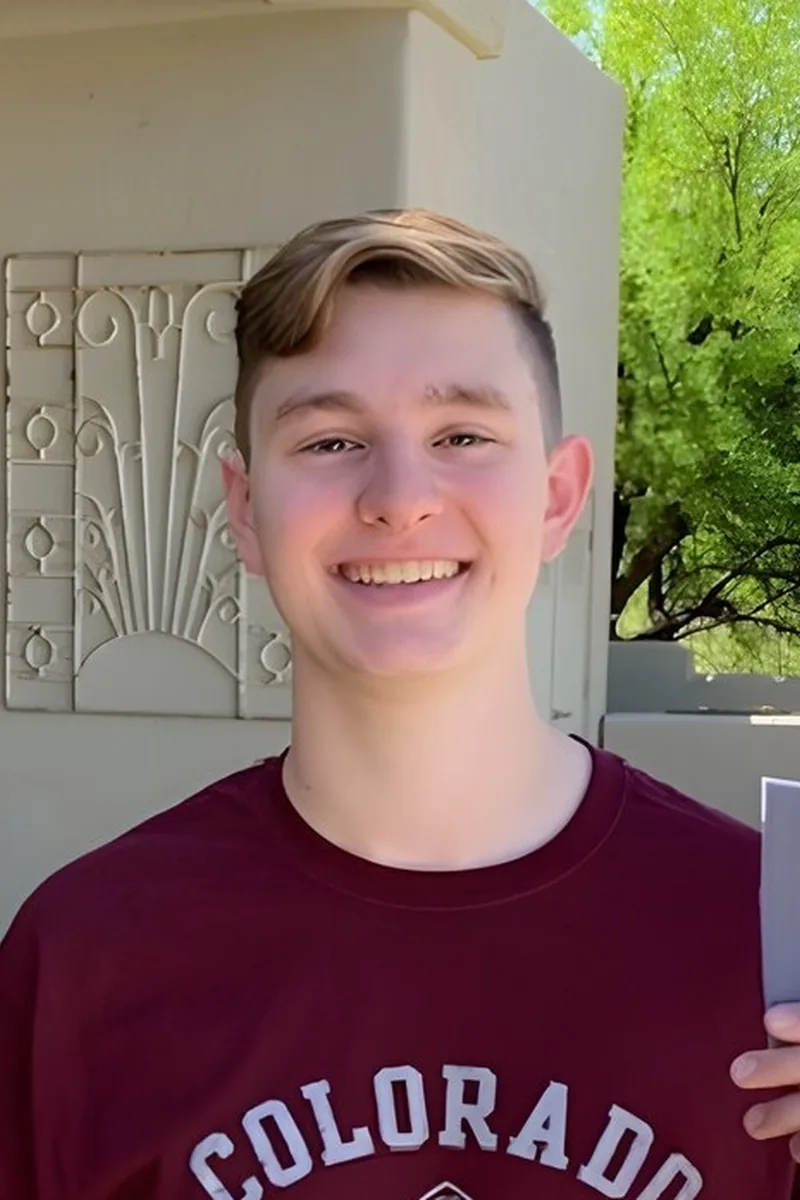
Studying Engineering Physics at Colorado School of Mines means Jude uses chemistry concepts daily — from thermodynamics and reaction kinetics to electrochemistry and molecular bonding. He treats chemistry sessions like conversations, asking targeted questions that push students to reason through stoichiometry or equilibrium problems rather than passively copying solutions. Rated 4.9 by students.
The jump from memorizing element names to actually solving stoichiometry and equilibrium problems trips up a lot of high school chemistry students. Colton approaches each topic by anchoring it to something concrete — mole ratios become recipes, gas laws become tire pressure — so the math feels less abstract. His engineering background means he's comfortable with both the conceptual and quantitative sides of the course.
A biology major doesn't get through college without serious chemistry coursework, and Michelle's training at Trinity University covered general and organic chemistry alongside her core science classes. She's especially effective at teaching stoichiometry, balancing equations, and mole conversions — topics where a disorganized approach leads to constant errors. Her method is to build a clear problem-solving framework students can apply to any calculation, not just the ones on tonight's homework.
Chemistry wasn't Marcus's primary degree, but his Biological Sciences coursework at Arizona State required a deep dive into general chemistry — balancing equations, understanding molar relationships, and applying stoichiometry to lab problems. He approaches high school chemistry by tying abstract concepts like electron configuration and periodic trends back to tangible biological processes students can visualize.
I am a student at the Georgia Institute of Technology studying Chemical Engineering. For the past several years, I have worked with students extensively. Through hosting events for younger kids to learn about STEM and for older teens to practice empathetic design, I know the importance of teaching students in ways that engage them rather than frustrate them, which I apply to my teaching. I have tutored high school students in a drop-in resource center in various subjects including math of all levels, chemistry, and English, making me adequately equipped in a variety of topics. I have also tutored several students long-term. Establishing relationships with students and exploring their unique learning styles is my favorite part of tutoring. I prioritize helping students discover HOW to learn in a manner that is the most effective for them, so they can begin to use those skills on their own throughout their education. Learning is a lifelong skill that requires practice for improvement; I strive to help my students gain confidence in their ability to learn.
Chemistry often feels like a foreign language, which is actually where Carson has an edge — his English background gives him a knack for translating abstract ideas like mole ratios, electron configurations, and reaction balancing into plain, logical steps. He treats each problem type as a reading exercise first, making sure students understand what's being asked before diving into calculations.
Working daily with CRISPR-Cas9 and other biochemical tools in a Yale research lab, Matthew sees chemistry in action — the thermodynamics of enzyme reactions, the pH sensitivity of buffer systems, the molecular interactions that make or break an experiment. That hands-on context sharpens how he teaches high school topics like equilibrium, gas laws, and nomenclature, because he can point to exactly where each concept shows up beyond the textbook.
Balancing redox reactions, predicting molecular geometry, and navigating stoichiometry all require a different kind of thinking than most students have used before. Lauren minors in chemistry at Duke and uses that depth to explain *why* electron configurations drive periodic trends or *why* a reaction favors products — not just how to get the right answer on a worksheet. She's rated 4.8 across her subjects.
Max earned his chemistry degree at MIT and spent much of high school diving deep into organic chemistry projects — meaning the fundamentals of high school chemistry like stoichiometry, electron configuration, and chemical bonding are second nature to him. He teaches gas law and equilibrium problems by pushing students to derive relationships themselves rather than memorize equations, building intuition that pays off when exam questions don't look like the textbook examples. Rated 5.0 by students.
Balancing redox reactions, predicting products, and navigating the mole concept are the places where most high school chemistry students get stuck. Noel's college-prep teaching background means he's seen these sticking points up close and tackles them by walking through the reasoning step by step rather than handing students a shortcut to memorize.
This isn't Hasan's core area — his degrees are in Literary Arts and Visual Arts from Brown — but his role as a lead teacher at a classical academy means he regularly supports students across subjects, including chemistry fundamentals like nomenclature, dimensional analysis, and basic stoichiometry. He's strongest at teaching students how to read and dissect word-heavy chemistry problems, applying the same close-reading instincts from his literary training to pull apart what a question is actually asking.
When mole conversions and electron configurations feel like two completely unrelated subjects crammed into one class, that's usually a sign the underlying logic hasn't clicked yet. Aidan ties high school chemistry concepts together by starting from atomic structure and building outward — showing why periodic trends predict reactivity, how bonding explains molecular shape, and where the math fits in. His premed coursework at Notre Dame covered this material in depth.
Teaching college chemistry for years gave Jeremy a clear picture of what high school students actually need before they arrive on a college campus — and where most curricula leave gaps. He zeroes in on the conceptual reasoning behind topics like mole conversions, gas laws, and electron configurations, making sure students can explain *why* an answer is correct, not just arrive at the right number.
General chemistry was the first subject Alec taught as a TA at Cornell, running problem-solving sessions where students worked through stoichiometry, equilibrium, and acid-base reactions in real time. That hands-on teaching background means he knows exactly where high schoolers get tripped up — whether it's balancing redox equations or making sense of periodic trends. Rated 4.8 by students.
When electron configurations and periodic trends start piling up alongside acid-base equilibria and redox reactions, high school chemistry can feel like two different courses crammed into one. Caroline tackles both sides — the conceptual and the computational — using her engineering mindset to show students how dimensional analysis and logical problem setup make even the trickiest stoichiometry problems approachable.
Czarina is a biophysics and premed student at Johns Hopkins who scored 770 on the SAT Chemistry subject test — meaning she's recently navigated the exact material high school chemistry students are working through, from periodic trends and bonding to thermodynamics and reaction kinetics. She zeroes in on the conceptual logic behind gas law calculations and equilibrium expressions so that problem-solving feels intuitive rather than formulaic. Rated 5.0 by her students.
The jump from memorizing element symbols to actually predicting reaction products trips up a lot of high school chemistry students. Viraj zeroes in on that transition, teaching how oxidation states, electronegativity trends, and molecular geometry determine what happens when substances mix. His Cornell lab experience means he can ground abstract concepts in tangible examples students remember.
Balancing equations, mole conversions, and periodic trends are the building blocks of high school chemistry, and Camille tackles each one by teaching the underlying logic rather than handing students a formula sheet. Her pre-med background at Duke means she's fluent in the problem-solving style these courses demand. Rated 5.0 by students.
Testimonials
Because the right High School Chemistry tutor makes all the difference.
Average Session Rating – Based on 3.4M Learner Ratings
Nearby High School Chemistry Tutors
Other Colorado Springs Tutors
Related Science Tutors in Colorado Springs
Frequently Asked Questions
High school chemistry requires mastering both abstract concepts and practical skills. Students often struggle with balancing chemical equations, understanding mole conversions, and visualizing molecular structures—concepts that don't have obvious real-world references. Additionally, many students find it challenging to connect theoretical principles (like stoichiometry or equilibrium) to actual lab work, and the cumulative nature of chemistry means falling behind early makes later topics even harder to grasp.
Personalized 1-on-1 instruction allows a tutor to identify exactly where your understanding breaks down—whether it's balancing equations, unit conversions, or conceptual gaps—and address those specific areas rather than moving at a class pace. Tutors can also help you develop problem-solving strategies, connect abstract concepts to real-world applications, and build confidence with lab reports and experimental design, which strengthens both your chemistry knowledge and scientific reasoning skills.
Yes. Tutors can help you understand the purpose behind experiments, interpret results, and develop proper lab technique and safety practices. They can also guide you through the scientific method, help you write clear lab reports, and explain how your experimental observations connect to the theoretical concepts you're learning in class—making lab work a tool for deeper understanding rather than just a grade.
Understanding is far more important than memorization in chemistry. While you'll need to know some key formulas and periodic table basics, chemistry is fundamentally about understanding *why* reactions happen and *how* to apply principles to new problems. Tutors focus on building conceptual understanding so you can tackle unfamiliar problems and see chemistry as a logical system rather than a collection of facts to memorize.
Your first session is about building a foundation for your tutoring relationship. Expect to discuss your current chemistry course, specific topics you find challenging (like balancing equations or gas laws), your learning style, and your goals—whether that's improving your grade, preparing for the AP Chemistry exam, or building stronger fundamentals. The tutor will likely work through a problem or concept with you to understand your thinking process and identify where to focus future sessions.
Many chemistry concepts—like molecular bonding, electron configurations, or reaction mechanisms—are invisible and difficult to picture. Tutors use diagrams, models, and real-world analogies to make these abstract ideas concrete and easier to visualize. They can also help you develop your own mental models and drawing techniques, so you're better equipped to tackle complex problems on tests and understand how molecular-level interactions drive macroscopic observations.
Look for tutors with strong chemistry backgrounds—ideally with a degree in chemistry, biochemistry, or a related field, or extensive high school chemistry teaching experience. Beyond credentials, the best tutors can explain concepts clearly, adapt to your learning style, and connect theory to real-world applications. When you connect with a tutor through Varsity Tutors, you can discuss their experience with high school chemistry curricula and ask about their approach to teaching challenging topics.
Yes. Varsity Tutors connects students in Colorado Springs with expert chemistry tutors who understand high school chemistry curricula and can provide personalized instruction tailored to your needs. Whether you're in one of the 18 school districts across the area or attending a charter school, you can get matched with a tutor who fits your schedule and learning goals.
Let’s find your perfect tutor
Answer a few quick questions. We’ll recommend the right plan and match you with a top 5% tutor.