Award-Winning SAT Tutors
serving Colorado Springs, CO
SAT
Tutors in Colorado Springs
Private 1-on-1 tutoring, weekly live classes for academic support, test prep & enrichment, practice tests and diagnostics, and more to elevate grades and test scores.
Based on 3.4M Learner Ratings
UniversitiesSchools & Universities
DeliveredHours Delivered
ProficiencyGrowth in Proficiency
Who will be getting tutoring?
No obligation. Takes ~1 minute.

Philosophy trained Eric to tear arguments apart — find the assumption, test the logic, spot the flaw — which is exactly what the SAT's Evidence-Based Reading questions demand. He scored a 1560 and applies that same analytical precision to the Writing and Language section, where grammar and rhetoric questions reward students who can articulate *why* one answer choice is structurally better than another. His additional strength in math means he covers the full exam without switching gears.
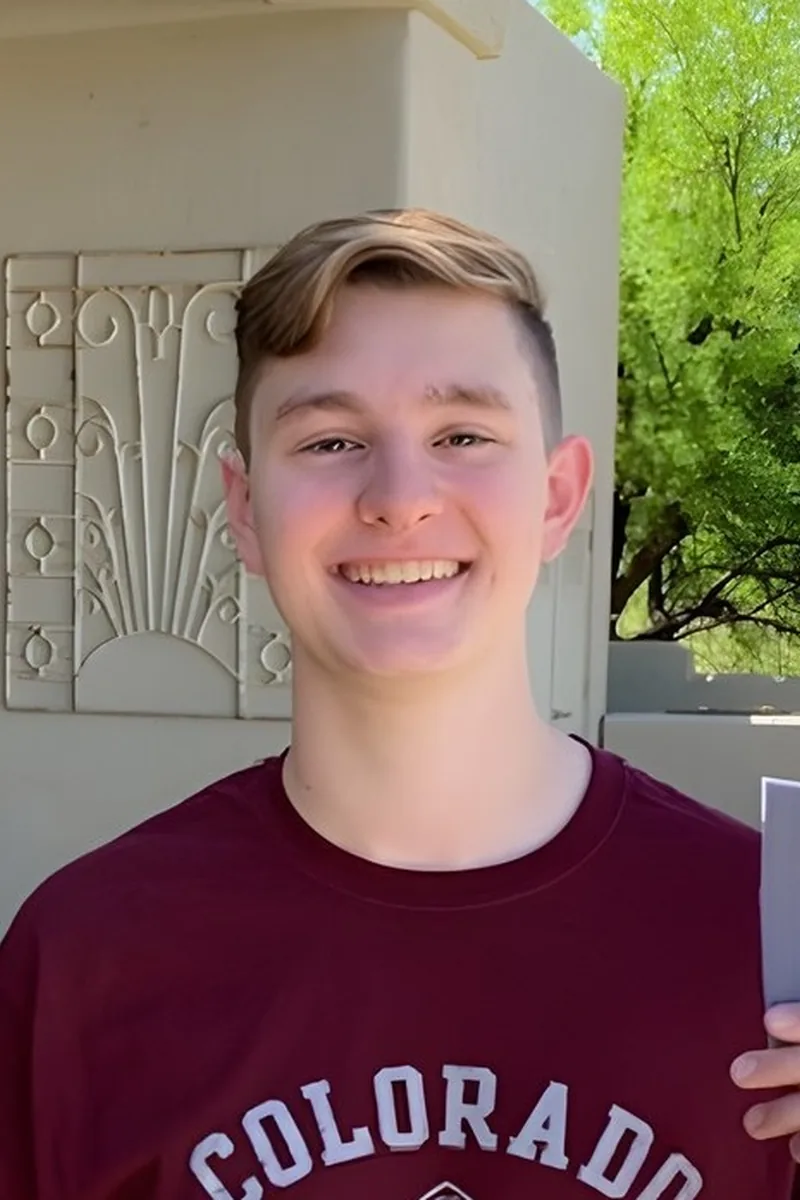
Most SAT points are lost not on hard questions but on avoidable mistakes — misreading a graph, rushing through a no-calculator problem, or second-guessing an evidence pair. Jude, who scored a 1590, treats prep as a physics-style diagnostic: isolate the variable causing errors, then drill it until the fix becomes automatic. His applied physics training at Colorado School of Mines means the math section is second nature, freeing up strategy time for the reading and writing side.
What separates a 1500 from a 1570 on the SAT often comes down to the handful of questions designed to punish rushing — Paul knows those traps well, having earned a 1570 himself. His background spans both the quantitative and verbal sides of the exam, with particular depth in math and Latin-rooted vocabulary that gives him a structural advantage when teaching students to decode unfamiliar words in context. He also coaches the college essay process, so he understands the bigger admissions picture that motivates students to push for every point.
Having gone through the IB diploma program and then a rigorous math degree at Brown, Zofia knows how to reverse-engineer a standardized test — she scored a 1550 on the SAT and teaches students the specific algebra, data analysis, and grammar patterns that repeat across sections. Her science coursework also sharpens her approach to evidence-based reading questions, where extracting conclusions from dense passages is essentially what she did in lab reports for four years.
Studying chemical engineering at Georgia Tech means Risha lives in the quantitative reasoning and data analysis that dominate the SAT Math section — she teaches students to translate word problems into equations quickly and spot the algebraic shortcuts that save time under pressure. Her experience tutoring English and writing at a high school drop-in center also means she can coach the Reading and Writing side without skipping a beat. She scored a 1520 on the SAT and holds a 5.0 rating.
Sociology taught Lena to pull arguments apart — find the claim, weigh the evidence, spot the logical gaps — which is exactly what the SAT's Reading section demands on every passage. She scored a 1470 on the exam and uses that same analytical lens on the Math side, where translating word problems into solvable setups is more about careful reading than advanced math. Rated 5.0 by students.
A dual degree in Biochemistry and MCD Biology from CU Boulder means Oliver tackles the SAT's science-heavy reading passages and data interpretation questions with genuine fluency — not just test-taking tricks. He scored a 1410 and breaks the exam into section-specific strategies, particularly for students who lose time on evidence-pair questions or get tripped up by the no-calculator math section. Rated 5.0 by students.
Rohith scored a 1480 on the SAT, with particular strength in the math section where his background in calculus and discrete math gives him a sharp eye for the reasoning traps the College Board builds into quantitative problems. He also tackles the reading and writing sections by teaching students how to eliminate answer choices using evidence from the passage — a skill he honed through his own work in literature and essay writing.
Cornell undergrad, Kentucky master's, and years of studying Spanish since elementary school — Jasmyn's academic range mirrors what the SAT actually demands, where students jump from algebraic reasoning to passage analysis to grammar rules within a single sitting. She scored a 1410 on the SAT herself and uses that experience to teach pacing and section-switching strategies, particularly for students who are strong in math but lose points on the verbal side (or vice versa). Her conviction that anyone can learn math carries over to test prep: she builds confidence by targeting the specific question types where each student stalls.
Computer science at KU trained Austin to think in logic and systems — exactly the mindset that pays off on SAT Math, where translating word problems into algebraic structures and catching pattern-based traps separates good scores from great ones. He scored a 1410 on the SAT himself and pairs that firsthand experience with a casual, low-pressure teaching style that keeps test anxiety from running the show. Rated 5.0 by students.
The SAT rewards a specific kind of disciplined thinking — reading precisely under pressure, translating word problems into clean algebra, and catching grammar traps that sound right but aren't. Cody's Engineering Physics training at Colorado School of Mines built exactly that rigor on the quantitative side, while his graduate work in Religious Studies sharpened the close-reading and argument-analysis skills that drive the Evidence-Based Reading section. He scored a 1440 on the SAT and knows how to coach both halves of the exam from firsthand experience.
Scoring a 1430 on the SAT herself, Melissa knows the specific pacing traps and question structures that cost students points — especially on the math section, where her algebra and calculus background lets her teach multiple solution paths for the same problem. She also brings her English teaching certification to the verbal side, breaking down evidence-based reading questions and command-of-evidence prompts so students stop second-guessing between the last two answer choices.
Annie scored a 1410 on the SAT and breaks the exam down into repeatable strategies — identifying trap answers in Evidence-Based Reading, catching grammar patterns in the Writing section, and managing time across math question types. She's been tutoring since high school and knows how to make test prep feel less like a grind and more like skill-building. Rated 5.0 by students.
A perfect 1600 on the SAT gives Katie the credibility to break down every section — from evidence-based reading passages to no-calculator math — with the precision of someone who's mastered each one. She builds targeted strategies around timing, question types, and the specific traps the College Board designs into answer choices. Rated 5.0 by students, she also draws on her experience advising BS/MD applicants to put SAT prep in the context of a bigger admissions picture.
Dennis's physics research at Princeton — modeling turbulent plasmas and cosmic ray acceleration — required exactly the kind of precise quantitative reasoning and data interpretation that dominates the SAT Math section. He scored a 1530 on the SAT himself and pairs that firsthand experience with a methodical, science-trained approach to the Reading section, where he teaches students to treat passages like data sets and extract evidence systematically.
What separates a 1500+ SAT score from a 1300 often isn't knowledge — it's knowing how the test tries to trick you. Joey scored a 1570 and built his prep approach around identifying those traps, particularly the algebra and data-analysis questions on the Math section where careful reading matters as much as calculation. His theater training at Columbia also sharpened the close-reading and rhetorical analysis skills that pay off on the Evidence-Based Reading and Writing sections.
A 1530 SAT scorer who tinkers with cars and old electronics for fun, Aaron brings that same diagnostic mindset to test prep — isolating exactly where points are being lost and building targeted strategies for each section. He's particularly sharp on the math side, where his mechanical engineering background makes even the trickiest word problems and data interpretation questions feel routine. Rated 5.0 by students.
What sets Nikhil apart for SAT prep is genuine fluency across both halves of the exam — his biomedical engineering training at Michigan keeps the math sections sharp, while his background in writing, literature, and essay editing means the Evidence-Based Reading and Writing sections aren't an afterthought. He scored a 1540 on the SAT himself and builds section-specific strategies around pacing and question-type recognition rather than generic practice. Rated 5.0 by students.
Most SAT prep treats the math and verbal sections as two separate exams, but Viktor's UChicago math degree and his experience teaching literature, grammar, and college essays mean he can coach the full test without switching gears. He scored a 1600 — a perfect composite — and uses that familiarity with the exam's logic to teach students how to spot the algebraic structures hidden in word problems and the rhetorical patterns that make Reading section trap answers so tempting.
Competition math experience and a 1540 SAT score give Tracy a particularly strong command of the Math section's trickiest problems — the ones that layer multiple concepts like systems of equations inside word problems or require nonstandard approaches under time pressure. She also brings native Mandarin fluency and an economics-trained reading style to the Evidence-Based Reading section, where she teaches students to trace an author's argument before touching the answer choices. Rated 4.9 by students.
Most SAT prep treats the Reading and Math sections as completely separate skill sets, but Emily's science training at Yale — where she spent years parsing dense research literature and working with data — means she teaches both sides of the exam as exercises in precise interpretation. She scored a 1550 on the SAT and builds her coaching around the specific reasoning habits that earned it: identifying exactly what a question asks before touching the answer choices, and translating word problems into structures rather than guessing at operations. Rated 5.0 by students.
After working as a test prep tutor and admissions consultant in Hong Kong, Asta developed a full-picture approach to the SAT — she knows not just how to raise scores but how those scores fit into a broader college application strategy for students targeting U.S. universities. Her 1530 SAT and University of Chicago political science training sharpen her coaching on the Reading section especially, where she teaches students to trace an author's argument before touching the answer choices. Rated 5.0 by students.
Most SAT prep treats the verbal and math sections as separate worlds, but Julia's English and Linguistics degree — paired with her genuine strength in math — lets her teach the whole exam as one coherent skill set: precise reading, logical elimination, and structured problem-solving. She scored a perfect 1600 and knows exactly where that score came from — not innate test-taking talent, but deliberate habits around pacing, process of elimination, and recognizing how the SAT reuses the same question structures across both sections. Rated 5.0 by students.
Biology majors spend four years learning to read dense, data-heavy passages under pressure — exactly the skill that drives scores on the SAT's Evidence-Based Reading section. Ashley pairs that analytical reading ability with strong math fundamentals across algebra and data interpretation, and her own 1480 SAT score means she knows firsthand which question types eat up time and which reward a systematic approach.
Keith's political science and history coursework at Williams built exactly the kind of dense, argument-heavy reading that mirrors SAT Evidence-Based Reading passages — he teaches students to trace an author's claim through supporting evidence and spot the distractor answers designed to punish skimming. His 1560 SAT score backs up a full-test approach that extends to the math and Writing & Language sections, where he emphasizes the repeatable grammar rules and algebraic setups that appear on every administration.
Testimonials
Because the right SAT tutor makes all the difference.
Average Session Rating – Based on 3.4M Learner Ratings
Practice SAT
Free practice tests, flashcards, and AI tutoring for SAT
Nearby SAT Tutors
Other Colorado Springs Tutors
Related Test Prep Tutors in Colorado Springs
Frequently Asked Questions
CU Boulder typically admits students with SAT scores around 1220-1410, with most admitted students scoring in the top 25-50% nationally. A score of 1300+ puts you in a competitive range for admission. Keep in mind that while test scores matter, CU Boulder also considers GPA, essays, and extracurriculars, so a strong overall application is essential even if your score falls slightly below this range.
Colorado Springs students generally perform at or slightly above the national average of 1050, though scores vary widely depending on school and preparation level. With Colorado Springs' 232 schools across 18 districts and a student-teacher ratio of 15.7:1, there's significant variation in college prep resources available. Many competitive Colorado Springs students aim for 1200+, which puts them in the top 25% nationally and opens doors to selective state and regional universities.
Most students see 100-200 point improvements with focused, personalized prep—especially when working on specific weak areas like Reading comprehension or Math problem-solving. The amount of improvement depends on your starting score, the time you invest, and which sections need the most work. Students who start at 950 and reach 1150 see meaningful gains; those already at 1300+ typically gain 50-100 points by targeting their remaining gaps.
Most juniors benefit from starting SAT prep in the spring or early summer before senior year, giving 3-4 months of preparation before fall test dates. If you're already in senior year, starting immediately is still worthwhile—even 6-8 weeks of focused prep can yield meaningful score improvements. The key is starting early enough to take the test multiple times if needed, since many students improve on their second or third attempt.
Both tests are equally accepted by Colorado colleges and universities, though the SAT has gained popularity nationally in recent years. The choice depends on your strengths: the SAT emphasizes reading comprehension and data interpretation, while the ACT tests faster-paced problem-solving and includes science reasoning. Many Colorado Springs students take a practice test in each format to see which plays to their strengths, and some take both—colleges accept either score equally.
The Reading section gives you 65 minutes for 52 questions, which requires efficient pacing—roughly 13 minutes per passage. Many students struggle with this section because they spend too much time re-reading or get stuck on difficult vocabulary questions. Effective strategies include previewing questions before reading, identifying key evidence in the text, and skipping extremely difficult questions to return to later. Personalized tutoring can help you develop a pacing strategy that works with your reading speed.
Multi-step Math problems require breaking the problem into smaller parts and checking your work at each stage. Common mistakes happen when students rush or skip steps, especially on the 55-minute calculator section where advanced math and data analysis questions appear. Writing out your work, double-checking calculations, and understanding what the question is actually asking before solving helps avoid careless errors. Working through practice problems with targeted feedback identifies exactly where you're losing points.
Most students benefit from taking the SAT 2-3 times: once in junior year to establish a baseline, then again after targeted prep. Colleges using score-optional policies or superscore (where they take your best scores from multiple attempts) make retaking a smart strategy with no downside. Since many Colorado Springs students improve 50-150 points on their second attempt, retaking is often worth it—just make sure you invest in focused prep between attempts rather than simply retesting.
Let’s find your perfect tutor
Answer a few quick questions. We’ll recommend the right plan and match you with a top 5% tutor.