Award-Winning Middle School Math Tutors
serving Aurora, CO
Middle School Math
Tutors in Aurora
Private 1-on-1 tutoring, weekly live classes for academic support, test prep & enrichment, practice tests and diagnostics, and more to elevate grades and test scores.
Based on 3.4M Learner Ratings
UniversitiesSchools & Universities
DeliveredHours Delivered
ProficiencyGrowth in Proficiency
Who needs tutoring?
No obligation. Takes ~1 minute.

The jump from arithmetic to middle school math — proportional reasoning, integer operations, basic geometry proofs, and early equation-solving — is where many students decide whether they're "math people" or not. Colton's approach uses gradual build-up and real-world shortcuts to keep that confidence intact, backed by hands-on tutoring experience across elementary and secondary levels. Rated 4.7 by students.
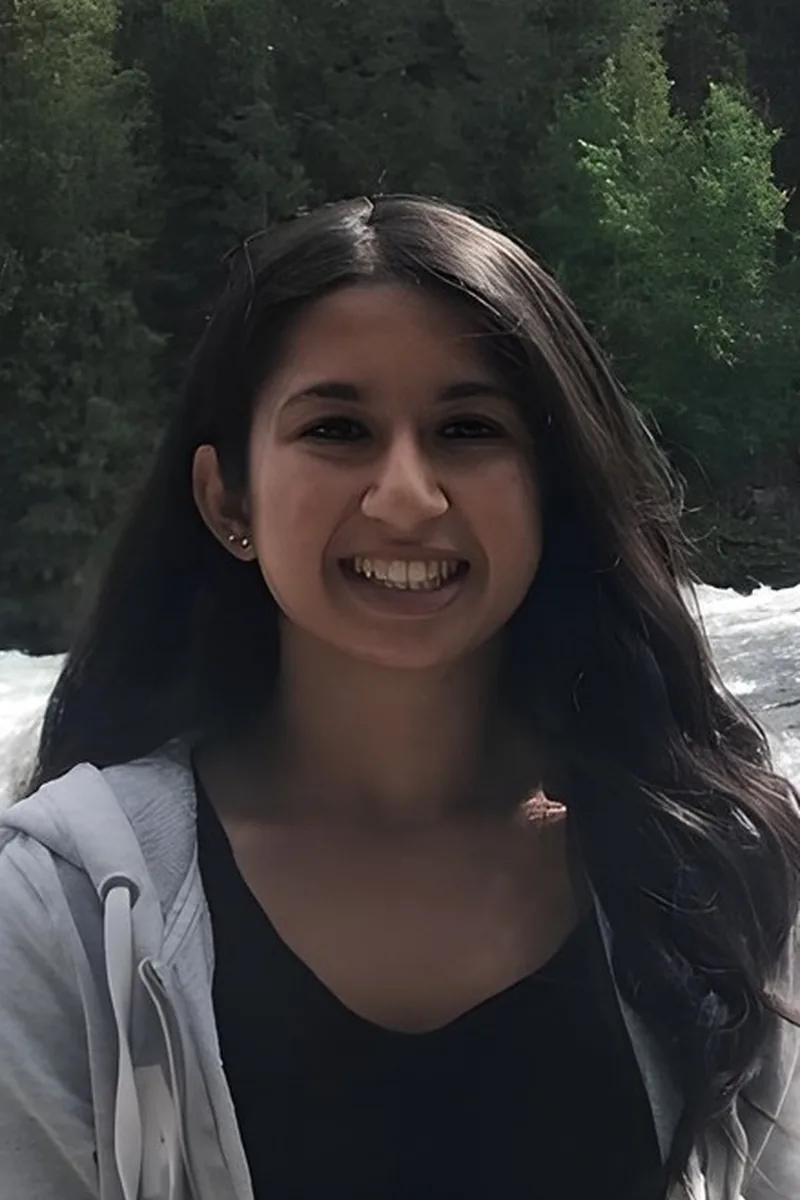
I am a student at the Georgia Institute of Technology studying Chemical Engineering. For the past several years, I have worked with students extensively. Through hosting events for younger kids to learn about STEM and for older teens to practice empathetic design, I know the importance of teaching students in ways that engage them rather than frustrate them, which I apply to my teaching. I have tutored high school students in a drop-in resource center in various subjects including math of all levels, chemistry, and English, making me adequately equipped in a variety of topics. I have also tutored several students long-term. Establishing relationships with students and exploring their unique learning styles is my favorite part of tutoring. I prioritize helping students discover HOW to learn in a manner that is the most effective for them, so they can begin to use those skills on their own throughout their education. Learning is a lifelong skill that requires practice for improvement; I strive to help my students gain confidence in their ability to learn.
The jump from elementary arithmetic to middle school math catches students off guard when fractions, decimals, and negative numbers all show up in the same problem. Anthony tackles these sticking points one at a time, using visual models and real-world scenarios to make ratios, proportions, and basic geometry intuitive rather than intimidating. His background spans math through calculus and engineering, so he knows exactly where each concept leads.
Fractions, ratios, and proportional reasoning are where middle school math starts demanding real number sense — not just memorized procedures. Tara makes these concepts click by connecting them to tangible, real-world scenarios, drawing on the same creative problem-solving she honed through her anthropology training. She's genuinely enthusiastic about this level of math and brings that energy into every session.
The jump from elementary math to middle school math often trips students up not because the content is harder, but because it demands a different kind of reasoning. Lacey's background as a high school science teacher means she regularly sees where middle school gaps — in fractions, proportional thinking, or basic geometry — create problems later. She addresses those gaps early by making the logic behind each concept visible.
Most middle schoolers don't need more practice problems — they need someone who can explain why the fraction rules work or what a variable actually represents. Oliver digs into those foundational questions, using visual models and real-world examples to make concepts like order of operations and basic equation-solving stick. His biochemistry and biology background at CU Boulder reflects someone who genuinely enjoys understanding how things work from the ground up.
Mechanical engineering at Oklahoma Christian means Christian lives in the math that middle schoolers are just starting to encounter — variables, proportional relationships, and the logic of multi-step problem solving show up in his coursework daily. His 34 ACT and 5.0 student rating back up what matters most at this level: he can break down the jump from basic arithmetic into early algebraic thinking in a way that actually makes sense to a sixth or seventh grader.
Getting proportions, fractions, and basic equation-solving to click in middle school sets the trajectory for every math class that follows. Jude turns these sessions into back-and-forth problem-solving conversations where the student does most of the thinking — he just asks the right questions at the right moments. It's an approach that earns him a 4.9 rating and keeps younger learners genuinely engaged.
Before diving into EMT training, Lena built a strong track record teaching math across every level from elementary through calculus — so she knows exactly which middle school concepts (like operations with negatives or setting up basic equations) tend to trip students up later if they're glossed over now. Her 1470 SAT and 31 ACT back up that quantitative fluency, and her 5.0 rating suggests she makes the material click without overcomplicating it.
Fractions, proportions, and integer operations trip up a lot of middle schoolers — not because the math is impossibly hard, but because earlier gaps quietly compound. Emma's elementary education training means she knows exactly where those gaps tend to hide and how to close them before they snowball into bigger problems. Rated 5.0 by students, she makes the jump from arithmetic to pre-algebra feel manageable.
Through the Denver Math Fellows program, Marcus has spent concentrated time delivering small-group math instruction to middle schoolers — not as a side gig, but as his primary professional focus after graduating from Arizona State with a degree in biological sciences. That daily repetition with sixth through eighth graders means he knows exactly which concepts (negative numbers, two-step equations, ratios) tend to unravel and how to re-anchor them using what a student already understands from elementary arithmetic.
The jump from fifth-grade arithmetic to pre-algebra concepts like ratios, proportions, and negative numbers can feel enormous to a middle schooler. Ed's energetic teaching style turns that intimidating leap into manageable steps, connecting each new idea — whether it's fraction operations or basic graphing — to something concrete the student already understands.
The jump from elementary to middle school math piles on new ideas fast — ratios, proportions, negative numbers, and early algebraic thinking all land at once. Hannah tackles each concept by connecting it to concrete examples students can visualize, making abstract reasoning feel less like a leap and more like a logical next step.
At the middle school level, math shifts from straightforward arithmetic to proportional reasoning, integer operations, and early algebraic thinking — and that transition can shake a student's confidence fast. Rosemary uses concrete examples from science and everyday life to make concepts like ratios, percentages, and coordinate graphing tangible. She's patient with the messy middle stage where students are still building number sense alongside new abstract skills.
Two years volunteering at an elementary and middle school gave Jalonna a firsthand sense of how students in this age group think about ratios, proportions, and introductory geometry. She connects abstract ideas to real-world examples so that concepts like fraction operations or percent problems feel less like memorization drills. Her patience with this age group is one of her biggest strengths.
The jump from basic arithmetic to proportional reasoning, negative numbers, and introductory equations can feel enormous for a middle schooler. Austin approaches these topics with patience and a relaxed style, breaking multi-step problems into smaller pieces so students can see exactly where their thinking went off track. He's rated 5.0 by students and emphasizes understanding the 'why' behind each procedure, not just the steps.
The jump from arithmetic to proportional reasoning, basic geometry, and early equation-solving is one of the biggest shifts in a student's math life. Annie has been tutoring math since high school and uses creative, hands-on techniques to make concepts like ratios, percentages, and coordinate graphing feel intuitive rather than intimidating. Her 5.0 rating speaks to how well she connects with younger learners.
A physics major who scored well on the ACT Math section, Evan brings a scientist's instinct for breaking problems into manageable pieces — exactly what middle schoolers need when fractions suddenly become equations and numbers go negative. He's especially sharp at rebuilding a student's self-belief alongside their skills, turning 'I can't do this' into genuine confidence with new material. Rated 5.0 by students.
Scoring a 35 ACT and 1570 SAT means Amber has the quantitative chops to teach middle school math cold, but her theater background is what makes her especially effective — she knows how to read an audience, adjust on the fly, and make a concept land. She zeroes in on the specific spot where a student's understanding breaks down, whether that's negative number operations or setting up basic equations, and rebuilds from there. Rated 5.0 by students.
Getting a PhD in Education at Harvard means Reid studies how learning actually works — and he brings that lens to the specific moment middle schoolers start struggling with the jump from straightforward arithmetic into algebraic thinking, variables, and multi-step problem solving. His sociology background also gives him a knack for turning word problems into stories that make sense, since he's trained to see patterns in how people and systems behave. With a 32 ACT and years teaching across math and humanities, he's comfortable switching between number sense and the verbal reasoning that word-heavy math problems demand.
Fractions, proportions, and integer operations tend to be the concepts where middle schoolers either build real momentum or start falling behind. Rachel breaks these topics into concrete steps and connects them to everyday reasoning — the kind of approach that makes pre-algebra and geometry concepts click rather than feel arbitrary. Her background in study skills and organization also means she tackles the homework-and-test-prep habits that matter just as much as the math itself.
Fractions, ratios, and early equation-solving can feel like a sudden leap from the arithmetic kids are used to — Greg breaks those transitions down so the logic behind each step is clear. His chemistry background at Cornell means he's constantly using middle school math concepts in real-world contexts, which gives students a reason to care about what they're learning. Rated 5.0 by students.
Sixth and seventh graders often don't realize that the ratios, proportions, and basic geometry they're learning now are the scaffolding for every math class that follows. Margaret makes those connections explicit — showing a student why cross-multiplication works, for instance, instead of just drilling the procedure. Her psychology background informs how she adapts explanations to match the way each student actually processes new ideas.
Ratios, proportions, and early equation-solving can feel abstract to middle schoolers who've only ever worked with straightforward arithmetic. Marisa bridges that gap by connecting each new concept to something concrete — turning word problems into stories and fractions into visual models that actually click.
The jump from elementary arithmetic to middle school math — ratios, proportional reasoning, negative numbers, intro to linear equations — is one of the steepest in a student's entire math career. Vinay tackles these topics by anchoring abstract ideas in concrete examples before moving to symbolic notation. Ten years of tutoring K-12 students means he's seen every version of where kids get stuck and knows how to get them unstuck.
From ratios and proportions to coordinate graphing, middle school math covers a huge range of skills in a short time. Sydney breaks each topic into manageable steps, connecting new material back to arithmetic students already know so nothing feels like it came out of nowhere. She's currently at the University of Chicago and calls math her absolute favorite subject to tutor.
The jump from elementary math to middle school math means juggling ratios, proportions, and introductory geometry all at once. Daniel keeps each topic grounded in practical scenarios — splitting a bill, scaling a recipe, measuring a room — so the reasoning clicks before the formulas pile up.
Fractions, decimals, and proportional reasoning are the concepts that either build a student's confidence in math or quietly undermine it for years. Valerie's background spans subjects from classics to emergency medicine, and she channels that range into finding the analogy or explanation that makes a tricky middle school concept land for each learner.
The jump from elementary math to middle school math is bigger than most people realize: suddenly students are dealing with fractions, ratios, proportions, and negative numbers all in the same problem set. Brian tutored underclassmen in math throughout his time at Stuyvesant and knows how to break these topics into manageable steps that build real number sense rather than rote procedures.
Fractions, ratios, and proportional reasoning click differently when a student sees how each concept builds on the last — and Sabira's Applied Mathematics training at Johns Hopkins gives her multiple ways to explain that progression. She's taught students of all ages since her years as a taekwondo instructor, so she knows how to adjust her approach on the fly when something isn't landing. Rated 5.0 by students.
Testimonials
Because the right Middle School Math tutor makes all the difference.
Average Session Rating – Based on 3.4M Learner Ratings
Nearby Middle School Math Tutors
Other Aurora Tutors
Related Math Tutors in Aurora
Frequently Asked Questions
Varsity Tutors matches Aurora students with expert Middle School Math tutors for 1-on-1 instruction. We pair each student with a tutor based on their specific needs, learning style, and goals.
Whether you need homework help, exam prep, or want to get ahead, our Middle School Math tutors are ready to help.
Common challenges include gaps from earlier material, difficulty with specific concepts, and trouble applying learning to new problems. These issues can snowball quickly in Middle School Math.
A tutor identifies where you're stuck, fills in gaps, and provides targeted practice. The 1-on-1 format means you get help exactly where you need it.
Tutors work with your student's actual coursework—homework assignments, class notes, and upcoming tests. This keeps tutoring directly relevant to what's happening in the classroom.
When you share information about your student's school and curriculum, we can match you with a tutor who has relevant experience.
All tutors complete background checks, credential verification, and teaching evaluation. Many of our Middle School Math tutors hold advanced degrees or have years of teaching experience.
You can review tutor profiles to find someone with the right background for your student's level and needs.
Many students see improved grades within a few weeks, along with better understanding of Middle School Math concepts and more confidence tackling challenging material.
Tutors track progress and adjust their approach to ensure continued improvement.
Most students benefit from 1-2 sessions per week. More frequent sessions help if your student is significantly behind or has an important exam coming up.
Your tutor can recommend a schedule based on your student's specific situation and goals.
Tutoring is purchased in packages of hours, with rates varying by tutor experience. Varsity Tutors offers several options to fit different budgets and needs.
You can discuss pricing during your consultation to find what works best.
Your tutor will assess where your student is, discuss goals, and start working on priority areas. Most students bring current homework or upcoming test material to focus on.
By the end, you'll have a clear sense of how the tutor can help and a plan for moving forward.
Let’s find your perfect tutor
Answer a few quick questions. We’ll recommend the right plan and match you with a top 5% tutor.