Award-Winning AP Calculus AB Tutors
serving Colorado Springs, CO
AP Calculus AB
Tutors in Colorado Springs
Private 1-on-1 tutoring, weekly live classes for academic support, test prep & enrichment, practice tests and diagnostics, and more to elevate grades and test scores.
Based on 3.4M Learner Ratings
UniversitiesSchools & Universities
DeliveredHours Delivered
ProficiencyGrowth in Proficiency
Who needs tutoring?
No obligation. Takes ~1 minute.

Colton's biomedical engineering coursework at UVA required fluency in calculus well beyond the AP level, which means he can explain limits, derivatives, and integrals with the kind of depth that makes free-response questions feel manageable. He breaks down the chain rule, related rates, and Riemann sums using gradual build-up rather than formula memorization, so the reasoning behind each step clicks.
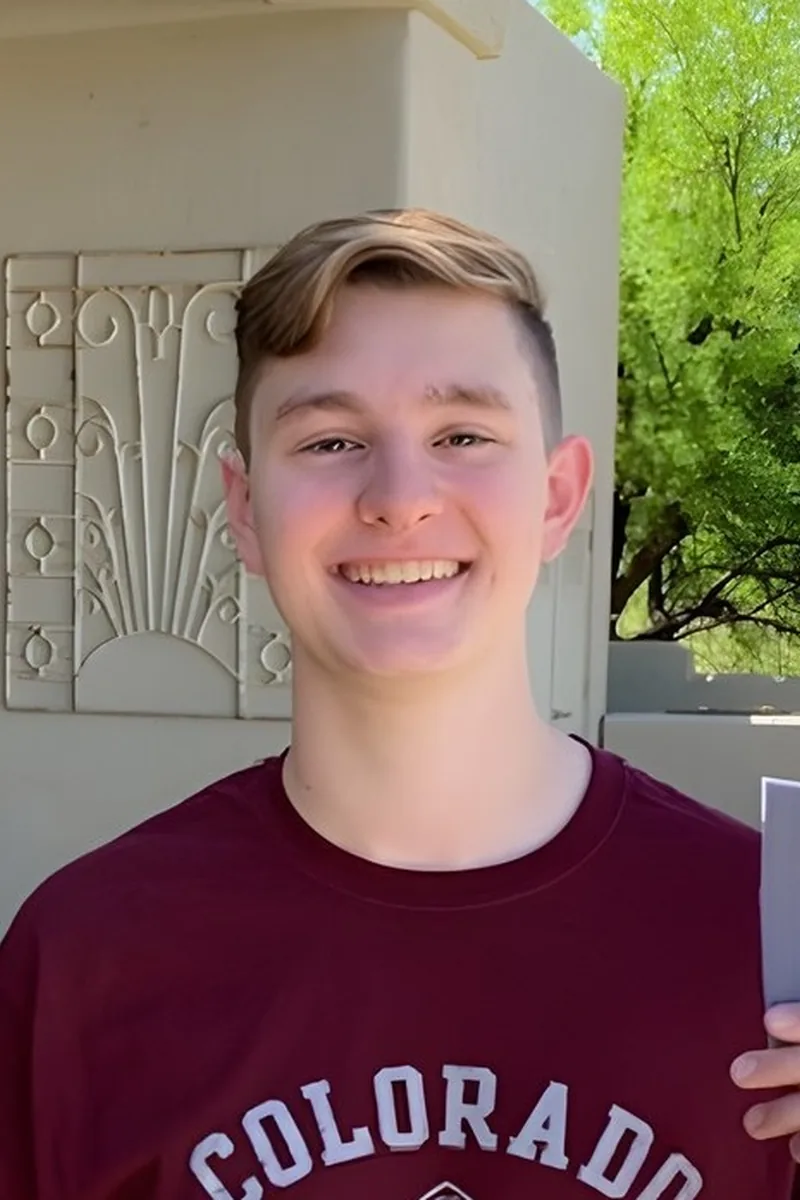
The jump from Pre-Calc to AP Calculus AB is where a lot of students lose confidence, especially around limits, the chain rule, and related rates problems. Jude tackles these by asking targeted questions that push students to discover the logic themselves, making the ideas stick far longer than passive note-taking would. His dual focus on applied math and engineering physics at Colorado School of Mines keeps him fluent in every AB topic.
I am a student at the Georgia Institute of Technology studying Chemical Engineering. For the past several years, I have worked with students extensively. Through hosting events for younger kids to learn about STEM and for older teens to practice empathetic design, I know the importance of teaching students in ways that engage them rather than frustrate them, which I apply to my teaching. I have tutored high school students in a drop-in resource center in various subjects including math of all levels, chemistry, and English, making me adequately equipped in a variety of topics. I have also tutored several students long-term. Establishing relationships with students and exploring their unique learning styles is my favorite part of tutoring. I prioritize helping students discover HOW to learn in a manner that is the most effective for them, so they can begin to use those skills on their own throughout their education. Learning is a lifelong skill that requires practice for improvement; I strive to help my students gain confidence in their ability to learn.
Astrophysics at CU Boulder means Graham uses calculus daily — from modeling orbital mechanics to analyzing rate-of-change problems that mirror real AP exam questions. He breaks down limits, derivatives, and integrals by connecting each concept to the physical intuition behind it, making the Fundamental Theorem of Calculus click rather than just seem like another formula. Rated 5.0 by students.
Computer science at KU's Honors Program means Austin writes code that depends on calculus concepts daily — recursive functions mirror limits, algorithm efficiency ties back to rates of change — so he teaches the AB curriculum with an eye toward what these ideas actually do beyond the exam. He's particularly strong at walking students through the setup of free-response problems, where translating a scenario into the right derivative or integral expression is the real challenge. Rated 5.0 by students.
Limits, derivatives, and integrals each build on the last, so a shaky grasp of one concept can quietly undermine everything that follows. Evan breaks AP Calculus AB into those building blocks, connecting each new rule — chain rule, u-substitution, related rates — back to the graphical and physical intuition that makes it click. His physics background gives him a deep well of real-world examples to draw from.
The leap from memorizing derivative rules to actually understanding what a limit means — and why the Fundamental Theorem ties everything together — is where most AP Calc AB students struggle. Daniel approaches each concept by building the intuition first, then layering on the computation, drawing on his Engineering Physics training at Cornell where calculus is the daily language.
Limits, derivatives, and the fundamental theorem of calculus click faster when a student sees how they connect — not just how to compute them in isolation. Nicholas approaches AP Calculus AB by building intuition around rates of change and accumulation, drawing on the applied math side of his Johns Hopkins engineering program. His 4.8 rating speaks to how well that conceptual clarity translates for students prepping for the AP exam.
Cognitive science at Northwestern taught Amanda to think about how people learn — and she applies that lens to the specific moments in AB Calculus where understanding collapses, like the jump from computing a derivative mechanically to interpreting what it means on a free-response question. Her 36 ACT and prior experience tutoring math at Mathnasium mean the computational side is second nature, freeing her to zero in on the conceptual gaps that actually cost students points. She's especially effective at teaching limits and continuity as a coherent story rather than disconnected epsilon-delta exercises.
Limits, derivatives, and integrals each build on the last, so a shaky grasp of one topic can quietly undermine everything that follows. Brooke tackles AP Calculus AB by connecting each concept back to its graphical and physical meaning — something her engineering training at Duke reinforces every day. She scored a 1550 on the SAT and carries that same precision into calculus.
Cornell's engineering curriculum throws calculus at you from day one — Ravnoor uses derivatives and integrals across his computer science coursework to analyze algorithm efficiency and model computational processes, which keeps the AB material sharp and immediately relevant. He's especially strong at teaching limits and continuity, breaking down the epsilon-delta logic that most students find intimidating into concrete, step-by-step reasoning. Rated 5.0 by students.
Scoring a 1570 SAT and 35 ACT takes the kind of disciplined problem-solving that translates directly into teaching limits, derivatives, and integration techniques at the AB level. Amber zeroes in on the moment students go from mechanically applying the power rule to actually understanding why the Fundamental Theorem ties differentiation and integration together — a shift that unlocks the entire second half of the course. Rated 5.0 by students.
Brett spent his senior year at Syracuse tutoring student athletes through AP-level calculus, breaking down limits, derivatives, and integration techniques for students who needed concepts explained more than once and in more than one way. His engineering background at Penn means he can show exactly how the chain rule or a Riemann sum connects to real problems in science and design.
Limits, derivatives, and integrals click faster when a student sees how each concept builds on the last — and Tim's computational science training at MIT means he can show exactly how those connections work, from the epsilon-delta definition through the Fundamental Theorem. He's tutored every level of high school math up through AP Calculus BC, so he knows precisely where AB students tend to stumble on topics like related rates and accumulation functions.
Public policy analysis at the University of Chicago is surprisingly calculus-heavy — modeling rates of change in population data, interpreting area under cost curves, quantifying how small policy shifts produce outsized effects — which means Noel learned AB-level concepts by actually using them to argue about real decisions. That policy lens makes him especially effective at teaching students how to set up and interpret definite integrals and optimization problems, where understanding what the math means in context is the difference between a formulaic answer and a convincing free-response solution. His 1550 SAT and 4.9 rating back up the analytical precision he brings to every problem.
Rachel treats AP Calculus AB as a course built on a handful of core ideas — limits, the derivative as a rate of change, and accumulation through integrals — and teaches students to see every problem as a variation on those themes. Her economics and strategy studies at Washington University mean she's applying derivatives and optimization regularly outside the classroom. That real-world fluency makes related rates and curve sketching click faster for students.
Caleb's statistics degree at Duke means he doesn't just teach AP Calculus AB procedures — he understands where concepts like limits, derivatives, and the Fundamental Theorem of Calculus lead in higher math. That perspective lets him explain *why* the chain rule or related rates problems work the way they do, giving students a conceptual grip that pays off on the AP exam.
The jump from memorizing derivative rules to applying them on AP free-response questions is where most Calc AB students lose points. Adam breaks down each problem type — related rates, accumulation functions, slope fields — by teaching the reasoning behind setups so students can handle unfamiliar prompts on exam day.
Testimonials
Because the right AP Calculus AB tutor makes all the difference.
Average Session Rating – Based on 3.4M Learner Ratings
Practice AP Calculus AB
Free practice tests, flashcards, and AI tutoring for AP Calculus AB
Nearby AP Calculus AB Tutors
Other Colorado Springs Tutors
Related Math Tutors in Colorado Springs
Frequently Asked Questions
AP Calculus AB covers limits, continuity, derivatives, applications of derivatives, and integrals. The course focuses on understanding rates of change and accumulation, with emphasis on both conceptual understanding and problem-solving skills. Most students spend the year building from foundational limit concepts through integration techniques, preparing for the May AP exam.
Score improvement depends on your starting point and consistency with tutoring. Students who work with tutors on targeted practice typically see gains of 1-2 score points on the 1-5 scale, especially when addressing specific weak areas like derivative applications or integration methods. The key is identifying gaps early and practicing consistently throughout the year—waiting until right before the exam limits potential gains.
Many students struggle with the conceptual jump from algebra to calculus, particularly understanding what derivatives and integrals represent beyond just the mechanics. Pacing is another challenge—the course moves quickly, and falling behind on limits or derivatives makes later topics harder to grasp. Time management on the exam is also critical, as students need to balance multiple-choice and free-response sections while showing clear work.
Your first session focuses on understanding where you stand. A tutor will assess your comfort with prerequisite algebra and precalculus skills, discuss your current progress in the course, and identify specific topics causing confusion—whether that's limits, derivatives, or integrals. From there, you'll develop a personalized study plan that targets your weak areas while reinforcing strengths.
Practice tests are essential—they help you understand the exam format, identify pacing issues, and reveal which topics need more review. Taking full-length practice tests under timed conditions mimics the actual exam experience and builds confidence. Most students benefit from starting practice tests 2-3 months before the May exam, then reviewing mistakes thoroughly with a tutor to avoid repeating errors.
Look for tutors with strong calculus backgrounds—ideally those who've taught or tutored AP Calculus AB specifically and understand both the curriculum and exam format. Experience with Colorado Springs schools is helpful since different districts may emphasize different topics. Most importantly, find someone who can explain concepts clearly and help you understand the 'why' behind calculus, not just the mechanics.
Building confidence through consistent practice and understanding is the best anxiety reducer. Working with a tutor on problem-solving strategies, time management techniques, and reviewing past mistakes helps you feel prepared. Practice tests under timed conditions also reduce anxiety by familiarizing you with the exam experience, so test day feels less like a surprise and more like a familiar challenge.
Starting tutoring early in the school year—ideally by October or November—gives you time to build a strong foundation and address gaps before they compound. If you're struggling with specific topics mid-year, getting help immediately prevents falling further behind. Even students doing well benefit from tutoring in the final 2-3 months to refine exam strategy and practice problem-solving under pressure.
Let’s find your perfect tutor
Answer a few quick questions. We’ll recommend the right plan and match you with a top 5% tutor.