Award-Winning College Chemistry Tutors
serving Colorado Springs, CO
College Chemistry
Tutors in Colorado Springs
Private 1-on-1 tutoring, weekly live classes for academic support, test prep & enrichment, practice tests and diagnostics, and more to elevate grades and test scores.
Based on 3.4M Learner Ratings
UniversitiesSchools & Universities
DeliveredHours Delivered
ProficiencyGrowth in Proficiency
Who needs tutoring?
No obligation. Takes ~1 minute.

Biomedical engineering at UVA meant Colton didn't just take college chemistry — he leaned on it daily through courses in biomaterials, thermodynamics, and biochemistry, where concepts like reaction kinetics and molecular bonding had to actually work in applied contexts. He also served as a TA for Cell & Molecular Biology, so he's practiced at breaking down the overlap between chemistry and biology that trips up so many pre-med and engineering students. Rated 4.7 by students.
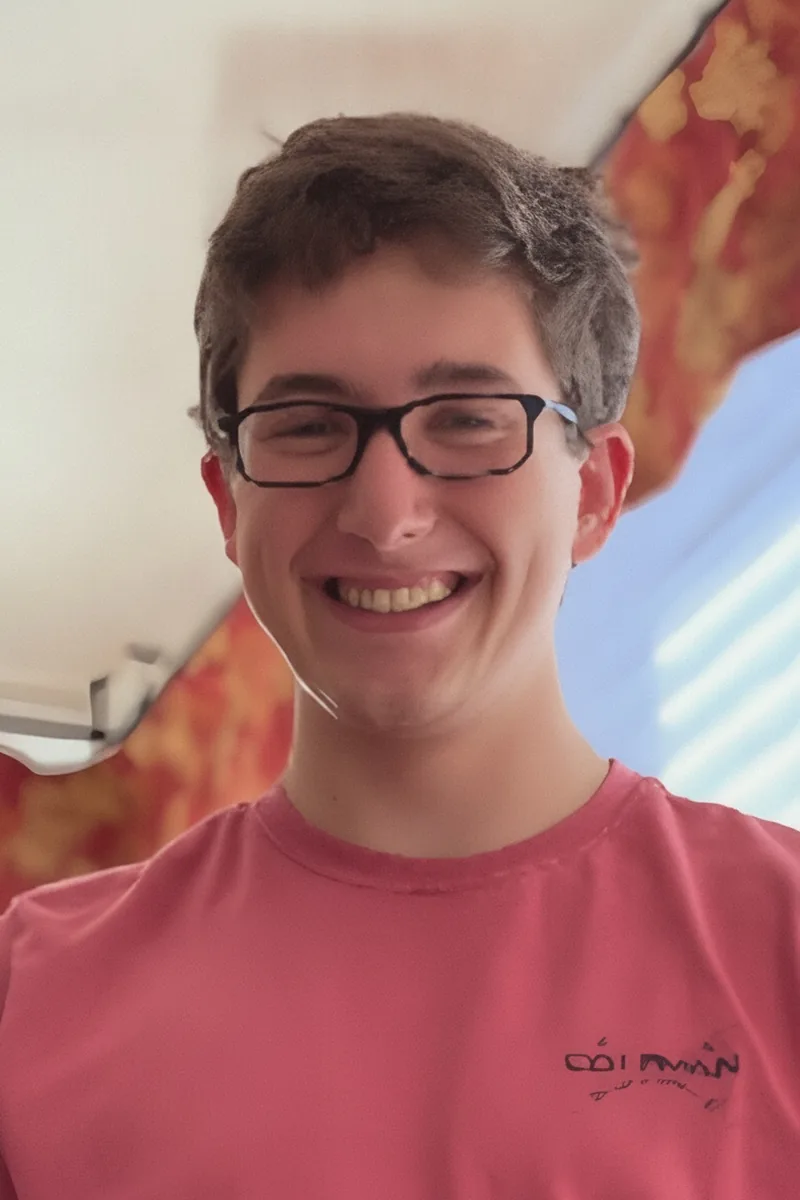
The jump from high school to college chemistry often hits hardest around quantum mechanical models of the atom, thermochemistry, and equilibrium calculations that demand real mathematical fluency. Graham is living that coursework right now as a chemistry major at CU Boulder with a 4.0 GPA, so he knows which textbook explanations actually clarify things and which ones just add confusion. He unpacks derivations step by step so the logic sticks.
Neuroscience at Brown meant Crony couldn't just skim gen chem — courses in neurochemistry and cellular biology demanded real fluency with topics like electrochemistry, molecular interactions, and reaction energetics long after the introductory sequence ended. That background gives him a sharp sense of which college chemistry concepts actually need to be internalized versus merely memorized, especially for students heading into upper-level STEM work. Rated 4.6 by students.
Though political science was her major at the University of Chicago, Asta's tutoring work across both chemistry and quantitative subjects means she's spent real time breaking down the conceptual hurdles in gen chem — balancing equations, working through mole conversions, and making sense of reaction types. Her 5.0 rating speaks to an approach that's honest about meeting the material on its own terms rather than pretending expertise she doesn't have, which students in a tough prerequisite course tend to trust more, not less.
Working in a research lab at UTHealth, Emily applies gen chem principles like reaction kinetics, buffer systems, and molecular interactions at the bench every day — which means she can show students what these concepts look like beyond the textbook problem set. Her biochemistry and cell biology degree built the content depth, and active research keeps it sharp, especially for topics like solution chemistry and thermodynamics where real-world context makes the logic easier to hold onto.
Being a Genetics Head Teaching Assistant at Brown while on the immunobiology track means Jessica has applied gen chem concepts like molecular interactions, reaction energetics, and acid-base chemistry in biological contexts where getting the fundamentals wrong isn't an option. She tackles college chemistry problems by pinpointing whether a student is stuck on the concept or the calculation — a distinction her years in math tutoring centers and science labs taught her to spot quickly. Rated 5.0 by students.
Dental school entrance exams and a microbiology degree meant Daniel had to master gen chem twice — once as an undergrad learning the fundamentals, and again at a higher level when topics like acid-base chemistry, solution concentration, and molecular interactions became the foundation for clinical science. That repetition gives him a sharp sense of which concepts students need to truly internalize versus which ones they can reference, and he teaches accordingly — spending more time on the reasoning behind equilibrium and bonding than on memorizing formulas that won't stick.
Pre-med bio-psychology coursework at UCSB means Aaron has pushed through college chemistry the same way his students are — as a high-stakes prerequisite where every gap in stoichiometry or equilibrium shows up again in upper-division science courses. He talks through problems conversationally, pressing students to explain the reasoning back to him, which exposes shaky understanding far faster than just re-solving practice sets. Holds a 5.0 rating.
Between AP Chemistry, organic chemistry, and inorganic chemistry, Rebecca has covered college-level chemical concepts from multiple angles — but it's her biology background that shapes how she teaches gen chem topics like electron configurations, bonding, and solution chemistry, always tying them back to the biological systems where students will encounter them again. She's especially sharp at bridging the gap between memorizing periodic trends and actually using them to predict reactivity or molecular behavior. Rated 5.0 by students.
General chemistry at the college level lives or dies on whether you actually understand what's happening at the molecular level — equilibrium shifts, thermodynamic spontaneity, orbital hybridization — or just memorize formulas. Mosab's health sciences graduate work means he uses these concepts constantly and can connect them to real biochemical applications. Rated 5.0 by students.
Thermodynamics, quantum numbers, and reaction kinetics all demand the kind of mathematical fluency that comes naturally to Nima as a Duke physics student. He unpacks college chemistry problems by grounding each calculation in the underlying physical principles, which makes topics like enthalpy, molecular orbital theory, and electrochemistry far more intuitive.
Engineering coursework at Harvard means Christopher regularly uses chemistry concepts like thermodynamics, equilibrium, and reaction kinetics in applied settings. He teaches college chemistry by connecting abstract ideas — say, Gibbs free energy or electrochemical cells — to tangible problems, making the material easier to internalize before exams.
MIT's general chemistry sequence is notoriously fast — Vania not only survived it but tutored other students through it via the university's Seminar XL and Tutorial Services Room programs, where she got fluent in the exact places students stall out on topics like thermochemistry, equilibrium, and electron configuration. Her mechanical engineering training means she thinks about chemistry problems quantitatively, tracing how molecular-level behavior connects to the math rather than treating equations and concepts as separate tasks. Rated 5.0 by students.
Fourth-year med student at Albert Einstein College of Medicine, Michael has been applying gen chem principles — acid-base chemistry, reaction thermodynamics, solution behavior — in clinical and biochemical contexts for years, which means he can explain not just how to solve a problem but where that concept resurfaces later. His biology degree from Yeshiva College (summa cum laude) and time teaching MCAT prep for Kaplan gave him practice breaking down the exact topics that trip up college chemistry students: stoichiometry setups, equilibrium expressions, and the leap from qualitative reasoning to quantitative problem-solving.
Testimonials
Because the right College Chemistry tutor makes all the difference.
Average Session Rating – Based on 3.4M Learner Ratings
Nearby College Chemistry Tutors
Other Colorado Springs Tutors
Related Science Tutors in Colorado Springs
Frequently Asked Questions
College Chemistry requires mastering both conceptual understanding and quantitative problem-solving—balancing equations, unit conversions, and stoichiometry often trip up students who memorized formulas without grasping underlying principles. Many students also struggle with visualizing molecular structures and bonding at the atomic level, which is crucial for predicting how reactions occur. Personalized tutoring helps you move beyond memorization to develop the scientific reasoning skills needed to tackle unfamiliar problems on exams and in lab work.
Tutors can help you understand the theory behind experiments before you enter the lab, making your hands-on work more meaningful and improving your lab reports. They can also walk you through data analysis, error evaluation, and how to connect experimental results back to chemical principles you've learned in lecture. This deeper preparation often leads to better experimental design and stronger scientific communication skills.
Your first session focuses on understanding your current level, specific challenges, and learning goals—whether you're struggling with general chemistry concepts, preparing for an exam, or working through a particular unit like thermodynamics or equilibrium. A tutor will assess which areas need the most attention and develop a personalized plan tailored to your course pace and teaching style. This foundation helps ensure every future session builds on your strengths and targets your weak spots efficiently.
Rather than drilling formulas, tutors help you build mental models of how atoms, molecules, and reactions actually work—using analogies, visualizations, and real-world examples to make abstract ideas concrete. When you truly understand *why* a reaction happens or how molecular geometry affects polarity, you can apply that knowledge to new problems instead of relying on memory. This conceptual foundation is especially valuable in College Chemistry, where exams test reasoning and problem-solving, not just recall.
Colorado Springs has a diverse student population across 18 school districts, and College Chemistry courses can vary in pace and emphasis depending on your institution and major. Personalized 1-on-1 instruction adapts to your specific curriculum, instructor's expectations, and learning style—whether you're preparing for pre-med, engineering, or chemistry major requirements. Tutors can also work around your schedule and focus intensively on the exact topics your course emphasizes.
Ideally, starting 3-4 weeks before an exam gives you time to review major units, practice problem-solving, and identify gaps without rushing. However, even 1-2 weeks of focused tutoring can significantly boost your confidence and performance by targeting high-yield topics and teaching test-taking strategies specific to your instructor's style. For cumulative final exams, many students benefit from ongoing tutoring throughout the semester to build a strong foundation from the start.
Look for tutors with strong chemistry backgrounds—ideally a degree in chemistry, biochemistry, chemical engineering, or a related field, plus experience teaching college-level material and familiarity with your specific course topics. It's also valuable if they have lab experience and can explain concepts clearly rather than just working through problems. Varsity Tutors connects you with expert tutors who have been vetted for both subject expertise and teaching ability.
Pricing depends on factors like tutor experience level, session frequency, and whether you need intensive exam prep or ongoing support throughout the semester. Varsity Tutors offers flexible options to fit different budgets and schedules—you can start with a few sessions to see if tutoring helps, then adjust as needed. Contact us to discuss your specific needs and get matched with a tutor whose rates and availability work for you.
Let’s find your perfect tutor
Answer a few quick questions. We’ll recommend the right plan and match you with a top 5% tutor.