Award-Winning Statistics Graduate Level Tutors
serving Olympia, WA
Award-Winning
Statistics Graduate Level
Tutors in Olympia
Private 1-on-1 tutoring, weekly live classes for academic support, test prep & enrichment, practice tests and diagnostics, and more to elevate grades and test scores.
Based on 3.4M Learner Ratings
UniversitiesSchools & Universities
DeliveredHours Delivered
ProficiencyGrowth in Proficiency
Who needs tutoring?
No obligation. Takes ~1 minute.
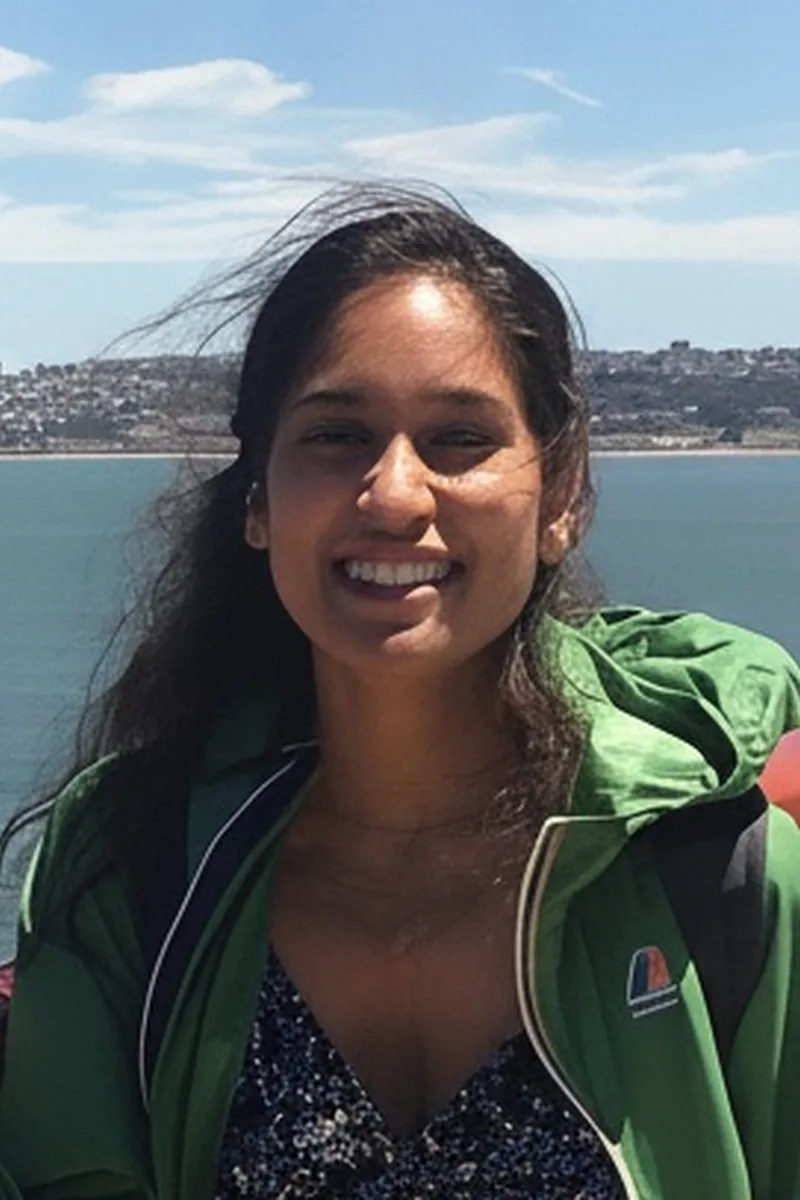
Graduate-level statistics throws curveballs that intro courses never prepare you for — survival analysis, mixed-effects models, high-dimensional inference. Nina earned her master's in biostatistics at Columbia and is currently pursuing her doctorate at NYU, so she's actively immersed in the theory and application behind these methods. She also served as a teaching assistant at Columbia, giving her a sharp sense of where grad students typically get stuck.

Having earned a PhD in Statistics, Sam teaches graduate-level topics like maximum likelihood estimation, Bayesian inference, and multivariate analysis with the depth that comes from years of research-level work. He's particularly strong at bridging the gap between statistical theory and practical application — connecting proofs to the computational tools students actually use in their programs.
Graduate-level statistics demands comfort with proofs and derivations that most intro courses skip — maximum likelihood estimation, Bayesian inference, and the mathematical foundations behind common tests. Brian's Caltech background in economics and computer science gave him deep exposure to these methods in both theoretical and applied contexts, and he breaks down dense notation into intuitive steps.
As a PhD student in economics at Yale, Anthony works with graduate-level statistics constantly — maximum likelihood estimation, regression diagnostics, hypothesis testing frameworks, and Bayesian methods all show up in his research. He brings that working fluency to tutoring sessions, breaking down proofs and derivations in ways that clarify the underlying probability theory. Students tackling measure-theoretic foundations or asymptotic theory get someone who's actively immersed in this material.
Graduate-level statistics throws students into multivariate analysis, hierarchical modeling, and software-driven data work that textbooks alone rarely make clear. Tashina uses MATLAB and Python in her own doctoral research in Psychological and Brain Sciences, so she can walk through both the mathematical theory and the practical implementation side by side. Rated 4.7 by students.
Graduate-level statistics is where psychology and research methods collide, and Jessi has lived that intersection — her psychology degree from Rice and ongoing bioethics work at UPenn mean she's run regressions, interpreted ANOVA tables, and designed studies with real data. She breaks down concepts like multivariate analysis and hypothesis testing by grounding them in the research contexts where they actually matter.
Graduate-level statistics throws students into the deep end — maximum likelihood estimation, mixed-effects models, Bayesian inference — and expects fluency, not just familiarity. Elliot's PhD in Neuroscience required designing and analyzing complex experimental datasets, so he teaches these methods as tools for answering real research questions. Rated 5.0 by students.
Graduate-level statistics demands comfort with concepts like hypothesis testing, regression modeling, and ANOVA that go well beyond intro courses. Dillon's engineering background — including a master's in welding engineering technology — required heavy applied statistics work, from designing experiments to interpreting multivariate data in real research contexts. He teaches the reasoning behind each method so students can choose and defend the right analytical approach.
Graduate-level statistics throws students into the deep end — maximum likelihood estimation, Bayesian inference, multivariate regression diagnostics — and expects fluency, not just familiarity. Evan is currently completing his own graduate work in statistics, so he's actively immersed in the theory and computation these courses demand. He also codes in Python and SQL, which means he can walk through both the mathematical proofs and the applied implementation side.
Graduate-level statistics often means wrestling with multivariate methods, hierarchical models, and software like SPSS, Stata, or R while simultaneously trying to apply them to a thesis or dissertation dataset. Hidefusa's doctoral work in clinical neuropsychology gave him hands-on experience designing studies, running complex analyses, and interpreting output — skills he now breaks down for other graduate students navigating their own research.
Graduate-level statistics demands fluency with proofs and derivations that introductory courses barely touch — moment-generating functions, maximum likelihood estimation, and the theory behind hypothesis testing. Victor's master's in Applied Mathematics gave him direct experience with these topics, and he brings that rigor to sessions while keeping notation and logic organized. He holds a 5.0 client rating.
Graduate-level statistics demands comfort with proofs and distributions that undergraduate courses only sketch — maximum likelihood estimation, sufficient statistics, and the theory behind hypothesis testing. Drisana is actively completing her graduate mathematics degree, so she's immersed in the rigorous thinking these courses require and can unpack dense notation into clear reasoning.
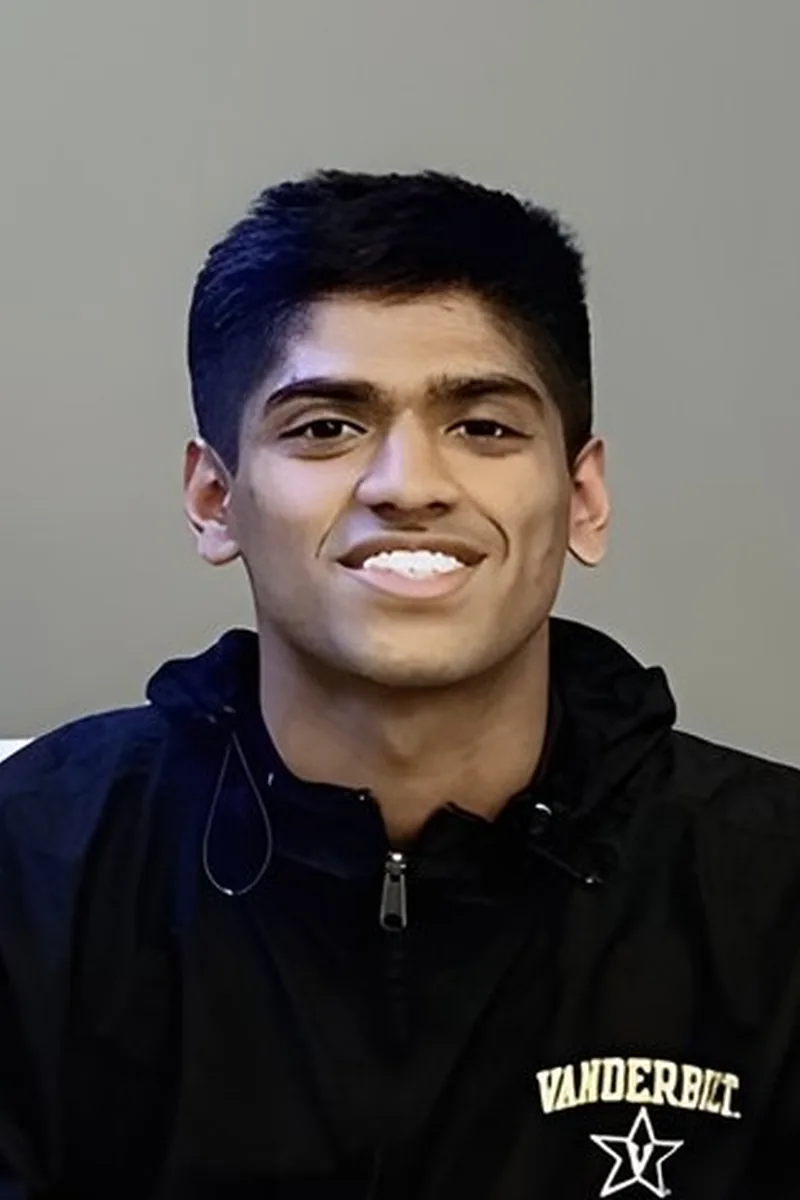
Graduate-level statistics is where Matthew lives professionally — his Master's in Educational Measurement and Statistics at the University of South Florida has him deep in topics like multivariate analysis, psychometrics, and inferential modeling on a daily basis. He's also served as a T.A. and instructor trainee for undergraduate statistics, so he knows how to unpack dense concepts like maximum likelihood estimation or ANOVA assumptions for students who are encountering them for the first time at the graduate level.
I am also interested in tutoring college students preparing for the GRE general test. For test preparation, I assign a decent amount of homework each week and I spend the majority of my sessions going over the questions my students answer incorrectly.
Graduate-level statistics in medical and biomedical research relies heavily on survival analysis, logistic regression, and interpreting multivariate models — all tools Elise used extensively through her M.D. training at Creighton. She breaks down the reasoning behind test selection (why a Cox model instead of a chi-square, for instance) so the methodology clicks rather than just the formulas.
Graduate-level statistics can feel like a different language — survival analysis, multivariate regression, Bayesian inference — especially for students outside traditional math backgrounds. Kimberly runs these methods daily in her Columbia MPH program, where biostatistics is central to public health research. She breaks down the logic behind each technique so students can apply it confidently in their own coursework and thesis work.
Duncan's master's degree in statistics makes him a natural fit for graduate-level coursework in regression analysis, hypothesis testing, ANOVA, and Bayesian methods. He approaches each topic by connecting the mathematical theory to the practical decisions students need to make — choosing the right model, interpreting output, and defending assumptions. His 5.0 client rating speaks to how clearly he breaks down even the most notation-heavy material.
Graduate-level statistics often demands fluency with multivariate analysis, mixed models, and experimental design — topics Dan tackled extensively during his Master's in Plant Biology and Conservation, where statistical modeling was central to his research. He breaks down the logic behind tests like ANOVA, regression diagnostics, and maximum likelihood estimation so the methodology clicks, not just the software output. Rated 5.0 by students.
Graduate-level statistics demands fluency with topics like maximum likelihood estimation, multivariate distributions, and regression diagnostics that go well beyond introductory coursework. Dana holds a degree in statistics and is pursuing PhD-level economics research involving econometrics, so she's actively working with these methods. She unpacks the mathematical theory behind statistical procedures while keeping the applied interpretation clear.
Graduate-level statistics demands comfort with mathematical proofs and distribution theory that undergraduate courses barely touch — moment-generating functions, maximum likelihood estimation, Bayesian inference. Sabry's Ph.D. training in Chemical and Biomolecular Engineering required rigorous statistical modeling for experimental data, so he approaches these topics as tools with real stakes, not just textbook exercises. He's particularly effective at connecting abstract theory to applied research contexts.
Graduate-level statistics throws curveballs that intro courses never touch — multivariate regression, hierarchical modeling, interaction effects in complex datasets. As a psychology PhD student who runs her own research analyses in SPSS, Kate teaches these methods through real study designs rather than abstract formulas, making output interpretation second nature.
I am highly praised by my students and supervisors. Even today I still kept the communication with many students.
Graduate-level statistics throws students into maximum likelihood estimation, Bayesian inference, and multivariate analysis — territory where intuition from introductory courses often breaks down. Irene holds a Ph.D. in Mathematics and Computer Science, which means she can unpack the measure-theoretic foundations behind concepts like convergence in distribution or sufficiency. She's particularly effective at bridging the gap between abstract proofs and applied problem sets.
I am currently finishing my thesis. For the past two years I was an adjunct instructor at The City College of New York, teaching statistics and introductory neuroscience, where I learned the importance of communicating complicated concepts clearly at an individualized level. All of my classes performed above average, and I discovered how satisfying it is to help people understand difficult ideas. I've found that by creating a good rapport with my students I am able to more effectively impart difficult concepts to them while causing them less stress. My passion is people, which first led me to study psychology, leading to my work in statistics, and later into teaching.
Graduate-level statistics demands fluency with theory — sufficiency, maximum likelihood estimation, Bayesian inference, and the mathematical underpinnings that introductory courses skip. Bahaeddine earned his PhD in Statistics and teaches at the university level, so he can walk through measure-theoretic probability or asymptotic theory with the rigor a graduate program expects.
Graduate-level statistics lives and dies in the details — knowing when to apply a two-way ANOVA versus a mixed-effects model, or interpreting interaction terms in a multivariate regression. William's MBA training grounded him in applied statistical methods, from hypothesis testing and confidence intervals to the kind of real-world data analysis that thesis committees actually scrutinize. He breaks down output from SPSS or Excel so students understand what every p-value and coefficient truly means.
Graduate-level statistics moves quickly from probability theory into regression modeling, hypothesis testing frameworks, and ANOVA designs that require both mathematical rigor and software fluency. Juan is completing a statistics degree at the University of Florida alongside his engineering program, so he's immersed in these methods right now — from Bayesian inference to experimental design. His 4.9 rating speaks to how clearly he communicates dense material.
Graduate-level statistics demands fluency with concepts like maximum likelihood estimation, Bayesian inference, and multivariate distributions that go far beyond introductory coursework. Yuanxin's master's in financial engineering at USC required exactly this depth — she built and analyzed stochastic models where getting the statistics wrong meant getting the entire financial model wrong.
Graduate-level statistics demands fluency with concepts like maximum likelihood estimation, hypothesis testing frameworks, and regression diagnostics — all of which Shoaib uses regularly in his economics research at Rutgers. His master's coursework involved heavy econometric modeling, so he can unpack the intuition behind proofs and derivations that textbooks often gloss over.
Victor earned his B.S. in Economics with a statistics concentration from Purdue, where he tackled regression analysis, hypothesis testing, and probability distributions as core coursework. That quantitative foundation, combined with his time as a Supplemental Instruction Leader, means he can unpack dense concepts like multivariate analysis or ANOVA in ways that actually click. Rated 5.0 by students.
Graduate-level statistics throws students into multivariate analysis, ANOVA designs, and regression modeling where the intuition behind each test matters as much as running it. Macklin applies these methods daily as a medical student analyzing clinical research data, so he teaches the reasoning behind choosing a test — not just the formulas. Rated 5.0 by students.
Graduate-level statistics in the health sciences — biostatistics, survival analysis, logistic regression — requires more than formula memorization; it demands understanding which test fits which study design and why. Julia's Doctor of Science in Pharmacy means she's applied these methods firsthand in clinical research contexts, interpreting p-values and confidence intervals with real patient data on the line. She teaches students to think like researchers, connecting statistical output back to the questions driving the analysis.
Graduate-level statistics demands comfort with concepts like maximum likelihood estimation, Bayesian inference, and hypothesis testing frameworks that go well beyond intro courses. Abhi's M.S. in Data Science from UIUC and current PhD work at NYU mean he uses these tools daily in research — he teaches the theory alongside the practical intuition for when and why each method applies.
Graduate-level statistics demands comfort with proofs and derivations that undergraduate courses often skip — moment-generating functions, maximum likelihood estimation, and the theoretical machinery behind hypothesis testing. Aaron brings a PhD mathematician's rigor to these topics, walking through measure-theoretic ideas and convergence arguments with the care they require.
Graduate-level statistics demands more than plugging data into software — it requires understanding why a likelihood ratio test applies in one scenario and a Wald test in another. Mayuri's PhD in Physics meant designing experiments and running advanced statistical analyses firsthand, from Bayesian inference to multivariate regression. She breaks down the mathematical derivations behind each method so the theory clicks alongside the application.
Graduate-level statistics demands comfort with proofs, distributions, and inference methods that go well beyond intro courses. Dana's Master's in analytics from Georgia Tech and her current PhD research in economics give her deep fluency with topics like maximum likelihood estimation, hypothesis testing frameworks, and regression theory. Rated 4.8 by students, she brings both the mathematical rigor and the applied intuition this level requires.
Seven years of experimental psychology research means Anna doesn't just teach graduate statistics — she uses it daily, from designing multivariate models to running hierarchical regressions and interpreting interaction effects. Her PhD work at Saint Louis University required mastering advanced techniques like structural equation modeling and mediation analysis, so she teaches these methods with the fluency of someone who actually applies them. Rated 4.9 by students.
Graduate-level statistics demands more than running tests — it requires understanding why you'd choose a mixed-effects model over a fixed-effects one, or when bootstrapping outperforms parametric assumptions. Snipta's computer science and cognitive science training at UT Dallas, plus hands-on research at the National Institutes of Health, means she's applied techniques like Bayesian inference and multivariate regression to real datasets, not just textbook exercises.
Graduate-level statistics trips up many students at the transition from descriptive methods to inferential reasoning — hypothesis testing, regression analysis, ANOVA, and the assumptions underlying each technique. Jason teaches these concepts at a technical college in Pittsburgh, which means he's constantly translating statistical theory into applied, real-world problem solving. His math and education background lets him break down dense material into steps that actually make sense.
Graduate-level statistics demands fluency with techniques like multiple regression, ANOVA, and non-parametric methods — often learned under pressure in programs that assume prior comfort with the math. Lindsay is completing her Ph.D. in Developmental and Educational Psychology at Boston College, where she applies these methods to her own research, so she teaches them as practical tools rather than abstract formulas.
Testimonials
Because the right Statistics Graduate Level tutor makes all the difference.
Average Session Rating – Based on 3.4M Learner Ratings
Other Olympia Tutors
Related Math Tutors in Olympia
Frequently Asked Questions
Varsity Tutors matches Olympia students with expert Statistics Graduate Level tutors for 1-on-1 instruction. We pair each student with a tutor based on their specific needs, learning style, and goals.
Whether you need homework help, exam prep, or want to get ahead, our Statistics Graduate Level tutors are ready to help.
Common challenges include gaps from earlier material, difficulty with specific concepts, and trouble applying learning to new problems. These issues can snowball quickly in Statistics Graduate Level.
A tutor identifies where you're stuck, fills in gaps, and provides targeted practice. The 1-on-1 format means you get help exactly where you need it.
Tutors work with your student's actual coursework—homework assignments, class notes, and upcoming tests. This keeps tutoring directly relevant to what's happening in the classroom.
When you share information about your student's school and curriculum, we can match you with a tutor who has relevant experience.
All tutors complete background checks, credential verification, and teaching evaluation. Many of our Statistics Graduate Level tutors hold advanced degrees or have years of teaching experience.
You can review tutor profiles to find someone with the right background for your student's level and needs.
Many students see improved grades within a few weeks, along with better understanding of Statistics Graduate Level concepts and more confidence tackling challenging material.
Tutors track progress and adjust their approach to ensure continued improvement.
Most students benefit from 1-2 sessions per week. More frequent sessions help if your student is significantly behind or has an important exam coming up.
Your tutor can recommend a schedule based on your student's specific situation and goals.
Tutoring is purchased in packages of hours, with rates varying by tutor experience. Varsity Tutors offers several options to fit different budgets and needs.
You can discuss pricing during your consultation to find what works best.
Your tutor will assess where your student is, discuss goals, and start working on priority areas. Most students bring current homework or upcoming test material to focus on.
By the end, you'll have a clear sense of how the tutor can help and a plan for moving forward.
Let’s find your perfect tutor
Answer a few quick questions. We’ll recommend the right plan and match you with a top 5% tutor.