Award-Winning SAT Math Tutors
serving Dayton, OH
SAT Math
Tutors in Dayton
Private 1-on-1 tutoring, weekly live classes for academic support, test prep & enrichment, practice tests and diagnostics, and more to elevate grades and test scores.
Based on 3.4M Learner Ratings
UniversitiesSchools & Universities
DeliveredHours Delivered
ProficiencyGrowth in Proficiency
Who will be getting tutoring?
No obligation. Takes ~1 minute.

I am a Yale graduate with over 8 years experience tutoring students from a variety of backgrounds. I recently graduated from the Yale School of Public Health with a MPH concentrating in Epidemiology and Global Health. I also received my B.S. from Yale with a double major in Molecular, Cellular, and Developmental Biology and French. I have experience both leading group classes and working with students one on one. I will respond to a student's strengths, weaknesses, and learning style in order to help them succeed and make the most of our time together. I earned a perfect score of 36 on the ACT, 2280 on the SAT, and qualified as a National Merit Scholar on the PSAT. I look forward to working with you!
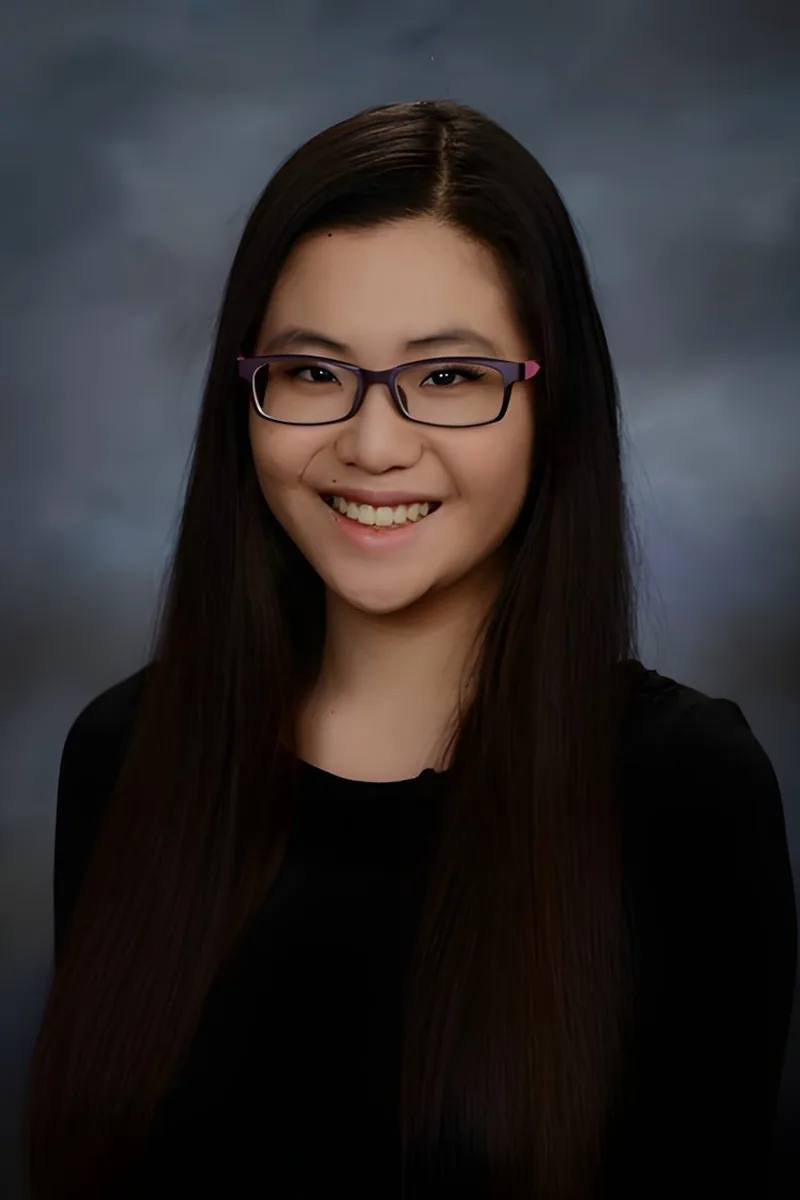
I am a current sophomore at Vanderbilt University! I am double majoring in Public Policy and Human & Organizational Development with a minor in Spanish. I first started tutoring in high school, when I started working at Kumon Learning Center and began teaching elementary and middle school students reading and mathematics. I also volunteered my tutoring services through my high school's National Merit Society, through which I helped my peers in advanced subjects such as AP testing, ACT, SAT, and PSAT prep.
I am usually someone they ask. I love reading and writing. I am a big believer in the importance of critical thought and creative problem solving. I am excited to work with you.
I am currently a senior at Johns Hopkins studying Biomedical Engineering. I have a lot of experience tutoring in math, physics, chemistry, and thermodynamics. I have also proof-read essays for college applications and english classes as well. Outside of school I like to cook, play basketball, and listen to music.
I am passionate about teaching because I love helping someone understand and become confident in a concept that previously baffled them. I am a student at The Ohio State University working towards a Computer Science degree. I have experience tutoring math up through AP Calculus BC, French, and AP Literature. My experience in tutoring comes from the free weekly French tutoring program I initiated at my high school, which grew to me tutoring other subjects as well. My teaching philosophy involves discussion and helping the student come to an answer themselves, which allows the topic to stick. Because of this one of my favorite subjects to tutor is writing. Writing tutoring helps the student grow and allows them to see the problems in their writing themselves. Outside of academia I enjoy calligraphy and playing piano.
I'm a recent college graduate with degrees in Biological Sciences and Russian from Ohio University. During my time there, I tutored students in a variety of subjects, including biology, chemistry, and Spanish. In addition, I worked as both a peer advisor and teaching assistant, which gives me insight into the learning strategies and study skills that students need to succeed. As a tutor, I like to focus on doing actual problems with students because it is the most effective way to immediately identify their strengths and weaknesses and to address them. In my free time, I like to lift weights, read books, and spend time with my friends.
Kevin earned a 1550 SAT alongside his 36 ACT, so he knows exactly where the two math sections diverge — the SAT leans harder into multi-step word problems, data interpretation, and algebraic reasoning that rewards setting up equations carefully over grinding through calculations. He breaks down the no-calculator section's trickiest question types, like systems of equations and quadratic modeling, into repeatable strategies. His engineering training at Case Western Reserve keeps him sharp on every concept the test covers.
Scoring 1570 on the SAT gave Vinay a sharp sense of where the Math section sets traps — especially in passport-to-advanced-math questions involving quadratics, nonlinear systems, and function transformations. His mathematics-economics degree from UCLA means he doesn't just know the shortcuts; he understands the algebra deeply enough to explain why each one works. Students walk away with both the conceptual grounding and the pacing instincts to finish confidently.
I am a rising sophomore at Columbia University in the City of New York, a member of the Ivy League, where I have compiled a track record of academic success across a variety of disciplines including my majors in History and Political Science. I currently maintain a 3.96 GPA, with especially strong success in social science related fields and English courses. I am living in our Writers House next year, a selective, competitive residential space for students interested in a career in writing.
I'm entering my senior year at Case Western Reserve University. I'm happy to provide tutoring services for those interested in improving their academic performance or exam preparation. The subjects which I am most proficient include SAT Math, Algebra 1 , Algebra 2, Middle School Math, Pre-Algebra, Pre-Calculus, and Trigonometry.
Scoring 1570 on the SAT, Priya knows the math section inside out — from the no-calculator portion's emphasis on algebraic manipulation to the calculator section's data analysis and advanced function questions. She teaches students to recognize which problems are testing concepts they already know in disguise, a skill that eliminates second-guessing and saves critical minutes. Her mathematics major means she can also explain the underlying logic when a student wants to understand why a shortcut works.
Biology and economics coursework means Sunny has spent years toggling between quantitative reasoning and data interpretation — the exact skill set the SAT Math section leans on hardest in its tables, scatterplots, and real-world modeling questions. He scored a 1550 on the SAT and is especially effective at teaching students to work through the algebra-heavy problems without a calculator by building number-sense habits that replace brute-force computation. Rated 5.0 by students.
Most students don't associate art history with math, but Elana's 1550 SAT came from the same close-reading discipline she applies to visual analysis — on the SAT Math section, she teaches students to dissect word problems and data tables with that same precision, pulling out exactly which values matter before setting up an equation. She's especially sharp on the geometry and coordinate-plane questions where sketching a quick diagram unlocks the answer faster than any formula.
I am a current student at the University of Pennsylvania majoring in English and minoring in journalism and art history. I am very passionate about literature, writing and history, and I love sharing my knowledge and learning new things. In the past few years, I have worked with young children learning to read and high school Latin students, and I also love working with students on improving Standardized Test results. In my spare time, I love reading, music and anything active!
Medical school admissions forced Hyerin to master the SAT herself — her 1470 composite means she's recently tackled the same algebra-heavy, time-pressured questions her students face. Her economics degree built the quantitative instincts that make the section's data-analysis and percent-change problems feel like second nature, and she teaches students to convert the SAT's deliberately tricky wording into straightforward arithmetic before solving. Rated 4.9 by students.
I am a student and life-long learner who is currently between undergraduate and graduate school. In May 2015, I received a Bachelor of Science in Behavioral Neuroscience and Biology from Centre College, and in September 2015, I will attend The Ohio State University to work towards a PhD in neuroscience. Throughout my academic journey, I have been guided by incredible teachers who have served as friends, mentors, and role models. I see teaching as a way to give back to my role models by passing down their knowledge to future generations of students. My well-rounded liberal arts education qualifies me to tutor a variety of subjects including algebra, biology, psychology, reading, and writing. As a neuroscience and biology double-major, I have an especially strong background in psychology and biology; however, I am also passionate about reading and writing as aptitude in these subjects forms the foundation of effective communication and comprehension of all other subjects. My teaching philosophy emphasizes individual learning and personal attention. I graduated from a small college where this philosophy is considered paramount, and by working as a teaching assistant there, I developed my skills as a teacher capable of providing a personalized education. In my spare time, I enjoy traveling, reading poetry and fiction, hiking, and training for my first marathon.
Data analytics coursework at Ohio State means Vishank spends his days manipulating equations, interpreting datasets, and building statistical models — all skills the SAT Math section tests through its algebra-heavy and data-interpretation questions. He earned a 1490 on the SAT himself and knows which problem types reward careful setup over speed, particularly the quadratic and systems questions where a clean first step prevents cascading errors. Rated 4.9 by students.
I am very familiar with both the SAT and the ACT and look forward to working with you!
Scoring 1520 on the SAT gave Nathan firsthand insight into how the math section tests algebraic reasoning and data analysis under pressure. He teaches students to recognize the handful of recurring problem structures — linear systems, percent change, scatterplot interpretation — so that even unfamiliar-looking questions feel solvable on test day.
I'm ready to help with your last-minute term paper crisis or your SAT/ACT stress. I am a senior at Denison University majoring in History and concentrating on American history, so I'm just the right person to help you find strategies and tools for your APUSH test, government paper, or social studies assignment.
Scoring 1540 on the SAT, Patrick knows the math section inside out — including the no-calculator portion where algebraic fluency and number sense matter most. He teaches students to recognize which problems reward setting up equations and which are faster with strategic back-solving or plugging in values. That kind of question-level awareness is what turns a good math student into a high scorer.
Maxwell scored a 1520 on the SAT and brings a mathematician's eye to the Math section, where the difference between a good score and a great one often comes down to spotting shortcuts in quadratic and systems-of-equations problems. He drills students on translating word problems into algebra quickly, then checking answers by back-substitution — a habit that eliminates careless errors under time pressure.
Scoring well on SAT Math often comes down to recognizing which algebraic setup a word problem is really asking for — systems of equations disguised as ticket sales, or quadratic models hidden in projectile scenarios. Karen scored 1530 on the SAT and teaches students to translate problem language into equations before reaching for a calculator. She's particularly effective at closing the gap between "almost there" scores and target numbers.
I'm going to fail, might as well not do it alone." I started working on homework with her and started to realize that I learned best when I taught others! Soon, I started "tutoring" many of my other pre-med friends in the same class and aced Chemistry! Since then, I've found a growing love for teaching others all sorts of subjects- especially all pre-medical sciences and the bible and it was my ticket into medical school! Still, medical school always hung on a string of doubt in my heart as I feel in love with teaching/ tutoring through teaching science and the bible so I eventually gave up medical school and started working at a school as a teaching aide with no idea if teaching was the path I should be on or not. Lo and behold near the end of the year, my school offered me a position and opportunity to become a certified teacher and here I am today working towards that and hoping to teach abroad someday!
Jacob's MA in Mathematics means the SAT's trickiest content — quadratic transformations, systems with no solution, abstract ratio setups — is territory he's covered at a graduate level and can break down without overcomplicating it. His 1540 SAT speaks for itself, but what matters more is his ability to teach students the underlying reasoning so they can handle unfamiliar problem variations on test day, not just the ones they've drilled.
Scoring 1530 on the SAT herself, Sarah knows the difference between understanding math and understanding SAT Math — the test rewards students who recognize problem structures and avoid common traps in areas like quadratic modeling, systems of equations, and data interpretation. She walks through each question type with an eye on both accuracy and the clock.
Hello! My name is AJ Eustace. I have five years of private tutoring experience working with students from middle school through college. I graduated from the University of Virginia with a double major in Statistics and Economics, and I'm currently enrolled in a Master of Social Work program at Ohio State. I specialize in helping students succeed in their math courses, particularly in algebra, geometry, and pre-calculus.
I'm looking forward to helping your student find personal success in their academic lives!
I am a senior at Miami University. I am studying Early Childhood Education and Spanish. I also spent two years studying biology. I can't wait to work with you!
I'm a rising senior at Brown University studying Modern Culture and Media and Literary Arts. I've worked as a reading tutor at the Cuyahoga County Public Library, taught comic book and screenwriting classes at Lake Erie Ink, coached Speech and Debate, and I currently work as a Writing Fellow at Brown, a role in which I offer students feedback regarding their academic writing. When it comes to tutoring, I'm most passionate about history, literature, and writing, but I'm also proficient in tutoring in a number of subjects, including standardized tests and high school math and latin. I really enjoy working with students, and I try to tailor my tutoring style to each student's individual needs.
I am currently working towards a BS in Music Education at Case Western Reserve University. In the past I have worked with middle school orchestra students at an arts summer camp, where I was a volunteer Teacher's Assistant. During this camp I ran sectionals with small groups of students and sat in with the violinists to help individual students in large group rehearsals. I have some tutoring and organization experience by working with my high school's chapter of the California Scholarship Federation, where we offered free tutoring to other high school students. I am most passionate about tutoring algebra and pre-calculus, because I really enjoy the problem-solving aspects of math. I also tutor English and SAT prep. In my free time I enjoy cooking, reading, and practicing as many different instruments as I can get my hands on!
I am very familiar with the preparation that goes into taking standardized tests and completing pre-college curriculum, and I try to teach these subject in ways that are applicable throughout a student's education down the road.
I am enrolled in Calculus and Biochemistry this semester. In my spare time, I walk in the Arboretum, play video games and deal with my medical school applications.
I am a complete Harry Potter nerd. I also love music- Handbells, Choir, Piano, Band, Percussion, all that jazz.
I am a Third Year Actuarial Science and Finance Student at the Ohio State University (Go Bucks!).
I am a recent college graduate looking for opportunities to tutor and get involved with education before I attend medical school this fall. I have a bachelor's of science from the University of Akron and my academic areas of focus where I am best prepared to teach are animal and cell physiology, immunology, biochemistry, and preparing for the MCAT. I took the MCAT this past January and am hoping to share some of the techniques that worked for me while the test is still fresh in my mind. For the ACT I would feel comfortable teaching the reading and science sections since those are my strong points.
I am a rising sophomore at Kenyon College, a small liberal arts school an hour out of Columbus, Ohio, majoring in Philosophy. It is difficult to identify a specialty of mine because I have worked with students from 1st grade through high school on topics ranging from elementary science to trigonometry test prep, but my foremost strength is the three sections of the SAT. I have roughly three years of experience tutoring and last year taught a test prep class. My approach to tutoring is to identify a students strengths and build upon them through frequent quizzes and reflective analysis. Additionally, having just gone through the college admissions process, I am privy to its length and complexity so can lend advice on anything, namely essays. I have plenty of experience writing and have been published in a local newspaper. While I think math is the easiest subject for me to teach, writing and writing skills are my favorite to teach because to see a writers progress is an extraordinary sight and, further, challenge.
I am most interested in tutoring Math (geometry, algebra 1/2/prealgebra, trigonometry), Physics 1 and 2, General Chemistry (Honors, AP, or college level), and the MCAT Foundations of Physical Science and Critical Analysis and Reasoning sections.
The SAT Math section rewards students who can move fluidly between algebra setups and real-world contexts — and Christine's biology training at UChicago means she's spent years doing exactly that with quantitative data, growth models, and statistical analysis. Her 1570 SAT speaks for itself, but what she actually teaches is how to avoid the section's traps: misreading what a question asks, second-guessing a clean algebraic setup, or burning time on a brute-force approach when a shortcut exists. Rated 4.9 by students.
Scoring a 1470 on the SAT gave Timothy firsthand insight into how the Math section tests algebraic reasoning and data interpretation in ways that look different from classroom problems. He walks students through the specific question formats — multi-step word problems, scatterplot analysis, systems of equations — and shows how to avoid the traps the test designers build in.
Testimonials
Because the right SAT Math tutor makes all the difference.
Average Session Rating – Based on 3.4M Learner Ratings
Practice SAT Math
Free practice tests, flashcards, and AI tutoring for SAT Math
Other Dayton Tutors
Related Test Prep Tutors in Dayton
Frequently Asked Questions
Score improvement depends on your starting point and how consistently you apply strategies learned in tutoring sessions. Students typically see meaningful gains—often 50-100+ points—when they work with a tutor to identify weak areas, learn test-specific strategies, and practice with real SAT problems. The key is combining personalized instruction with regular practice between sessions to reinforce concepts and build test-taking confidence.
Many students struggle with pacing—managing the 80-minute window across 58 questions—and distinguishing between what a question is actually asking versus what seems obvious at first glance. Others find the geometry and trigonometry content unfamiliar or struggle with word problems that require translating real-world scenarios into equations. Varsity Tutors connects you with tutors who specialize in breaking down these specific pain points and teaching strategies to work through them efficiently.
Expert tutors typically start by reviewing your practice test results and past assignments to spot patterns—whether you're consistently missing algebra questions, geometry problems, or specific question types like grid-ins. They'll also work through problems with you in real-time to understand your thinking process and identify whether struggles stem from conceptual gaps, careless mistakes, or time management issues. This diagnostic approach ensures your tutoring focuses on areas that will have the biggest impact on your score.
Practice tests are essential—they're the best way to simulate test conditions, identify weak areas, and build stamina for the full 80-minute section. Taking full, timed practice tests helps you understand your pacing, reveals which question types trip you up, and builds confidence before test day. Tutors often use your practice test results to guide instruction and track your progress over time, making them a cornerstone of effective SAT Math preparation.
Most students benefit from 2-4 months of focused preparation, though this varies based on your starting score and target score. If you're aiming for significant improvement, more time allows for deeper concept mastery and multiple practice tests. Working with a tutor helps you use your study time efficiently—prioritizing high-impact topics and strategies rather than spending weeks on concepts you've already mastered.
Test anxiety often stems from uncertainty about what to expect or doubt in your problem-solving abilities. Personalized tutoring builds confidence by familiarizing you with every question format, teaching you reliable strategies to tackle tough problems, and giving you repeated practice in low-pressure environments. As you master concepts and see your practice test scores improve, anxiety naturally decreases—you'll know you're prepared.
Effective strategies include spending 30-45 seconds on easier questions to build momentum, flagging harder problems to return to later, and knowing when to skip versus guess strategically. Many students benefit from working through the test in order of difficulty (easy to hard) rather than sequentially, which helps maximize points in the time available. Tutors teach these pacing techniques and help you practice them repeatedly so they become automatic on test day.
Your first session typically focuses on understanding your goals, reviewing your practice test results or past performance, and identifying which topics and question types need the most work. The tutor will also assess your problem-solving approach and test-taking habits to understand where to focus efforts. From there, you'll develop a personalized study plan tailored to your timeline and target score, ensuring every session moves you closer to your goal.
Let’s find your perfect tutor
Answer a few quick questions. We’ll recommend the right plan and match you with a top 5% tutor.