Award-Winning Geometry Tutors
serving Dayton, OH
Geometry
Tutors in Dayton
Private 1-on-1 tutoring, weekly live classes for academic support, test prep & enrichment, practice tests and diagnostics, and more to elevate grades and test scores.
Based on 3.4M Learner Ratings
UniversitiesSchools & Universities
DeliveredHours Delivered
ProficiencyGrowth in Proficiency
Who needs tutoring?
No obligation. Takes ~1 minute.
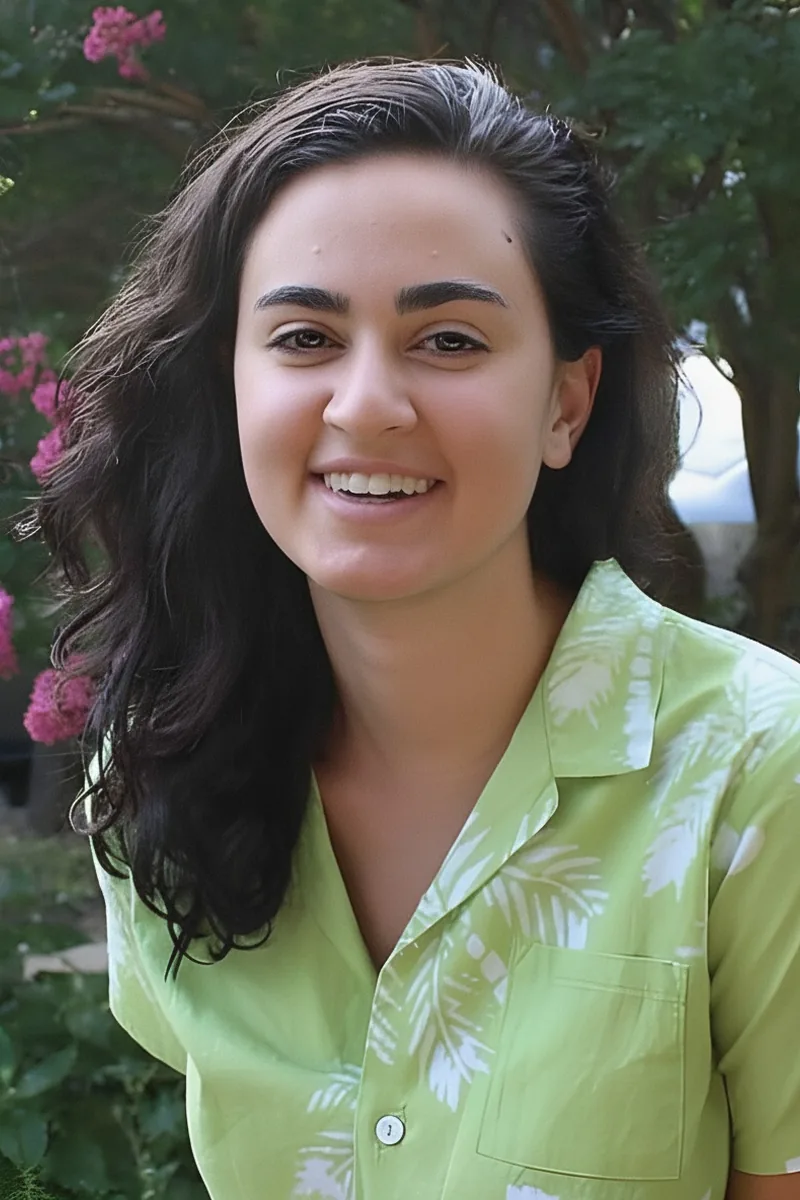
Proofs are usually the sticking point in geometry — students can calculate angles and areas but freeze when asked to construct a logical argument about congruence or similarity. Christine approaches proof-writing the way she learned to structure engineering reports at Johns Hopkins: identify what you know, state what you need to show, and connect the two with clear reasoning.
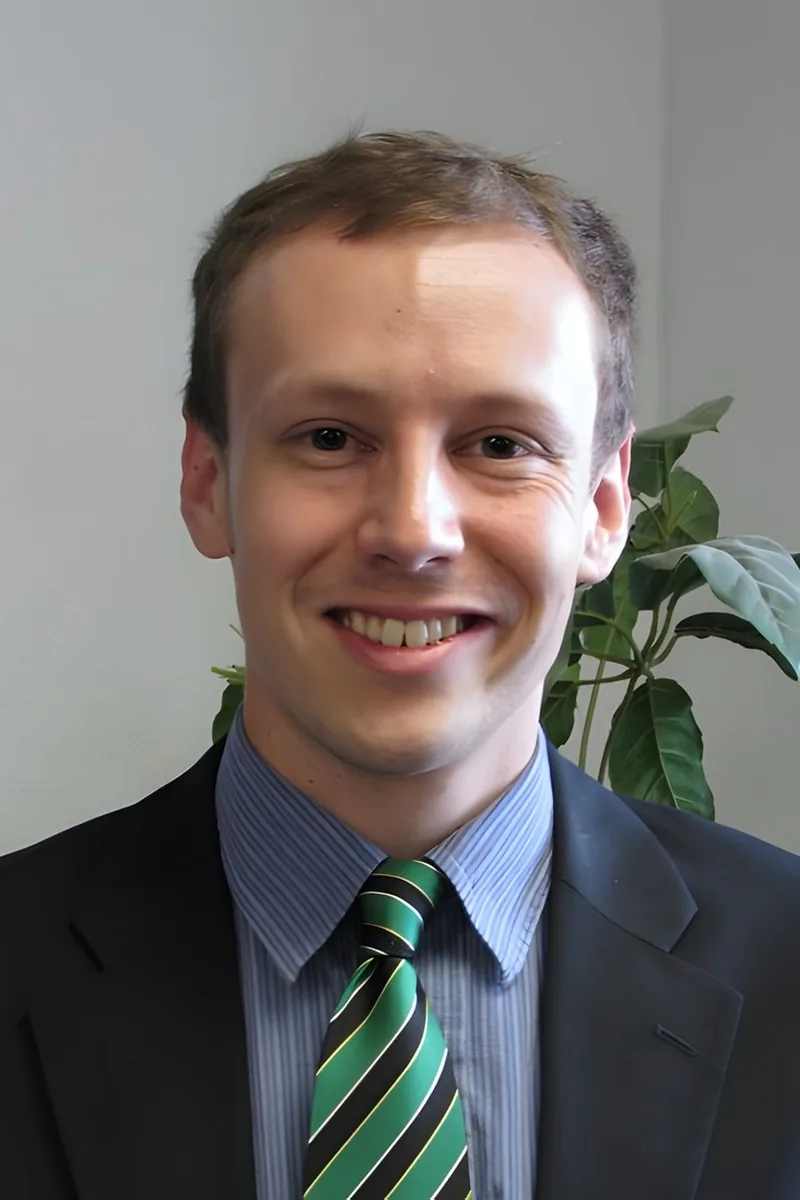
Proofs are usually the sticking point in geometry — students who've been comfortable computing answers suddenly have to construct logical arguments about congruence, similarity, or parallel lines. Samuel walks through proof structure step by step, treating each one like a puzzle where the given information and the goal dictate the strategy. He's known for his patience with this shift in mathematical thinking.
Holding dual degrees from UCLA in biology and mathematics-economics, Vinay brings an unusual ability to toggle between abstract reasoning and concrete problem-solving — exactly what geometry demands when a student has to move from reading a diagram to constructing a formal proof. He unpacks circle theorems and polygon properties by tying them back to the algebraic foundations students already have, closing gaps before they compound. Rated 5.0 by students.
Proofs and spatial reasoning trip up a lot of geometry students because the subject demands a different kind of thinking than arithmetic ever did. Rahul breaks down concepts like similarity, congruence, and angle relationships by encouraging students to reason through problems logically rather than hunt for formulas to apply. His engineering training at Cornell reinforced exactly this kind of structured, visual problem-solving.
Proofs are usually where geometry students panic, but Priya treats them as puzzles — each theorem is a tool, and the challenge is figuring out which ones to use and in what order. Her mathematics training at Vanderbilt means she's comfortable moving between visual intuition and formal reasoning, whether the topic is triangle congruence, circle theorems, or coordinate geometry.
Proofs are usually the first time students are asked to build a logical argument from scratch, and that shift trips up even strong math students. Dillon tackles geometry by connecting theorems about congruence, similarity, and parallel lines back to spatial reasoning skills — something his civil engineering background made second nature. He walks through each proof step as a chain of decisions, not a script to replicate.
Neuroscience involves a surprising amount of spatial thinking — mapping brain regions, visualizing neural pathways in three dimensions, interpreting cross-sectional imaging — and Eshita brings that same spatial fluency to geometry topics like transformations, circle properties, and reasoning about symmetry. She's especially good at teaching students to read a complex diagram and pull out the specific relationships they need before jumping into a solution. Rated 5.0 by students.
Proofs are usually the first place Geometry students get stuck, because suddenly math asks you to explain *why* something is true instead of just solving for x. Vishank walks through each proof type — two-column, paragraph, coordinate — by focusing on logical structure rather than memorized templates. He also covers the spatial reasoning side, from triangle congruence shortcuts to circle theorems, with an emphasis on sketching and visualization.
I am an upbeat and patient tutor. I like to make learning as fun as possible, and I'm constantly learning new things.
Kevin's biomedical engineering background means he's spent serious time with the geometry that underpins medical imaging and anatomical modeling — cross-sections, symmetry, and spatial relationships aren't abstract concepts but tools he's actually used. He unpacks geometric proofs by treating each step like a lab protocol: every claim needs evidence, every conclusion must follow logically from what came before. Rated 5.0 by students.
Proofs are usually the moment geometry stops feeling intuitive and starts feeling impossible. Delaney tackles them by teaching students to read diagrams like puzzles — identifying congruent triangles, parallel line relationships, and angle pairs before writing a single statement. Her 5.0 rating speaks to how well that approach clicks.
Between physics tutoring and his Science Preprofessional coursework, Ishaan constantly works with geometric relationships in applied contexts — vectors, force diagrams, optics — which gives him a practical fluency with angle relationships, triangle properties, and trigonometric reasoning that pure math classes don't always build. He unpacks geometry problems by connecting them to real physical situations, making abstract theorems feel concrete and motivated. Rated 5.0 by students.
Proofs are where most geometry students stall — not because the logic is hard, but because nobody teaches them how to organize their reasoning step by step. Kevin approaches geometric proofs, congruence, and similarity by connecting each theorem back to a visual intuition, making the formal logic feel natural rather than arbitrary. His engineering training at Case Western means spatial reasoning is second nature to him.
Proofs trip up most geometry students because they require a completely different kind of thinking than arithmetic or algebra — building logical arguments step by step. Rosalyn approaches proof-writing the way she learned to design lab protocols in her biochemistry program: each statement needs evidence, and the order matters. She walks through angle relationships, triangle congruence, and circle theorems with that same structured logic.
Five years at Kumon teaching math to young learners means Catherine has watched hundreds of students make the jump from arithmetic to visual-spatial reasoning — and she knows exactly which foundational gaps cause trouble when geometry introduces shapes, angle relationships, and area formulas. Her neuroscience background also gives her a practical understanding of how spatial thinking develops, so she adapts explanations to match how each student actually processes diagrams and figures. Rated 4.9 by students.
Proofs are usually the first place geometry students feel lost, because the subject suddenly asks them to justify every claim rather than just compute an answer. Ricardo teaches proof-writing as a structured argument — identifying givens, choosing the right theorem, and building a logical chain — while also reinforcing the angle relationships and triangle properties that make those arguments possible.
Proof-writing is where most geometry students freeze, unsure how to move from a diagram to a logical argument. Lillian teaches students to identify which theorems — triangle congruence, parallel line properties, circle angle relationships — apply to a given figure and then construct the reasoning step by step. Her methodical approach to pattern recognition translates especially well to this subject.
Proofs are usually where geometry stops feeling intuitive and starts feeling impossible. Jane teaches students to read a proof like a logical argument — identifying what's given, what's needed, and which theorem bridges the gap — rather than treating each one as a memorization exercise. Her 6-12 math certification means she's built geometry curricula for diverse classrooms.
Proofs are usually where geometry students freeze up, unsure how to bridge the gap between a diagram and a logical argument. Jordan teaches a step-by-step approach to structuring proofs — identifying given information, selecting the right postulates, and building toward a conclusion — that turns an intimidating format into something manageable. His strong math background at Yale keeps the reasoning rigorous without making it feel inaccessible.
Proofs are usually the make-or-break topic in geometry — Sunay approaches them as logic puzzles, teaching students to identify which theorems apply before writing a single line. He covers everything from triangle congruence and similarity to circle theorems, connecting each concept back to the spatial reasoning that makes geometry click.
Proofs are usually the sticking point in Geometry — students can calculate angles and areas but freeze when asked to construct a logical argument. Emily was trained as a writing tutor, which means she's unusually good at teaching the structured reasoning that makes a proof hold together. She treats each proof like a short essay: claim, evidence, conclusion.
Most geometry struggles come down to not knowing how to start a proof or which properties apply to a given figure. Alexander tackles this by teaching students to read diagrams systematically — identifying congruence relationships, parallel-line angle pairs, and similarity criteria before writing a single line of reasoning. His analytical training in engineering makes him especially good at breaking logical arguments into clear steps.
As a math major who's also deeply into writing and literature, Henry approaches geometric proofs the way you'd build a persuasive essay — each statement needs to logically follow from the last, with no gaps in reasoning. That cross-disciplinary instinct makes him especially effective at teaching students how to structure two-column and paragraph proofs around triangle properties and circle theorems. Rated 4.9 by students.
Proofs, congruence, and spatial reasoning in geometry require a different kind of thinking than arithmetic-heavy math courses. Kevin's chemical and environmental engineering training involved constant work with three-dimensional structures and spatial analysis, giving him a practical vocabulary for explaining angle relationships, similarity, and area calculations in ways that click.
Proofs trip up most Geometry students because they require a completely different kind of thinking than computation. Rex approaches them as design problems — each step has to logically connect to the next, much like the structured reasoning he uses in his Communication Design work. He also tackles angle relationships, triangle congruence, and coordinate geometry with a visual-first method that makes spatial reasoning intuitive.
Proofs are usually the first time a math student has to explain *why* something is true, not just calculate an answer — and that shift demands a different kind of thinking. Nora walks through geometric reasoning step by step, from triangle congruence shortcuts like SAS and ASA to circle theorems and coordinate geometry. Her engineering training reinforces the logical precision that proof-writing requires.
Art history trains your eye to analyze spatial composition — how shapes interact on a canvas, how perspective creates depth, how symmetry and proportion hold a structure together. Elana brings that same visual instinct to geometry, breaking down problems involving transformations, angle relationships, and similar figures by teaching students to actually see what's happening in a diagram before writing anything down. Rated 5.0 by students.
Proofs are usually the first time a math student has to build a logical argument instead of just computing an answer, and that shift trips up a lot of people. Steven walks through triangle congruence, parallel line theorems, and circle properties by emphasizing the reasoning chain — why each statement follows from the last. His engineering mindset treats geometry as applied logic, which makes proof-writing feel less foreign.
A Master's in Medical Physiology might not scream geometry, but Ryan's biology and physiology training is built on interpreting diagrams, visualizing three-dimensional structures, and reasoning through spatial relationships — skills that translate directly to working with geometric figures and their properties. He unpacks circle theorems and polygon relationships by encouraging students to sketch, label, and trace the logic step by step before writing anything formal.
Proofs are where most geometry students lose confidence — the leap from calculating angles to constructing logical arguments feels sudden. Linda's science background means she's spent years building structured arguments from evidence, and she brings that same step-by-step reasoning to triangle congruence, similarity, and circle theorems. Rated 5.0 by students.
Proofs are usually the sticking point in geometry — students can measure angles and identify shapes but freeze when asked to justify a congruence or similarity argument. Hyerin teaches proof-writing as structured reasoning: identify what's given, figure out what's missing, and chain the logic one step at a time. That approach turns an intimidating format into something manageable.
Proofs are usually the first place Geometry students feel lost, because the reasoning style is completely different from anything they've done in math before. Patrick approaches proofs as logical arguments — teaching students to identify what's given, what's needed, and which theorems bridge the gap. His mathematics background means he can also connect topics like similarity, congruence, and circle theorems into a unified framework.
Proofs are usually where Geometry students panic, but they're really just logical arguments built from definitions and postulates. Mehmet's math education background means he teaches proof-writing as a skill — setting up given statements, identifying congruence shortcuts like SAS and ASA, and constructing each step with purpose rather than guesswork.
Two years studying biology before switching to Early Childhood Education and Spanish gave Grace an unexpected edge in geometry — she's comfortable with the precise, methodical reasoning that proofs demand and the spatial visualization that shows up in problems about transformations and symmetry. She teaches younger and middle-level students regularly, so she's tuned into the moments where geometric vocabulary alone can stall a kid's progress. Rated 5.0 by students.
Proofs trip up most geometry students because they demand a completely different kind of thinking than computation. Brittany approaches them as logical arguments, teaching students to identify given information, map relationships between angles and segments, and build each conclusion one justified step at a time.
Proofs are usually where geometry stops feeling intuitive, and students start wondering why they need to justify things that look obvious. Sunnia tackles this by teaching the logic behind each proof structure — showing how postulates and theorems chain together — so that writing a two-column proof becomes a reasoning exercise instead of a guessing game. Her engineering training at Ohio State reinforces that structured, step-by-step thinking.
Jonathan's nutrition degree at Ohio State required calculus and multiple hard sciences, but it was the constant work with molecular structures and spatial models in organic chemistry and biochemistry that built his comfort with geometric reasoning — visualizing shapes, understanding symmetry, and thinking in three dimensions. He teaches geometry by grounding abstract theorems in concrete diagrams, making topics like triangle congruence and circle properties feel intuitive rather than arbitrary.
Proofs are usually the first place geometry students panic — the logic feels completely different from anything they've done in math before. Morgan's background on her high school STEM robotics team gave her practice thinking spatially and structurally, and her economics training sharpened the logical reasoning that makes angle relationships, triangle congruence, and circle theorems click.
I am always willing to help and I will try my best to help students who desire further understanding of the subject at hand.
Proofs are where most geometry students panic, but for someone trained in formal logic and philosophy, constructing a geometric proof is second nature. Ian teaches students to chain together postulates and theorems the same way you'd build a logical argument — premise by premise, with nothing assumed. Rated 5.0 by students.
Testimonials
Because the right Geometry tutor makes all the difference.
Average Session Rating – Based on 3.4M Learner Ratings
Practice Geometry
Free practice tests, flashcards, and AI tutoring for Geometry
Other Dayton Tutors
Related Math Tutors in Dayton
Frequently Asked Questions
Many students struggle with the shift from algebra's procedural steps to geometry's emphasis on visual reasoning and logical proofs. Common pain points include understanding why geometric properties work (not just memorizing them), translating word problems into diagrams, and constructing formal proofs with proper justification. Personalized tutoring helps students build conceptual understanding by connecting visual patterns to mathematical reasoning, making these abstract concepts click.
Proofs require a different way of thinking than students typically encounter in earlier math courses—they demand logical sequencing and understanding *why* each step follows from the previous one. Tutors work with students to break down proof strategies, identify which theorems and properties apply, and develop a structured approach to organizing their reasoning. With guided practice and feedback on their logic, students build confidence in constructing sound arguments.
During the first session, tutors assess your student's current understanding of geometry concepts, identify specific areas of struggle (whether it's proofs, coordinate geometry, or spatial reasoning), and learn about their learning style. From there, they develop a personalized plan focused on building both conceptual understanding and problem-solving skills. This foundation ensures every subsequent session targets the gaps that matter most.
Yes. With 29 school districts across the Dayton area serving over 17,000 students, geometry is taught using different textbooks and approaches. Tutors are experienced working with various curricula and can align their instruction with your student's specific course materials, whether that's traditional geometry, integrated math sequences, or honors-level geometry. They'll work directly with your student's assignments and exams to ensure targeted support.
Word problems require students to translate written descriptions into geometric diagrams and then solve using properties and theorems—a multi-step process that trips up many learners. Tutors teach students to break problems into manageable pieces: identifying what's given, what's being asked, which properties apply, and how to show their work clearly. With practice and strategic guidance, students develop confidence in tackling unfamiliar problem types.
Absolutely. Math anxiety often stems from feeling lost or frustrated, which personalized tutoring directly addresses by building understanding at your student's pace. When students see *why* geometric concepts work and experience success solving problems with support, confidence grows naturally. Tutors create a judgment-free space to ask questions, make mistakes, and learn from them—shifting the relationship with math from stressful to manageable.
Geometry is fundamentally about recognizing patterns—in angle relationships, triangle properties, transformations, and spatial reasoning. Expert tutors help students move beyond isolated facts to see how concepts connect: how properties of parallel lines relate to angle theorems, how transformations reveal congruence, how coordinate geometry bridges algebra and shapes. This big-picture understanding makes geometry less overwhelming and more intuitive.
Varsity Tutors connects you with expert tutors experienced in geometry instruction. Simply share information about your student's current level, specific challenges, and goals, and we'll match them with a tutor who's the right fit. You can start with a single session to see how it goes, or commit to ongoing support—whatever works best for your student's needs.
Let’s find your perfect tutor
Answer a few quick questions. We’ll recommend the right plan and match you with a top 5% tutor.