Award-Winning Middle School Math
Tutors
Middle School Math
Tutors
Private 1-on-1 tutoring, weekly live classes for academic support, test prep & enrichment, practice tests and diagnostics, and more to elevate grades and test scores.
Based on 3.4M Learner Ratings
UniversitiesSchools & Universities
DeliveredHours Delivered
ProficiencyGrowth in Proficiency
Who needs tutoring?
No obligation. Takes ~1 minute.

The jump from elementary math to middle school math means juggling ratios, proportions, and introductory geometry all at once. Daniel keeps each topic grounded in practical scenarios — splitting a bill, scaling a recipe, measuring a room — so the reasoning clicks before the formulas pile up.
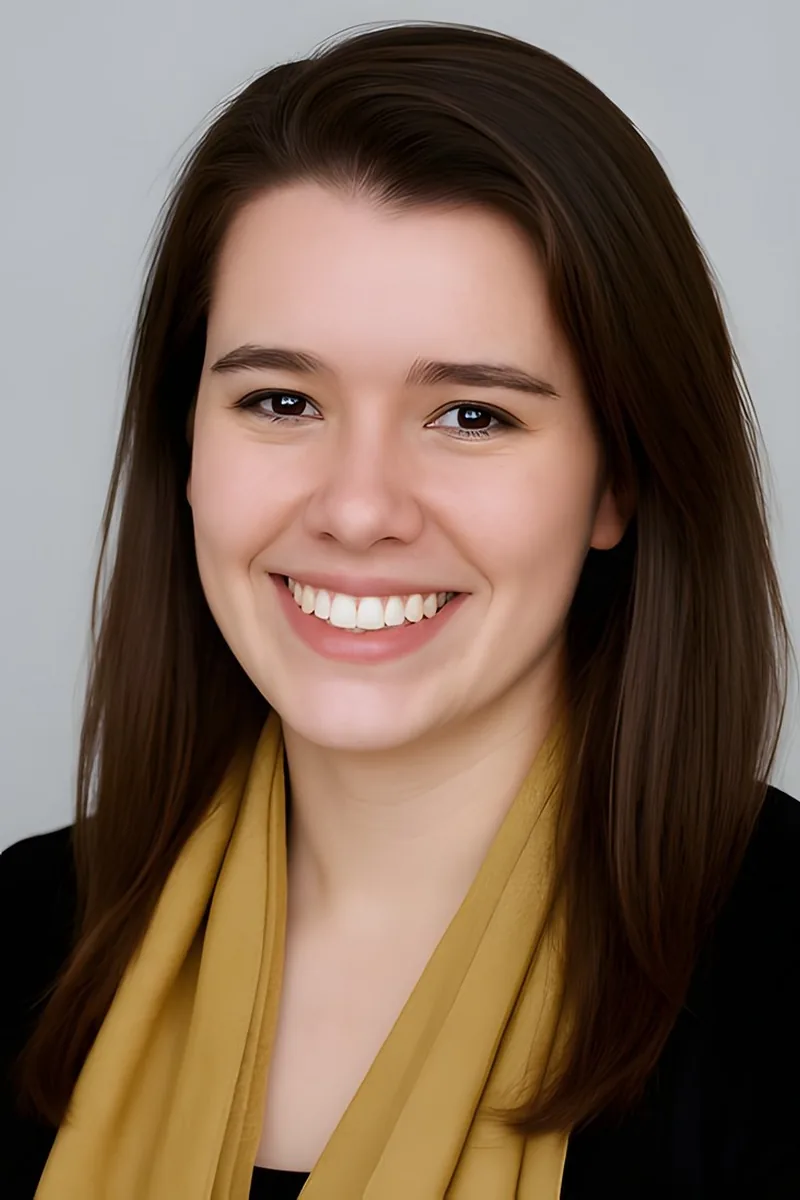
From ratios and proportions to basic geometry and early equation-solving, middle school math covers a huge range of skills in a short time. Erika's approach is to identify exactly where a student's understanding breaks down — whether it's fractions, decimals, or translating word problems into expressions — and rebuild confidence from that specific point. Rated 5.0 by students.
Ratios, proportions, and pre-algebraic thinking click faster when students can see them — and Mimi's background in visual and object-based learning means she naturally turns abstract middle school math concepts into something concrete. Her Harvard Ed.M. trained her to design lessons around how each learner actually thinks, not just how the textbook is organized.
Ratios, proportions, basic geometry, and early equation-solving can feel abstract to a middle schooler without the right context. Aimee pulls from her engineering training to turn these topics into tangible problems — calculating rocket fuel ratios or scaling a bridge model — so the math clicks instead of feeling like busywork.
The middle school math years — ratios, proportions, integer operations, intro to linear equations — set the trajectory for everything that comes after. Sugi approaches these topics by building the reasoning behind each procedure, so a student doesn't just cross-multiply but understands why it works. Rated 5.0 by her students, she keeps sessions structured without making them feel like a lecture.
As a biomedical engineering major at Brown, Phillip uses middle school math concepts — ratios, proportions, basic statistics — in his coursework daily, which means he can answer the classic 'when will I ever use this?' question with real examples. He's especially effective at building the problem-solving habits that carry students through pre-algebra and into high school math.
Scoring a 35 ACT and 1570 SAT means Amber has the quantitative chops to teach middle school math cold, but her theater background is what makes her especially effective — she knows how to read an audience, adjust on the fly, and make a concept land. She zeroes in on the specific spot where a student's understanding breaks down, whether that's negative number operations or setting up basic equations, and rebuilds from there. Rated 5.0 by students.
Princeton's Mechanical and Aerospace Engineering program threw Matthew into calculus and physics from day one, but he traces his math instincts back to the fundamentals — integer operations, fraction reasoning, and the algebraic thinking that middle schoolers are just starting to wrestle with. His tutoring method is hands-on: he walks through a problem step by step, then puts a harder one in front of the student and lets their questions drive the next explanation. A 34 ACT composite backs up the depth of his mathematical fluency.
Running a tutoring program at a charter middle school in Boston gave Liz a front-row seat to every common math struggle sixth through eighth graders face — from proportional reasoning to coordinate graphing to early work with expressions and equations. She pairs that classroom experience with a Master's in Special Education, which means she's practiced at adapting explanations on the fly for different learning styles. Rated 4.7 by students and families.
At the middle school level, math starts asking students to think abstractly for the first time — proportional reasoning, negative numbers, introductory geometry, and basic equation solving. Brian brings a calm, structured style to these topics, breaking each problem into small logical steps so younger students build genuine confidence instead of just copying procedures.
Fractions, ratios, and pre-algebra concepts click faster when a student understands the reasoning behind each step — not just the procedure. Zosia's chemistry background at Yale means she thinks in terms of logical problem-solving, and she brings that same structured clarity to middle school math topics like proportional reasoning and integer operations.
Biology majors do more math than most people realize — Joseph spent his UCLA undergrad calculating dilution ratios, analyzing statistical datasets, and working through quantitative models, all of which map directly onto the proportional reasoning and equation-solving middle schoolers are tackling for the first time. His public health master's at Yale keeps him knee-deep in data interpretation daily, so he teaches these concepts as practical skills with real stakes rather than abstract exercises. Rated 4.9 by families.
Fractions, ratios, and proportional reasoning click differently when a student sees how each concept builds on the last — and Sabira's Applied Mathematics training at Johns Hopkins gives her multiple ways to explain that progression. She's taught students of all ages since her years as a taekwondo instructor, so she knows how to adjust her approach on the fly when something isn't landing. Rated 5.0 by students.
Fractions, ratios, and pre-algebra concepts click faster when a student understands the reasoning behind each step — not just the procedure. Sherry's experience as a classroom aide and mentor to middle school girls means she knows how to break down topics like proportional relationships and integer operations in ways that actually stick. Rated 5.0 by students.
The jump from fifth-grade math to pre-algebra and early geometry catches many middle schoolers off guard, especially when proportional reasoning and negative numbers enter the picture. Asta tackles these transitional concepts by connecting them to patterns students already recognize, making ratios, percents, and coordinate graphing feel less abstract. She holds a 5.0 client rating.
Getting a PhD in Education at Harvard means Reid studies how learning actually works — and he brings that lens to the specific moment middle schoolers start struggling with the jump from straightforward arithmetic into algebraic thinking, variables, and multi-step problem solving. His sociology background also gives him a knack for turning word problems into stories that make sense, since he's trained to see patterns in how people and systems behave. With a 32 ACT and years teaching across math and humanities, he's comfortable switching between number sense and the verbal reasoning that word-heavy math problems demand.
Teaching math to middle schoolers at gifted summer programs taught Isabella that this age group thrives when they understand the "why" behind a procedure, not just the steps. She digs into topics like ratios, proportional reasoning, and introductory linear relationships with the depth you'd expect from someone who earned a math degree at MIT. Her 5.0 rating speaks to how well that approach lands with younger students.
The jump from elementary arithmetic to middle school math introduces ratios, proportional reasoning, and basic equation-solving that can intimidate students if the logic isn't made visible. Ingrid uses concrete examples and real-world scenarios to demystify concepts like fractions-to-decimals conversion and simple inequalities. Her experience leading hands-on workshops for undergraduates translates naturally into clear, patient explanations for younger learners.
Fractions, ratios, and proportional reasoning are the concepts that quietly determine whether a student thrives or struggles in high school math. Andrew takes the time to unpack why procedures like cross-multiplying actually work, building the kind of number sense that carries through algebra and beyond. His 4.9 rating speaks to how well that patient, explanation-first approach lands with younger learners.
I am a graduate of the University of Pennsylvania with a Masters degree in Education and have been an Elementary and Middle School educator for over thirty years. I have worked with students in the inner city, suburbs, Appalachia, and Deep South. I love teaching and children, and have discovered my passion in tutoring students who are struggling in Reading and Math. I have taught children with learning disabilities to read, and coached students with dyscalculia in math and reading. I worked as a principal for the past eight years, so was working with students from Pre-K to 8th grade, coaching teachers, analyzing data, and tutoring individual students in math and reading. I have worked as a national park ranger in the past, so social studies and history are areas of strength. Students that I teach respond well to my teaching style and enjoy working with me. I believe that education is extremely important for children's futures and do everything that I can to help them be successful.
Emily's biology training at Yale — where molecular and cellular coursework meant constant work with ratios, concentrations, and quantitative modeling — gives her a fluency with the math middle schoolers are formalizing that goes well beyond textbook drills. She's particularly strong at helping kids see how fractions, decimals, and early variable work connect to each other as one coherent system rather than a pile of disconnected rules. Rated 5.0 by students.
Three science degrees — including one in chemistry — mean Sung has spent years relying on algebra, ratios, and unit conversions in lab settings, so he can show middle schoolers exactly how the math they're learning powers real scientific work. He's particularly strong at breaking down fraction and decimal operations by tying them to measurement and mixing problems that make the steps feel logical rather than arbitrary. Rated 5.0 by students.
I'm a current PhD student in the history department at Georgetown University who is also an experienced instructor with Varsity Tutors. As a recipient of several degrees, the most recent being a BA in history from Hillsdale College and a MA in Russian, East European, and Eurasian Studies from Stanford University, I have long sought to make teaching my profession. Meanwhile, as a volunteer grade school teacher and a tutor with this company, I have many years' experience helping students reach their full potential. I am capable of teaching students in many subjects, including reading, mathematics, test prep, Latin, and especially writing, history, and literature. In practice, I am comfortable adapting to different learning styles and specific student preferences. Outside of my academic and career endeavors, I enjoy cooking, reading, and listening to and making music.
Akarsh's cellular and molecular biology training — both undergrad and master's level — means he's been doing math in the service of science for years, from calculating dilution ratios to interpreting growth curves. That gives him a practical vocabulary for showing middle schoolers how decimals, fractions, and basic equations actually function outside a textbook. His 1560 SAT score speaks to the fundamentals being rock-solid underneath the advanced science.
As experienced and passionated educator with a Bachelor's degree in Computer Science from Rice University, I am passionate about empowering students to achieve their academic goals. With over 3 years of tutoring experience in subjects such as AP Computer Science A, Machine Learning, and SAT Math, I adapt to different learning styles and create a supportive learning environment. My teaching philosophy centers on personalized instruction, where I connect with each student to understand their unique learning styles and challenges. I take pride in guiding students through the complexities of computer science and college application essays, equipping them with the skills they need for future success. Outside of tutoring, I enjoy exploring new technologies and engaging in coding projects to improve my teaching approach.
Getting a sixth or seventh grader comfortable with variables, negative numbers, and basic geometric reasoning sets the trajectory for everything that follows in math. Ainsley has tutored middle school students through state standardized test prep and knows how to make abstract ideas concrete — using visual models and real-world examples that stick. She also has specific experience supporting students with dyslexia and ADHD.
As a passionate educator with a Doctorate in Curriculum and Instruction from Liberty University, Dr. Barnett brings 20 years of tutoring and classroom experience to his role. His specialties in Elementary School English, Math, Reading, Science, and Social Studies enable him to create engaging, interactive lessons tailored to each student's unique needs. Dr. Barnett believes in fostering a supportive learning environment that empowers students to build confidence and achieve academic achievement. Through personalized tutoring plans, he offers effective online tutoring for grades 1-8, guiding students through their educational journeys. Dr. Barnett finds great joy in celebrating students' successes and inspiring a lifelong love for learning. Currently certified to teach in Maryland, he is dedicated to making a positive impact in students' lives.
I am an Arizona native. Upon graduating from Desert Mountain High School, I attended Rice University and I received my Bachelor of Arts in Kinesiology with a business focus. At Rice I was a student/athlete representing the Division I Owls in track and field. After several years experience voluntarily tutoring friends and family members I became a professional private tutor my junior year of college. My senior year, I took advantage of the opportunity to reach more students, creating a small private tutoring company in Houston in which I served as lead tutor and conducted all business operations. After graduating from college, I moved back to Arizona and am excited to have the opportunity to continue my passion of helping young men and women achieve academic excellence through tutoring. I have experience tutoring elementary through college-aged students in all academic disciplines. My primary areas of focus include: math, English, and standardized test prep. In my spare time I enjoy exercising, following sports, and spending time with friends and family.
The jump from arithmetic to proportional reasoning, integer operations, and basic equation-solving is one of the biggest conceptual leaps in all of K-12 math. Simon tackles middle school math by making sure students understand the reasoning behind each step — why dividing by a negative flips an inequality sign, or how a ratio actually describes a relationship. His 1540 SAT speaks to the kind of foundational fluency he builds at this level.
Julie is pursuing a certificate in Statistics and Machine Learning alongside her philosophy degree at Princeton — a combination that means she thinks about math both computationally and conceptually. For middle schoolers tackling pre-algebra and proportional reasoning, she breaks down each problem's logic so students understand the *why* before memorizing the *how*. Rated 4.9 by families.
Fractions, decimals, and proportional reasoning are the concepts that either build a student's confidence in math or quietly undermine it for years. Valerie's background spans subjects from classics to emergency medicine, and she channels that range into finding the analogy or explanation that makes a tricky middle school concept land for each learner.
A year as a course assistant in Harvard's math department — teaching introductory calculus to undergraduates — gave Richard an unusual vantage point on middle school math: he knows exactly which arithmetic and pre-algebraic habits (especially around fractions, negative numbers, and variable expressions) need to be rock-solid before higher math stops making sense. He scored a 36 ACT and 1600 SAT, but more relevantly, he's spent time volunteering to teach a weekly course to middle schoolers through Harvard's Leadership Institute, so he's comfortable matching his explanations to how younger students actually think.
The jump from arithmetic to algebraic thinking is one of the biggest shifts in a student's math life, and middle school is exactly when it happens. Ava has spent years tutoring students as young as seven, building their comfort with fractions, ratios, proportional reasoning, and early equation-solving so that high school math feels like a natural next step.
Every concept in middle school math — ratios, proportional reasoning, negative numbers, basic geometry — becomes a building block for high school. Tracy pinpoints exactly which block is wobbly before stacking more on top, whether that means revisiting fraction operations or pushing ahead into linear equations. She's been tutoring students at this level since she was in middle school herself, so she understands where confusion typically hides.
The jump from arithmetic to middle school math trips students up when fractions, ratios, and negative numbers all arrive at once. Rachel breaks each concept into manageable steps and ties them to concrete examples, building the kind of number sense that makes pre-algebra and beyond feel approachable rather than overwhelming.
From fractions and decimals in sixth grade to linear equations and geometry in eighth, middle school math covers an enormous range in a short time. Jessica's teaching background with students ages 8–15 means she knows exactly where the common stumbling blocks are — and how to address them before they snowball. She tailors her explanations to each student's reasoning style, whether that means visual models, real-world examples, or structured practice.
The jump from elementary math to middle school math introduces fractions, decimals, ratios, and negative numbers all at once, and it's easy for gaps to snowball. Maggie has spent years working with middle schoolers on exactly this transition, pinpointing where a concept broke down and rebuilding fluency from that point forward. Her 5.0 rating speaks to how well that approach lands with students and families.
Building number sense in middle school — whether it's fraction operations, proportional reasoning, or early work with variables — sets the trajectory for every math class that follows. JF has been tutoring students as young as third grade since high school and knows how to make concepts like ratios and integer arithmetic click before they become obstacles in algebra.
Most of Samuel's tutoring centers on writing and language arts, but his math roster runs from elementary through calculus — and middle school is where those subjects quietly overlap, since word problems and multi-step equations demand the same careful reading skills he teaches in English. He's especially effective at slowing students down to decode what a problem is actually asking before they start computing. Rated 5.0 by students.
Until about age 16, Viktor thought math was a boring exercise in memorizing formulas — which means he understands exactly how a middle schooler feels staring down fractions, ratios, or integer operations. What changed his mind was a teacher who showed him why the rules work, and that's the approach he brings to every session. He unpacks each concept so students carry understanding forward instead of forgetting everything after the test.
Testimonials
Because the right Middle School Math tutor makes all the difference.
Average Session Rating – Based on 3.4M Learner Ratings
Top 20 Math Subjects


Top 20 Subjects
Frequently Asked Questions
Many middle school students learn to follow procedures without grasping the underlying concepts—they can solve equations but don't understand why the steps work. Expert tutors help bridge this gap by asking questions that guide students to discover patterns, using visuals and manipulatives to make abstract ideas concrete, and connecting new concepts to things students already understand. This deeper understanding builds stronger foundational skills and makes higher-level math feel much less intimidating.
Word problems require students to translate language into mathematical thinking—a skill that takes practice and confidence. Tutors work with students to break problems into manageable steps: identifying what information matters, deciding which operations to use, and checking if answers make sense. Through guided practice with different problem types, students develop strategies they can apply to unfamiliar situations, turning word problems from overwhelming to manageable.
Showing work isn't just about getting the right answer—it helps teachers and tutors understand a student's thinking process, identify where misconceptions happen, and build mathematical communication skills that matter in higher grades. Tutors model clear, organized work, explain why each step matters, and help students recognize that showing work actually makes problems easier to solve and easier to check. This habit becomes invaluable in algebra, geometry, and beyond.
Multi-step equations frustrate many middle schoolers because they involve juggling multiple operations and keeping track of what's happening to the variable. Expert tutors break the process into smaller, visual steps—often using balance analogies or color-coding to show how operations affect both sides of an equation equally. Students practice with scaffolded problems that gradually increase in complexity, building confidence and developing a reliable strategy they can use consistently.
Math anxiety often stems from past struggles, negative experiences, or comparing oneself to peers—not from actual ability. Personalized tutoring creates a low-pressure environment where students can ask questions without judgment, work at their own pace, and celebrate small wins. As students experience success and understand concepts more deeply, their confidence grows. Many students are surprised to discover they can actually do math when they're not rushed or stressed—it completely shifts their perspective.
Yes. Different textbooks and curricula emphasize different approaches—some focus heavily on visual models, others on procedural fluency, and many blend both. Expert tutors understand these variations and can work with your student's specific curriculum, textbook, and classroom approach. This alignment means students get reinforcement that matches what their teacher is doing, making classroom lessons clearer and homework easier to tackle.
One hallmark of mathematical thinking is recognizing that seemingly different topics are actually connected. For example, fractions, decimals, and percentages are different representations of the same idea. Expert tutors deliberately point out these connections, help students organize their thinking with visual tools like concept maps, and revisit earlier concepts when learning new ones. When students see math as an interconnected web rather than isolated topics, it becomes easier to remember, easier to apply, and far less overwhelming.
Let’s find your perfect tutor
Answer a few quick questions. We’ll recommend the right plan and match you with a top 5% tutor.