Award-Winning LSAT
Tutors
LSAT
Tutors
Private 1-on-1 tutoring, weekly live classes for academic support, test prep & enrichment, practice tests and diagnostics, and more to elevate grades and test scores.
Based on 3.4M Learner Ratings
UniversitiesSchools & Universities
DeliveredHours Delivered
ProficiencyGrowth in Proficiency
Who will be getting tutoring?
No obligation. Takes ~1 minute.
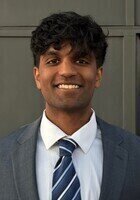
Standardized tests and AP classes can feel like a mountain of stress, but I'm here to help you navigate them without burning out. I've been through the gauntlet myself, scoring a 1570 on the SAT, a 1510 on the PSAT, and earning 4s and 5s on my AP exams. My goal is to hand you the exact playbook, strategies, and pacing tricks I used to succeed, broken down in a way that actually makes sense to you.

I'm currently pursuing a degree in Neuroscience! My passion lies in empowering students to conquer challenging subjects like AP Biology, Chemistry, and standardized test preparation, including the SAT and PSAT. With over 3 years of tutoring experience, I have honed my ability to adapt my teaching methods to accommodate diverse learning styles, ensuring each student feels supported and confident. I believe in creating interactive sessions that transform learning into an engaging experience, where students not only grasp complex concepts but also develop the skills to tackle challenges independently. As a National Merit Scholar, I offer valuable insights into effective test strategies, helping students navigate the nuances of SAT math and reading. My goal is to inspire students to embrace their academic journey with enthusiasm and resilience.
I am an interdisciplinary educator with an Ed.M. from the Harvard Graduate School of Education and a B.A. from Dartmouth College. My background is primarily in integrated arts learning and museum education and I specialize in visual arts, history and art history, and object-based learning. In all subjects, I take a creative, inquiry-based and learner-centered approach, designing opportunities for each unique individual to meet their learning goals.
I am currently a resident physician at Northwestern Hospital.
I believe that every student has slightly different approach to learning or learning style and that a good tutor should be able to adapt to the needs of the student. This is the tutor I strive to be!
I've been working with students for over seven years, from middle school all the way through college, across subjects like math, calculus, statistics, linear algebra, chemistry, and physics, with a lot of SAT and ACT prep mixed in. My background is perhaps a little unconventional. I have two bachelor's degrees, one in Engineering and one in Communication Studies, plus a Master's in Design. That combination means I can guide you through challenging technical material and communicate it in a way that is easy to grasp. What I care most about is helping students get to a place where they don't need me anymore. I know that sounds like a strange thing for a tutor to say, but I think it's the right goal. I'm not here to walk you through steps to copy down. I want you to understand why something works, because that's what holds up under pressure, on a test you haven't seen before. If you're ready to ace that test or prove that theorem that's been bugging you, reach out and let's work together
I hold a Bachelor's degree in Applied Mathematics and Statistics and Economics from Johns Hopkins University and a Master's degree in Biostatistics from Boston University. My academic background has given me a strong foundation in both quantitative reasoning and analytical thinking, which I bring into every tutoring session. I'm passionate about helping students build confidence in their abilities and enjoy guiding them through challenging material by breaking down complex concepts into clear, understandable steps. With over five years of tutoring and teaching experience, I've worked with students across a wide range of subjects, including middle school math, Algebra I & II, Geometry, Precalculus, AP Calculus AB/BC, AP Statistics, and college-level courses like Calculus IIII, Linear Algebra, Differential Equations, and Statistics. I also specialize in standardized test preparation, offering targeted support for the SAT, ACT, and GRE math sections. Beyond math, I tutor economics at both introductory and advanced levels, including Introductory Microeconomics and Macroeconomics, Microeconomic and Macroeconomic Theory, Monetary Analysis, and similar courses. I enjoy helping students connect theoretical models with real-world applications and develop a strong understanding of core economic principles. My tutoring style is patient, supportive, and highly personalized. I focus on fostering deep understanding and critical thinking, tailoring my approach to fit each student's individual learning style and academic goals. Outside of tutoring, I enjoy reading, staying active, and exploring emerging technologies.
I recently graduated from the University of Chicago with a B.S. in Mathematics and Computer Science, earning honors (cum laude) with a 3.88 GPA. This fall, I will begin a Ph.D. in Mathematics at Georgia Tech. I scored a 1550 on the SAT (790 Math, 760 Reading and Writing) and have a strong mathematical background spanning everything from foundational subjects to advanced university-level coursework. I have experience tutoring middle and high school students in topics ranging from algebra and geometry to calculus, as well as SAT and ACT math. My goal is to help students develop a genuine understanding of mathematics while building confidence and problem-solving skills. Whether you're preparing for the SAT or working to improve your performance in class, I'm committed to helping you succeed.
I have spent all my academic life learning how to study effectively, earning high scores on the ACT and SAT, and I am passionate about passing that knowledge on to others. With my performance on standardized tests, I was able to become a National Merit Scholar and obtain a full scholarship to university, a long-time dream of mine. I understand the hurdles that many students face, and I want them to feel confident that they have the tools they need to succeed. I love teaching test prep because standardized tests have an enormous impact on people's futures, and I also teach math because it reaches across many fields, from astronomy to robotics. I work with students to encourage a personal path towards learning that is different for everyone.
I love helping students build confidence in math, STEM, and the standardized testing process! I'm looking forward to working together to find the learning method that best suits you. Breaking down complex ideas to understand them bit by bit can help you love these subjects as much as I do!
I am proud to be a part of Varsity Tutors! I am originally from San Antonio, TX; I completed my undergraduate education at Rice University in Houston where I received a bachelor's degree in Biochemistry and Cell Biology. Currently, I am in my second year of medical school at Baylor College of Medicine.
I am a passionate educator with a strong background in computer science, mathematics, and STEM subjects. Currently pursuing a degree in Computer Science with focuses on artificial intelligence and education at Purdue University, I have been tutoring since high school, where I began teaching coding to middle and high school students. Over the years, I've had the privilege of helping students excel in a variety of subjects, including AP courses(APCSA - 5, AP Calc AB - 5, AP World - 4), SAT preparation(1590), and programming. My favorite subjects to tutor are mathematics and coding because they not only build critical thinking skills but also empower students to solve real-world problems creatively. I enjoy breaking down complex concepts into manageable steps, tailoring my teaching approach to each student's unique learning style. I believe in fostering a growth mindsetencouraging students to embrace challenges as opportunities to grow and learn. Beyond academics, I have a deep interest in soccer and motorsports, and I love integrating real-life examples from these areas to make lessons engaging and relatable. My goal as a tutor is to build students' confidence, inspire a lifelong love of learning, and equip them with the skills they need to achieve their goals.
Hello! I am currently a junior at The Ohio State University majoring in mechanical engineering. I've been tutoring for around 5 years and have worked with students of all ages. I specialize in helping students improve their SAT and ACT scores. My teaching method is to target students weak areas in a subject and reteach them the topic from scratch with tips and tricks. I believe the best way to learn is by applying the topics learnt to real questions to ensure your student feels comfortable solving them come time for the exam!
I'm a current medical student at the University of Arizona College of Medicine with undergraduate degrees from Washington and Lee in chemical engineering and anthropology. I have extensive experience in tutoring and teaching since 2010, and am ready to help you with your learning needs! I focus on standardized testing (SAT/ACT) and also tutor in a wide range of math, English, and Spanish classes. In my free time, I like to run, do CrossFit, volunteer, and watch TV!
I am a current medical student at Columbia University, and an alumna of the University of Chicago, where I graduated with a Bachelor of Science in Biological Sciences and Bachelor of Arts in Romance Languages & Literatures. I am extremely passionate about tutoring, and I have several years of experience tutoring students in my high school's learning center, tutoring private clients in Standardized Test preparation, and tutoring through my medical school. While I have a wide range of interests and am able to tutor various subjects, I am most passionate about tutoring in Standardized Test preparation, Biology, Chemistry, Math, English, and Spanish. I truly believe that students should have the opportunity to learn in the way that works best for them, and I love being able to help them succeed by creating a comfortable tutoring environment in which we can best assess their particular needs and use strategies specific to them.
I am passionate about helping students with math, science, test prep, and more! As sophomore undergraduate at Brown University studying Mathematics and Biophysics, I am well experienced with many topics. I received a perfect 36 on my ACT, so I am very confident with test taking.
I am a driven, positive, affirming tutor who is happy to help students in any way he can. I graduated magna cum laude from Dartmouth College in 2020, and I obtained my Master's in Political Science from the University of Toronto in 2022. In 2016, I received an SAT score of 1550. That year, I also received a 5 on my AP exams in Calculus AB, English Language, U.S. History, and U.S. Government. I am happy to tutor students in mathematics, English, and social sciences (e.g., history, government). I especially enjoy tutoring pre-algebra and algebra. I believe in a practice-based approach in which I take students step-by-step through the concepts at hand. After practicing together with my guidance, the student will soon be able to apply what they have learned on their own.
I'm a huge Red Sox fan and love watching detective shows when I have free time.
Hi, I'm Lavontria! I've tutored for 12+ years and scored in the 99th percentile on both the SAT and ACT. I'm finishing my PhD, and I tutor the SAT, ACT, GRE, plus math and science. I don't just say "study harder", I teach repeatable strategies, like finding a passage's main idea fast or spotting math shortcuts that save time. I pay attention to how your brain learns and teach to that. Wherever you're starting from, that's where we begin, no judgment. Let's build your confidence and your score.
As a passionate tutor working on a Bachelor's degree in Economics, Mathematics, and Philosophy from the University of Toronto, I have over two years of tutoring experience that spans various subjects, including Writing, English, and advanced math topics. My approach centers on creating engaging, tailored lessons that resonate with students' individual goals and interests. I believe in fostering a supportive learning environment where trial and error can lead to discovery and growth. My experience includes working with elementary and high school students, helping them navigate their homework, prepare for tests like the SAT, and cultivate a deeper appreciation for math and writing. I am deeply motivated to inspire students and help them achieve their academic aspirations while nurturing their curiosity and confidence. I enjoy: Writing, Reading, Piano, Fencing, Archery, Math, Economics, Philosophy, Law.
Currently a second-year law student at the University of Chicago, Elena tackled the LSAT recently enough to remember exactly where the logic games and conditional reasoning trips people up. She teaches Analytical Reasoning by breaking each game into setup diagrams and inference chains, so students stop staring at the board and start eliminating answers with confidence. Her perfect 1600 SAT speaks to her comfort with high-stakes standardized tests, and her 4.9 rating shows that approach translates to her students.
I am a recent graduate from a masters program in biostatistics at Columbia University. I received my Bachelor of Arts in biological sciences, with a focus in neurobiology at Northwestern University. In August, I will be starting a doctoral program in biostatistics at NYU. I was a teaching assistant at Columbia University in my department and also have tutored graduate students and undergraduates privately as well. My primary areas of tutoring are math and statistics coursework in addition to math sections on standardized tests such as the GRE and GMAT. I am very passionate about helping students feel more confident and excited about math. In my spare time, I enjoy running, playing piano, and spending time with friends and family.
I'm Anna! I'm currently a student in the MD/MBA program between Northwestern University's Feinberg School of Medicine and the Kellogg School of Management, and graduated from Northwestern University as part of the Honors Program in Medical Education. I attended the Bergen County Academies in New Jersey, a selective, application-based magnet school, for high school.
I want students to feel heard, supported, and challenged to be their best selves. I bring 6 years of tutoring experience in English, Math, Science, Spanish, and AP and SAT prep with students from all backgrounds, from elementary school students learning to read and write, to middle schoolers working on public speaking, to high schoolers preparing for exams and college admissions. Whatever your goals might be, I'd love to help you reach them!
I am happy to accommodate and work with learners on the spectrum.
No subject, no test, and no question is bigger than you. By the end of our time together, I hope to make you see that my only job was really just to make you see--you really had it in you, all along. If there's any subject in which you truly believe you suck--that you're just the worst, and that nothing will ever help you improve--then don't you dare give up until you've given me a call! I'm a writer, but I love numbers, and nothing makes me more proud than helping students overcome their biggest challenges. I've scored near-perfect on both standardized tests, and I've been helping students understand how to improve their own scores ever since. I'm also capable of tutoring advanced Music Theory topics, as well as Spanish and Mandarin Chinese
I'm a rising junior at Brown University studying biomedical engineering. I have lots of experience in middle school through college level instruction in STEM and SAT/ACT prep. My goal is to provide a fun and productive learning environment by only teaching subjects that I am passionate about.
I am a graduate of the University of Chicago, with a bachelor's degree in psychology and linguistics. Currently, I am pursuing a master's degree in speech-language pathology at Teachers College, Columbia University. In the past, I have worked as a teacher's aide in a public school classroom, a mentor to middle school girls, an instructor and tutor at the literacy education organization 826, and a summer camp counselor. I tutor a diverse range of subjects, and I find that I especially enjoy tutoring language arts, reading, and writing at all levels, from elementary school all the way up to college/grad school test prep. As a tutor, I am committed to helping students reach their full potential as learners. Throughout my years as an educator, I have seen firsthand the remarkable academic growth that can occur when tutors provide students with the individualized support that they need. In my spare time, I enjoy reading, journaling, and learning about other languages and cultures.
I am currently studying chemical engineering at the University of Michigan. I have always helped out my fellow students with schoolwork, and I have tutored in the National Honor Society for three years. My tutoring strengths include my abilities to stay calm, be patient, and offer different perspectives on the learning process. I do not just help my students learn the material, but I also teach them how to learn it. I tutor math and test prep courses. Outside of school and tutoring, I play the piano. I have played classical piano for 13 years and jazz piano for 7.
My tutoring approach is one of coaching, mentoring, and helping the student understand exactly what level and detail of help that they need to get ahead. Combining the personal discipline learned during 20 years as a Naval Officer with the unique expertise learned in one-on-one communication with peers and sailors as well as my five children, I can help you or your child succeed. A Bachelor's in Electrical Engineering, and a Math Minor help qualify me for tutoring in many subjects. My individualized tutoring methods also raised my step-son's Physics grade from a C to an A in one semester. I specialize in mathematics (basic arithmetic through calculus) but can help in many other subjects. Learning should be fun, but should also, at times, bring "Instant" results. I work to keep positive encouragement in every lesson, tutoring, or test preparation session. I speak fluent Spanish!
I am currently attending New York University where I am pursuing a degree in Finance and Statistics. I have previous experience tutoring individuals in math, a subject I have always excelled at academically. My knowledge and interest in mathematics, makes it easy for me to frame and deconstruct seemingly complicated concepts and theories in ways students will be able to understand and remember. Outside of academia I enjoy playing tennis, going to movies, and spending time with friends and family.
Currently navigating law school at Hofstra, Brian knows the LSAT from both sides — as a test-taker and as someone who now sees how the skills it measures (argument dissection, rule application, dense reading comprehension) show up daily in legal coursework. He builds targeted strategies for each section rather than relying on generic test-taking advice. His 5.0 rating speaks to how well that approach translates to score gains.
I am available to tutor a range of middle school and high school subjects, but I am most excited about tutoring test prep. I remember how stressful preparing for college can be and I am eager to do my part in helping students fulfill their college goals. I believe that learning is a collaborative process and I am committed to being as actively involved in the student's learning as I can. In my spare time, I enjoy reading, going to the movies (I try to see each Oscar nominee before the ceremony every year.), and am a huge Michigan sports fan.
I'm eager to teach students how to make connections and understand any part of the world they need!
I am a graduate from Georgetown University, where I received a Bachelor of Arts degree in Mathematics with a minor in Music. I'm currently pursuing a Master's of Science in Business Analytics at Carnegie Mellon University. I've been tutoring since I started high school, focusing on mathematics and writing. Throughout my college career I was employed both privately and by Georgetown University to tutor peers and high school students in the Washington, D.C. area. I worked with students taking classes in all levels of mathematics falling under Algebra, Calculus, Combinatorics, and Problem Solving.
Helping students has always felt deeply personal to me. I know what it's like to struggle with a subject and how much of a difference the right guidance can make. That's what drives me, not just to explain the material, but to meet students where they are, and help them build confidence along the way. My teaching philosophy is centered around a low-pressure, high-engagement environment where students feel comfortable asking questions and exploring ideas. I use real-world examples, visual breakdowns, and active recall to reinforce understanding and make learning stick. I'm currently in my 4th year of medical school, so I have a certain love for Biology and other life sciences. It can be complex, but when taught the right way, it becomes incredibly intuitive and logical. I also thoroughly enjoy teaching SAT/ACT prep, as it also can be tricky for students to see through its complexity, but becomes much easier to find the objective when taught the right way, with the right tools.
Hi! My name is Harry, and I'm a junior at the Albert Dorman Honors College at NJIT studying for a BA/MD in Biology on the accelerated program with NJMS. I've been interested in the sciences since I was younger, through which I have enjoyed engaging in my coursework, research, and fellow peers. What I particularly enjoy is the camaraderie that STEM brings about with problem solving with you and your peers, which I hope to foster through tutoring. At NJIT, I have taken challenging courses like General and Organic Chemistry I & II, Physics I & II, and a series of biology courses such as neuroscience, mammalian physiology, and cellular and molecular biology. These experiences not only provided me with a strong academic background but also with an understanding of how to deconstruct difficult material in a way that makes it less intimidating.
I am a graduate of Columbia University with a degree in Drama and Theatre Arts. I taught math and essay writing to my peers in high school and college, and have tutored a close friend in her mathematics courses since junior year of high school. I am most comfortable and passionate about tutoring SAT prep, particularly the Math section and subject tests. I believe in supporting and encouraging my students and making material as accessible as possible, breaking down what may be difficult subject matter into terms and concepts that they already understand. I firmly believe in the potential of every student to grasp material that they may think is out of reach, and aim to reduce the stress factor of studying as much as possible. Outside of tutoring, I am a professional actor and playwright, and in my free time (a rare, mystical thing these days) I enjoy playing guitar and mandolin, practicing yoga, and my PS4.
I am a freshman undergraduate at Johns Hopkins University. I am majoring in Molecular and Cellular Biology and minoring in Spanish on the pre-med track! I have been a tutor for all 4 years of high school. I have helped students with mathematics, ranging from middle school to college level courses, as well as intermediate Spanish. I have also worked at Kumon for the past 3 years and have experiences in teaching English, grammar, and reading for all high-school level courses. While I am confident in my abilities to help students in science (biology and chemistry!), I am most passionate about helping students in mathematics, whether that is with the SAT, ACT, AP, and excel at reviewing college admission essays. I am a firm believer in creating an organized and adaptive tutoring program, allowing students to practice with questions that would challenge them in beneficial ways.
Testimonials
Because the right LSAT tutor makes all the difference.
Average Session Rating – Based on 3.4M Learner Ratings
Practice LSAT
Free practice tests, flashcards, and AI tutoring for LSAT
Top 20 Graduate Test Prep Subjects


Top 20 Subjects
Frequently Asked Questions
Logic Games is often the most intimidating section because it requires both pattern recognition and spatial reasoning under time pressure—skills that don't transfer directly from other academic work. A tutor can break down the diagramming systems that make games manageable, help you recognize game types quickly, and build the muscle memory needed to set up and solve games in under 8-9 minutes each. Many students improve dramatically once they have a consistent, personalized approach rather than trying random strategies.
LSAT Reading Comp requires active annotation and identifying the author's main point and argument structure—not just understanding content. A tutor can teach you how to map passages efficiently, spot common question traps (like answers that are true but don't answer the specific question), and manage the cognitive load of dense passages. The key is learning to read strategically for test purposes, which is very different from how you'd read for pleasure or even for college classes.
Students often miss the distinction between the argument's conclusion and supporting premises, fall for answer choices that sound reasonable but don't match the logical structure, or spend too much time on complex wording. A tutor focuses on teaching you to strip arguments down to their skeleton, identify assumption-based reasoning, and recognize common logical fallacies (like scope shifts or false causation). With targeted practice, you can learn to spot these patterns instantly rather than re-analyzing each argument from scratch.
Timing isn't just about speed—it's about strategic allocation. A tutor helps you identify which question types you should tackle first (usually easier ones to build confidence), which to skip strategically, and how to allocate your 35 minutes per section based on your strengths. For example, if Logic Games is your weakness, you might spend 22 minutes there and 13 on Reading Comp, rather than dividing time equally. Personalized pacing strategies are far more effective than generic "spend X minutes per question" advice.
Score improvement depends on your starting point and effort level. Students starting around 140-150 often see 10-15 point improvements with consistent tutoring, while those already at 160+ may see 3-5 point gains since the questions become significantly harder. The LSAT rewards mastery of patterns and strategy, so students who are willing to do untimed practice and review mistakes thoroughly tend to see the best results. A tutor can help you identify exactly which question types are costing you points and create a focused improvement plan.
Practice tests are essential—they build stamina, reveal your weak areas, and let you experience the actual test format. A tutor should have you take full, timed tests regularly (typically every 1-2 weeks) and then spend most of your tutoring time reviewing mistakes in depth rather than drilling individual questions. The goal is understanding why you got something wrong: Did you misread the question? Miss a logical inference? Run out of time? This diagnostic approach is far more valuable than just practicing more questions.
Test anxiety often stems from unfamiliarity with question types or uncertainty about your approach. A tutor builds confidence by ensuring you've seen every common question format, have a reliable strategy for each section, and have practiced under realistic timed conditions repeatedly. When you've solved dozens of similar problems successfully, test day feels less like a mystery and more like executing a plan you've already practiced. Tutors also help you develop mental strategies for managing pressure, like knowing when to skip a tough question and return to it later.
A strong LSAT tutor should have a high personal LSAT score (typically 170+), deep familiarity with the test's logic and structure, and experience teaching students across different starting levels. They should be able to explain not just the right answer, but why the wrong answers are traps and what logical principles they violate. Look for someone who stays current with LSAT changes, uses official LSAC materials, and can diagnose your specific weak areas rather than using a one-size-fits-all approach. Experience with students similar to your situation is also valuable.
Let’s find your perfect tutor
Answer a few quick questions. We’ll recommend the right plan and match you with a top 5% tutor.