Award-Winning Linear Algebra Tutors
serving Canton, OH
Linear Algebra
Tutors in Canton
Private 1-on-1 tutoring, weekly live classes for academic support, test prep & enrichment, practice tests and diagnostics, and more to elevate grades and test scores.
Based on 3.4M Learner Ratings
UniversitiesSchools & Universities
DeliveredHours Delivered
ProficiencyGrowth in Proficiency
Who needs tutoring?
No obligation. Takes ~1 minute.

Database management as a field of study means Vishank has worked extensively with the underlying matrix structures and data transformations that power query optimization and relational modeling — giving him a practical anchor for concepts like rank, column space, and systems of equations. He connects the computational side of row reduction and determinants to the data-driven applications where those operations actually do something, which tends to click for students who need more than abstract definitions to build intuition. Rated 4.9 by students.
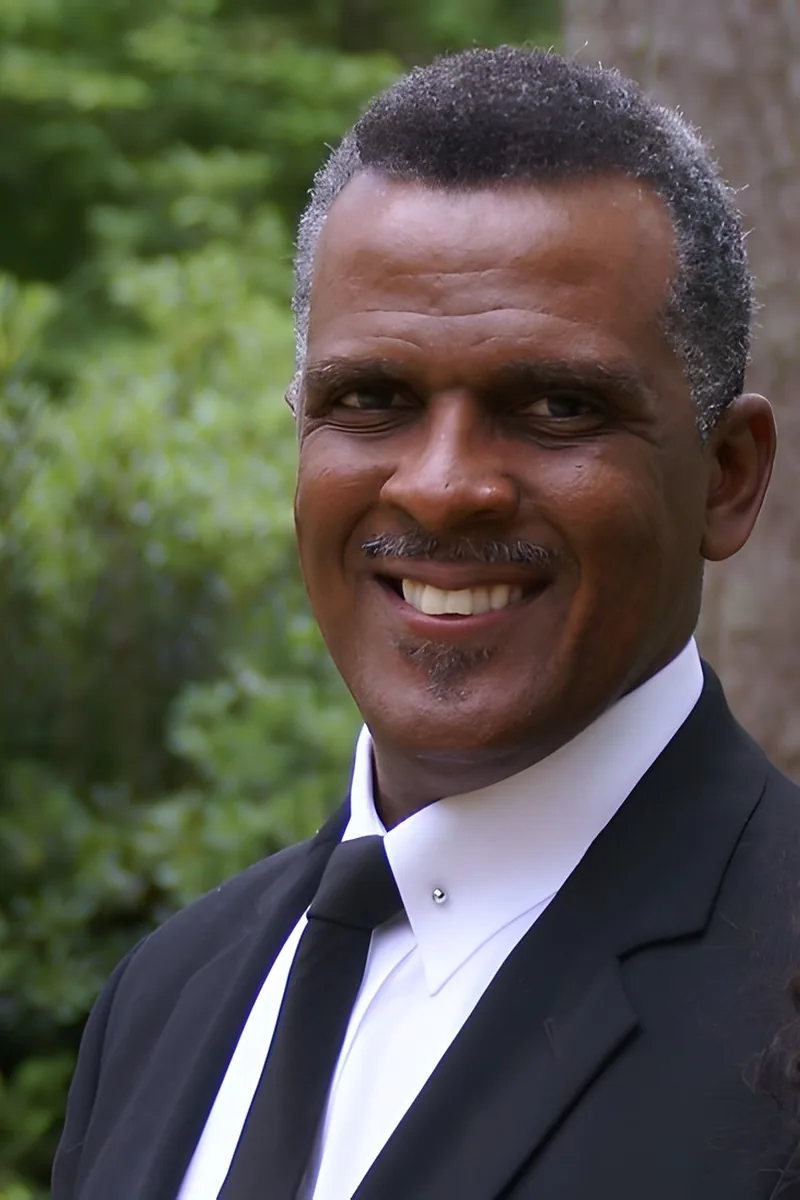
Eigenvalues, vector spaces, and matrix decompositions sit at the heart of nearly every applied math discipline — and Dr's Ph.D. in Applied Mathematics means he's used these tools in practice, not just taught them from a textbook. He unpacks abstract proofs by tying them to concrete computations, so students see why a basis matters before they're asked to find one. That combination of theory and application is especially useful for students heading into data science, physics, or engineering coursework.
Samuel holds a Ph.D. in Applied Mathematics, which means linear algebra isn't a course he passed — it's a language he works in daily, from inner product spaces to spectral decompositions. He's particularly effective at teaching the proof-writing transition that trips students up mid-semester, when the course shifts from row reduction to reasoning about abstract vector spaces and linear maps. Rated 5.0 by students.
Currently studying mathematics as an undergrad, Henry is working through the same linear algebra material his students are — which means he knows exactly which definitions trip people up when a course introduces abstract vector spaces and suddenly expects fluency with concepts like span and dimension. He breaks down the leap from matrix arithmetic to formal proof-writing in a way that's still fresh, not filtered through years of distance from the struggle. Rated 4.9 by students.
Training at ETH Zurich's applied math program means Shahnawaz worked through linear algebra at a level where concepts like spectral decompositions, Jordan normal forms, and singular value factorizations were prerequisites for more advanced coursework — not endpoints. He digs into the geometric intuition behind abstract definitions, showing students what a null space or eigenvector actually looks like before formalizing the algebra around it. Rated 4.9 by students.
I am interested in Physics and Mathematics and working out practical problems from plumbing to electronics. I will someday go back for my Ph.D. in Physics but until then I am looking to grow as an engineer or computer programmer.
Eigenvalues, vector spaces, and matrix transformations aren't just abstract math — in Tony's robotics and aerospace work, they're the backbone of everything from control systems to coordinate frame rotations. His MS in Mechatronics means he can unpack concepts like singular value decomposition or change of basis with concrete engineering examples that make the theory click.
Eigenvalues, vector spaces, and matrix decompositions stop being abstract once you've used them to solve real systems — and Moe's electrical engineering master's work relied on linear algebra constantly, from signal processing to circuit analysis. He unpacks proofs and computations side by side so students understand both the theory and the mechanics of each operation.
Mechanical engineering PhD work means Ian solves systems of equations, decomposes matrices, and manipulates eigenvalue problems as routine steps in modeling heat transfer and fluid flow — so he teaches linear algebra with the instinct of someone who depends on it daily. He's particularly good at demystifying abstract operations like matrix factorizations and determinant properties by tying them back to the physical systems they describe. Rated 4.9 by students.
I'm trying to work on personal projects. I really enjoy snowboarding, and have been doing that since the third grade. I also enjoy playing sports and video games.
Hello, my name is Yosef and I would be happy to serve as a math tutor. I place strong emphasis on a good balance between knowledge of mathematical content and proficiency in problem-solving, reasoning, and conveying mathematical ideas in writing. There are times when a student needs to be informed of a solution, times when he or she also needs to hear the explanation of why the solution works, and times when he or she should be guided to finding the solution on his or her own. It is important for the tutor to recognize which approach is appropriate. Frequently, when students struggle, it is because they do not understand the notation or terminology in use. In such cases, it is important to reassure the student, reminding him or her that he or she is only struggling with understanding a single word, not the entire mathematical concept. As a rule, people perform better and are better motivated when they have self-confidence, not when the task ahead seems frighteningly daunting. It is also important to recognize that different students learn best through different means. As an example, some students are visual learners and can understand the material best through pictures and gestures. Other students learn best through hearing the procedures vocalized, while still others learn best through writing out the steps of the solution procedure. I know to adapt my teaching style to the individual student. with these considerations in mind, I promise to provide the best assistance that I can, taking your individual needs into consideration.
Philosophy trains you to build rigorous arguments from axioms — which turns out to be exactly the skill linear algebra demands once a course moves past computation into proofs about vector spaces, linear independence, and spanning sets. Joshua's background in formal logic means he treats proof-writing as structured reasoning rather than guesswork, breaking down what each definition actually requires before students attempt to use it. He's especially useful for the mid-semester shift when homework stops being row reduction and starts asking "prove that this map is injective."
Benjamin's master's dissertation at the University of Essex centered on graph theory and group theory — areas where linear algebra isn't just a tool but the structural backbone, from adjacency matrices to representation theory. That research-level immersion means he teaches eigenvalues, vector spaces, and linear maps with the fluency of someone who's built arguments on top of them, not just solved textbook exercises about them.
Studying statistics and machine learning at Princeton means Julie uses linear algebra daily — from matrix transformations to eigenvalues to vector spaces. She teaches the subject with an eye toward both theoretical understanding and practical application, connecting abstract proofs to the computational intuition students need to actually work problems.
A year as a course assistant in Harvard's math department — teaching introductory calculus — gave Richard a front-row seat to where students first stumble with abstraction, a skill that translates directly to linear algebra's shift from matrix arithmetic to reasoning about vector spaces and linear maps. His government major might seem unrelated, but formal logical argumentation is central to both fields, and he leans on that structured thinking when breaking down proofs involving span, basis, and dimension.
A master's in statistics built on a math undergraduate degree means Nicholas has lived inside matrix algebra — covariance matrices, projections, and least-squares estimation all run on linear algebra's core machinery. He teaches determinants, eigendecompositions, and rank not as isolated procedures but as the mechanics driving real statistical models. Rated 5.0 by students.
Testimonials
Because the right Linear Algebra tutor makes all the difference.
Average Session Rating – Based on 3.4M Learner Ratings
Practice Linear Algebra
Free practice tests, flashcards, and AI tutoring for Linear Algebra
Other Canton Tutors
Related Math Tutors in Canton
Frequently Asked Questions
Varsity Tutors matches Canton students with expert Linear Algebra tutors for 1-on-1 instruction. We pair each student with a tutor based on their specific needs, learning style, and goals.
Whether you need homework help, exam prep, or want to get ahead, our Linear Algebra tutors are ready to help.
Common challenges include gaps from earlier material, difficulty with specific concepts, and trouble applying learning to new problems. These issues can snowball quickly in Linear Algebra.
A tutor identifies where you're stuck, fills in gaps, and provides targeted practice. The 1-on-1 format means you get help exactly where you need it.
Tutors work with your student's actual coursework—homework assignments, class notes, and upcoming tests. This keeps tutoring directly relevant to what's happening in the classroom.
When you share information about your student's school and curriculum, we can match you with a tutor who has relevant experience.
All tutors complete background checks, credential verification, and teaching evaluation. Many of our Linear Algebra tutors hold advanced degrees or have years of teaching experience.
You can review tutor profiles to find someone with the right background for your student's level and needs.
Many students see improved grades within a few weeks, along with better understanding of Linear Algebra concepts and more confidence tackling challenging material.
Tutors track progress and adjust their approach to ensure continued improvement.
Most students benefit from 1-2 sessions per week. More frequent sessions help if your student is significantly behind or has an important exam coming up.
Your tutor can recommend a schedule based on your student's specific situation and goals.
Tutoring is purchased in packages of hours, with rates varying by tutor experience. Varsity Tutors offers several options to fit different budgets and needs.
You can discuss pricing during your consultation to find what works best.
Your tutor will assess where your student is, discuss goals, and start working on priority areas. Most students bring current homework or upcoming test material to focus on.
By the end, you'll have a clear sense of how the tutor can help and a plan for moving forward.
Let’s find your perfect tutor
Answer a few quick questions. We’ll recommend the right plan and match you with a top 5% tutor.