Award-Winning Geometry
Tutors
Who needs tutoring?
FEATURED BY


TUTORS FROM
- YaleUniversity
- PrincetonUniversity
- StanfordUniversity
- CornellUniversity
Award-Winning Geometry Tutors

Certified Tutor
2+ years
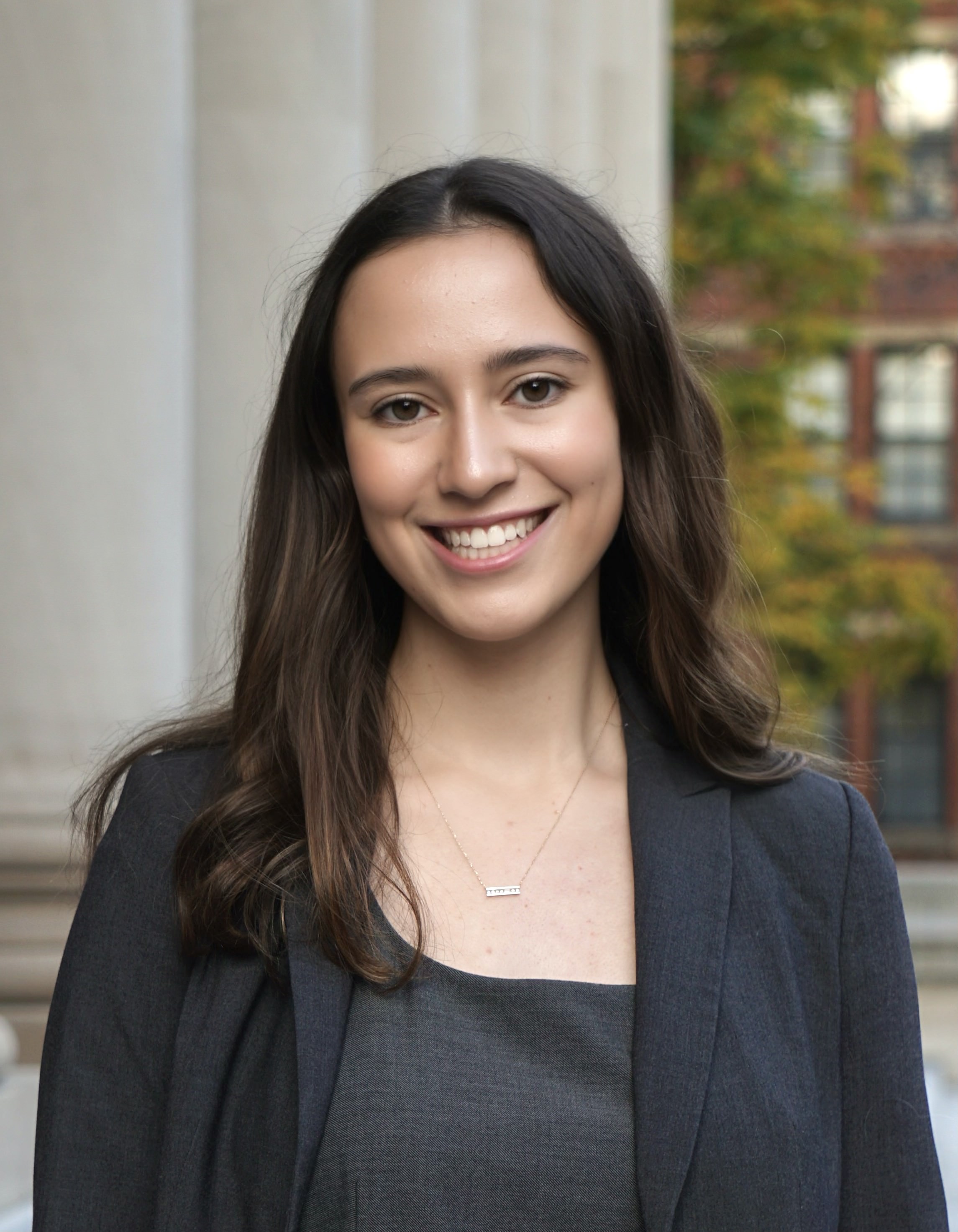
Proofs are usually the first time a math student has to explain *why* something is true, not just solve for x — and that shift is where most geometry frustration lives. Elias walks through proof logic step by step, teaching students to identify congruence criteria, angle relationships, and parallel-...
University of Pennsylvania
Bachelor
Certified Tutor
2+ years
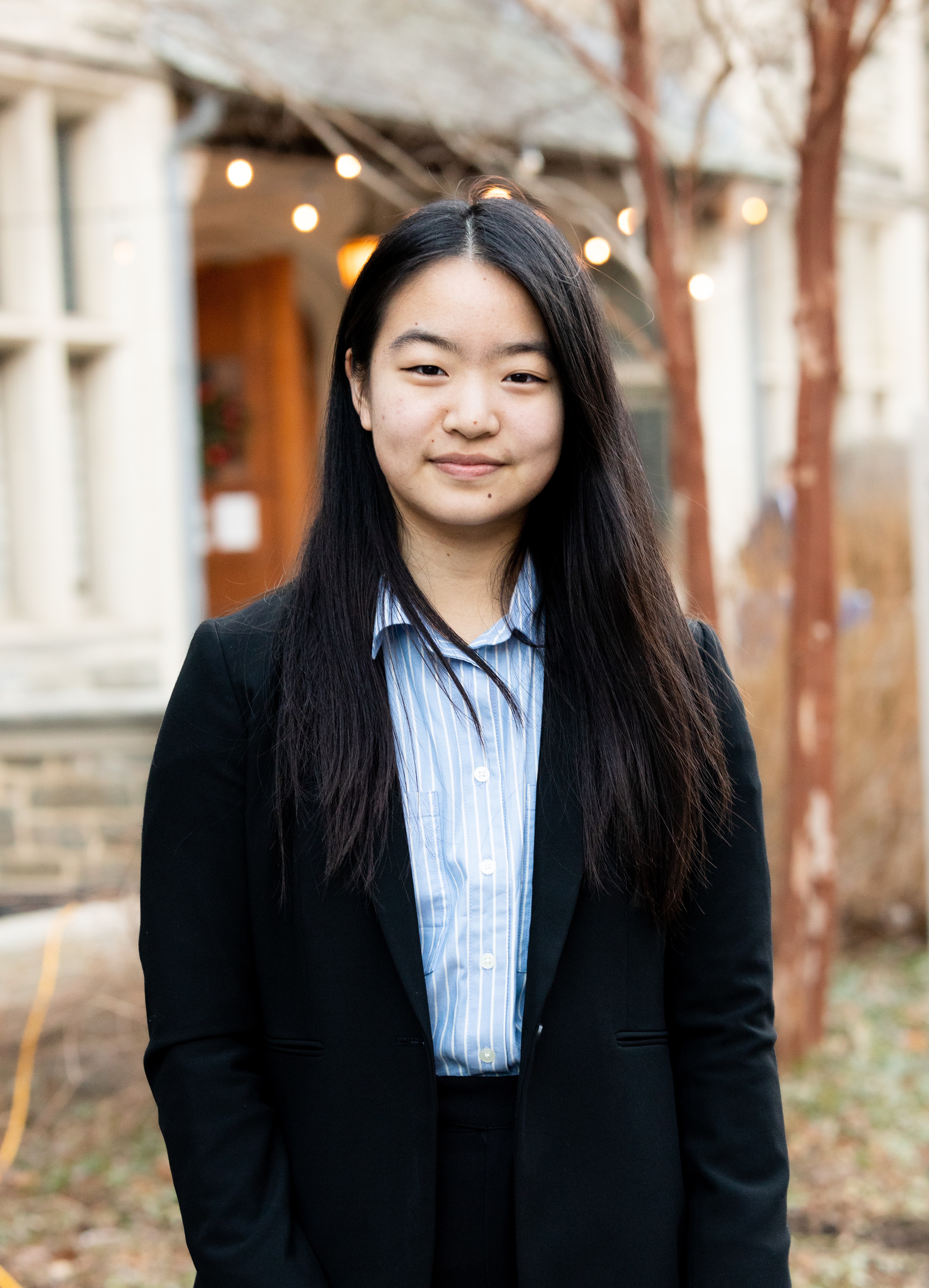
Mock Trial at Harvard is essentially proof-writing in disguise — building a case from premises to conclusion, anticipating counterarguments, and knowing exactly which evidence supports each claim. Brooke applies that same structured reasoning to geometric proofs, particularly when students need to c...
Harvard University
Bachelor
Certified Tutor
2+ years
A 4.0 GPA in Business Economics at Wharton means Carina spent years working through quantitative models where geometric intuition — understanding slopes, areas, and spatial relationships — was baked into the coursework. She teaches geometry by connecting the visual logic of shapes and diagrams to th...
University of Pennsylvania
BS

Certified Tutor
2+ years
Joey
Proofs are usually the first place geometry students feel lost, because the logic feels completely different from arithmetic. Joey's engineering training at Glasgow and Penn required rigorous spatial reasoning — from analyzing force diagrams to modeling 3D structures — and he uses that intuition to ...
University of Pennsylvania
Master's/Graduate
University of Glasgow
Bachelor
Certified Tutor
2+ years
Proofs are where most geometry students stall — not because the logic is too hard, but because nobody teaches them how to think in logical steps. Miles holds degrees in both Philosophy and Mathematics from Cornell, plus a master's in Logic from the University of Amsterdam, which means he treats geom...
Cornell University
MS
University of Amsterdam
MS

Certified Tutor
2+ years
Proofs are usually where geometry stops feeling like math and starts feeling like a logic puzzle with no clear entry point. Jerry approaches them by teaching students to identify what they actually know from a diagram, then chain those facts together step by step. His engineering training — where sp...
University of Central Florida
Bachelor

Certified Tutor
2+ years
Proofs are usually the first place geometry students feel lost — the logic feels completely different from anything they've done in math before. Randy walks through each proof step by step, teaching students how to identify given information, spot congruence relationships, and build a logical chain ...
Rice University
Undergraduate Degree
The University of Texas at Austin
Undergraduate Degree
Certified Tutor
2+ years
Balamurugan
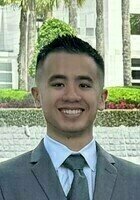
Proofs are usually the hardest part of geometry for students — not because the logic is impossible, but because nobody teaches them how to structure an argument. Balamurugan digs into triangle congruence, parallel line theorems, and circle properties by first making sure students can articulate why ...
University of Delaware
BOE
Certified Tutor
2+ years
Proof-writing is where most Geometry students struggle, because it demands a completely different skill than computation — constructing a logical argument step by step. David's Johns Hopkins computer science degree trained him in formal logic and rigorous proof techniques, which translates directly ...
Johns Hopkins University
BS
Certified Tutor
2+ years
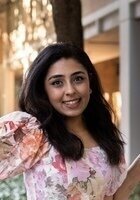
Tutoring math from middle school through IB Mathematics at her high school's peer mentorship program, Maham learned that geometry is where students first encounter the shift from 'solve for x' to 'prove why' — and that transition trips up even strong math students. Her biochemistry work at Rice, whe...
Rice University
BS
Practice Geometry
Free practice tests, flashcards, and AI tutoring for Geometry
Top 20 Math Subjects


Meet Our Expert Tutors
Connect with highly-rated educators ready to help you succeed.
Zane
AP Calculus AB Tutor • +56 Subjects
Everybody learns, and everybody learns differently. The importance of pedagogy, the practice of teaching, cannot be overstated. It is not enough to share knowledge; knowledge must be communicated. This is the philosophy by which I have tutored and by which I currently tutor. With 4th grade students and with college-age students, with students in America and with students in Japan, I have helped new ideas and information take root and blossom to the satisfaction of student and tutor alike. I love those moments of recognition as someone internalizes knowledge, when an unfamiliar idea becomes familiar, and the creative ability such moments foster. My aim as a tutor is to understand how my students learn, so that they can do so most efficiently.
Allison
AP Calculus AB Tutor • +41 Subjects
I am here to help you have success in your mathematics classes! I have a Bachelor's of Science in Mathematics and a Master's of Teaching Mathematics in Secondary Mathematics. I have taught secondary math for four years, and I am excited to tutor in Algebra I, Algebra II, Geometry, Trigonometry, Calculus, A.P. Calculus, ACT Math, and more. My teaching philosophy is to empower students to analyze mathematics problems and understand how a particular concept fits in to the mathematics framework.
David
AP Calculus AB Tutor • +16 Subjects
I have tutored students in the Math portion of the PSAT and SAT as well as the subjects of Algebra, Geometry, Trigonometry, Algebra II, and AP Calculus AB. I am a recent graduate of Cathedral Preparatory High School in Elmhurst, New York and a rising freshman at Tufts University. Currently I am working towards a Bachelor's Degree in Mathematics. I have over 3 years of experience peer tutoring high school students at Cathedral Prep. In addition, I have previous experience teaching the SAT and NY State Regents Exams. I have also taught as an assistant teacher at Cathedral Prep. It brings me joy to tutor students because I am able to help them grow in confidence and in their understanding of new topics.
Chamberlyn
Pre-Algebra Tutor • +56 Subjects
"Make your life a masterpiece, imagine no limitations on what you can be, have, or do." -Brian Tracy B.S. in Cognitive Studies and Child Development & Education at Vanderbilt University; M.S. in Clinical Mental Health Counseling. As an educator, I am honored to have the opportunity to share my knowledge in order to contribute to the success of others! I firmly believe in a holistic style of education one that places an emphasis on the student as opposed to the content. From personal experience, I am aware that every person learns differently from one another and ground my style of teaching in what best suits my students. To me, it is important to empower all students and encourage their desire to learn; after all, exams and grades are only temporary, but knowledge lasts forever! I wholeheartedly enjoy teaching all subjects that fall within the realm of my expertise, but I am especially passionate about biology, chemistry, mathematics, writing, and most of all teaching how to learn!
Jacob
AP Calculus AB Tutor • +29 Subjects
Hello! I'm Jacob, a dedicated tutor with a passion for helping students excel in math, science, and ACT preparation. I am studying degrees in Electrical Engineering and Theology from the University of Notre Dame. Using my tutoring experience, I tailor my teaching to each student's unique learning style, ensuring they gain confidence and achieve their academic goals. Let's work together to unlock your full potential and achieve success!
Grishma
Middle School Math Tutor • +69 Subjects
I'm passionate about helping students because I've seen how meaningful support can turn uncertainty into confidence. Having excelled academically myselfI graduated in the top 1% of my high school class and completed a rigorous AP curriculum in subjects like Chemistry, Biology, Physics, Calculus BC, English, Economics, and SpanishI know how transformative good teaching can be. I later earned my undergraduate degree from Northwestern University, where I studied Neuroscience, Anthropology, and Global Health. Those disciplines deepened my appreciation for how people learn, think, and connect across different perspectives. Throughout college and medical school, I've tutored students of varying ages and backgrounds in subjects including biology, chemistry, math, and writing, as well as standardized test preparation. My favorite subjects to tutor are biology and writingbiology because it helps students see the logic and beauty behind how living systems work, and writing because it empowers them to express complex ideas with clarity and confidence. My teaching philosophy centers on patience, adaptability, and curiosity. I approach each session as a collaboration, tailoring lessons to each student's needs and helping them build problem-solving skills rather than rely on rote memorization. Outside of academics, I'm passionate about photography and travelboth of which keep me creative, observant, and open-minded, qualities I bring into every tutoring interaction.
Adeyeni
Pre-Algebra Tutor • +50 Subjects
I graduated from Cornell University studying Biology and choosing to specialize in Neurobiology and Behavior. I have an extensive background in math and science. I was pre- med during my four years and I am currently working part time while finishing my final year of medical school. Right after graduating, I participated in City Year, an AMERICORPS education focused non-profit that partners with schools needing the most assistance. I led the 9th Grade academy where my job was to design tailored math and science curricula for 6-8 high risk academic students in 5 different classes. I provided attendance and behavior sessions for another group of students and I served as the Math Coordinator for my team. Since then, I have been working with Varsity tutors and offering academic assistance to other students in my school. Although medical school and tutoring occupy most of my time, I enjoy watching and playing basketball and soccer (futbol). I am a big fan of hip hop and the arts, as well. I have seen that the biggest challenge that prevents students from succeeding is a lack of self confidence. My mother is a part-time business owner, who couldn't operate a computer on her own until this year. When I was young, she simply decided that she was 'bad at technology' and it stuck. Eventually, my sister and I sat her down and gave her instructions on how to access the internet. The next day, we taught her how to use Microsoft word. We made sure that she focused on each skill alone and ignored everything else that seemed confusing. Two weeks later, she got the hang of it. I tutor by presenting the subject matter in a similar way while frequently setting attainable goals so that students will realize how easy it is for them to master subjects on their own. It is the same method I use to learn all of the challenging material I encounter every day. I look forward to meeting you and helping you build the confidence and skills necessary to succeed.
Solomon
AP Calculus AB Tutor • +29 Subjects
I graduated from Yale University with a degree in Math and Philosophy. Currently, I am a music and entertainment critic-hopeful. I have tutored for over four years now with specialties in mathematics, logic, philosophy, English, and the ACT.
Olivia
AP Calculus AB Tutor • +37 Subjects
I received my BA in mathematics and economics from Vanderbilt University. Upon graduating, I was employed as a high school math teacher for four years in the states of Tennessee and Florida, while also tutoring in STEM and test prep for a Nashville-based company. I love getting to see students grow in confidence in mathematics, and create relevant scenarios that get them excited about tackling challenges. I believe education is the most important tool that a person can have, and I am currently pursuing my PhD in Economics at UNC Chapel Hill. When not studying furiously myself, I enjoy spending time outside, playing sports, and reading good books.
Alex
AP Calculus AB Tutor • +40 Subjects
I am a rising sophomore majoring in Computer Science with a minor in Data Science at Rice University in Houston, TX. Naturally, my favorite subjects to teach are math and computer science, particularly programming languages like Python, Java, and Scratch. I have found great enrichment in these seemingly daunting areas, and I hope to make them more easily accessible for others. As a founding member of the Ready for College Leadership club (RCL), I mentored high school freshmen and sophomores to help them succeed in high school and prepare for college admissions, while also providing academic aid. The best part of working with students is watching them grow not just as a learner, but also as a thinker. I always encourage students to be curious and let their true interests be incorporated into lessons. In my spare time, I love learning languages; I am a heritage Spanish speaker and a self-taught Portuguese speaker. I also enjoy playing guitar and practicing new songs to sing.
Top 20 Subjects
Frequently Asked Questions
Proofs require a fundamental shift from the procedural math students learned before—instead of following steps to get an answer, students must construct logical arguments using definitions, postulates, and theorems. Many students struggle because they don't see the "why" behind each step or don't know which properties to apply. A tutor can break down proof-writing into manageable strategies: identifying what you're given versus what you need to prove, working backward from the conclusion, and building a library of common proof patterns (like proving triangles congruent before using corresponding parts). This transforms proofs from mysterious puzzles into systematic problem-solving.
Spatial reasoning—picturing how shapes move, rotate, and relate in space—doesn't come naturally to all learners, yet it's essential for topics like rotations, reflections, cross-sections of solids, and coordinate geometry. Tutors use concrete strategies like having students sketch from multiple perspectives, manipulate physical models or digital tools, and translate between 2D diagrams and 3D objects. By practicing these visualization techniques repeatedly and connecting them to specific problems, students build mental models that make concepts like volume formulas and perspective drawings click. This hands-on approach helps students move from confusion to confidence when tackling spatial problems.
Geometry word problems often require students to translate written descriptions into accurate diagrams first—a step that algebra word problems don't emphasize as heavily. Students must identify which geometric properties (like angle relationships, triangle congruence, or circle theorems) apply to the situation before they can even set up equations. Tutors teach a structured approach: carefully read and annotate the problem, sketch and label a diagram accurately, identify the relevant geometric relationships, then solve. Many students skip the diagram step and get lost; tutoring emphasizes that the diagram is your roadmap. This methodical process turns confusing word problems into solvable challenges.
Students often confuse angle relationships—complementary vs. supplementary, corresponding vs. alternate interior angles, or angles formed by tangent and chord—because there are many similar-sounding rules to remember. Rather than memorizing in isolation, tutors help students see the underlying patterns: why alternate interior angles are equal (parallel lines create symmetry), how inscribed angles relate to central angles (both measure the same arc), or why exterior angles of a triangle equal the sum of remote interior angles. By connecting these relationships to visual patterns and proofs, students understand them deeply enough to apply them in unfamiliar contexts, rather than just pattern-matching on tests.
Many students treat Coordinate Geometry as a separate topic rather than seeing it as algebra applied to shapes—they can find slopes and write equations of lines, but don't connect these tools to proving properties of quadrilaterals or finding distances. Tutors explicitly bridge this gap by showing how the distance formula comes from the Pythagorean theorem, how slope determines parallel and perpendicular lines, and how equations of lines define the sides of geometric figures. When students see that they're using familiar algebra to verify geometric properties (like proving a quadrilateral is a rectangle by checking that opposite sides are parallel), Coordinate Geometry becomes a powerful tool rather than a confusing new section.
In Geometry, getting the right numerical answer means little without explaining *why* it's correct—teachers and tests emphasize reasoning and justification more heavily than in algebra. Students must cite theorems, postulates, or previously proven statements for every claim, which feels tedious until they understand it's the entire point of the subject. Tutors teach students to think like mathematicians: state what you know, explain what property or theorem applies, and show how it leads to your conclusion. By modeling this reasoning process on simple problems and gradually increasing complexity, students internalize that Geometry is about building logical arguments, not just calculating. This shift in mindset makes grading rubrics make sense and helps students write clearer, more convincing proofs.
Students often confuse congruence (same shape and size) and similarity (same shape, different size) because both involve matching angles and proportional sides—the vocabulary sounds abstract. Tutors use visual comparisons and real-world examples: congruent triangles are identical copies you could overlay perfectly, while similar triangles are enlargements or reductions of each other. More importantly, tutors teach students to recognize *when* each concept applies: use congruence to prove that segments or angles are equal (via SSS, SAS, ASA), and use similarity to find unknown lengths or prove angle relationships in figures with parallel lines. By connecting these tools to specific problem types, students stop treating them as isolated definitions and start seeing them as strategies for solving different geometric challenges.
The circle unit introduces a flood of theorems—inscribed angles, tangent-chord angles, power of a point, secant-secant angles—that can feel overwhelming because each one looks different and has its own rule. Rather than memorizing each theorem separately, tutors help students see the unifying principle: all these angle measures relate to arcs of the circle. By focusing on how different configurations (inscribed, tangent, secant) create different angle-to-arc relationships, students build intuition rather than relying on memorization. Tutors also teach students to draw and label diagrams carefully, identify which angle and arc they're dealing with, and apply the appropriate relationship—this systematic approach makes the unit feel manageable and helps students retain concepts long-term.
Connect with Geometry Tutors
Get matched with expert tutors in your subject