Award-Winning English Tutors
serving St. Paul, MN
English
Tutors in St. Paul
Private 1-on-1 tutoring, weekly live classes for academic support, test prep & enrichment, practice tests and diagnostics, and more to elevate grades and test scores.
Based on 3.4M Learner Ratings
UniversitiesSchools & Universities
DeliveredHours Delivered
ProficiencyGrowth in Proficiency
Who needs tutoring?
No obligation. Takes ~1 minute.
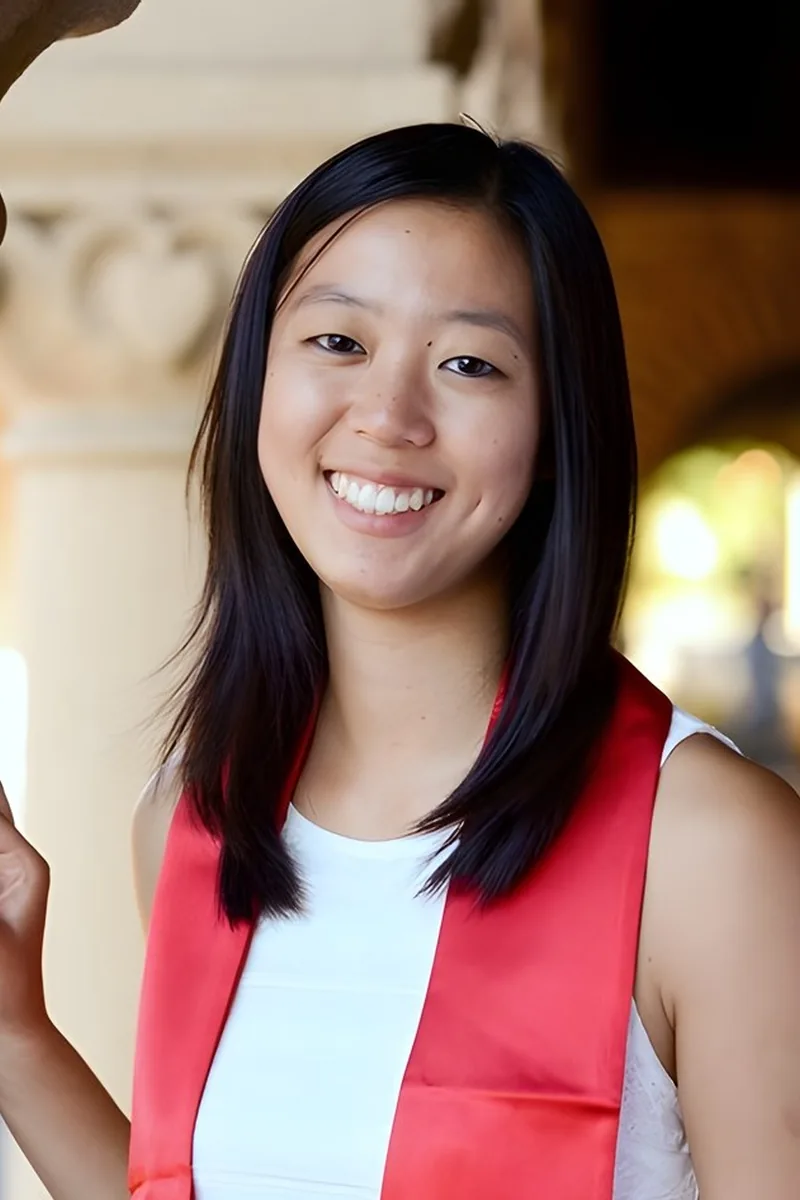
Caroline's background might start in mechanical engineering, but her role at the Children's Defense Fund requires daily writing — crafting program materials, editing reports, and communicating complex ideas clearly. She brings that real-world editorial instinct to English tutoring, walking students through thesis development, textual analysis, and how to structure an argument that actually holds together.

Nicholas reads philosophy for fun and brings that same close-reading discipline to English tutoring, teaching students to dissect an author's argument, trace themes across a text, and build written responses with clear evidence. His 36 ACT composite reflects sharp reading comprehension and writing skills that translate directly into essay construction and literary analysis.
Kari's English tutoring pulls from her background in theatre, American literature, and Shakespeare, which means students get someone who genuinely lights up when unpacking a poem or revising an essay's thesis. She zeroes in on close reading skills — annotation, identifying tone shifts, building textual evidence into arguments — that pay off across every English class and standardized test a student will encounter.
Editing hundreds of drafts as the head editor of an award-winning high school newsmagazine taught Eva something most English students learn much later — that strong writing is really rewriting, and every revision sharpens both the prose and the thinking behind it. Now a Comparative Literature student at Columbia, she brings that editorial instinct to grammar, close reading, and essay craft, catching the structural and sentence-level issues that keep a piece from landing. Rated 5.0 by students.
I'm a fourth year veterinary student at the University of Minnesota College of Veterinary Medicine. I graduated from SUNY Binghamton University in May 2019, with a BA in Biology, and a minor in Biological Anthropology.
Reading closely and writing clearly are skills David sharpened through Stanford's cognitive science program, where every paper required synthesizing research across disciplines into a coherent argument. He tackles English by connecting analytical reading — identifying tone, structure, and authorial intent — directly to the writing process, so students see how strong readers become stronger writers.
Between crafting his own successful college application essays and earning a perfect 36 ACT, Ryne developed a practical command of English that spans close reading, argument construction, and revision strategy. He's especially strong at teaching students how to build a thesis from textual evidence — the skill that separates average essays from compelling ones.
Engineering programs demand clear, structured writing on tight deadlines, which gave Vania constant practice building thesis-driven arguments and revising for clarity. She applies that discipline to English coursework by teaching students how to outline before drafting, integrate textual evidence smoothly, and self-edit for coherence — skills that transfer across every essay they'll write in high school or college.
Reading is the core of Emma's Classics education at Carleton, where she dissects everything from Virgil's rhetoric to modern literary criticism on a daily basis. She brings that close-reading discipline to English tutoring, teaching students how to identify an author's argument, trace motifs across a text, and build thesis-driven essays that go beyond plot summary.
Between her Digital Arts studies at Dartmouth and a lifelong love of reading and writing, Allison treats English as a craft — breaking down how authors build arguments, use rhetoric, and structure essays that actually hold a reader's attention. She's particularly sharp at teaching thesis development and textual analysis, connecting grammar mechanics to the bigger picture of clear, persuasive writing. Rated 4.9 by students.
As someone who mastered English while studying across three countries, Angela knows firsthand what it takes to move from competent reading to genuine comprehension — identifying an author's argument, tracking tone shifts, and pulling evidence from a text to support a claim. Her background in writing and literature makes her particularly effective at teaching students how to read critically and respond in clear, organized prose.
Between coaching college essays and editing academic writing, Eric knows how to sharpen a student's argument from a vague idea into a clear, well-supported claim. He digs into thesis development and textual evidence with the same logical rigor he applies to his computer science coursework at Washington University in St. Louis.
Poetry writing, political debate, and a genuine love of talking through ideas give Nisarg an unusual toolkit for English tutoring. He's especially effective at teaching students how to build an argument in an essay — structuring a thesis, selecting textual evidence, and revising drafts until the writing actually says what the student means it to say.
Teaching English across cultures — including classrooms in both Minneapolis and Paris — gave Anniessa an unusually sharp sense of how grammar, syntax, and composition work differently for native speakers versus language learners. Her M.Ed. in Second Languages and Cultures means she can diagnose whether a student's writing struggles stem from unfamiliar grammar rules, unclear organization, or gaps in reading comprehension, then address the actual root. Rated 5.0 by students.
Studying child development taught George how kids actually acquire language — the cognitive stages behind reading comprehension, grammar intuition, and the leap from understanding a text to writing about it clearly. He applies that developmental lens when tutoring English, adjusting how he explains everything from sentence mechanics to essay argumentation based on where a student's thinking currently sits. Rated 5.0 by students.
Seth's history degree from Carleton was really a degree in close reading and persuasive writing, which puts him squarely in his element for English coursework. He tackles everything from thesis construction in analytical essays to unpacking literary devices in novels and poetry, always pushing students to support their interpretations with specific textual evidence rather than vague claims about theme.
Strong English skills run through everything Kushal teaches, from the essay-writing strategies he coaches for college applications to the reading comprehension techniques he uses in test prep. He's particularly effective at teaching students how to build a clear thesis and support it with textual evidence — the backbone of any English class from middle school through college admissions essays.
Between literature analysis, essay editing, and SAT verbal prep, Adam has spent years working across the full spectrum of English skills. He's particularly sharp at teaching students how to build a clear argument in writing — structuring a thesis, selecting evidence, and revising for precision — because his political science training at Boston College demanded exactly that. Students who can think clearly on paper tend to read more critically too, and Adam connects those skills deliberately.
Strong writing starts with reading critically — identifying how authors build arguments, use evidence, and structure ideas for different audiences. Harry applies this analytical lens from his economics coursework at Carleton College, where breaking down dense texts and constructing clear, persuasive prose is a daily requirement. Rated 4.8 by students, he tackles everything from grammar mechanics to thesis development.
Reading a poem, writing a persuasive paragraph, and identifying an author's purpose all require different skills — Emily treats each one as its own teachable craft rather than lumping them under a generic "English" label. Her master's in elementary teaching and her experience across ESL, phonics, and literature mean she can pinpoint exactly which English skill a student needs to sharpen. Rated 5.0 by students and families.
Between her Cinema and Media Studies degree at Carleton and her IB diploma from Switzerland, Sarah has spent years close-reading texts of every kind — novels, films, essays, speeches. She teaches students to dig into literary devices like tone, symbolism, and narrative perspective with the same analytical rigor she applies to visual storytelling. That cross-disciplinary lens makes her especially effective at getting students to articulate what a text is really doing.
Travis's background spans political science, Spanish, ESL, and songwriting — an unusual mix that means he's constantly shifting between registers, audiences, and modes of communication. That versatility shows up in his English tutoring, where he's especially sharp on tone, word choice, and helping writers match their voice to their purpose. Rated 5.0 by students.
Most students don't associate an aerospace engineer with English, but Ethan tutors college essays, literature, and editing alongside his STEM subjects — and carries a 5.0 rating across all of them. He approaches reading and writing the same way he approaches engineering problems: break the prompt apart, identify what's really being asked, and build a clear, structured response.
Between her love of reading and writing and her experience across 14 AP exams, Lillian knows how to build an argument on a page and how to pull meaning out of a dense text. She teaches close-reading strategies that go beyond summarizing — identifying tone shifts, tracking an author's rhetorical choices, and turning observations into thesis-driven analysis.
Between scoring a 1500 SAT and writing extensively in her doctoral program, Marika has spent years sharpening both analytical reading and persuasive writing. She tackles English by connecting the skills — teaching students to pull apart an author's argument in a passage and then mirror that structure in their own essays and written responses.
Katie's theater and literary criticism training at the undergraduate level means she learned to read texts the way a dramaturg does — pulling apart dialogue, subtext, and authorial intent to build an interpretation she could defend in writing. That skill translates directly into teaching literary analysis and essay construction, especially for students who can identify a theme but struggle to turn it into a clear, evidence-driven argument. Her social work graduate training only deepened the precise, audience-aware communication she brings to grammar and composition.
Between his love of reading, writing, and art, Amrit brings a genuine curiosity to English that makes close-reading exercises and composition assignments feel less like chores. He walks students through the full arc of an English class — from annotating a passage for rhetorical strategies to drafting thesis-driven essays with well-integrated textual evidence.
Between her philosophy coursework and her math training, Audrey reads texts the way most people don't — pulling apart an author's argument structure, identifying assumptions, and evaluating whether the evidence actually supports the conclusion. She applies that analytical lens to reading comprehension, literary analysis, and essay writing, teaching students to build claims that hold up under scrutiny.
Between his background in Latin, literature, and college essay coaching, Danny approaches English as an integrated skill set: reading closely, building arguments from textual evidence, and writing with clarity. He's particularly strong at teaching students how to move from a rough thesis to a polished analytical paragraph, connecting what they read to what they put on the page.
Reading a novel and writing a polished essay about it require two very different skill sets, and Richard teaches both. He breaks literary analysis into concrete steps — identifying authorial choices, building a thesis from textual evidence, and structuring paragraphs that actually argue a point rather than just summarize plot. His background spanning AP History, literature, and essay editing gives him a cross-disciplinary lens on how to read critically and write persuasively.
Being able to explain your reasoning clearly is a principle David carries from his CS background into English tutoring, where constructing a coherent argument matters more than any single vocabulary word. He digs into thesis development, textual evidence, and paragraph-level organization, pushing students to articulate not just what they think but why. His 5.0 rating speaks to how well that approach connects.
Reading closely and writing persuasively are skills Celestine refined across two degrees and a dissertation that demanded clear argumentation on every page. She teaches students to build a thesis from textual evidence, tighten paragraph-level organization, and revise for both clarity and voice — treating each essay draft as an opportunity to sharpen thinking, not just fix errors.
Anna's English tutoring spans reading, writing, and literary analysis, but what ties it all together is close attention to language — how word choice shapes meaning, how sentence structure controls pacing, how an author builds an argument across paragraphs. She's equally comfortable dissecting a short story's symbolism and coaching a student through a five-paragraph essay. Her 5.0 rating speaks to how well that range translates to real improvement.
Reading a text closely and then turning that analysis into clear, organized writing is the core skill running through every English class, and it's where Brita does her strongest work. She teaches students how to build an argument from textual evidence — identifying tone, tracking themes, and translating those observations into paragraphs that say something specific.
Between his political science coursework at the University of Minnesota and his role as a debate coach, Rohit spends most of his time doing what English class demands — close reading, constructing arguments from textual evidence, and revising drafts until every paragraph earns its place. He teaches students to read like writers, noticing how authors build tone through diction and syntax before tackling their own analytical essays.
Between crafting political economy analyses, working on a science fiction novel, and scoring a 1530 SAT, Cleo lives inside the English language from multiple angles — argumentative, creative, and test-driven. She breaks down everything from close reading and thesis development to tone and rhetorical strategy, connecting each skill to the kind of writing students actually need to produce.
Brian approaches English as an argument-building discipline, teaching students how to craft thesis statements, organize evidence, and revise for clarity and tone. His experience writing college essays and research papers in both the sciences and humanities gives him a practical perspective on what makes prose effective. Rated 4.9 by students, he's especially strong at helping writers tighten their structure and sharpen their claims.
Michelle's approach to English leans on the close-reading and argumentation skills she's honed across both literature courses and her math education training — she treats a thesis statement like a claim that needs logical support. She walks students through essay structure, textual analysis, and revision with a clarity that makes the writing process feel less subjective.
A double major in Genetics and French, Jaya brings a cross-disciplinary reading habit to English tutoring — she's constantly dissecting dense texts across two very different fields, which sharpens her ability to teach close reading, thesis development, and paragraph structure. She tackles grammar and syntax as logical systems rather than arbitrary rules, making them click for students who think analytically.
Studying linguistics gave Laura a framework for understanding how English operates at every level — sentence structure, word choice, tone, argumentation. She applies that when teaching students to analyze literature, craft thesis-driven essays, or untangle complex reading passages. Her own creative writing habit keeps her connected to what makes prose actually compelling, not just technically correct.
Testimonials
Because the right English tutor makes all the difference.
Average Session Rating – Based on 3.4M Learner Ratings
Nearby English Tutors
Other St. Paul Tutors
Related English Tutors in St. Paul
Frequently Asked Questions
Varsity Tutors matches St. Paul students with expert English tutors for 1-on-1 instruction. We pair each student with a tutor based on their specific needs, learning style, and goals.
Whether you need homework help, exam prep, or want to get ahead, our English tutors are ready to help.
Common challenges include gaps from earlier material, difficulty with specific concepts, and trouble applying learning to new problems. These issues can snowball quickly in English.
A tutor identifies where you're stuck, fills in gaps, and provides targeted practice. The 1-on-1 format means you get help exactly where you need it.
Tutors work with your student's actual coursework—homework assignments, class notes, and upcoming tests. This keeps tutoring directly relevant to what's happening in the classroom.
When you share information about your student's school and curriculum, we can match you with a tutor who has relevant experience.
All tutors complete background checks, credential verification, and teaching evaluation. Many of our English tutors hold advanced degrees or have years of teaching experience.
You can review tutor profiles to find someone with the right background for your student's level and needs.
Many students see improved grades within a few weeks, along with better understanding of English concepts and more confidence tackling challenging material.
Tutors track progress and adjust their approach to ensure continued improvement.
Most students benefit from 1-2 sessions per week. More frequent sessions help if your student is significantly behind or has an important exam coming up.
Your tutor can recommend a schedule based on your student's specific situation and goals.
Tutoring is purchased in packages of hours, with rates varying by tutor experience. Varsity Tutors offers several options to fit different budgets and needs.
You can discuss pricing during your consultation to find what works best.
Your tutor will assess where your student is, discuss goals, and start working on priority areas. Most students bring current homework or upcoming test material to focus on.
By the end, you'll have a clear sense of how the tutor can help and a plan for moving forward.
Let’s find your perfect tutor
Answer a few quick questions. We’ll recommend the right plan and match you with a top 5% tutor.