Award-Winning Geometry
Tutors
Who needs tutoring?
FEATURED BY


TUTORS FROM
- YaleUniversity
- PrincetonUniversity
- StanfordUniversity
- CornellUniversity
Award-Winning Geometry Tutors

Certified Tutor
2+ years
Knowledge is powerful tool that can change your life and the lives of others. As a tutor my goal is to teach my students how to wield knowledge through embracing their mistakes and teaching them how to learn. I expect my students to approach sessions with an open mind and a willingness to learn. ...
University of Chicago
PhD
Purdue University-Main Campus
PhD

Certified Tutor
2+ years
My academic credentials include a Bachelor of Mathematics degree from the University of Texas at Arlington and a Master of Aeronautical Engineering from Stanford University. I am retired from 40+ years of engineering. The last thirty years was working in the flight simulation industry. I had re...
Stanford University
MS
The University of Texas at Arlington
MS

Certified Tutor
2+ years
I'm an MIT grad with 10+ years of experience tutoring SAT and ACT living in the Boston area. I work in finance, but my passion is teaching. If you work with me, I promise my enthusiasm and corny jokes will keep you motivated.
Boston College
MBA
Massachusetts Institute of Technology
MBA

Certified Tutor
2+ years
Theodore
I am a Master of Divinity student at Princeton Theological Seminary. I graduated Harvard College in 2016 and was a peer tutor at Harvard. Before Divinity School, I taught high school and middle school debate and was an SAT/ACT tutor in Birmingham, Alabama. I then taught middle school debate at Succe...
Harvard University
MD
Certified Tutor
2+ years
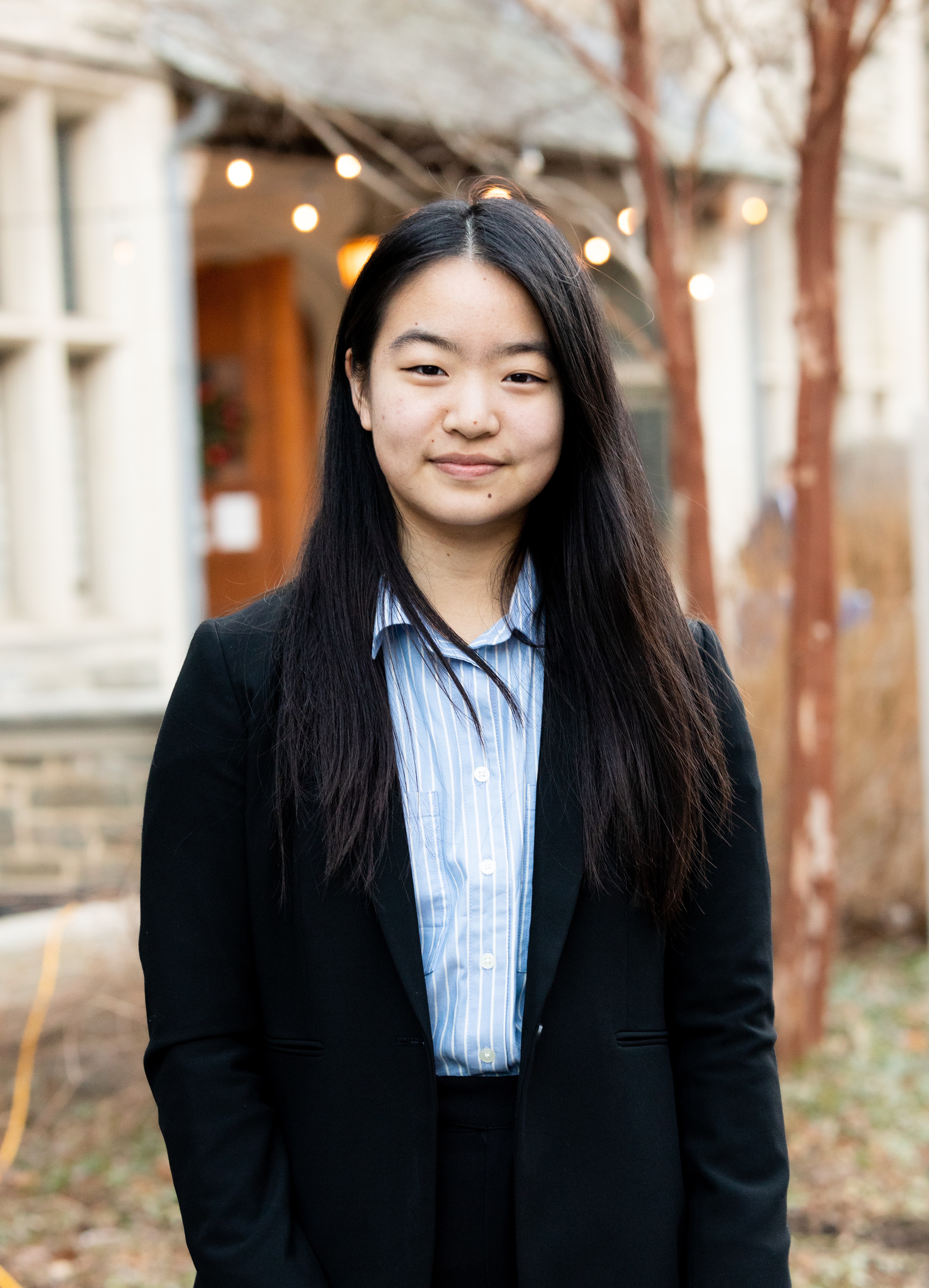
A 4.0 GPA in Business Economics at Wharton means Carina spent years working through quantitative models where geometric intuition — understanding slopes, areas, and spatial relationships — was baked into the coursework. She teaches geometry by connecting the visual logic of shapes and diagrams to th...
University of Pennsylvania
BS

Certified Tutor
2+ years
I have a strong background in science and engineering from RPI, MIT and CMU and attained the degrees of BS, MS and PhD from these universities respectively. I used my education as a engineer for designing nuclear reactors and after retirement I taught engineering subjects at various universities. ...
Massachusetts Institute of Technology
MS
Rensselaer Polytechnic Institute
MS

Certified Tutor
2+ years
Joseph
I'm passionate about helping students because I believe everyone deserves the tools and preparation to build a brighter future. Education isn't just about learning facts, it's about discovering your potential, and I love being part of that journey. I've worked with students from all levels, from ...
Yonsei University
Master's/Graduate
Lehigh University
Bachelor

Certified Tutor
2+ years
Harshit
Hello! I'm a passionate educator with a Ph.D. in Electrical Engineering and a love for making learning both effective and enjoyable. Over the years, I've taught a wide range of subjects, always with the goal of making even the most complex topics simple and approachable. My teaching style focuses o...
University of South Florida-Main Campus
Doctorate (PhD)
National Taiwan University
Master's/Graduate

Certified Tutor
2+ years
Peter
Hi - I'm Peter. I've always had a preference for math and science, which explains my undergrad choice in engineering. I graduated from Rensselaer Polytechnic Institute with a degree in Mechanical Engineering. I received my MBA (Industrial Management) from the Wharton Graduate Division at U. of Pa. M...
University of Pennsylvania
Master's/Graduate
Rensselaer Polytechnic Institute
Bachelor

Certified Tutor
2+ years
A philosophy major at Duke, Eric brings the same logical structure used in formal arguments — premises, valid inferences, conclusions — directly into two-column proofs and deductive reasoning about triangle congruence and angle relationships. His theater minor also trained him to think spatially abo...
Duke University
AB
Practice Geometry
Free practice tests, flashcards, and AI tutoring for Geometry
Top 20 Math Subjects


Meet Our Expert Tutors
Connect with highly-rated educators ready to help you succeed.
Patrick
Middle School Math Tutor • +76 Subjects
I am a retired teacher who tutors and writes and who has had decades of success motivating and preparing people for a range of tests and tasks. I also walk/jog 50-plus miles a week, do yoga, and exercise my critical thinking skills regularly. My students since 1979 have ranged from middle school urban and rural to university level juniors and seniors. While I spent almost ten years teaching higher ed. English Composition, Literature, and Research, the majority of my teaching time was in college preparatory curricula. I make a room comfortable when I come in but if it needs energized, I energize it.
Orne
Pre-Algebra Tutor • +14 Subjects
Hey! My name is Orne Akter and I am an undergraduate student at Harvard College under the majors of Neuroscience and Psychology! After 3 years of teaching Geometry and Algebra at my high school, I have picked up a passion for teaching students like myself! I can teach math (geometry, Algebra I/II, SAT math), English (SAT English, AP Lit/Lang, and general English courses). As I have just gotten through the college processes myself, I can also give deep insight into how the process works, strategies and tips I used to get into Harvard, and essay writing tips!
Seng Guan
Pre-Calculus Tutor • +8 Subjects
As a graduate of Stanford University with a PhD in Aeronautics and Astronautics, and a Bachelor of Engineering in Mechanical from the National University of Singapore (NUS), I bring a solid academic foundation to my role as a tutor. With over 19 years of experience teaching subjects such as mathematics, heat transfer, thermodynamics, and engineering plastics and composites, my approach centers on building a strong understanding of fundamental concepts before advancing to more complex topics. I am passionate about integrating real-world applications into my lessons, which helps students connect theoretical knowledge to practical scenarios. This not only enhances their learning experience but also fosters a deeper appreciation for the subject matter. As an adjunct faculty member at NUS, I strive to create a supportive learning environment where students feel encouraged to explore and ask questions, ultimately guiding them toward academic success.
Kevin
AP Calculus BC Tutor • +27 Subjects
I am a graduate from the University of Pennsylvania where I received a Bachelor of Arts in Chemistry. I started peer tutoring in high school, staying after school to help fellow students with AP Chemistry content before major exams and quizzes. I currently tutor in math (up to AP Calculus BC/Calculus II), chemistry, physics, biology and offer test prep for the SAT and several SAT Subject tests. However my favorite subjects to tutor involve chemistry, due to the various real world examples that make the subject more comprehensive and ultimately enjoyable for students. My hobbies and interests include dancing, solving crossword puzzles, binging Netflix TV shows and hiking.
Harleen
AP Statistics Tutor • +151 Subjects
I am a Molecular Engineering major at the University of Chicago, I am currently taking time off to focus on other aspects of my career but I don't want to stop tutoring outside college campus!. I am a child of immigrants and have spent my life tutoring my siblings and younger students, and I loved working with them! See y'all in class!
Kelcy
Pre-Algebra Tutor • +27 Subjects
I have an MBA from Rice University and both real-world business experience and teaching experience. Most recently, I taught a first-year college course in Microeconomics for nine years, in addition to other classes in the university's international trade program. My students came from over 30 countries! I've worked in over a dozen countries for the U.S. Department of Commerce, as well as for private firms in building engineering and the energy industry. I enjoy helping students gain competence and master their chosen area of study.
Lorenzo
AP Calculus BC Tutor • +45 Subjects
I'm Lorenzo! I'm a rising senior at the University of Pennsylvania studying engineering and education. Teaching has been a lifelong passion and in school I am a part of multiple tutoring organizations in the Philadelphia area. I am passionate about math and science (especially computer science), as they form a basis of thinking that can help in every other subject. I also thoroughly enjoy teaching Writing, English, and History because their applications are so useful in the real world. Other than my abilities, I bring positive energy and attitude that is great for any student.
Erika
Pre-Algebra Tutor • +50 Subjects
As an experienced tutor, I see myself in an important supporting role: there to help the student shine! Whether looking for help completing homework, preparing for tests, or building solid foundational knowledge to build upon in the years ahead, I am ready to tailor my support to your particular needs. I can help explain concepts, walk you through specific problems, or give you hints to help you score better. Let me know how I can best help you achieve your goals!
Ravi
AP Calculus AB Tutor • +63 Subjects
I am passionate about the broad implications and applications of the Science, Math, and Engineering in our daily lives - and enjoy teaching them to my own kids. Towards this end, I also want to leverage my 20+ years in graduate and post-doctoral science/engineering research, past undergraduate level teaching/tutoring experience in physics, math, geophysics, and scientific computation, along with 10+ years of scientific programming & system administration experience towards STEM tutoring/mentoring at school to college level.
Brooke
AP Statistics Tutor • +133 Subjects
Hi! I'm a student currently studying Government at Harvard, and I'm really looking forward to getting to work with you. I have experience tutoring high school students in a number of subjects, including math (Algebra 2 and Precalculus), English, History, and Spanish. I also have helped students write and revise college essays and supplementals. Additionally, I have experience with public speaking as captain of the Harvard Mock Trial team, which has awarded multiple times at the national championship. I'm happy to help with whatever you're looking for, and I feel strongly about catering my tutoring to each individual student's needs. I look forward to getting to work with you!
Top 20 Subjects
Frequently Asked Questions
Proofs require a fundamental shift from the procedural math students learned before—instead of following steps to get an answer, students must construct logical arguments using definitions, postulates, and theorems. Many students struggle because they don't see the "why" behind each step or don't know which properties to apply. A tutor can break down proof-writing into manageable strategies: identifying what you're given versus what you need to prove, working backward from the conclusion, and building a library of common proof patterns (like proving triangles congruent before using corresponding parts). This transforms proofs from mysterious puzzles into systematic problem-solving.
Spatial reasoning—picturing how shapes move, rotate, and relate in space—doesn't come naturally to all learners, yet it's essential for topics like rotations, reflections, cross-sections of solids, and coordinate geometry. Tutors use concrete strategies like having students sketch from multiple perspectives, manipulate physical models or digital tools, and translate between 2D diagrams and 3D objects. By practicing these visualization techniques repeatedly and connecting them to specific problems, students build mental models that make concepts like volume formulas and perspective drawings click. This hands-on approach helps students move from confusion to confidence when tackling spatial problems.
Geometry word problems often require students to translate written descriptions into accurate diagrams first—a step that algebra word problems don't emphasize as heavily. Students must identify which geometric properties (like angle relationships, triangle congruence, or circle theorems) apply to the situation before they can even set up equations. Tutors teach a structured approach: carefully read and annotate the problem, sketch and label a diagram accurately, identify the relevant geometric relationships, then solve. Many students skip the diagram step and get lost; tutoring emphasizes that the diagram is your roadmap. This methodical process turns confusing word problems into solvable challenges.
Students often confuse angle relationships—complementary vs. supplementary, corresponding vs. alternate interior angles, or angles formed by tangent and chord—because there are many similar-sounding rules to remember. Rather than memorizing in isolation, tutors help students see the underlying patterns: why alternate interior angles are equal (parallel lines create symmetry), how inscribed angles relate to central angles (both measure the same arc), or why exterior angles of a triangle equal the sum of remote interior angles. By connecting these relationships to visual patterns and proofs, students understand them deeply enough to apply them in unfamiliar contexts, rather than just pattern-matching on tests.
Many students treat Coordinate Geometry as a separate topic rather than seeing it as algebra applied to shapes—they can find slopes and write equations of lines, but don't connect these tools to proving properties of quadrilaterals or finding distances. Tutors explicitly bridge this gap by showing how the distance formula comes from the Pythagorean theorem, how slope determines parallel and perpendicular lines, and how equations of lines define the sides of geometric figures. When students see that they're using familiar algebra to verify geometric properties (like proving a quadrilateral is a rectangle by checking that opposite sides are parallel), Coordinate Geometry becomes a powerful tool rather than a confusing new section.
In Geometry, getting the right numerical answer means little without explaining *why* it's correct—teachers and tests emphasize reasoning and justification more heavily than in algebra. Students must cite theorems, postulates, or previously proven statements for every claim, which feels tedious until they understand it's the entire point of the subject. Tutors teach students to think like mathematicians: state what you know, explain what property or theorem applies, and show how it leads to your conclusion. By modeling this reasoning process on simple problems and gradually increasing complexity, students internalize that Geometry is about building logical arguments, not just calculating. This shift in mindset makes grading rubrics make sense and helps students write clearer, more convincing proofs.
Students often confuse congruence (same shape and size) and similarity (same shape, different size) because both involve matching angles and proportional sides—the vocabulary sounds abstract. Tutors use visual comparisons and real-world examples: congruent triangles are identical copies you could overlay perfectly, while similar triangles are enlargements or reductions of each other. More importantly, tutors teach students to recognize *when* each concept applies: use congruence to prove that segments or angles are equal (via SSS, SAS, ASA), and use similarity to find unknown lengths or prove angle relationships in figures with parallel lines. By connecting these tools to specific problem types, students stop treating them as isolated definitions and start seeing them as strategies for solving different geometric challenges.
The circle unit introduces a flood of theorems—inscribed angles, tangent-chord angles, power of a point, secant-secant angles—that can feel overwhelming because each one looks different and has its own rule. Rather than memorizing each theorem separately, tutors help students see the unifying principle: all these angle measures relate to arcs of the circle. By focusing on how different configurations (inscribed, tangent, secant) create different angle-to-arc relationships, students build intuition rather than relying on memorization. Tutors also teach students to draw and label diagrams carefully, identify which angle and arc they're dealing with, and apply the appropriate relationship—this systematic approach makes the unit feel manageable and helps students retain concepts long-term.
Connect with Geometry Tutors
Get matched with expert tutors in your subject