Award-Winning Economics Tutors
serving Madison, WI
Economics
Tutors in Madison
Private 1-on-1 tutoring, weekly live classes for academic support, test prep & enrichment, practice tests and diagnostics, and more to elevate grades and test scores.
Based on 3.4M Learner Ratings
UniversitiesSchools & Universities
DeliveredHours Delivered
ProficiencyGrowth in Proficiency
Who needs tutoring?
No obligation. Takes ~1 minute.

Supply and demand is just the starting point — the real challenge in economics is understanding how incentives ripple through markets, governments, and individual decisions. Maddy's economics coursework at Vanderbilt gives her a working fluency with concepts like opportunity cost, comparative advantage, and market equilibrium that she translates into clear, intuitive explanations.
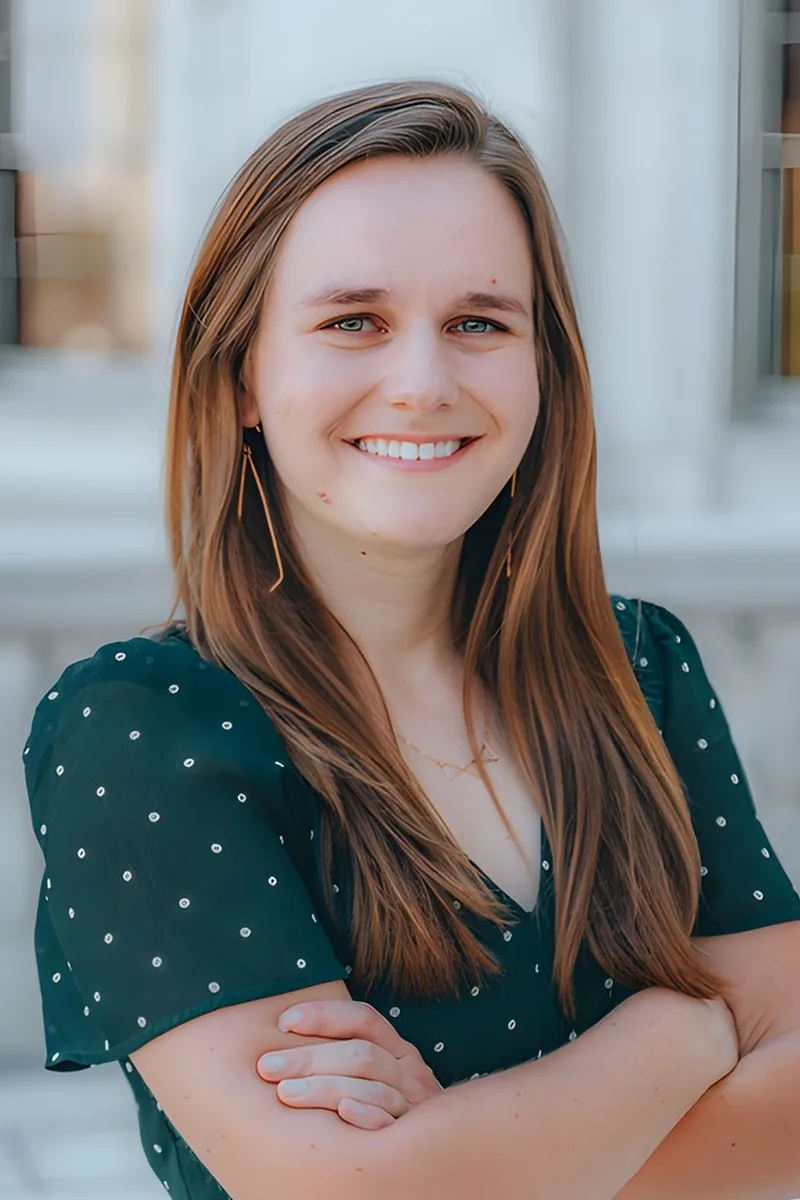
I'm fluent in R, Python, SQL, and M (MUMPS). This September I will be pursuing a Master's degree in data science. I'm available to tutor GRE, ACT, and SAT math as well as other math, statistics, and economics subjects. Although I am most passionate about math, I'm also happy to help students with general testing strategies and preparation for the other parts of the standardized exams.
Breanna's background isn't in economics specifically, but her statistics and math teaching experience means she's comfortable with the quantitative side — interpreting supply and demand graphs, calculating elasticity, or working through the algebra behind equilibrium models. Her counseling training also gives her a sharp read on where a student's confusion actually lives, so she can adjust explanations on the fly rather than repeating the same approach louder.
I'm now living in New York City pursuing a career in casting and producing theater. Although I have found my passion in the arts, I find great fulfillment tutoring math and science, because I think it's important for students to know they can succeed in these challenging subjects. I seek to develop an individual learning plan for each student, discovering the tools that will best help them succeed. My previous private tutoring clients have gone on to graduate at the top of their class. In addition, I am also an experienced SAT and ACT prep tutor.
Double-majoring in economics and international relations at Tufts meant Mark studied microeconomic and macroeconomic theory alongside the geopolitical forces that shape trade agreements, sanctions, and development — giving him a built-in habit of connecting models like comparative advantage or exchange rate dynamics to actual global events. Heading to Duke Law this fall adds a policy dimension, since he's already thinking about how legal frameworks and economic incentives interact. Rated 4.9 by his students.
Supply and demand curves are simple enough on the surface, but economics gets slippery once you hit elasticity, market failures, or GDP accounting. George tackles these concepts through his finance and accounting training at the Wisconsin School of Business, where economic theory isn't abstract — it's the foundation for real financial decisions. He connects models to concrete scenarios so the logic clicks rather than just the formulas.
Two internships at major accounting firms — CLA and Forvis — gave Aubriana a front-row seat to how economic forces like tax policy, interest rates, and market cycles shape actual business decisions. She uses that practical lens when teaching topics like supply and demand or fiscal policy, tying textbook models back to the financial realities she's seen in audit and tax work. Rated 5.0 by her students.
Supply and demand curves are simple enough on the surface, but Economics gets tricky when students have to apply elasticity, market structures, or GDP accounting to unfamiliar scenarios. Josh's business administration degree with an actuarial focus means he learned economics through a quantitative, real-world lens — and that's how he teaches it.
Ian studied economics formally and uses that training to teach the subject the way it actually works: as a framework for analyzing tradeoffs, incentives, and unintended consequences. He covers both micro and macro foundations — supply and demand, market structures, national income accounting — and emphasizes graph interpretation and free-response writing, since those are where most students lose points on exams.
Supply and demand curves are straightforward until students have to apply them — analyzing price ceilings, tax incidence, or shifts in aggregate demand on an exam. Raechal connects each economic model to real-world scenarios so the graphs and terminology make intuitive sense, not just textbook sense.
At its core, economics is about modeling how systems behave under constraints — which is exactly what Brendan does every day as a mechanical engineering student at Marquette. He explains supply and demand, opportunity cost, and market equilibrium by grounding abstract theory in concrete, real-world examples that stick.
I am pursuing a Math/Stats & Computer Science B.A. at Carleton College. I love learning and helping others learn, and I live for those "ah-ha!" moments, both the ones I experience myself and those I experience through others.
I am currently studying at Northwestern University, on the track to a Bachelor of Arts in Statistics with a double major in Mathematical Methods in the Social Sciences, which is just a fancy way of saying math-based economics, and a minor in Legal Studies as well as Marketing. After my undergraduate studies, I plan on working in consulting for a few years before attending law school. Finally, I hope to combine my law studies with my consulting work to become a well-rounded corporate lawyer. At Northwestern, I provide SAT tutoring to Chicago-area juniors and seniors. In high school, I tutored third through fifth graders in basic reading and writing skills and developed their interpersonal skills through group crafts and teamwork activities. While I am open to tutoring a broad range of subjects and tests, I am most passionate about Math, Statistics, Economics, and US History. In my experience helping students prepare for the SAT, I have found that interactive activities and group work really help! I am a firm believer in the work-hard-play-hard mindset and find it to be absolutely necessary for a balanced lifestyle, and I try to impart this appreciation to all of my students. While I encourage my students to keep up with their studies and work hard, I also believe that studying needs to be balanced out with interests and fun.
Kevin's Philosophy, Politics, and Economics major at the University of Pennsylvania means he studies economics not as an isolated discipline but as something deeply entangled with policy decisions and ethical trade-offs. He breaks down concepts like market equilibrium, elasticity, and game theory by connecting them to real political and social questions that make the logic behind the models click.
Three economics degrees deep, Simon lives in supply-and-demand curves, GDP models, and game theory the way most people live in their native language. He unpacks concepts like elasticity, monetary policy, and market equilibrium by tying them to real headlines — tariff debates, Federal Reserve decisions, housing markets — so the math and the intuition reinforce each other.
As a Cornell economics major, Tameem is still immersed in the coursework — working through the same models, problem sets, and exam formats that students are currently facing. That proximity to the material makes him particularly sharp on the foundational concepts that drive intro and high school economics, like how shifts in aggregate demand connect to unemployment and inflation or why price elasticity changes a firm's revenue strategy.
Dylan's undergraduate degree in Policy Analysis and Management required working through the economic frameworks that underpin real policy decisions — microeconomic reasoning about incentives, cost-benefit trade-offs, and how markets respond to regulation. His additional coursework in econometrics and AP Microeconomics means he can move fluidly between the intuitive side of economics and the quantitative tools students need to actually model outcomes.
Jake's marketing degree means he studied the demand side of economics firsthand — consumer behavior, pricing strategy, and how firms respond to market signals are concepts he's applied, not just memorized. His strong quantitative background (he tutors AP Statistics and both AP Calculus courses) lets him handle the graphing and algebraic reasoning that economics problems demand when students move past definitions into actual analysis. Rated 4.9 by his students.
Matt's undergraduate economics degree gives him genuine fluency with the core material — supply and demand mechanics, market structures, opportunity cost — while his theatre and acting training means he knows how to make a dry lecture on GDP or fiscal policy feel like a conversation worth having. A 34 ACT composite speaks to the kind of analytical sharpness that keeps explanations tight and precise, especially when students need to connect graphs to the economic reasoning behind them.
Rithi's quantitative backbone — a neuroscience degree, a master's in biotechnology, and deep coursework in statistics and calculus — means she can tackle the math-heavy side of economics that often catches students off guard, like working through elasticity calculations, interpreting cost curves, or setting up optimization problems. Her 4.9 rating speaks to an ability to make that quantitative reasoning feel approachable even for students who came in expecting a purely conceptual course.
A PhD candidate in economics at Yale with undergraduate degrees in physics and math from the same institution, Anthony brings serious quantitative firepower to the subject — the kind that matters when courses pivot from intuitive ideas about markets into optimization problems, game theory, or econometric proofs. He also teaches AP Micro, AP Macro, and econometrics, so he can connect introductory concepts to the formal models students will encounter as the material deepens. Rated 5.0 by his students.
Studying economics and legal studies at Penn means Ethan lives inside the overlap between market forces and the rules that shape them — how antitrust law changes competitive dynamics, or why regulatory frameworks matter as much as supply curves. That legal dimension gives him a useful angle for explaining topics like market failures and government intervention, where the textbook model and the real-world outcome don't always match up. His 35 ACT speaks to the kind of analytical sharpness that translates well into breaking down econ problem sets.
Double-majoring in Economics and History at UCLA meant Christopher studied economic models alongside the policy debates and institutional shifts that produced them — so concepts like fiscal multipliers or trade deficits come with built-in context, not just formulas. His post-college work at Deutsche Bank gave him a front-row seat to how macroeconomic forces actually ripple through financial markets, which keeps his explanations grounded in observable outcomes.
Studying economics at Dartmouth with a computational emphasis, Eric digs into both the theoretical models and the real-world data that test them. He's particularly effective at unpacking concepts like elasticity, comparative advantage, and market equilibrium — translating the math into plain-language reasoning that sticks.
Caltech's economics program is heavily quantitative — Brian's coursework there meant building economic models with real calculus and statistical tools, not just sketching supply-and-demand curves. His computer science double major adds a computational edge that's particularly useful for students tackling game theory, optimization problems, or any econ course where the math suddenly gets serious. His 1580 SAT reflects the kind of analytical precision he brings to breaking down dense material.
Testimonials
Because the right Economics tutor makes all the difference.
Average Session Rating – Based on 3.4M Learner Ratings
Nearby Economics Tutors
Other Madison Tutors
Related Business Tutors in Madison
Frequently Asked Questions
Economics requires students to think abstractly about systems, incentives, and trade-offs—concepts that don't always feel intuitive at first. Many students struggle with graphing supply and demand curves, understanding elasticity, or connecting real-world events to economic principles. Personalized 1-on-1 instruction helps break down these complex ideas into digestible pieces and shows how they apply to situations students actually care about.
High school Economics (typically a semester or year-long course) focuses on foundational concepts like scarcity, opportunity cost, supply and demand, and basic macroeconomics. College-level Economics becomes more rigorous, with calculus-based models, econometrics, and deeper analysis of market failures and policy. Tutors can help students master whichever level they're studying and prepare for the jump to more advanced coursework.
AP Economics includes two exams: Microeconomics and Macroeconomics, each with 60 multiple-choice questions and free-response sections that require students to analyze graphs, calculate elasticity, and explain economic concepts. Success requires not just memorizing definitions but deeply understanding how to apply economic reasoning to unfamiliar scenarios. Personalized tutoring helps students practice with released exams, identify weak spots, and develop strategies for the free-response section where many students lose points.
Economic graphs require students to interpret multiple variables at once—price, quantity, shifts in curves, and the meaning of equilibrium points. Without clear scaffolding, these visual representations feel abstract and disconnected from real behavior. A tutor can walk through graphs step-by-step, explain what each shift means economically, and have students practice translating between written scenarios and visual models until the patterns click.
A tutor will start by understanding where you are—whether you're taking high school Economics, AP Micro/Macro, or college-level courses—and what specific topics are giving you trouble. They'll work through a problem or concept with you to see how you think through economic questions, then create a personalized plan to target your gaps. Most students leave the first session with a clearer understanding of at least one challenging topic and concrete strategies for tackling homework or test prep.
In a classroom of 25+ students, there's limited time to explore how inflation affects your family's budget or why certain industries have pricing power. With personalized instruction, tutors can use examples relevant to your interests—whether that's tech companies, sports economics, or policy debates—to make abstract concepts concrete. This approach not only deepens understanding but also makes Economics feel relevant and interesting rather than purely theoretical.
Look for tutors with strong backgrounds in Economics—whether that's a degree in Economics, Business, Finance, or related fields, plus teaching experience. For AP or college-level prep, verify they've successfully helped students tackle those specific exams or courses. Varsity Tutors connects you with tutors who have proven expertise in Economics and a track record of helping students improve their understanding and grades.
With consistent, focused tutoring—typically 1-2 sessions per week—students often see noticeable improvement in understanding within 3-4 weeks and measurable grade improvement within 6-8 weeks. The timeline depends on where you're starting and what you're working toward (homework help vs. AP exam prep). Regular practice between sessions and applying concepts to new problems accelerates progress significantly.
Let’s find your perfect tutor
Answer a few quick questions. We’ll recommend the right plan and match you with a top 5% tutor.