Award-Winning Organic Chemistry Tutors
serving Madison, WI
Organic Chemistry
Tutors in Madison
Private 1-on-1 tutoring, weekly live classes for academic support, test prep & enrichment, practice tests and diagnostics, and more to elevate grades and test scores.
Based on 3.4M Learner Ratings
UniversitiesSchools & Universities
DeliveredHours Delivered
ProficiencyGrowth in Proficiency
Who needs tutoring?
No obligation. Takes ~1 minute.

A zoology degree means Eitan encountered organic chemistry where it matters most — understanding how biomolecules behave, how enzymes catalyze specific transformations, and why functional groups dictate a molecule's biological fate. He uses that life-science context to teach concepts like stereochemistry and carbonyl reactivity in ways that feel grounded rather than abstract. Rated 5.0 by students.
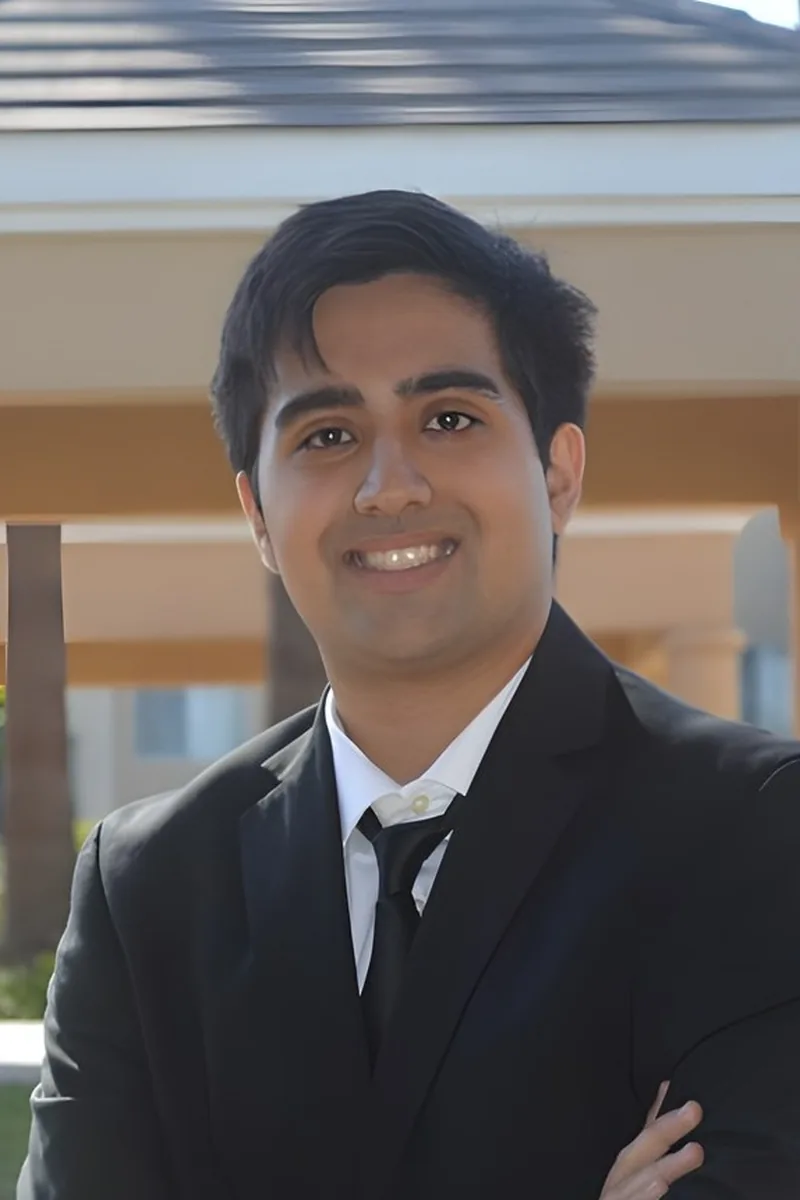
Reaction mechanisms are the language of organic chemistry, and most students struggle because they try to memorize arrows instead of understanding electron flow. Abrahim unpacks each mechanism — SN1 vs. SN2, E1 vs. E2, electrophilic aromatic substitution — by starting with nucleophilicity, sterics, and leaving-group ability so the logic drives the arrow-pushing rather than the other way around. His 5.0 rating speaks to how well that approach clicks.
Working in a cancer biology research lab means Yasheen encounters the organic chemistry behind drug design and molecular signaling every day — not as textbook problems, but as real questions about how functional groups determine a molecule's behavior in living systems. She connects that bench-level intuition to the arrow-pushing, stereochemistry, and carbonyl reactivity students need to master in their orgo courses. Rated 5.0 by students.
Reaction mechanisms are the core of organic chemistry, and most students struggle because they try to memorize arrow-pushing patterns instead of understanding why electrons move where they do. Jamie has tutored organic chemistry extensively alongside his pre-med and medical coursework, and he teaches students to read a mechanism the way you'd read a sentence — identifying the nucleophile, the electrophile, and the driving force before ever drawing an arrow.
Most organic chemistry frustration comes from trying to memorize hundreds of reactions instead of recognizing the handful of electronic patterns — nucleophilic attack, leaving group ability, steric effects — that drive all of them. Garrett teaches students to read arrow-pushing mechanisms as stories about electron movement, which makes predicting products and regiochemistry intuitive. His approach turns reaction maps from overwhelming charts into logical flowcharts.
Penn's pre-health track put Brittany through rigorous chemistry coursework alongside her psychology degree, and she spent her undergraduate years tutoring General Chemistry I and II at the university's Tutoring Center — building the kind of fluency with reaction fundamentals that carries directly into organic mechanisms. She approaches topics like nucleophilic substitution and carbonyl reactivity by connecting them back to the foundational principles of electron behavior and molecular structure, making each new reaction type feel like an extension of something students already know.
Reaction mechanisms become far less intimidating when you can see the electron movement as a story rather than a set of arrows to memorize. Monika's biochemistry degree required deep fluency in organic chemistry — from nucleophilic substitutions through multi-step synthesis — and she teaches students to predict products by understanding why electrons move, not just where.
Four years of tutoring organic chemistry at Yale — while simultaneously doing pre-med coursework — gave Marcus a sharp sense of where students get stuck, particularly with carbonyl reactivity and multi-step synthesis planning. His current research at the Hospital for Special Surgery keeps him actively applying these concepts, so he teaches functional group transformations as interconnected tools rather than an isolated reaction catalog.
Chemical engineering at Cornell meant Rahul didn't just pass organic chemistry — he applied it daily in reactor design, synthesis planning, and thermodynamic analysis of reaction pathways. That engineering lens gives him a distinctive angle on topics like carbonyl chemistry and stereoselectivity, where he ties mechanism logic back to energy landscapes and kinetic versus thermodynamic control. Rated 4.9 by students.
Reaction mechanisms are the language of organic chemistry, and Daniel learned to speak it fluently through his microbiology and dental science training. He walks through arrow-pushing, stereochemistry, and functional group reactivity by emphasizing the "why" behind each electron movement — so students can predict products on exam day instead of relying on memorized templates.
Being on the pre-med track at Northwestern while studying both biology and chemistry means Kade is taking organic chemistry alongside the same students he tutors — he knows which professors emphasize what, which problem sets are brutal, and where the common mistakes hide in topics like stereochemistry and acyl substitution. That proximity to the material gives him a practical, recently-tested understanding of how to break down multi-step synthesis problems into manageable pieces.
Reaction mechanisms are the language of organic chemistry, and Josef teaches students to read them — arrow pushing, stereochemistry, and functional group reactivity — rather than memorize hundreds of individual reactions. His biochemistry focus at Cornell means he can connect orgo concepts like nucleophilic substitution and carbonyl chemistry directly to biological molecules students will encounter later.
Reaction mechanisms are the language of organic chemistry, and David treats them that way — once a student can read electron flow through curved arrows, predicting products for substitution, elimination, and addition reactions becomes systematic rather than overwhelming. His Yale neuroscience training required two semesters of organic chemistry, and he still uses those fundamentals daily in his bioethics graduate work.
Most organic chemistry struggles come down to not recognizing patterns — why a nucleophile attacks here and not there, or how electron-pushing arrows predict a product. Eric's graduate training in chemistry means he teaches reaction mechanisms as a connected framework of electronic and steric principles rather than a list of isolated reactions. Students rated him 5.0.
Testimonials
Because the right Organic Chemistry tutor makes all the difference.
Average Session Rating – Based on 3.4M Learner Ratings
Practice Organic Chemistry
Free practice tests, flashcards, and AI tutoring for Organic Chemistry
Nearby Organic Chemistry Tutors
Other Madison Tutors
Related Science Tutors in Madison
Frequently Asked Questions
Organic Chemistry requires visualizing 3D molecular structures and understanding reaction mechanisms that aren't always intuitive on a 2D page. Many students struggle with memorizing reaction types and conditions, but the real challenge is connecting those mechanisms to predict outcomes in new situations. Personalized tutoring helps students move beyond memorization to develop the spatial reasoning and logical thinking that make Organic Chemistry click.
Expert tutors help you understand the 'why' behind lab procedures—why you use specific reagents, what reactions are occurring, and how to interpret results. This deeper understanding transforms lab from following steps into genuine scientific inquiry. Tutors can also help you prepare for lab reports and troubleshoot when experiments don't go as expected, reinforcing both content knowledge and practical scientific skills.
Reaction mechanisms are the foundation of Organic Chemistry—they explain how and why molecules transform. Personalized instruction breaks down electron movement, intermediate steps, and stereochemistry into manageable pieces, then builds your ability to predict new mechanisms. Practice with immediate feedback helps you develop the pattern recognition skills that make mechanism problems feel less overwhelming and more systematic.
Synthesis problems require working backward from a target molecule to plan a multi-step route—a skill that takes practice to develop. Tutors teach you systematic strategies: identifying functional groups, recognizing key transformations, and building a toolkit of reactions. With guided practice, students learn to approach unfamiliar synthesis problems with confidence rather than guessing.
Your first session focuses on understanding where you are and where you want to go. Tutors assess your grasp of foundational concepts like bonding, polarity, and acid-base chemistry, then identify specific areas—whether it's mechanisms, stereochemistry, or synthesis—that need attention. You'll leave with a clear picture of how personalized instruction will help you build mastery and confidence in Organic Chemistry.
Many students struggle to translate between 2D structural formulas and 3D molecular reality. Expert tutors use multiple visualization strategies—drawing techniques, molecular models, and practice converting between representations—to build your spatial reasoning skills. This stronger mental model of molecular geometry directly improves your ability to predict reactivity and understand stereochemistry.
Yes. Organic Chemistry grades depend on both conceptual understanding and problem-solving speed, and personalized tutoring addresses both. Students who work with tutors typically see improvements in exams, problem sets, and lab reports because they're learning to think like organic chemists rather than memorizing disconnected facts. The timeline depends on where you're starting, but consistent tutoring usually shows results within a few weeks.
Varsity Tutors connects you with tutors who have strong backgrounds in chemistry—many hold degrees in chemistry, biochemistry, or related fields, and many have teaching or tutoring experience. When you connect with a tutor, you can review their qualifications and experience with Organic Chemistry specifically. This ensures you're getting instruction from someone who not only knows the content but understands how to teach it effectively.
Let’s find your perfect tutor
Answer a few quick questions. We’ll recommend the right plan and match you with a top 5% tutor.