Award-Winning Geometry Tutors
serving Madison, WI
Geometry
Tutors in Madison
Private 1-on-1 tutoring, weekly live classes for academic support, test prep & enrichment, practice tests and diagnostics, and more to elevate grades and test scores.
Based on 3.4M Learner Ratings
UniversitiesSchools & Universities
DeliveredHours Delivered
ProficiencyGrowth in Proficiency
Who needs tutoring?
No obligation. Takes ~1 minute.
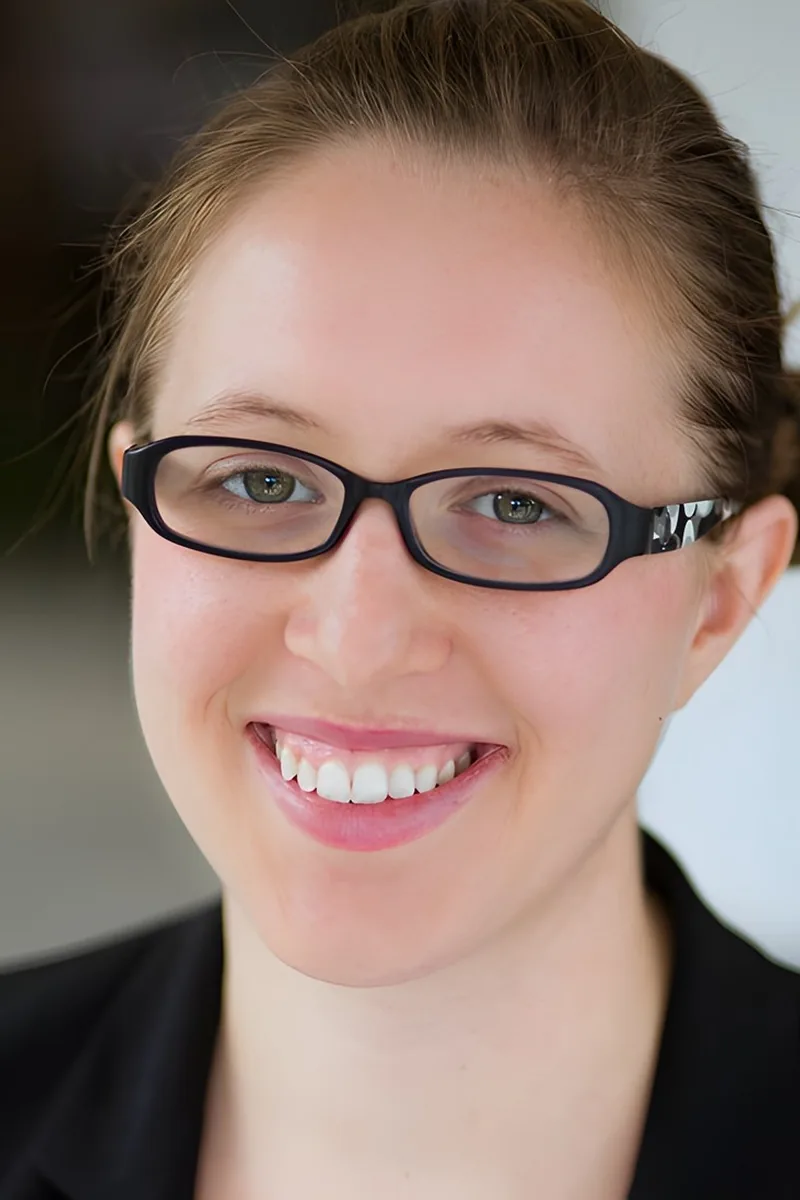
Theater training builds a surprising skill for geometry: Amber's background in staging and set design means she's used to thinking about space, angles, and spatial relationships in practical, visual terms — which translates directly to topics like transformations, reflections, and symmetry. She teaches students to sketch and annotate diagrams before jumping into calculations, turning abstract problems into something they can actually see and reason through. Rated 5.0 by students.
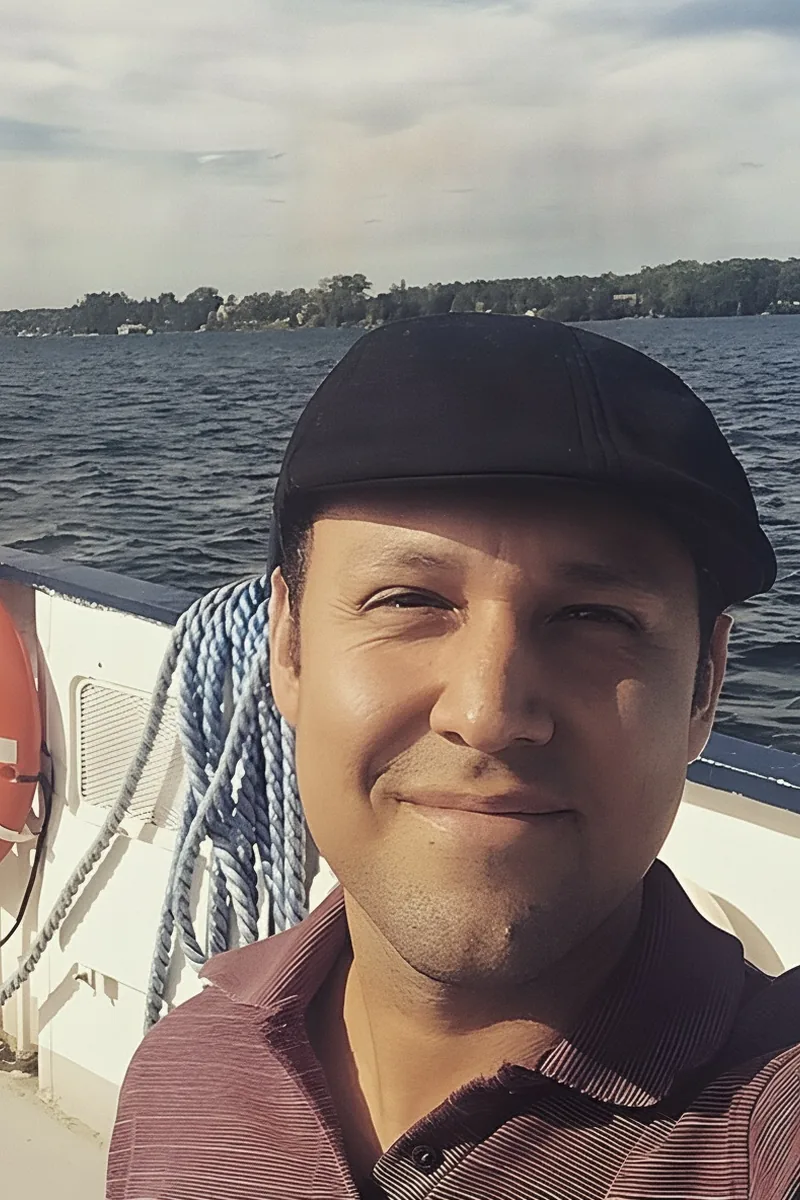
Richard approaches geometry as a logic course disguised as a math class, spending real time on how to construct proofs and reason through angle relationships rather than just memorize postulates. His math degree gives him the formal training to explain why a theorem is true, which makes applying it to new problems far easier.
Proofs trip up a lot of geometry students because they require a completely different kind of thinking — building logical arguments instead of just computing answers. Shona's math background at Johns Hopkins was heavy on rigorous reasoning, and she applies that training to teach students how to structure two-column and paragraph proofs while also tackling angle relationships and triangle congruence.
Most geometry courses rush past the "why" of proofs to get to area and volume formulas, but Aaron does the opposite — he lingers on the reasoning. He's a fan of results like Thales' theorem, where dragging a point around a circle suddenly reveals that every inscribed angle on a diameter is exactly 90°, turning an abstract proof into something students can see and feel. That sense of surprise, rooted in his PhD-level mathematical thinking, makes geometric logic stick.
Proofs are where most geometry students panic — the jump from calculating angles to constructing logical arguments feels like a different subject entirely. Eitan walks through each proof as a chain of small, defensible claims, teaching students to spot which theorems apply and why. His 5.0 rating speaks to how well that structured approach lands.
Proofs are usually the first place geometry students get stuck — going from "I can see it's true" to writing a logical chain of reasons feels like learning a new language. Connor teaches proof structure as a skill in itself, walking through how to set up two-column and paragraph proofs for congruence, similarity, and circle theorems. His 5.0 student rating speaks to how clearly he communicates these ideas.
Years of counseling and teaching have given Breanna a sharp eye for the specific moment a student's confidence breaks down — and in geometry, that moment usually arrives with proofs. She approaches two-column and paragraph proofs as structured storytelling, connecting each logical step to the visual diagram so students see why a statement follows, not just that it does. Her education background across math levels from pre-algebra through calculus means she can quickly spot and patch the algebraic gaps that make geometric reasoning harder than it needs to be.
Lab science is full of geometry most students never think about — measuring angles of incidence under a microscope, calculating cross-sectional areas of cultures, reasoning about three-dimensional cell structures from two-dimensional slides. Samantha's microbiology work at UW-Madison built that kind of spatial intuition, and she brings it to bear on everything from triangle congruence to circle theorems. Rated 5.0 by students.
Proof-writing is usually where Geometry goes from comfortable to confusing, and Zach addresses that head-on by teaching students how to build a logical chain from given information to conclusion. He also digs into coordinate geometry and circle theorems with the same structured approach. As a biochemistry major who scored a 33 ACT, he brings both mathematical rigor and clear communication to every session.
Proofs are usually the part of Geometry that throws students off, because they require a completely different kind of thinking than computation. Almira approaches them as logical arguments — setting up given information, identifying the right postulates, and building toward a conclusion step by step. Her 4.2 GPA and STEM academy training gave her years of practice with exactly this kind of structured reasoning.
Proofs are usually where Geometry students panic, and Sarah tackles that head-on by teaching how to read a diagram like a logical argument — identifying given information, spotting congruence relationships, and building toward a conclusion step by step. Her computer science training reinforces this structured thinking, since writing code and writing proofs share the same demand for precise, sequential logic.
Coordinate geometry and transformations click faster when a student can connect them to something concrete, and Halle's biology background gives her a knack for grounding abstract spatial concepts in real-world structure — symmetry in organisms, geometric patterns in cell division, angles in molecular shapes. She breaks down each problem type, from area and volume to angle relationships, by making sure students can sketch and reason through it before touching a formula. Rated 5.0 by students.
Proofs are usually where geometry students hit a wall, because suddenly math asks them to argue logically instead of just compute. Eric walks through proof construction step by step, teaching students to identify which theorems about parallel lines, congruent triangles, or circle properties actually apply — a reasoning skill that pays off well beyond the geometry classroom.
Tutoring 13 different college math courses at UW-Madison means Mingxi has seen geometry concepts resurface everywhere — from the vector spaces of linear algebra to the curves of calculus — and he brings that wider perspective back to the high school level. He unpacks the logic behind constructions and circle theorems by connecting them to the algebraic reasoning students already have, making the jump from computation to proof feel natural rather than foreign. Rated 4.7 by students.
Competition math taught Tracy to look at a geometry figure and immediately spot the relationships that matter — which triangles are similar, where auxiliary lines unlock a problem, how a single angle chase can crack open a complicated diagram. That instinct, sharpened through years of math competitions and a 36 ACT, carries over directly when she teaches students to approach proofs and problem-solving with strategy instead of panic. Rated 4.9 by students.
Proofs are usually where geometry stops being fun — students go from measuring angles to writing logical arguments, and the shift feels sudden. Matt approaches proofs as puzzles with clear rules, teaching students to identify given information, spot congruence relationships, and build each step with purpose rather than guesswork.
Proofs are usually the first place Geometry students freeze up, because suddenly math requires structured written arguments instead of just calculations. Alexander teaches a step-by-step reasoning process for two-column and paragraph proofs that makes the logic visible. He also covers angle relationships, triangle congruence, and coordinate geometry with an emphasis on drawing things out and thinking spatially.
Seven years teaching high school math in San Francisco means Elizabeth has walked hundreds of students through their first encounter with formal proofs — and she knows that geometry is often where math stops feeling like pure calculation and starts demanding logical argumentation. Her mathematics degree from Johns Hopkins gives her the rigor to teach two-column and paragraph proofs properly, while her teaching experience tells her exactly when to slow down on foundational ideas like postulates and definitions so the reasoning actually holds together.
Proofs are where most geometry students get stuck — the logic feels completely different from arithmetic. Joel approaches them as structured arguments, teaching students to identify which theorems apply and how to chain reasoning from given information to conclusion. His background in both physics and writing gives him a knack for making logical structure click.
Proofs are the part of Geometry that makes students question everything they thought they knew about math. Thomas teaches proof-writing as a logical argument — identifying given information, choosing the right postulates, and building a chain of reasoning — rather than a format to memorize. His analytical training as a Math/Stats major at Carleton College makes him especially effective at demystifying that transition from computation to deduction.
Mechanical engineering at Purdue meant Neil spent years translating between 2D blueprints and 3D objects — calculating tolerances, interpreting cross-sections, and reasoning about how shapes behave under real constraints. That training makes him especially effective at teaching students to visualize and solve problems involving parallel and perpendicular lines, angle bisectors, and the properties of quadrilaterals that often get overshadowed by triangle-heavy curricula.
Proofs are where most geometry students panic, because suddenly math requires structured written arguments instead of just calculations. Mary's background in speech-language pathology gives her a unique edge here — she's trained to teach people how to organize and express logical reasoning. She walks through each proof by identifying what's given, what's needed, and which theorem bridges the gap.
In mechanical engineering, every part Philip designs starts as a geometric sketch — angles, tolerances, cross-sections — so the spatial reasoning behind triangle congruence, parallel line theorems, and volume calculations feels like second nature to him. He breaks down busy diagrams into simpler shapes students already recognize, building intuition for how individual properties connect before tackling multi-step problems. Rated 4.6 by students.
Proofs are usually the make-or-break moment in Geometry — students who can't articulate why two triangles are congruent end up lost for the rest of the course. Nicole approaches proof-writing as a logic exercise, teaching students to build arguments step by step using postulates and theorems rather than guessing at the right sequence. Her strong quantitative background across multiple standardized tests shows the depth of her math fluency.
Cellular and molecular biology requires constant visualization of three-dimensional structures — protein folding, membrane surfaces, cell geometry — and Maya brings that same spatial instinct to teaching geometry concepts like area, volume, and properties of shapes. As the oldest of five, she's spent years breaking down abstract ideas for different ages, which shows in how she unpacks geometric vocabulary and diagram interpretation for students who know what a shape looks like but freeze when asked to prove something about it.
A biology degree might not scream geometry, but Jeffry's daily work in bioinformatics — analyzing spatial structures of proteins, mapping molecular geometries — builds exactly the kind of shape-and-pattern intuition that makes topics like transformations and properties of similar figures click. He teaches students to read a diagram the way he reads a data set: identify what you know, mark what you need, and trace the logical path between them. Rated 4.9 by students.
Proofs are usually where geometry students panic, but Ian approaches them as logical arguments rather than mysterious rituals — each statement needs a reason, just like building a case. He also digs into the spatial reasoning side, from triangle congruence and similarity to circle theorems, so students develop intuition alongside formal technique.
Proofs are usually the first place Geometry students feel lost, because suddenly math requires written arguments instead of just calculations. Sarah approaches them as logic puzzles, connecting each theorem to a visual reason that makes the chain of reasoning click. Her psychology background also gives her insight into how spatial reasoning develops, which shapes the way she explains angle relationships and congruence.
Proofs are usually where geometry students panic, because suddenly math requires written reasoning instead of just computation. Joseph's background in secondary education and history actually makes him well-suited for this — he's spent years teaching students how to construct logical arguments from evidence. He applies that same structured thinking to angle relationships, triangle congruence, and formal proof writing.
Proofs are usually the first place geometry students feel lost, because the subject suddenly asks them to argue logically instead of just compute. Wei approaches proofs as a structured problem-solving exercise — similar to debugging code — teaching students to identify given information, choose the right theorem, and build an argument step by step through congruence, similarity, and circle relationships.
One of the most important things in tutoring math is to make sure students understand why a mathematical procedure works, not just how to do it. When student know how to do the procedure, but don't understand why it works, they will forget the procedure or misapply it, or worse, they may begin to hate math, not because they can't do it, but because they don't understand its relevance.
Someone who grew up obsessed with building Legos and went on to study mechanical engineering thinks spatially in a way that translates directly to Geometry. Brendan connects proofs, angle relationships, and area formulas to the physical intuition students already have about shapes, making topics like triangle congruence and circle theorems far more approachable.
Proofs are the part of Geometry that makes students question why they signed up, but they're also the part that teaches logical thinking applicable far beyond math class. Steven walks through each proof as a chain of small, justifiable claims — congruence postulates, parallel-line theorems, triangle similarity — until constructing an argument feels methodical rather than mysterious.
I am currently studying at Northwestern University, on the track to a Bachelor of Arts in Statistics with a double major in Mathematical Methods in the Social Sciences, which is just a fancy way of saying math-based economics, and a minor in Legal Studies as well as Marketing. After my undergraduate studies, I plan on working in consulting for a few years before attending law school. Finally, I hope to combine my law studies with my consulting work to become a well-rounded corporate lawyer. At Northwestern, I provide SAT tutoring to Chicago-area juniors and seniors. In high school, I tutored third through fifth graders in basic reading and writing skills and developed their interpersonal skills through group crafts and teamwork activities. While I am open to tutoring a broad range of subjects and tests, I am most passionate about Math, Statistics, Economics, and US History. In my experience helping students prepare for the SAT, I have found that interactive activities and group work really help! I am a firm believer in the work-hard-play-hard mindset and find it to be absolutely necessary for a balanced lifestyle, and I try to impart this appreciation to all of my students. While I encourage my students to keep up with their studies and work hard, I also believe that studying needs to be balanced out with interests and fun.
Proofs are usually the first thing that trips students up in geometry, but Taylor approaches them as storytelling — each statement follows logically from the last, building an argument step by step. Beyond proofs, she tackles triangle congruence, circle theorems, and coordinate geometry with the rigor her mathematics degree trained her in. Students consistently rate her 5.0.
I am passionate about teaching because I understand greatly a lot of the academic struggles and problems students may face through education, especially as a first generation college student. Currently I am studying for my medical doctorate degree (M.D.) at the Medical College of Wisconsin. I graduated UCLA with a Biology degree with Asian Languages minor in 2019, cum laude honors. Both during my undergrad and days since, I had a chance to tutor private clients in Southern California and work for a few exam prep companies. I enjoy tutoring math, sciences (chemistry, biology mainly), social sciences (history, politics), essay writing, and Japanese. I also help assist in studying for standardized exams (SAT, ACT, SAT Subject, AP, MCAT, PCAT, OAT)! My tutoring style will be very direct in trying to identify gaps in knowledge and working/practicing on those gaps. I like to be interactive and answer the students' questions directly. I strongly believe education is one path in which students may be able to reach their dreams and I will be your supporter along the way. In my free time, I enjoy playing the piano, practicing martial arts, and watching anime/playing games.
Proofs are usually where geometry stops feeling intuitive and starts feeling intimidating. Allen tackles that head-on by teaching students to read a diagram like a puzzle — identifying congruent triangles, parallel-line angle relationships, or circle theorems before writing a single line of formal reasoning. His Yale-trained analytical rigor translates well to the logical structure geometry demands.
Most geometry struggles aren't about the shapes — they're about constructing logical arguments. Writing a two-column proof or reasoning through circle theorems requires a style of thinking that Justin, trained in mathematical proof at both the undergraduate and doctoral level, breaks down into concrete steps. He treats each theorem as a claim that needs defending, which builds reasoning skills students carry into every future math class.
A biology major from Rice with a 1570 SAT, Perry approaches geometry problems the way he approaches lab work — by breaking complex diagrams into discrete, manageable pieces and reasoning through each relationship step by step. He's especially effective at teaching circle theorems and polygon properties, where students often know the individual rules but freeze when a problem layers several together. Rated 5.0 by students.
Proofs are usually where geometry students panic — the logic feels nothing like the computation they're used to. Rachel spent her Dartmouth engineering program constructing logical arguments from axioms and constraints, so she's comfortable walking students through how to set up two-column and paragraph proofs while also tackling area, volume, and triangle congruence.
Testimonials
Because the right Geometry tutor makes all the difference.
Average Session Rating – Based on 3.4M Learner Ratings
Practice Geometry
Free practice tests, flashcards, and AI tutoring for Geometry
Nearby Geometry Tutors
Other Madison Tutors
Related Math Tutors in Madison
Frequently Asked Questions
Many students struggle with the shift from algebra to geometric reasoning—geometry requires both visual thinking and logical proof-writing, which is a big jump. Common pain points include understanding why proofs matter (not just memorizing steps), visualizing 3D shapes from 2D diagrams, and applying theorems to word problems. Madison students often benefit from tutoring that bridges these gaps by connecting geometric concepts to real-world applications and building confidence with formal reasoning.
Proofs require a specific type of thinking—identifying given information, recognizing which theorems apply, and building a logical chain of reasoning. Personalized 1-on-1 instruction helps students develop a systematic approach: understanding what they're trying to prove, working backwards from the conclusion, and learning when to use specific theorems like SSS, ASA, or properties of parallel lines. Tutors can also help students see proofs as problem-solving puzzles rather than intimidating formal exercises, which builds both skill and confidence.
Yes. Varsity Tutors connects you with tutors who are familiar with geometry standards taught across Madison's school districts and can work with your student's specific textbook and curriculum approach. Whether your student is working with coordinate geometry, transformations, or classical Euclidean proofs, tutors adapt their instruction to match what's being taught in class while filling gaps and deepening understanding where needed.
Geometry is inherently visual, but not all students naturally "see" 3D shapes or understand how 2D diagrams represent spatial relationships. Tutors use multiple strategies—drawing diagrams together, using manipulatives, exploring how angles and side lengths relate, and connecting abstract theorems to concrete examples. This hands-on approach helps students build spatial reasoning skills and recognize patterns, which makes both problem-solving and proofs feel more intuitive.
Word problems require students to translate real-world scenarios into geometric diagrams, identify relevant information, and apply the right theorems—it's a multi-step process that combines reading comprehension, visualization, and geometric reasoning. Tutors help by teaching a structured problem-solving strategy: identifying what's given, drawing accurate diagrams, choosing appropriate theorems, and checking that answers make sense. Breaking down this process reduces overwhelm and builds problem-solving confidence.
Math anxiety often stems from feeling lost or falling behind, and geometry can feel particularly intimidating because it's unfamiliar territory after years of algebra. Personalized 1-on-1 instruction creates a low-pressure environment where students can ask questions without embarrassment, work at their own pace, and experience small wins that build confidence. When tutors help students understand not just the "how" but the "why" behind geometric concepts, geometry shifts from mysterious to manageable.
The first session is about understanding where your student is and what they need. Tutors typically review recent assignments or assessments, identify specific challenges (whether it's proofs, visualization, or problem-solving strategies), and learn about your student's learning style. This foundation helps tutors create a personalized plan focused on building understanding and confidence in the areas that matter most for your student's success.
Varsity Tutors connects you with expert tutors who specialize in geometry and understand the needs of Madison students. You can share details about your student's current challenges, grade level, and goals, and we'll match them with a tutor whose expertise and teaching style fit. The process is straightforward, and you can get started quickly with personalized 1-on-1 instruction tailored to your student's specific needs.
Let’s find your perfect tutor
Answer a few quick questions. We’ll recommend the right plan and match you with a top 5% tutor.