Award-Winning Calculus Tutors
serving Madison, WI
Calculus
Tutors in Madison
Private 1-on-1 tutoring, weekly live classes for academic support, test prep & enrichment, practice tests and diagnostics, and more to elevate grades and test scores.
Based on 3.4M Learner Ratings
UniversitiesSchools & Universities
DeliveredHours Delivered
ProficiencyGrowth in Proficiency
Who needs tutoring?
No obligation. Takes ~1 minute.
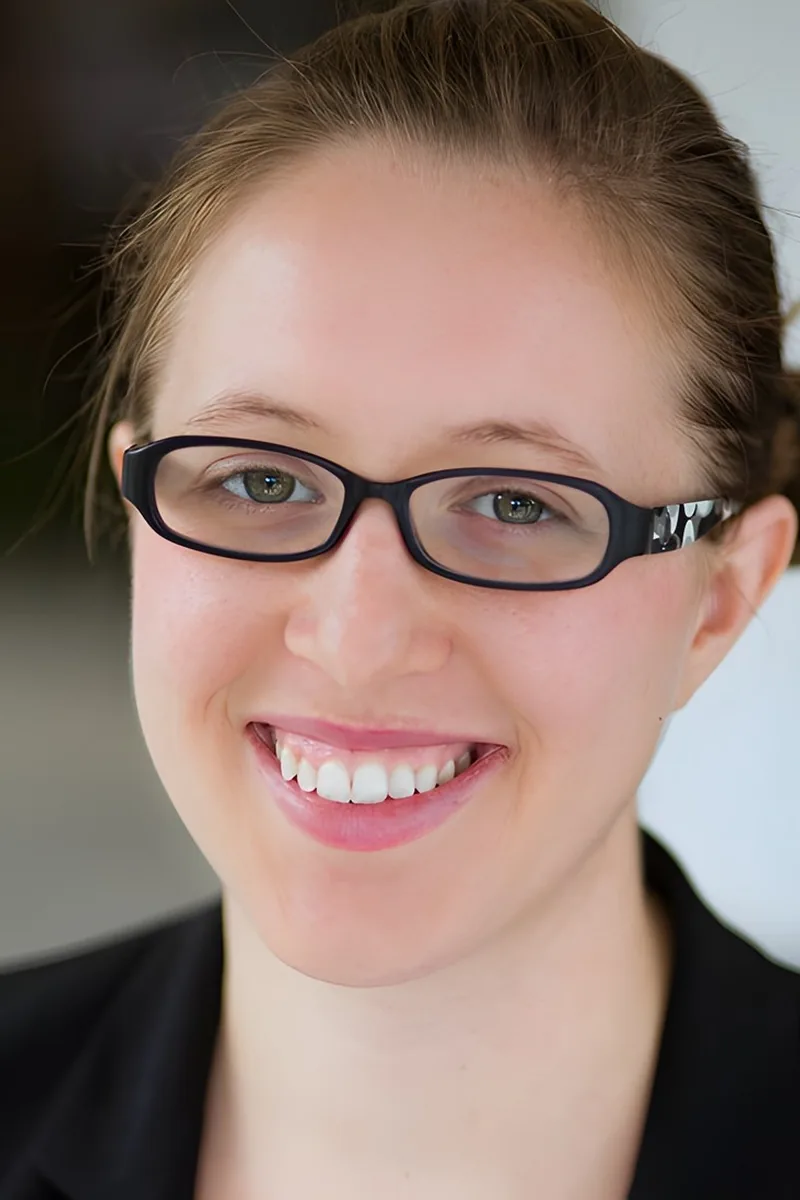
Between a 1570 SAT and a 35 ACT, Amber has proven she can handle serious quantitative work — and her tutoring roster spans from elementary math through AP Calculus AB, meaning she's taught the entire arc that leads to derivatives and integrals. That full-picture perspective lets her pinpoint exactly where a student's understanding broke down, whether it's shaky algebra mechanics or a gap in how limits actually behave. Rated 5.0 by students.
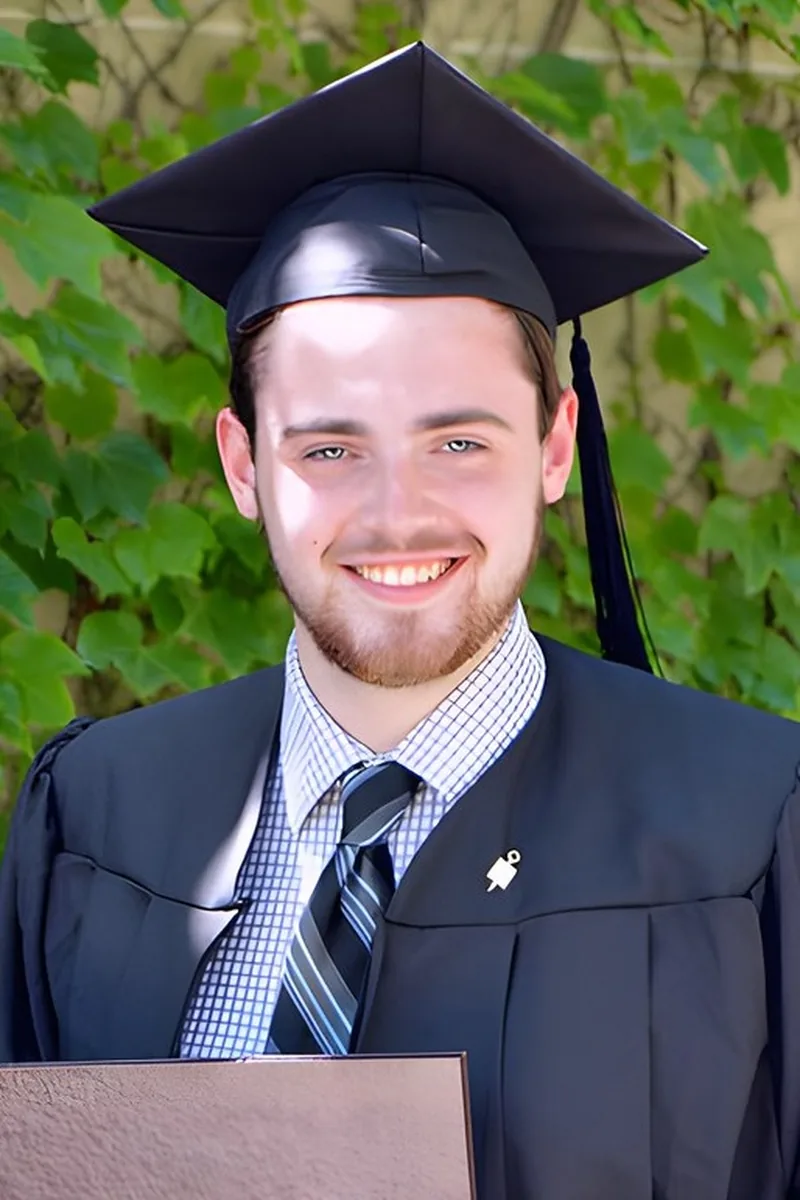
Patrick's background is squarely in English literature and linguistics, not mathematics, so he's honest that calculus isn't his area of depth. That said, his 35 ACT and 1560 SAT demonstrate strong quantitative reasoning, and his linguistics training — which leans heavily on formal logic and structural analysis — gives him a useful framework for unpacking the step-by-step reasoning behind limits and early derivative concepts.
Modeling population dynamics for her doctoral research at Wisconsin-Madison, Karann applies derivatives and integrals to real ecological questions every day. She unpacks calculus concepts — chain rule, related rates, area under a curve — by grounding each one in what it actually describes about how quantities change over time.
The jump into calculus demands more than procedural differentiation and integration — it requires understanding *why* the chain rule works or what a Riemann sum actually represents geometrically. Sophie is an Applied Mathematics major at Brown, so she uses calculus constantly in her own coursework and can explain both the mechanics and the deeper reasoning. She's especially strong at walking through related rates and optimization problems step by step.
Teaching communications and comparative religion at UW-Madison meant Sarah spent years breaking down dense, abstract material into structured arguments — a skill that transfers surprisingly well to unpacking what a limit or derivative actually means before the notation takes over. Her academic background is in humanities rather than mathematics, so she's best suited for students in the early conceptual stages of calculus who need someone to slow down and make the logic visible.
An Economic Policy minor at Penn means James spent time in the quantitative side of social science — working through marginal analysis, optimization problems, and the derivative logic that underpins policy modeling. He teaches early calculus by connecting those tools to decisions about cost, growth, and tradeoffs, which gives students a reason to care about what a derivative actually represents. Rated 5.0 by students.
Dual bachelor's degrees in math and physics mean Richard didn't just pass calculus — he lived in it across multiple disciplines, from proving theorems in pure math to applying differential equations to atmospheric fluid dynamics in his master's work. That depth lets him teach integration techniques, series convergence, and multivariable concepts with the fluency of someone who's used them daily, not just studied them for an exam.
Business and economics coursework means Maddy has used calculus where it actually lives in the real world — marginal analysis, cost optimization, and modeling how revenue changes with each additional unit sold. That applied foundation, paired with a 33 ACT composite, lets her teach derivatives and integrals as tools with a purpose rather than abstract procedures. Rated 5.0 by students.
Quantitative reasoning is the backbone of any science PhD, and Madeline uses calculus daily in her microbiology research — modeling bacterial growth curves, analyzing rates of change in enzyme kinetics, and interpreting differential equations that describe biological systems. She teaches derivatives and integrals by connecting them to tangible problems, making abstract notation feel purposeful.
Physics majors don't just take calculus — they use it constantly, from deriving equations of motion to solving electromagnetic field integrals, which means Michael has spent years applying derivatives and integrals to real problems rather than just computing them on homework sets. That applied fluency makes him especially effective at teaching the chain rule, integration techniques, and multivariable concepts through the physical intuition that makes the math feel purposeful.
Jacob's academic home is communication, not mathematics, so he's straightforward that calculus isn't his deepest subject. That said, his 33 ACT demonstrates solid quantitative reasoning, and his graduate teaching assistant role has sharpened his ability to break down abstract processes step by step — a skill that translates well to unpacking early calculus ideas like limits and derivative rules so the reasoning behind each step is clear, not just the procedure.
An applied mathematics degree from Johns Hopkins means Shona didn't just pass calculus — she built on it, using derivatives, integrals, and series as daily tools across her upper-level coursework. Her software development career added another layer, since writing algorithms often means translating calculus concepts like optimization and rate-of-change into working code. Rated 4.9 by students.
An English and classics background doesn't scream calculus, but Jonas teaches math alongside his humanities subjects, and his training in Classical Greek — a language that demands rigorous logical parsing — gives him an unusual knack for breaking down the formal notation that trips students up in early calculus. He treats a limit definition or derivative rule the way he'd treat a dense passage of text: slowing down, identifying each moving part, and making the structure visible before pushing forward.
Running a K-8 tutoring program meant Dylan spent years building students' math foundations from arithmetic through pre-algebra and beyond, so he understands the conceptual staircase that leads into calculus. His political science coursework at UW-Madison also sharpens the kind of logical, argument-style reasoning that makes unpacking a limit definition or working through the chain rule feel less like memorization and more like following an airtight case to its conclusion.
History majors don't usually end up on a calculus page, and Julia is honest that this isn't her deepest subject — but her 31 ACT and experience tutoring math across grade levels mean she can walk students through the early conceptual terrain, particularly limits and what a derivative actually represents before the notation gets dense. Her instinct is to ground abstract ideas in concrete, relatable language, which turns out to be exactly what most students need when calculus stops feeling like algebra.
Biology majors don't just take calculus — they use it, and Miriam's coursework at UW-Madison means she's modeled population growth with differential equations and applied integration to problems in ecology and physiology. That science-student perspective lets her teach derivatives and integrals as tools with a purpose, connecting each rule to a real question about how something changes over time. Her 1570 SAT and 4.9 rating back up the quantitative chops.
Half artist, half problem-solver — that's how Aaron describes mathematicians, and his PhD in math means he can back it up across the full calculus sequence, from limits through series and multivariable extensions. He teaches concepts like the chain rule or integration by parts by first grounding students in the simpler forward problem, then building toward the harder inverse, so each new technique feels like a natural extension rather than a disconnected formula. Rated 5.0 by students.
Materials Science & Engineering at UW-Madison means Adam lives in calculus daily — from modeling heat transfer with integrals to applying differential equations to material stress analysis. He breaks down concepts like limits, derivatives, and integration techniques by tying them to tangible engineering problems, which makes abstract rules easier to internalize.
The leap from memorizing derivative rules to actually applying them — related rates, optimization, volumes of revolution — is where most calculus students need a second explanation. Connor's Applied Math major at UW-Madison means he uses calculus constantly across coursework in analysis and modeling, so he can unpack both the mechanics and the reasoning behind each technique. He connects every rule back to what's actually happening on the graph.
Limits, derivatives, and integrals each layer on top of the last, so a shaky grasp of one concept snowballs fast. Eitan zeroes in on the specific link in the chain where a student's understanding breaks down — whether that's the epsilon-delta definition or setting up related rates — and rebuilds from there.
Journalism and math don't often share a résumé, but Olivia genuinely loves both — she credits growing up with a math-teacher parent for building the kind of numerical intuition that makes calculus feel like a natural extension of algebra rather than a foreign language. Her 1580 SAT confirms that quantitative strength, and she brings a writer's instinct for clarity to explaining derivatives and integration, breaking dense notation into plain, logical steps.
An English literature degree from UW-Madison doesn't scream calculus, and Chloe is honest about that — this is far from her wheelhouse. Her experience tutoring math and her knack for making abstract ideas feel concrete through careful, plain-language explanation mean she can support students wrestling with early concepts like limits and slope interpretation, approaching the material with the same patience she brings to close reading.
I'm fluent in R, Python, SQL, and M (MUMPS). This September I will be pursuing a Master's degree in data science. I'm available to tutor GRE, ACT, and SAT math as well as other math, statistics, and economics subjects. Although I am most passionate about math, I'm also happy to help students with general testing strategies and preparation for the other parts of the standardized exams.
Breanna's degrees are in education and human development rather than mathematics, so she's straightforward that calculus isn't her deepest subject — but her experience teaching across the full K-12 math sequence means she understands the conceptual scaffolding that leads into it. Her counseling background gives her a particular edge with students who've hit a confidence wall around limits or early derivatives, where math anxiety is often the bigger obstacle than the math itself.
Having completed calculus at UW-Madison as part of a biochemistry sequence, Zach knows exactly where students tend to stall — related rates problems that require translating a physical scenario into derivatives, or integration techniques where choosing the right method is half the battle. He walks through each problem type by connecting the calculus back to the underlying algebra and geometry, which makes even chain rule and u-substitution feel less mechanical.
Microbiology and genetics coursework at UW-Madison put Samantha through calculus in contexts like modeling bacterial growth curves and reaction kinetics, where derivatives describe how biological systems change in real time. That lab-science grounding means she teaches concepts like the chain rule and integration by connecting them to problems she's actually solved, not just textbook exercises. Rated 5.0 by students.
Graduate work in therapy might seem unrelated to calculus, but Wolly's communications and counseling training sharpened a specific skill that matters here: breaking down abstract processes into concrete, step-by-step language a person can actually follow. That translates directly to unpacking early calculus ideas like limits and instantaneous rates of change, where the notation often obscures concepts that are simpler than they look.
Studying Computer Science with a Math emphasis at UW-Madison, Sarah applies calculus concepts in both her pure math and programming coursework, which gives her multiple ways to explain ideas like integration techniques and convergence tests. She's particularly strong at walking through multi-step problems — chain rule applications, optimization setups, and improper integrals — where students often lose track of the overall strategy.
Having tested out of college math entirely and coming from a STEM academy background, Almira built her calculus fluency early and kept it sharp through the quantitative coursework in her Industrial and Organizational Psychology program — where statistical modeling and rate-of-change concepts show up constantly. She teaches derivatives and integration by connecting the mechanics to real patterns, like how performance metrics shift over time in workplace data.
Joseph calls the transition into calculus "mathematical freestyling" — the point where rigid formulas give way to creative problem-solving, and students start choosing their own approach to integration techniques or related rates. His math degree from UW-Madison means he's taught the full sequence through Calc 3, so he can connect early derivative concepts to the multivariable ideas they're building toward. Rated 5.0 by students.
Halle's biology coursework at UW-Madison means she's worked through calculus in contexts like modeling enzyme kinetics and population growth rates, so she can ground derivatives and integrals in problems that actually mean something. She's especially sharp at breaking down chain rule and related rates problems into smaller, manageable steps until a student can reason through them independently. Rated 5.0 by students.
India's math and science emphasis at Madison-Area Technical College means she's currently immersed in the calculus sequence — working through derivatives, integration techniques, and applications problems in real time. That proximity to the material is an advantage: she remembers exactly where the conceptual stumbling blocks are and how she got past them. Rated 4.8 by students.
Having tutored college students through multiple calculus courses at UW-Madison — from single-variable through multivariable and beyond — Mingxi has seen every common stumbling block, from misunderstanding the limit definition of a derivative to struggling with integration by parts. She unpacks each technique by connecting it to the underlying concept so that students can adapt when problems don't match textbook examples. Rated 4.7 by students.
My name is Mika and I recently graduated from Case Western Reserve University in Cleveland where I studied Economics, Math, and Spanish. I want to help you get the best grades, knowledge, and love of learning possible!
I'm a junior undergraduate at Florida State University with over 200 hours of tutoring experience, both online and in person. I've been teaching for more than two years, including students with learning disorders like ADHD, and I mainly specialize in physics, chemistry, calculus, and algebra. Outside of tutoring, I've been a soccer coach for the past four years, which taught me patience, creativity, and how to keep things engaging no matter who I'm working with. I can tutor math through chemistry, physics, and statistics, tying lessons to real-life applications and adjusting my approach to fit each student- because there's never just one "right" way to understand a problem.
Biology at UCLA doesn't let you skip calculus — Joseph worked through it in the context of modeling population dynamics, enzyme kinetics, and epidemiological curves, and his public health master's at Yale deepened that quantitative toolkit with biostatistics and rate-based modeling. His 1530 SAT confirms the math chops, and he teaches derivatives and integrals by connecting them to the biological systems where they actually matter.
Competition math experience in high school gave Tracy a comfort with calculus concepts — series, optimization, rates of change — that goes well beyond standard coursework, and her 36 ACT composite confirms that quantitative fluency. She teaches the reasoning behind each rule, walking through why the chain rule or integration by parts works mechanically so students can adapt to unfamiliar problems instead of freezing when a question doesn't match a template.
Quinn's political science background means calculus isn't his primary lane, but a 35 ACT composite reflects the kind of analytical reasoning that makes early calculus concepts accessible — particularly limits and the intuition behind what a derivative actually represents. He treats each new idea like a policy argument: break it into pieces, make sure every step logically follows, and don't move on until the reasoning holds up. Rated 5.0 by students.
Statistics training at the University of Chicago means Samuel spent serious time inside calculus — probability density functions, moment-generating functions, and the integration techniques that underpin statistical theory were daily fare, not abstract exercises. That background lets him teach derivatives and integrals as tools with clear purpose, connecting each rule to the quantitative reasoning it actually serves. Rated 4.9 by students.
Computer science at Stanford means Elyse writes code that depends on calculus daily — optimization algorithms, gradient descent, and the derivative-based logic behind machine learning all require fluency with rates of change and integration. She teaches those concepts by connecting them to the computational problems where they actually do something, which makes the chain rule and fundamental theorem feel purposeful rather than abstract. Rated 5.0 by students.
Testimonials
Because the right Calculus tutor makes all the difference.
Average Session Rating – Based on 3.4M Learner Ratings
Nearby Calculus Tutors
Other Madison Tutors
Related Math Tutors in Madison
Frequently Asked Questions
Many students struggle with the transition from algebra and precalculus to the conceptual thinking Calculus requires. The biggest hurdles are typically understanding limits and continuity, grasping why derivatives and integrals matter beyond formulas, and applying these concepts to word problems. Personalized 1-on-1 instruction helps students build these connections and see the underlying patterns rather than just memorizing procedures.
Teachers and standardized tests expect students to justify each step, not just arrive at answers. A tutor can work through problems alongside your student, asking questions that encourage them to explain their thinking and identify where they're making assumptions. This builds both mathematical communication skills and deeper understanding of why methods work—skills that transfer to exams and future math courses.
Word problems require students to translate real-world scenarios into mathematical language, identify which Calculus concepts apply, and then solve—a multi-step process that combines reading comprehension with mathematical reasoning. Tutors break this down by helping students practice extracting key information, sketching diagrams, and choosing the right approach before diving into calculations. Over time, this builds confidence and pattern recognition that makes word problems feel manageable.
Varsity Tutors connects you with tutors who understand how Calculus is taught across Madison's 6 school districts and are familiar with different textbook approaches and pacing. Whether your student is working through AP Calculus AB, BC, or college-level Calculus, tutors can align instruction with what's happening in the classroom and help bridge gaps between different teaching styles.
Yes. Math anxiety often stems from feeling lost or unsupported when concepts don't click immediately. One-on-one tutoring removes the pressure of classroom pacing and creates space for your student to ask questions, make mistakes safely, and build confidence through small wins. Many students find that understanding the 'why' behind Calculus concepts—not just the mechanics—transforms their relationship with math.
The first session is about understanding where your student is and what they need. A tutor will likely review recent assignments or exams, ask about specific topics that feel confusing, and identify patterns in mistakes. This assessment helps the tutor create a personalized plan focused on your student's actual gaps—whether that's strengthening precalculus foundations, building conceptual understanding, or developing problem-solving strategies.
Graphing and proofs require both visual and logical reasoning. Tutors help students connect algebraic manipulations to what's actually happening on a graph, and teach proof-writing as a communication skill—not a mysterious ritual. Through guided practice and feedback, students learn to justify their steps clearly and understand why certain arguments work, building skills that extend beyond Calculus.
The best time is whenever your student feels stuck or wants to strengthen their foundation. Some students benefit from tutoring at the start of the course to build confidence and establish good habits. Others connect with a tutor when they hit a specific topic like derivatives or integrals. Early intervention prevents small gaps from becoming major obstacles, especially since Calculus builds cumulatively.
Let’s find your perfect tutor
Answer a few quick questions. We’ll recommend the right plan and match you with a top 5% tutor.