Award-Winning AP Calculus AB Tutors
serving Madison, WI
AP Calculus AB
Tutors in Madison
Private 1-on-1 tutoring, weekly live classes for academic support, test prep & enrichment, practice tests and diagnostics, and more to elevate grades and test scores.
Based on 3.4M Learner Ratings
UniversitiesSchools & Universities
DeliveredHours Delivered
ProficiencyGrowth in Proficiency
Who needs tutoring?
No obligation. Takes ~1 minute.
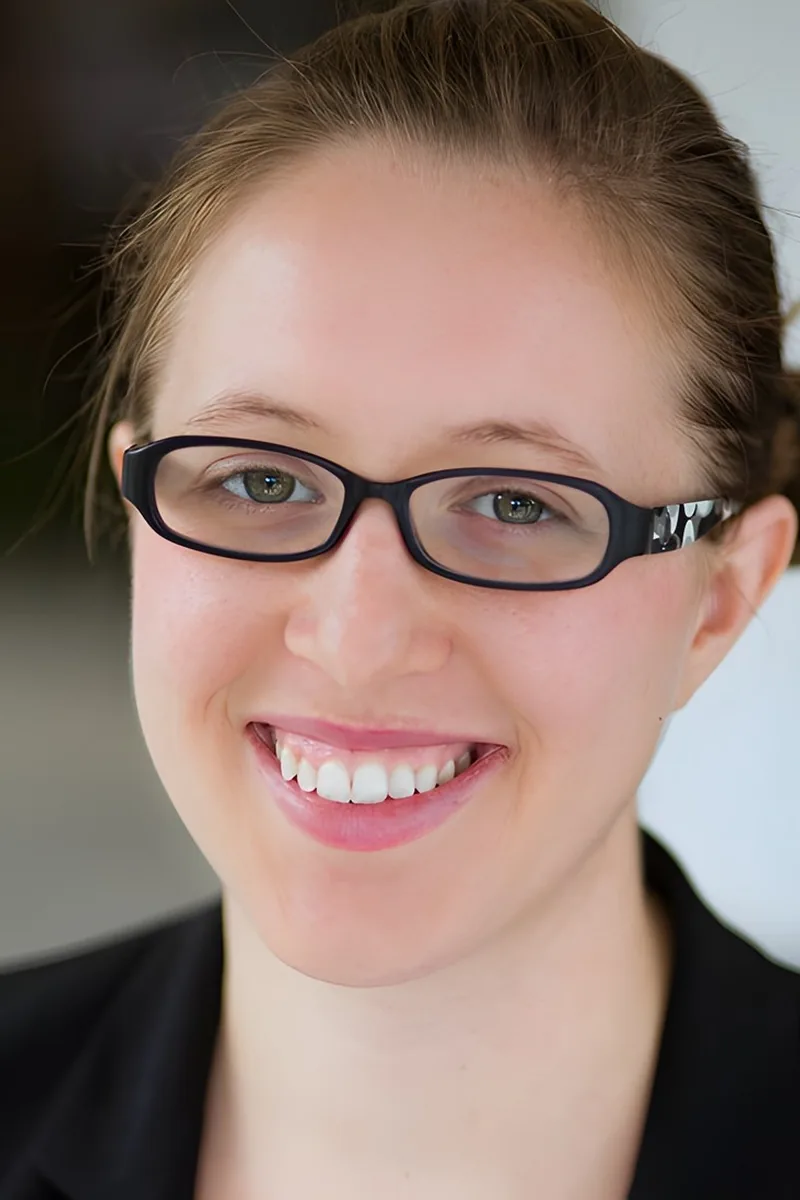
Scoring a 1570 SAT and 35 ACT takes the kind of disciplined problem-solving that translates directly into teaching limits, derivatives, and integration techniques at the AB level. Amber zeroes in on the moment students go from mechanically applying the power rule to actually understanding why the Fundamental Theorem ties differentiation and integration together — a shift that unlocks the entire second half of the course. Rated 5.0 by students.

Limits, derivatives, and integrals each build on the last, so a shaky grasp of one concept tends to snowball through the entire AP Calculus AB curriculum. Aaron treats each new idea as a chance to revisit and strengthen what came before — his approach to the chain rule, for instance, starts by reconnecting students to composition of functions until the derivative feels inevitable. His PhD in math and 5.0 rating speak to how well this works in practice.
Computer science with a math emphasis at UW-Madison means Sarah writes code that depends on calculus concepts daily — recursive functions mirror summation, algorithm analysis relies on limits, and optimization problems are literally what derivatives were built for. That crossover makes her especially effective at teaching the AB curriculum's limit definitions and optimization units, where she can show students the logic underneath the formulas instead of just the mechanics. Rated 4.9 by students.
When limits, derivatives, and integrals are taught as disconnected procedures, the AB exam's free-response section can feel like a minefield — Halle tackles that by building each new concept directly on top of the previous one so students see calculus as a single connected story. Her biology coursework at UW-Madison means she's comfortable using rate-of-change problems grounded in growth models and population dynamics to make abstract differentiation feel tangible. Rated 5.0 by students.
Where many tutors teaching AP Calculus AB come from engineering or science backgrounds, India approaches the subject from the math-emphasis track of her liberal arts program — meaning she learned limits, derivatives, and integration as ideas worth understanding on their own terms, not just as tools for another field. That perspective is especially useful for students who need to build genuine comfort with concepts like continuity and the Fundamental Theorem before tackling free-response applications. Rated 4.8 by students.
Seven years teaching high school math in San Francisco — plus a Johns Hopkins mathematics degree and medical school training — means Elizabeth has walked hundreds of students through the exact moment where limits, derivatives, and the Fundamental Theorem either click or collapse. She's especially sharp at diagnosing why a student's related rates setup goes wrong, because she's seen every common misstep enough times to spot the pattern before frustration sets in. Her medical background also gives her a unique angle on applied problems, connecting rate-of-change concepts to biological contexts that make the abstraction tangible.
Scoring a 36 ACT while pursuing a math/stats degree at Carleton means Thomas has both the formal training and the test-taking instinct to know exactly where AB students lose points — particularly on limit definitions, continuity arguments, and the conceptual leaps the exam demands in its free-response section. He teaches the 'why' behind each differentiation and integration technique so that unfamiliar problem setups feel approachable rather than paralyzing. Rated 5.0 by students.
Working as a systems design engineer and automation technician after earning his EE degree from UIUC, Wei has spent years applying derivatives and integrals to real control systems — tuning feedback loops, modeling signal behavior, analyzing rate-of-change problems that mirror exactly what shows up on the AB exam. That engineering instinct is especially valuable when students hit the AB curriculum's differential equations and accumulation problems, where knowing how to frame the math matters more than grinding through algebra. Rated 5.0 by students.
Mechanical engineering coursework at Marquette means Brendan uses AP Calculus AB concepts daily — from computing integrals for area and volume to applying the chain rule in kinematics problems. He breaks down the reasoning behind each differentiation and integration technique so students can tackle free-response questions with confidence. Rated 5.0 by students.
One of the most important things in tutoring math is to make sure students understand why a mathematical procedure works, not just how to do it. When student know how to do the procedure, but don't understand why it works, they will forget the procedure or misapply it, or worse, they may begin to hate math, not because they can't do it, but because they don't understand its relevance.
Something clicked for Steven when calculus stopped being about memorizing formulas and started being about understanding why things change — and that shift from frustration to genuine enthusiasm for math is exactly what he brings to teaching limits, derivatives, and integrals in the AB curriculum. He's especially good at walking students through the conceptual buildup from pre-calculus into calculus territory, since he also teaches trig, pre-calc, and physics, giving him a clear picture of where the gaps usually hide. Rated 5.0 by students.
I am currently studying at Northwestern University, on the track to a Bachelor of Arts in Statistics with a double major in Mathematical Methods in the Social Sciences, which is just a fancy way of saying math-based economics, and a minor in Legal Studies as well as Marketing. After my undergraduate studies, I plan on working in consulting for a few years before attending law school. Finally, I hope to combine my law studies with my consulting work to become a well-rounded corporate lawyer. At Northwestern, I provide SAT tutoring to Chicago-area juniors and seniors. In high school, I tutored third through fifth graders in basic reading and writing skills and developed their interpersonal skills through group crafts and teamwork activities. While I am open to tutoring a broad range of subjects and tests, I am most passionate about Math, Statistics, Economics, and US History. In my experience helping students prepare for the SAT, I have found that interactive activities and group work really help! I am a firm believer in the work-hard-play-hard mindset and find it to be absolutely necessary for a balanced lifestyle, and I try to impart this appreciation to all of my students. While I encourage my students to keep up with their studies and work hard, I also believe that studying needs to be balanced out with interests and fun.
Studying neuroscience at Vanderbilt meant Benjamin couldn't escape calculus — modeling membrane potentials, analyzing signal decay curves, computing rates of neurotransmitter diffusion — so the AB curriculum's core concepts aren't textbook abstractions for him but tools he's actually used. His 34 ACT reflects the quantitative precision he brings to teaching limits and the chain rule, two topics where small conceptual gaps snowball into free-response mistakes. He's especially good at slowing down the problem-setup phase so students learn to read what a question is really asking before jumping into computation.
Having already completed multivariable calculus and linear algebra as a freshman in Northwestern's engineering program, Dylan teaches AB concepts like limits, derivative rules, and integration techniques with the confidence of someone who uses them as building blocks for more advanced work every week. His 1500 SAT and 5.0 rating back up an approach grounded in making sure students understand the reasoning behind each step before moving on to the next application.
Cognitive science at Northwestern taught Amanda to think about how people learn — and she applies that lens to the specific moments in AB Calculus where understanding collapses, like the jump from computing a derivative mechanically to interpreting what it means on a free-response question. Her 36 ACT and prior experience tutoring math at Mathnasium mean the computational side is second nature, freeing her to zero in on the conceptual gaps that actually cost students points. She's especially effective at teaching limits and continuity as a coherent story rather than disconnected epsilon-delta exercises.
Teaching calculus at Harvard as a Course Assistant gives Sanjana a front-row seat to the mistakes students make most often — and the explanations that actually click. She breaks down AB topics like related rates, the Fundamental Theorem, and integration techniques by connecting each one back to the graphical intuition behind it.
Chemical engineering coursework drills calculus into you through a different lens — Kelly spent her undergraduate years using derivatives to track reaction kinetics and integrals to size equipment, so the AB curriculum's application problems map naturally onto skills she's already internalized. She's particularly strong at teaching students how to set up problems from scratch, especially optimization and definite integral applications where the hardest part isn't the math but knowing what to model. Rated 5.0 by students.
Mechanical and aerospace engineering at Princeton means Matthew builds on calculus daily — computing trajectories, analyzing forces, optimizing structural loads — so the AB curriculum's core techniques are second nature to him. He teaches each new concept by working through a few problems step by step, then hands students progressively harder variations, asking targeted questions that expose gaps before they become exam-day surprises. His 34 ACT underscores the quantitative precision behind that approach.
The jump from pre-calculus to AP Calculus AB is often the biggest conceptual shift in a student's math career — suddenly everything revolves around rates of change and accumulation. Julie's philosophy background at Princeton sharpened her ability to explain abstract ideas with clarity, and she applies that skill to unpacking limits, derivatives, and the Fundamental Theorem. She earned a 1570 SAT and teaches math at every level, so she knows how to bridge gaps in algebra or trig that can hold AB students back.
Limits, derivatives, and integrals each build on the last, so a shaky grasp of one topic can snowball fast in AP Calculus AB. Aidan tackles this by connecting each new concept back to its geometric meaning — showing, for example, why the derivative is a slope before diving into differentiation rules. His 1540 SAT and 35 ACT reflect the kind of precision he brings to exam preparation.
The jump from memorizing derivative rules to actually applying them — related rates, optimization, accumulation functions — is where most AP Calc AB students stall. Matthew tackles these problems by tying them to physical intuition from his physics degree, making concepts like rate of change feel concrete instead of formulaic. His approach turns the AB exam's free-response section from a guessing game into a structured process.
Cornell's engineering curriculum throws calculus at you from day one — Ravnoor uses derivatives and integrals across his computer science coursework to analyze algorithm efficiency and model computational processes, which keeps the AB material sharp and immediately relevant. He's especially strong at teaching limits and continuity, breaking down the epsilon-delta logic that most students find intimidating into concrete, step-by-step reasoning. Rated 5.0 by students.
The jump from pre-calc to AP Calculus AB is where many students first encounter limits, derivatives, and the chain rule as ideas that demand genuine conceptual reasoning instead of procedural steps. Brice earned a perfect 1600 SAT and studies computer science at MIT, where calculus underpins nearly every technical course he takes — meaning he explains AB material with the fluency of someone who actually uses it daily.
Three engineering degrees mean Andrea has spent years where calculus isn't a course but a daily language — computing derivatives to analyze mechanical stress, integrating to find volumes and energy transfers across systems. That fluency shows up most when she teaches limits and continuity, building the conceptual scaffolding that keeps students from hitting a wall once the AB curriculum reaches the Fundamental Theorem. Her 32 ACT and 4.8 rating back up an approach grounded in genuine mechanical intuition.
Testimonials
Because the right AP Calculus AB tutor makes all the difference.
Average Session Rating – Based on 3.4M Learner Ratings
Practice AP Calculus AB
Free practice tests, flashcards, and AI tutoring for AP Calculus AB
Nearby AP Calculus AB Tutors
Other Madison Tutors
Related Math Tutors in Madison
Frequently Asked Questions
AP Calculus AB focuses on limits, continuity, derivatives, and integrals—the foundational concepts of single-variable calculus. The course emphasizes understanding rates of change, optimization problems, and accumulation, with heavy emphasis on both conceptual understanding and computational skills. You'll also learn to interpret calculus concepts graphically, numerically, and algebraically, which is essential for success on the AP exam.
The exam consists of two sections: a multiple-choice section (45 questions, 105 minutes) and a free-response section (6 questions, 90 minutes). The multiple-choice section tests breadth of knowledge across all topics, while free-response questions require you to show your work and explain your reasoning. A calculator is permitted on parts of both sections, so understanding when and how to use technology effectively is a key strategy.
Many students struggle with the transition from algebra to calculus thinking—particularly understanding limits conceptually and recognizing when to apply different derivative rules. Pacing is another major challenge; the course moves quickly through interconnected topics, so falling behind on one concept (like the chain rule) can create gaps that compound. Time management on the exam is also critical, as students often spend too long on early problems and rush through later ones.
Score improvement depends on your starting point and commitment level. Students who work consistently with a tutor typically see gains of 1-2 points on the 1-5 AP scale, with larger improvements possible if you're addressing fundamental gaps in prerequisite skills like algebra or trigonometry. The key is identifying weak areas early—whether that's derivative applications, integration techniques, or exam strategy—and targeting them systematically through practice and feedback.
Ideally, you should connect with a tutor early in the school year or as soon as you notice conceptual gaps forming. If you're already struggling with derivatives or integrals, waiting until spring review is risky because you'll be trying to catch up while also preparing for the exam. Even students performing well benefit from a tutor in the final 4-6 weeks before the AP exam to refine problem-solving speed, review weak topics, and build confidence with full-length practice tests.
Practice is essential—calculus is a skill-based subject where understanding a concept is only half the battle; you need to apply it repeatedly to build fluency and speed. Full-length practice tests under timed conditions are particularly valuable because they help you identify pacing issues and get comfortable with the exam format. A tutor can help you analyze which problem types trip you up, prioritize your practice, and adjust your approach based on where you're losing points.
You should be comfortable with algebra, functions, and trigonometry—these are the tools you'll use constantly in calculus. If you're weak in any of these areas, it's worth addressing them early, as gaps here will slow you down significantly. Varsity Tutors connects you with tutors who can quickly assess your prerequisite skills and fill any holes while you're learning new calculus content.
Varsity Tutors connects you with experienced tutors who specialize in AP Calculus AB and understand the specific pacing and expectations of Madison-area schools. Whether you need help with a single challenging topic or comprehensive exam prep, you can get matched with a tutor who fits your learning style and schedule. Your first session is a great opportunity to discuss your goals, identify weak areas, and build a targeted study plan.
Let’s find your perfect tutor
Answer a few quick questions. We’ll recommend the right plan and match you with a top 5% tutor.