Award-Winning Statistics Tutors
serving Norfolk, VA
Statistics
Tutors in Norfolk
Private 1-on-1 tutoring, weekly live classes for academic support, test prep & enrichment, practice tests and diagnostics, and more to elevate grades and test scores.
Based on 3.4M Learner Ratings
UniversitiesSchools & Universities
DeliveredHours Delivered
ProficiencyGrowth in Proficiency
Who needs tutoring?
No obligation. Takes ~1 minute.
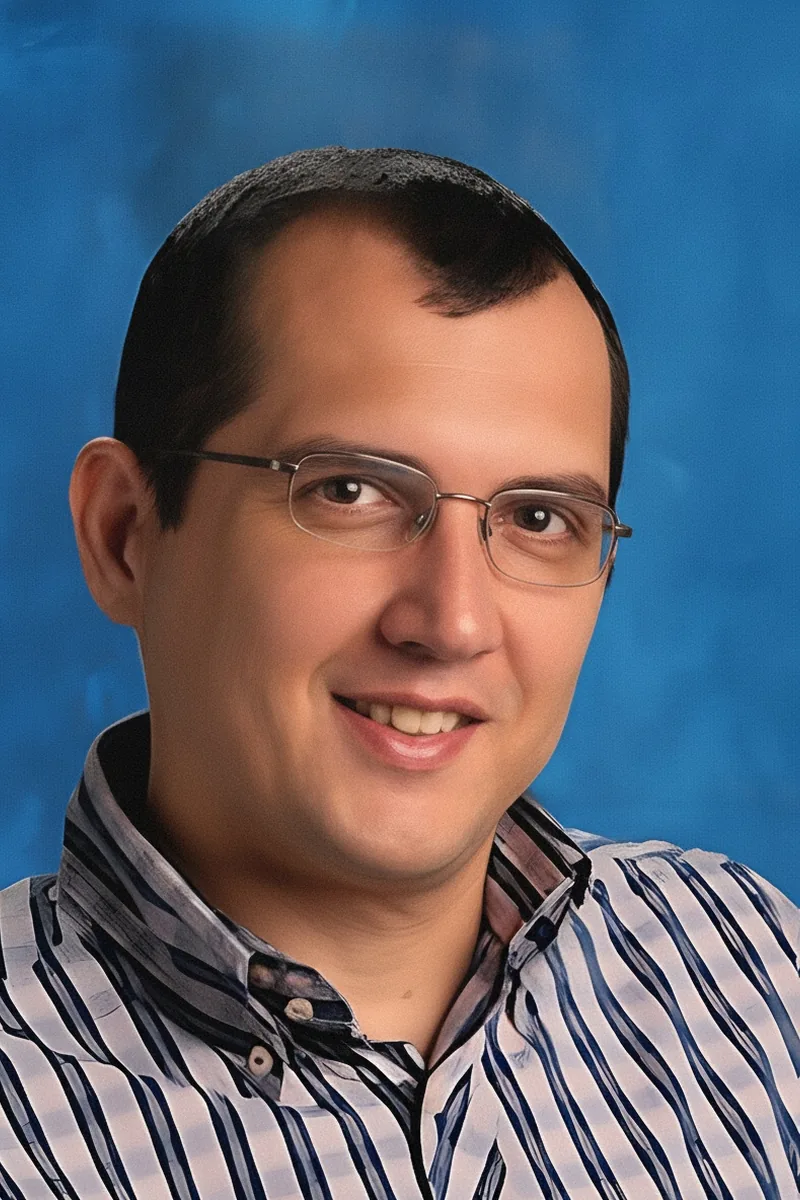
Understanding statistics means learning to ask the right question before running any calculation — is this a one-sample or two-sample problem? Is the data paired? Calin's background in philosophy sharpens that kind of precise thinking, and he applies it to everything from probability distributions to hypothesis testing and regression analysis.
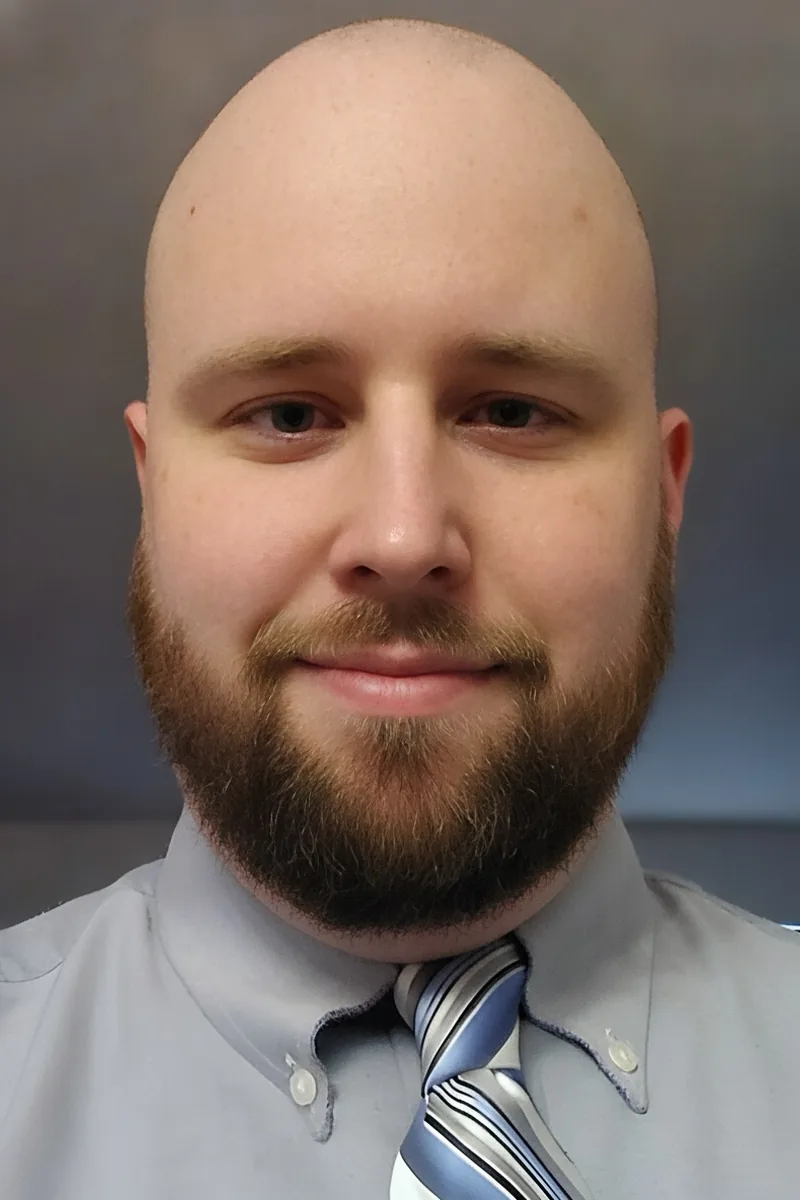
Kyle's interdisciplinary background — philosophy, psychology, political science, and history — means he's been interpreting data, evaluating research claims, and picking apart flawed arguments across multiple disciplines for years. That cross-field reasoning translates directly to statistics, where he teaches students to think critically about hypothesis tests, sampling methods, and what a p-value actually means rather than just how to calculate one. Rated 4.7 by students.
Regression analysis, hypothesis testing, sampling methods — statistics shows up constantly in Devan's finance studies at the University of Virginia, so he teaches it with the fluency of someone who actually applies it. He's especially sharp at translating abstract formulas into plain-language explanations of what the numbers mean and why they matter.
An economics degree from UVA is essentially a statistics degree in disguise — Zeke spent years interpreting p-values, building regression models, and translating data into arguments. He tackles everything from basic probability distributions to ANOVA and inference, always tying the math back to what the numbers actually mean in context.
Too many statistics courses reduce the subject to calculator steps — punch in data, read off a p-value, move on. Rene digs into what's actually happening behind hypothesis tests, confidence intervals, and regression models so students understand when a method applies and why it works. A PhD mathematician with training from Duke and NYU, he's equally comfortable explaining z-scores to beginners and walking through ANOVA assumptions with more advanced students.
Hi, I'm Jackson! I tutor Math, Reading, History, and Science and specialize in turning confusion into confidence. Whether you're catching up or aiming for the top, I'll build a strategy that works for you. Let's get to work book a session today!
I have been coaching students to their best performance in math for seven years. I am fluent in all levels of math, primary, secondary, and freshman/sophomore university level. I am also fluent with the mathematics which one may find on the ACT, SAT, GRE, ASVAB, CLEP test and most standardized test. My background in Engineering also gives me a level of confidence with computer science and general sciences such as physics and chemistry. I have over a year of study in each myself. Overall, I have had much success working with students in various languages and levels of computer programming.
Probability distributions, hypothesis testing, confidence intervals — statistics is where math meets real-world decision-making, and Logan's applied mathematics degree from William & Mary means he taught himself to think in data long before he started teaching others. As a current high school math teacher, he breaks down concepts like p-values and standard deviation into language that actually sticks.
I am an undergraduate student at the University of Virginia (UVA) originally from Fairfield, Connecticut. I am pursuing my Bachelor of Arts in Biology and Global Public Health on the pre-med track with the hopes of becoming a physician (hopefully in pediatrics). At UVA, I am involved in youth mentoring as a Program Director of "GEMS" (Girls Excited about Math and Science), where I teach exciting lessons and conduct experiments with a class of elementary school girls in a variety of scientific topics, while I am also the Head Program Director of Youth Mentoring at UVA. I was also involved in tutoring throughout high school, where I worked with a group of special needs students. While I tutor in a broad range of subjects, I am most passionate about English, Science (especially Biology and Chemistry), and Humanities, which are most strongly reflected in my own studies. In my experience in the areas of reading and writing in particular, strong literary thinking skills helped me to be more creative and set myself apart in many of my applications to college, so I am passionate about helping students of any age to become stronger writers. I am also passionate about enhancing students' skills in critical thinking, especially through STEM topics, which can set students up for success in any difficult course or standardized test. I hope to instill a strong appreciation for education and learning within each of my students, and I believe that the first step is to help students feel more confident in their areas of interest while setting goals for the future. In my spare time, I enjoy hiking and being outdoors, traveling, painting, and playing soccer.
I have spent my life teaching math, both as a classroom teacher and as a tutor, and I love it! My goal is always to make mathematics simple and understandable. I teach by asking questions, both to check for understanding and to allow the student to figure out the concept on his/her own. While my favorite topics are Statistics and Trigonometry, I love teaching all of Algebra too. I have taught both AP Statistics as well as IB SL. Nothing compares to seeing the look of understanding a math concept on a student's face! In addition, I have taught courses in, and tutored, SAT Prep for 35 years. While I do tutor both the math and Reading & Writing sections, I do believe that students can be helped more in the math section. Therefore, I choose to work with students who want to improve their math score more, but may still want some help with the Reading and Writing. Yes, the SAT has changed throughout the years but I have kept up with it and have seen more than 100 SAT tests. I am an expert in SAT test construction and offer many problem-solving strategies for success on the SAT test.
Data science was half of Ankitha's coursework at Cornell, so she teaches statistics the way she actually uses it — connecting concepts like distributions, hypothesis testing, and regression to real datasets rather than abstract formulas. That applied perspective makes topics like standard deviation and confidence intervals feel purposeful instead of mechanical.
I earned a bachelor's degree in psychology at the University of Maryland in May 2023. I would like to use my degree in a field that involves education, children, and studying child cognition. I have over 3 years of tutoring experience, and math has always been a passion of mine. Thus, I prefer to tutor children in math, but I am qualified to tutor in subjects such as Spanish, science, and English. I find it very rewarding to help students learn and overcome struggles they have in school. Their smiles alone make the work worthwhile to me. My past experience tutoring students includes working with children between the ages of 6 and 16. While tutoring, I try my best to keep the student engaged by including physical and virtual math games, physical learning tools, and other learning instruments designed to make learning more engaging for students. My tutoring style is pretty hands-on, but I also try to sit back and allow the student to think more deeply about the content and absorb the knowledge on their own. Outside of academia, I love to draw, especially with graphite, but I do occasionally use charcoal, colored pencils, and pens. I also love to exercise at the gym, but I especially enjoy hot yoga and pilates classes. I was also a gymnast all throughout my childhood and adolescence, and I was a gymnastics instructor at my hometown gym in college.
Between her sociology research in undergrad and her MBA coursework, Krupa has run enough regressions, hypothesis tests, and probability models to know exactly where students get tripped up. She tackles the conceptual side — why you'd choose a t-test over a z-test, what a p-value actually means — so the formulas stop feeling arbitrary. Her 4.9 rating speaks to how clearly she communicates these ideas.
A political science degree from Brown meant Lyall spent years interpreting polling data, regression models, and probability distributions in real research contexts. He brings that applied lens to statistics tutoring, connecting concepts like standard deviation and confidence intervals to situations where the numbers actually matter. Students get someone who treats stats as a tool for making arguments, not just a formula sheet to memorize.
Yi's graduate training in research and experimental psychology required heavy use of statistical methods — from hypothesis testing and ANOVA to regression modeling and interpreting p-values in published studies. That hands-on experience with real data analysis means she teaches statistics as a tool for answering questions, not just a set of formulas to memorize.
Working as a research assistant in Yale's cognitive neuroscience lab meant Emily ran statistical analyses regularly — hypothesis testing, probability distributions, and interpreting p-values were part of her daily routine. That hands-on experience makes her especially effective at explaining why a statistical method works, not just how to execute it on a calculator.
Designing and optimizing light filters for optical multiplexers at Norfolk State required Dennis to apply statistical methods to real engineering data — fitting distributions, quantifying uncertainty, and interpreting experimental results. He teaches statistics with that practitioner's perspective, making topics like standard deviation, probability, and regression feel like problem-solving tools rather than abstract formulas.
Probability distributions, hypothesis testing, and regression analysis are central to both engineering and business — and Caroline has graduate-level training in both. Her mechanical engineering M.S. from WashU built her statistical modeling skills, while her current MBA at MIT Sloan sharpens how she interprets data for real-world decisions. She teaches the reasoning behind each method so formulas stop feeling like black boxes.
Understanding when to use a standard deviation versus an interquartile range — or why a skewed distribution changes your entire analysis — requires more than formula memorization. Vinson approaches statistics through data interpretation first, walking through probability distributions, hypothesis testing, and regression with an emphasis on what the numbers actually tell you. He's studying computational math at Rice, where statistical reasoning is woven into his daily coursework.
Probability distributions, hypothesis testing, and regression analysis all click faster when you've actually used them to make decisions. Hari's finance background means he's applied statistical methods to real datasets — forecasting, risk analysis, variance modeling — and he teaches the logic behind each test so students can choose the right approach on their own.
Understanding statistics means learning to ask the right questions about data before running any test: Is the sample random? What's the shape of the distribution? Could this result have happened by chance? Ethan's policy background gave him years of practice interrogating datasets and translating statistical output into plain-language conclusions, a skill he now brings directly to topics like hypothesis testing and regression analysis.
Studying economics at Brown meant Carter lived inside datasets — running regressions, testing hypotheses, and interpreting distributions long before he started tutoring. That firsthand experience makes him especially effective at teaching concepts like standard deviation, normal models, and conditional probability in ways that feel grounded rather than abstract. He's rated 5.0 by students.
As an economics major at Yale, Conor uses statistical methods constantly — regression analysis, probability distributions, hypothesis testing — so he teaches statistics as a practical toolkit rather than an abstract set of formulas. He's especially sharp at walking through the logic behind concepts like p-values and confidence intervals, which tend to confuse students who try to memorize procedures without understanding what the numbers actually mean.
Most students can plug numbers into a standard deviation formula — the harder part is interpreting what the result actually means in context. Joshitha approaches statistics by connecting every calculation to real-world reasoning: why a confidence interval narrows, what a p-value does and doesn't tell you. Her engineering background at Johns Hopkins means she uses statistical thinking constantly and can show students where these ideas live outside the textbook.
Testimonials
Because the right Statistics tutor makes all the difference.
Average Session Rating – Based on 3.4M Learner Ratings
Practice Statistics
Free practice tests, flashcards, and AI tutoring for Statistics
Other Norfolk Tutors
Related Math Tutors in Norfolk
Frequently Asked Questions
Varsity Tutors matches Norfolk students with expert Statistics tutors for 1-on-1 instruction. We pair each student with a tutor based on their specific needs, learning style, and goals.
Whether you need homework help, exam prep, or want to get ahead, our Statistics tutors are ready to help.
Common challenges include gaps from earlier material, difficulty with specific concepts, and trouble applying learning to new problems. These issues can snowball quickly in Statistics.
A tutor identifies where you're stuck, fills in gaps, and provides targeted practice. The 1-on-1 format means you get help exactly where you need it.
Tutors work with your student's actual coursework—homework assignments, class notes, and upcoming tests. This keeps tutoring directly relevant to what's happening in the classroom.
When you share information about your student's school and curriculum, we can match you with a tutor who has relevant experience.
All tutors complete background checks, credential verification, and teaching evaluation. Many of our Statistics tutors hold advanced degrees or have years of teaching experience.
You can review tutor profiles to find someone with the right background for your student's level and needs.
Many students see improved grades within a few weeks, along with better understanding of Statistics concepts and more confidence tackling challenging material.
Tutors track progress and adjust their approach to ensure continued improvement.
Most students benefit from 1-2 sessions per week. More frequent sessions help if your student is significantly behind or has an important exam coming up.
Your tutor can recommend a schedule based on your student's specific situation and goals.
Tutoring is purchased in packages of hours, with rates varying by tutor experience. Varsity Tutors offers several options to fit different budgets and needs.
You can discuss pricing during your consultation to find what works best.
Your tutor will assess where your student is, discuss goals, and start working on priority areas. Most students bring current homework or upcoming test material to focus on.
By the end, you'll have a clear sense of how the tutor can help and a plan for moving forward.
Let’s find your perfect tutor
Answer a few quick questions. We’ll recommend the right plan and match you with a top 5% tutor.