Award-Winning College Physics Tutors
serving Norfolk, VA
College Physics
Tutors in Norfolk
Private 1-on-1 tutoring, weekly live classes for academic support, test prep & enrichment, practice tests and diagnostics, and more to elevate grades and test scores.
Based on 3.4M Learner Ratings
UniversitiesSchools & Universities
DeliveredHours Delivered
ProficiencyGrowth in Proficiency
Who needs tutoring?
No obligation. Takes ~1 minute.
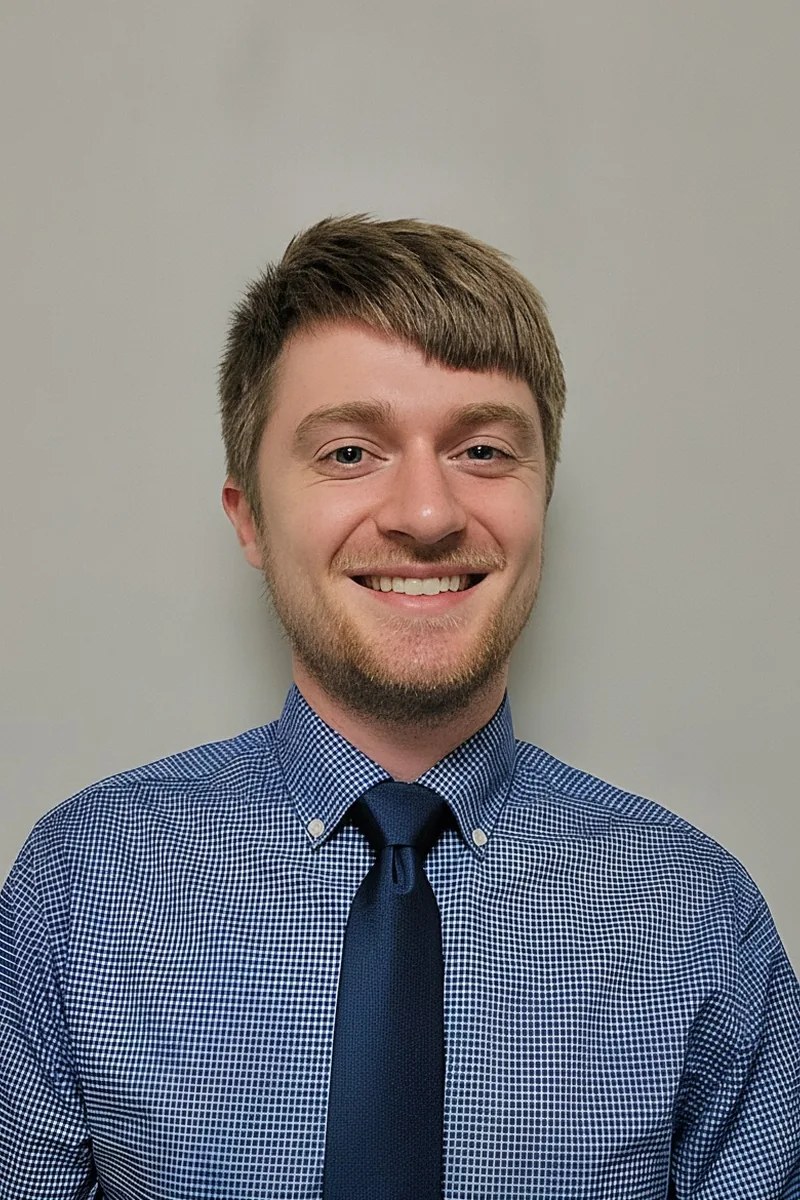
College-level physics ramps up fast, and the jump from textbook examples to exam problems can be brutal. Bryan earned his B.S. in Physics and tackles that gap by teaching problem-solving frameworks — symmetry arguments in electrostatics, constraint equations in multi-body dynamics — that transfer across chapters instead of requiring a new trick every week.

Biomedical engineering at VCU meant Waleed spent years applying physics to biological systems — modeling forces on prosthetic joints, analyzing fluid flow through vessels, understanding the electromagnetic principles behind imaging equipment like MRI and ultrasound. That gives him a concrete hook for the mechanics, thermodynamics, and E&M topics that fill college physics problem sets, since he can ground abstract equations in systems students can actually picture. Holds a 5.0 rating.
College-level physics ramps up fast — multivariable problems, rotational dynamics, and electromagnetism all demand strong mathematical fluency and physical intuition simultaneously. Christianna's architecture master's required advanced structural and environmental physics, so she tackles topics like stress analysis and wave behavior with firsthand understanding rather than textbook-only knowledge.
I am currently a lead preschool teacher. I received my Bachelor's in Psychology from VCU and am looking to return to school to further my education. While in college, I worked as a Supplemental Instruction leader, teaching general biology and anatomy. I have also worked in an after school program with elementary age children, but I have my fondest memories volunteering as a counselor for Camp Kesem. In my own experience, I loved school and now I love teaching even more at all age levels! I especially enjoy the challenge of getting creative to discover what approach and mediums work best for each student. I am available for in person as well as online tutoring.
Pre-med students often hit a wall when college physics problems require translating biological intuition into free-body diagrams and energy equations — Yashwant, currently pursuing his biology degree and pre-med track at VCU, knows that translation challenge firsthand. He breaks down mechanics and wave problems by connecting them to the biological systems pre-med students already care about, like sound propagation in hearing or fluid pressure in circulation. Rated 4.8 by students.
College-level physics layers calculus onto mechanics and electromagnetism, which is where many students lose their footing. Monika's biomedical engineering coursework puts her in these problems daily — from circuit analysis to fluid dynamics — and she explains the calculus-based derivations alongside the physical reasoning so both pieces reinforce each other.
Mechanical and aerospace engineering at UVA means Andrew's entire curriculum runs on calculus-based physics — every statics problem, every fluid dynamics derivation, every thermodynamic cycle he solves reinforces the same material showing up on college physics problem sets. He's particularly strong at walking through free-body diagrams and energy methods, translating the abstract setup into a clear sequence of steps students can replicate on their own. Rated 4.8 by students.
Kinesiology is essentially applied physics — Ryan's exercise science coursework at James Madison meant calculating torque at joints, resolving force vectors during gait analysis, and applying Newton's laws to human movement long before stepping into a formal physics classroom. That biomechanics lens gives him a concrete way to teach mechanics concepts like equilibrium, work-energy relationships, and rotational motion, since he can tie every free-body diagram back to something a body actually does. He's heading into a Doctor of Physical Therapy program in 2026, which keeps these principles sharp and clinically grounded.
I'm a Crane Structural Engineer at a major defense contractor with a VA Mechanical Engineering FE/EIT. I've spent years tutoring math, physics, and engineering courses and use them everyday. I also graduated from Virginia Tech with a B.S. in Engineering Science and Mechanics and minors in Mathematics and Leadership Studies. I use humor and relatable situations to teach, turning difficult topics into easy concepts to remember. I've been the student at the bottom of the class before, so I know what it's like to be overwhelmed. I find the best fix for that is to use what students know to WORK SMARTER NOT HARDER. I've also tutored students with disabilities, tailoring my approach to meet unique learning needs with patience and creativity. I'm on the East Coast but keep a flexible schedule to ensure full availability for West Coast students. Whether you're local or four time zones away, I'm ready to help you reach your full potential. Hope to see you soon and best of luck with classes!
Biomedical engineering at Brown means Phillip solves physics problems with real biological stakes — modeling fluid flow through vessels, analyzing stress on implant materials, calculating electrical signals in tissue. That daily overlap with mechanics, thermodynamics, and electromagnetism gives him a practical fluency that makes college physics problem sets feel less abstract and more like puzzles with actual answers. Rated 5.0 by students.
A computer science degree from UCLA means Michael spent semesters deep in the physics that underpins simulation and graphics — kinematics, force modeling, energy systems — and his 1560 SAT confirms the quantitative chops to handle calculus-based problem solving. He teaches students to treat each physics problem like debugging code: isolate what you know, identify the governing principle, then execute step by step until the answer falls out.
A physics degree means Nima didn't just pass college physics — he built his entire undergraduate education on top of it, from classical mechanics through electromagnetism and modern physics. He breaks down multi-step problems by teaching students to identify the governing principle first, then translate it into math, which is where a 1580 SAT and deep comfort with calculus-based reasoning pay off.
Pursuing an MD at Stanford after a double major in economics and molecular/cellular biology, Maggie brings a pre-med perspective to college physics that makes topics like optics, fluid dynamics, and wave mechanics feel immediately relevant rather than abstract. She's especially sharp at teaching students to set up problems cleanly — translating a physical scenario into the right free-body diagram or energy equation before doing any math. Rated 5.0 by students.
Three science-focused bachelor's degrees — including biology — meant Garrett sat through the full calculus-based physics sequence and kept coming back to it in physiology and physical chemistry, where concepts like fluid dynamics, pressure gradients, and energy transfer show up again and again. That repeated exposure across disciplines gives him an intuitive feel for when to apply conservation of energy versus momentum, or how to reason through a thermodynamics problem without getting lost in the formalism. His 1530 SAT speaks to the quantitative sharpness he brings to each session.
Working at an ExxonMobil refinery before MIT Sloan meant Caroline spent years applying thermodynamics, fluid mechanics, and force analysis to real industrial systems — the same physics that fills college problem sets, except with actual consequences for getting the math wrong. Her mechanical engineering M.S. from WashU (magna cum laude) gave her deep fluency with calculus-based derivations, so she can walk through everything from torque problems to heat transfer without skipping the steps that textbooks gloss over. Rated 5.0 by students.
Running an immunology lab at Columbia University Medical Center means Matthew applies physics daily in ways most tutors haven't — calibrating imaging equipment, analyzing force and pressure data in tissue samples, and troubleshooting instruments that depend on optics and electromagnetism. That hands-on fluency, combined with a physics degree and a 35 ACT, lets him teach college-level mechanics and E&M problems by connecting equations to the physical systems they actually describe.
Studying computer science at MIT means Brice lives inside the math and physics that most students only encounter on problem sets — his coursework regularly demands fluency in mechanics, wave behavior, and electromagnetism as foundations for everything from signal processing to computational modeling. He breaks physics problems into the same kind of step-by-step logical structure he'd use to debug code, which makes tangled multi-concept questions feel systematic rather than overwhelming. Rated 4.9 by students.
Princeton's mechanical and aerospace engineering program is essentially a four-year immersion in applied physics — Fred spent it solving problems in fluid dynamics, thermodynamics, structural mechanics, and orbital motion, which maps directly onto the topics that fill college physics syllabi. He breaks down force diagrams and energy methods by connecting them to the engineering contexts where those concepts actually get used, making abstract problem sets feel more concrete. His 1550 SAT reflects the quantitative precision he brings to calculus-heavy coursework.
A bio-organic chemistry degree means Alex spent semesters in calculus-based physics courses where thermodynamics, electromagnetism, and mechanics weren't electives — they were prerequisites for understanding molecular behavior. That chemistry-physics overlap gives him a knack for unpacking energy conservation and electric potential in ways that click for students who think in terms of atoms and reactions rather than pulleys and ramps.
Biomedical engineering at Johns Hopkins means Christine solves physics problems daily that most students only see in textbooks — fluid dynamics in blood flow, pressure gradients across membranes, mechanics of prosthetic joints — giving her a concrete, application-heavy lens for the material. She's particularly strong on the thermodynamics and mechanics portions of college physics, where her coursework overlaps most directly with standard problem sets. Holds a 5.0 rating.
A chemistry degree from Yale means Zosia spent years in courses where physics does the heavy lifting — thermodynamics driving reaction spontaneity, quantum mechanics explaining atomic structure, electrostatics governing molecular interactions — so she knows these concepts from the inside out. She's particularly effective at teaching students to translate word-heavy problem statements into clean free-body diagrams or energy bar charts before touching an equation. Rated 4.9 by students.
Testimonials
Because the right College Physics tutor makes all the difference.
Average Session Rating – Based on 3.4M Learner Ratings
Other Norfolk Tutors
Related Science Tutors in Norfolk
Frequently Asked Questions
Varsity Tutors matches Norfolk students with expert College Physics tutors for 1-on-1 instruction. We pair each student with a tutor based on their specific needs, learning style, and goals.
Whether you need homework help, exam prep, or want to get ahead, our College Physics tutors are ready to help.
Common challenges include gaps from earlier material, difficulty with specific concepts, and trouble applying learning to new problems. These issues can snowball quickly in College Physics.
A tutor identifies where you're stuck, fills in gaps, and provides targeted practice. The 1-on-1 format means you get help exactly where you need it.
Tutors work with your student's actual coursework—homework assignments, class notes, and upcoming tests. This keeps tutoring directly relevant to what's happening in the classroom.
When you share information about your student's school and curriculum, we can match you with a tutor who has relevant experience.
All tutors complete background checks, credential verification, and teaching evaluation. Many of our College Physics tutors hold advanced degrees or have years of teaching experience.
You can review tutor profiles to find someone with the right background for your student's level and needs.
Many students see improved grades within a few weeks, along with better understanding of College Physics concepts and more confidence tackling challenging material.
Tutors track progress and adjust their approach to ensure continued improvement.
Most students benefit from 1-2 sessions per week. More frequent sessions help if your student is significantly behind or has an important exam coming up.
Your tutor can recommend a schedule based on your student's specific situation and goals.
Tutoring is purchased in packages of hours, with rates varying by tutor experience. Varsity Tutors offers several options to fit different budgets and needs.
You can discuss pricing during your consultation to find what works best.
Your tutor will assess where your student is, discuss goals, and start working on priority areas. Most students bring current homework or upcoming test material to focus on.
By the end, you'll have a clear sense of how the tutor can help and a plan for moving forward.
Let’s find your perfect tutor
Answer a few quick questions. We’ll recommend the right plan and match you with a top 5% tutor.