Award-Winning AP Calculus AB Tutors
serving Norfolk, VA
AP Calculus AB
Tutors in Norfolk
Private 1-on-1 tutoring, weekly live classes for academic support, test prep & enrichment, practice tests and diagnostics, and more to elevate grades and test scores.
Based on 3.4M Learner Ratings
UniversitiesSchools & Universities
DeliveredHours Delivered
ProficiencyGrowth in Proficiency
Who needs tutoring?
No obligation. Takes ~1 minute.

Limits, derivatives, and the Fundamental Theorem of Calculus form the backbone of AB — but the real challenge is learning to think about rates of change intuitively, not just procedurally. Austin has logged serious hours teaching calculus to students across engineering, computer science, and economics, giving him a sharp sense of which analogies click for different types of learners. His applied math background keeps every explanation grounded in what these concepts actually do.
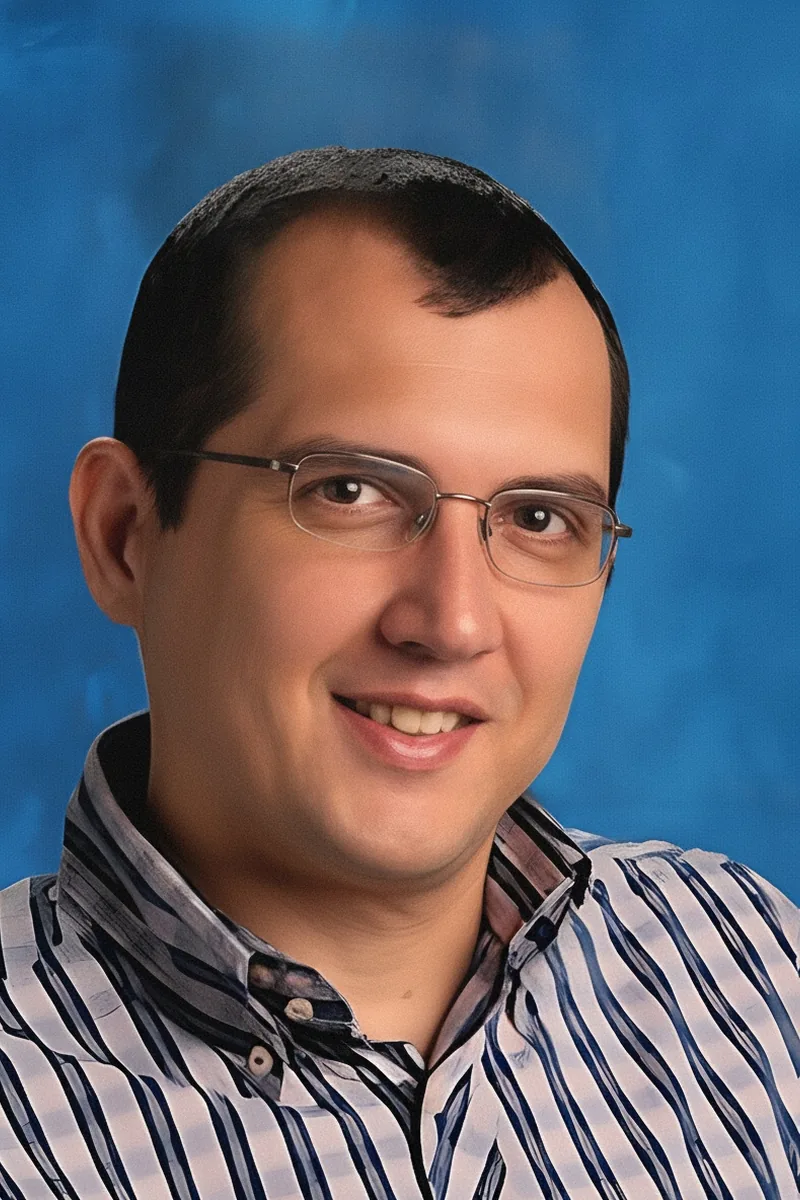
The jump from pre-calc to AP Calculus AB is often less about the math itself and more about learning to think in terms of rates and accumulation. Calin holds degrees in both mathematics and philosophy, which means he teaches the chain rule or the Fundamental Theorem of Calculus by unpacking the reasoning behind each step rather than just drilling procedures.
Electrical engineering at VCU's honors college means Emma hits derivatives and integrals every week — analyzing circuit behavior, modeling signal changes, computing power dissipation — so the AB curriculum's core concepts are second nature to her. Her 34 ACT and 4.9 rating back up an approach that zeroes in on the places students actually lose points: setting up definite integrals from word problems and correctly applying the chain rule under time pressure.
Being in VCU's BS/MD Guaranteed Admissions program means Roshni's biology and pre-med coursework constantly leans on calculus — modeling population growth, analyzing enzyme kinetics — so she teaches AB concepts with a clear sense of where the math is heading and why it matters. Her 35 ACT and 1550 SAT back up the quantitative sharpness she brings to tricky limit definitions and integration techniques that trip students up on free-response questions. Rated 4.9 by students.
The jump from memorizing derivative rules to applying them — related rates, optimization, accumulation functions on the free response — is where most AP Calc AB students stall. Kyle breaks these problems into a logical sequence of decisions, drawing on the same structured reasoning he developed earning his MA in Philosophy. He's currently deepening his calculus coursework as he prepares for a high school teaching career.
Mechanical engineering at VCU means Ying is knee-deep in calculus every semester — computing derivatives to analyze motion and setting up integrals to solve real force and energy problems — so the AB curriculum maps directly onto skills she's actively building. She volunteered through high school tutoring peers on math SOLs, which taught her how to spot the exact moment a concept stops making sense and re-explain it from a different angle. That combination of current coursework and hands-on teaching instinct makes her especially useful for students wrestling with limits, the chain rule, or the transition from computation to application problems.
Logan teaches AB Calculus concepts the way he teaches them in his own high school classroom: grounding every limit, derivative, and integral in graphical and numerical reasoning before moving to algebraic manipulation. His MAT from Virginia Commonwealth specifically trained him in how students learn mathematical concepts at the secondary level, which makes his explanations unusually well-calibrated to what clicks for AP students.
I am currently a lead preschool teacher. I received my Bachelor's in Psychology from VCU and am looking to return to school to further my education. While in college, I worked as a Supplemental Instruction leader, teaching general biology and anatomy. I have also worked in an after school program with elementary age children, but I have my fondest memories volunteering as a counselor for Camp Kesem. In my own experience, I loved school and now I love teaching even more at all age levels! I especially enjoy the challenge of getting creative to discover what approach and mediums work best for each student. I am available for in person as well as online tutoring.
Hey, I'm Ryan, I specialize in micro and macro economics, math through Calc 3, Spanish, and SAT prep. I've been tutoring for years throughout middle school and high school, and I'm happy to help with whatever you might need!
Hi everyone! My name is Iris, and I am passionate about making math fun and easy for everyone. My philosophy is that every student can succeed when concepts are explained from the ground up in a way that fits their learning style. I break problems into steps, encourage questions, and create a comfortable environment for students. I think mistakes are an important part of learning, and my motivation comes from seeing a student go from stuck to succeeding on their own!
I'm a Crane Structural Engineer at a major defense contractor with a VA Mechanical Engineering FE/EIT. I've spent years tutoring math, physics, and engineering courses and use them everyday. I also graduated from Virginia Tech with a B.S. in Engineering Science and Mechanics and minors in Mathematics and Leadership Studies. I use humor and relatable situations to teach, turning difficult topics into easy concepts to remember. I've been the student at the bottom of the class before, so I know what it's like to be overwhelmed. I find the best fix for that is to use what students know to WORK SMARTER NOT HARDER. I've also tutored students with disabilities, tailoring my approach to meet unique learning needs with patience and creativity. I'm on the East Coast but keep a flexible schedule to ensure full availability for West Coast students. Whether you're local or four time zones away, I'm ready to help you reach your full potential. Hope to see you soon and best of luck with classes!
Kate breaks AB Calculus into two core skills: understanding what derivatives and integrals actually represent, and learning the mechanical techniques to compute them quickly. Her environmental engineering training required heavy use of related rates, optimization, and area-under-the-curve problems, so she can show students exactly how these concepts connect to real applications.
Studying neuroscience at Vanderbilt meant Benjamin couldn't escape calculus — modeling membrane potentials, analyzing signal decay curves, computing rates of neurotransmitter diffusion — so the AB curriculum's core concepts aren't textbook abstractions for him but tools he's actually used. His 34 ACT reflects the quantitative precision he brings to teaching limits and the chain rule, two topics where small conceptual gaps snowball into free-response mistakes. He's especially good at slowing down the problem-setup phase so students learn to read what a question is really asking before jumping into computation.
The jump from "find the derivative" to "explain what the derivative means on this graph" is where most AP Calculus AB students lose points on free-response questions. Justin bridges that gap by teaching limits, Riemann sums, and the Fundamental Theorem as connected ideas rather than isolated procedures — an approach shaped by his dual background in physics and mathematics at Washington University in St. Louis.
Limits, derivatives, and integrals click faster when a student sees how each concept builds on the last — and Tim's computational science training at MIT means he can show exactly how those connections work, from the epsilon-delta definition through the Fundamental Theorem. He's tutored every level of high school math up through AP Calculus BC, so he knows precisely where AB students tend to stumble on topics like related rates and accumulation functions.
Limits, derivatives, and integrals each build on the last, so one shaky concept can snowball through the entire AP Calculus AB curriculum. Annie breaks down each idea with concrete visual intuition — what a derivative actually means on a graph, why the chain rule works the way it does — drawing on the rigorous calculus sequence she completed as a biomedical engineering major at Cornell. Rated 4.9 by students.
Limits, derivatives, and integrals each build on the last, so a shaky grasp of one topic can snowball fast in AP Calculus AB. Aidan tackles this by connecting each new concept back to its geometric meaning — showing, for example, why the derivative is a slope before diving into differentiation rules. His 1540 SAT and 35 ACT reflect the kind of precision he brings to exam preparation.
Caleb's statistics degree at Duke means he doesn't just teach AP Calculus AB procedures — he understands where concepts like limits, derivatives, and the Fundamental Theorem of Calculus lead in higher math. That perspective lets him explain *why* the chain rule or related rates problems work the way they do, giving students a conceptual grip that pays off on the AP exam.
Limits, derivatives, and integrals each build on the last, so a shaky understanding of one concept compounds quickly in AP Calc AB. Ben unpacks each topic by tying it to its geometric meaning — the slope of a tangent line, the area under a curve — so that formulas feel intuitive rather than arbitrary. His 5.0 client rating speaks to how well that approach lands with students.
Chemical engineering at the undergraduate level and then medical school means Siva has been setting up and solving calculus problems in high-stakes contexts for years — from modeling heat transfer and reaction kinetics to quantifying physiological rates of change. That depth shows when he teaches limits, continuity, and the mechanics of integration, because he can explain not just the procedure but the reasoning that makes free-response setups feel logical instead of mysterious. Rated 5.0 by students, with a 1560 SAT backing up the quantitative precision behind his approach.
A PhD in statistics built on a biomedical engineering foundation means Sam has spent years where calculus isn't a course — it's the machinery underneath everything, from deriving probability distributions to modeling biological systems. That depth shows when teaching limits and the Fundamental Theorem, where he can trace each concept forward into the math students will actually use in college. Rated 4.9 by students.
Cognitive science at Penn might not scream calculus, but Samantha's coursework required enough mathematical modeling — derivatives for rate-of-change problems, integrals for cumulative distributions — that she teaches AP Calculus AB with real fluency. She's especially effective at walking through optimization and curve-sketching problems, where translating a word problem into the right function is half the battle. Her 1460 SAT reflects the quantitative precision she brings to exam prep.
The jump from memorizing derivative rules to actually understanding limits, the chain rule, and the Fundamental Theorem is where most AB students struggle. Anthony approaches calculus the way he learned it as a Yale physics and math major: every rule has a reason, and once students see that reason, problem-solving becomes intuitive rather than mechanical. He holds a 5.0 client rating.
Testimonials
Because the right AP Calculus AB tutor makes all the difference.
Average Session Rating – Based on 3.4M Learner Ratings
Practice AP Calculus AB
Free practice tests, flashcards, and AI tutoring for AP Calculus AB
Other Norfolk Tutors
Related Math Tutors in Norfolk
Frequently Asked Questions
Varsity Tutors matches Norfolk students with expert AP Calculus AB tutors for 1-on-1 instruction. We pair each student with a tutor based on their specific needs, learning style, and goals.
Whether you need homework help, exam prep, or want to get ahead, our AP Calculus AB tutors are ready to help.
Common challenges include gaps from earlier material, difficulty with specific concepts, and trouble applying learning to new problems. These issues can snowball quickly in AP Calculus AB.
A tutor identifies where you're stuck, fills in gaps, and provides targeted practice. The 1-on-1 format means you get help exactly where you need it.
Tutors work with your student's actual coursework—homework assignments, class notes, and upcoming tests. This keeps tutoring directly relevant to what's happening in the classroom.
When you share information about your student's school and curriculum, we can match you with a tutor who has relevant experience.
All tutors complete background checks, credential verification, and teaching evaluation. Many of our AP Calculus AB tutors hold advanced degrees or have years of teaching experience.
You can review tutor profiles to find someone with the right background for your student's level and needs.
Many students see improved grades within a few weeks, along with better understanding of AP Calculus AB concepts and more confidence tackling challenging material.
Tutors track progress and adjust their approach to ensure continued improvement.
Most students benefit from 1-2 sessions per week. More frequent sessions help if your student is significantly behind or has an important exam coming up.
Your tutor can recommend a schedule based on your student's specific situation and goals.
Tutoring is purchased in packages of hours, with rates varying by tutor experience. Varsity Tutors offers several options to fit different budgets and needs.
You can discuss pricing during your consultation to find what works best.
Your tutor will assess where your student is, discuss goals, and start working on priority areas. Most students bring current homework or upcoming test material to focus on.
By the end, you'll have a clear sense of how the tutor can help and a plan for moving forward.
Let’s find your perfect tutor
Answer a few quick questions. We’ll recommend the right plan and match you with a top 5% tutor.