Award-Winning Science Tutors
serving Ogden, UT
Science
Tutors in Ogden
Private 1-on-1 tutoring, weekly live classes for academic support, test prep & enrichment, practice tests and diagnostics, and more to elevate grades and test scores.
Based on 3.4M Learner Ratings
UniversitiesSchools & Universities
DeliveredHours Delivered
ProficiencyGrowth in Proficiency
Who needs tutoring?
No obligation. Takes ~1 minute.

Double-majoring in psychology and writing at the University of Utah means Ali spends a lot of time reading and producing research — designing studies, interpreting results, and explaining findings in precise language — which is applied scientific reasoning in everything but name. She's especially comfortable walking students through the scientific method, hypothesis formation, and how to make sense of data in lab reports or classroom experiments. Rated 5.0 by students.
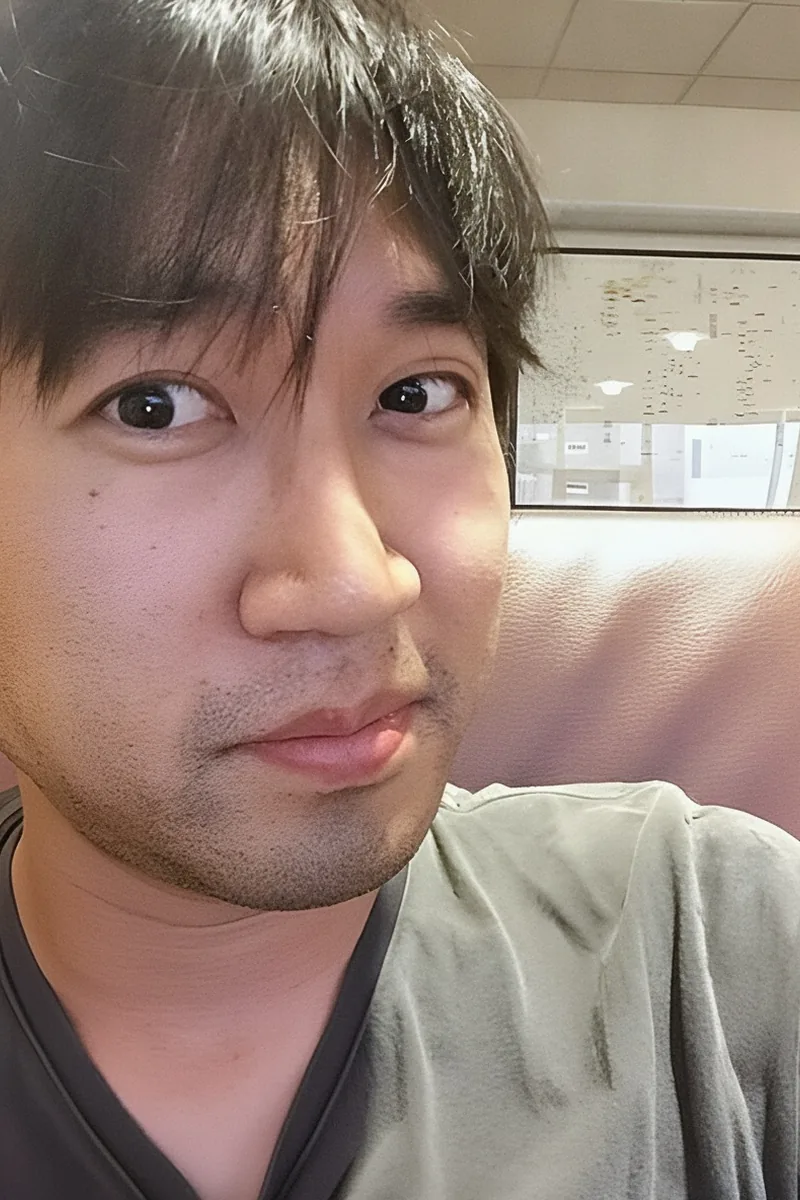
Hidefusa's science teaching draws on a clinical neuropsychology PhD track, where understanding the brain means integrating biology, chemistry, and research methodology into a single framework. He's especially strong at explaining the scientific method, experimental design, and how to interpret data — skills that run through every science class from middle school life science to AP-level coursework. Students get someone who actually conducts research, not just someone who once read about it.
Three semesters as a college chemistry TA gave Joshua extensive practice explaining scientific concepts — balancing equations, interpreting reaction kinetics, walking through acid-base equilibria — to students encountering them for the first time. His exercise science coursework adds depth in biology and human physiology, making him a versatile science tutor across multiple disciplines. Rated 4.9 by students.
A genetics degree gives Spencer an unusually integrated view of science — cell biology, chemistry, physics, and experimental design all lived under one roof in his coursework. He's comfortable explaining everything from mitosis and Mendelian inheritance to basic thermodynamics, and he emphasizes reading data and interpreting experiments, not just memorizing vocabulary.
A doctoral candidate in clinical psychology, Ben designs and runs actual research studies — controlling variables, collecting data, and defending conclusions in front of faculty — which is the scientific method in practice, not just in a textbook diagram. He's particularly good at walking students through how to set up a fair experiment and interpret what their results actually tell them, since that's what his own weekly workload looks like. Holds a 5.0 rating.
Pre-med coursework at the University of Utah keeps Rebecca immersed in biology and chemistry, so she brings current, firsthand experience with the material students are tackling. She connects scientific concepts to concrete examples — like explaining cellular respiration through what actually happens during exercise — to make abstract processes click.
A biochemistry degree, a PhD in Biomedical Engineering, and an incoming lectureship in General Biology give Kristina unusual range across the sciences — from cell structure and genetics to the physics and chemistry underlying biological systems. She connects abstract scientific concepts to concrete, visual examples so students actually retain what they're learning instead of cramming and forgetting.
Elementary education majors at BYU take integrated science methods courses designed to teach concepts like life cycles, weather systems, and properties of matter through hands-on investigation — and Heather brings that training directly into her tutoring. She's especially strong with younger learners who need to connect scientific vocabulary to things they can touch, observe, and test, rather than just read about in a textbook.
Reading widely across geology, economics, and literature — all subjects Matthew actively tutors — trained him to pick up new scientific concepts quickly and spot connections between disciplines, which is exactly what general science coursework asks students to do. He's especially good at walking through how to set up a fair experiment and interpret what the results actually show, breaking the scientific method into concrete steps rather than a list to memorize. His 35 ACT (rated 4.8 by students) confirms he handles data and evidence-based reasoning with real precision.
An English education major might not scream 'science tutor,' but Joseph's strength is in the skill that trips up most science students: explaining what they actually understand. He teaches students to articulate observations, write clear lab reports, and translate data into plain-language conclusions — the communication side of science that textbooks rarely teach well. His 5.0 rating suggests students appreciate having someone who makes the writing-heavy parts of science feel manageable.
Having taken several AP courses and earned a 34 ACT, Jared brings genuine cross-disciplinary strength to science — he's comfortable with the math behind formulas and unit conversions, the reading comprehension needed to parse dense passages, and the logical reasoning that ties hypotheses to experimental outcomes. He's especially good at walking students through how to connect what they observe in a lab or diagram to the underlying concept being tested, rather than treating each topic as a standalone set of facts to memorize.
Rachel's path to law school ran through immigration casework and refugee resettlement — fields where reading policy research, interpreting demographic data, and evaluating evidence-based claims were daily tasks, not classroom exercises. That practical experience with real-world data analysis translates well when she teaches students to work through the scientific method, from forming testable hypotheses to explaining what results actually support. Her 33 ACT and 5.0 rating back up the analytical rigor she brings to the subject.
Biophysics sits at the intersection of biology, chemistry, and physics — so Benjin spends his coursework doing exactly what general science demands: moving between disciplines, connecting concepts across fields, and applying quantitative reasoning to living systems. His 36 ACT confirms he can handle the full range of science content, from interpreting experimental data to explaining mechanisms at the molecular level. He's particularly strong at bridging the gap between the math side of science and the conceptual side, since his major requires both daily.
Tutoring both math and science means Kristin can bridge the gap when a science problem suddenly turns into a unit conversion or a graph interpretation exercise — she doesn't skip the quantitative steps that trip students up. Her sociology coursework at the University of Utah also included research methods and data analysis, so she teaches the scientific method as something you actually do, not just a list of steps to memorize. Holds a 5.0 rating.
An English major might not scream 'science tutor,' but Grace's strength is in the skill that trips up most science students: explaining what they actually understand. She teaches students to read dense textbook passages, pull key information from diagrams, and write lab conclusions that demonstrate real comprehension — the literacy-heavy side of science that often gets overlooked. Her experience tutoring math and test prep means she's comfortable with the quantitative pieces too.
For students who freeze up when they see a lab report prompt or can't connect a textbook diagram to what's actually happening in an experiment, Samantha bridges the gap between scientific content and the literacy skills needed to understand it. She's tutored across middle and elementary school science and approaches each topic — whether it's the water cycle or cell structure — by anchoring it to something concrete the student already knows.
Ecology is one of Miles's listed subjects, and that foundation in how living systems interact gives him a concrete way into broader science material — food webs, energy flow, classification, and the relationships between organisms and their environments. He also brings strong reading and writing skills to the table, which matters more than most students expect when they're asked to interpret a diagram, explain an experiment, or write up observations in their own words. Holds a 5.0 rating.
Holding a geology degree with a geophysics concentration, Garrett has deep comfort across earth science, physics, and astronomy — and he spent time as a learning assistant in a college astronomy lab at CU Boulder. He breaks down scientific reasoning by walking through real datasets and experiments, making the scientific method feel like problem-solving rather than vocabulary memorization. Rated 4.8 by students.
A physics degree means Kendall thinks in terms of models, units, and experimental reasoning — skills that transfer directly to any science course, whether a student is balancing chemical equations or interpreting data from a biology lab. He breaks down the scientific method into concrete steps so students learn to approach unfamiliar problems systematically rather than guessing. Rated 5.0 by students.
Mechanical engineering sits at the intersection of physics, chemistry, and applied math, so Taylor encounters core science concepts daily in his BYU coursework. He's especially strong at explaining physical science topics like forces, energy transfer, and motion — connecting abstract formulas to tangible, real-world examples that click.
I am a teacher that loves to teach grammar, vocabulary, writing, reading. ACT Prep. I love to travel and ride motorcycles. I am an avid reader.
A physics degree from the University of Utah means Grey doesn't just know scientific facts — he understands the scientific method that connects them, from designing controlled experiments to interpreting data and drawing evidence-based conclusions. He teaches students to think like scientists by working through problems hands-on, whether that's balancing chemical equations, tracing energy transfers, or analyzing motion graphs. Rated 4.7 by students.
A Communication Disorders degree is essentially applied science — Kjirsten studied anatomy, acoustics, and the neuroscience of speech and language, which means she learned to think in systems, trace cause and effect through the body, and interpret clinical data long before she started tutoring. She brings that same diagnostic mindset to general science, walking students through how to set up experiments, read results carefully, and explain biological processes in their own words.
A computational math background might seem unrelated to middle-school science, but Kacey's strength is in the quantitative side — unit conversions, interpreting data tables, graphing experimental results, and using formulas correctly. She brings structured problem-solving habits that make the math-heavy parts of science courses far less intimidating.
A physics degree means John learned science the hard way — deriving equations from first principles, running labs with real error analysis, and connecting abstract models to measurable phenomena. That training makes him especially effective at teaching students to move past definitions and actually explain how systems work, whether the topic is forces, chemical reactions, or energy flow. Rated 4.8 by students.
Running the physics help lab at BYU for over a year gave Matthew a front-row seat to where science understanding breaks down — usually at the intersection of conceptual reasoning and mathematical application. He teaches students to read experiments the way a physicist would: identifying variables, interpreting graphs, and building intuition for why a result makes sense before crunching numbers.
Brett's biology background means he doesn't just know scientific facts — he understands how to design experiments, interpret data tables, and distinguish correlation from causation. Whether a student is struggling with the scientific method, cell biology, or basic chemistry concepts, he ties each topic back to concrete examples from lab work and MCAT prep that make the material click.
Growing up trilingual in Spanish, German, and Romanian trained Helaman to spot patterns across systems — a habit that carries over when he teaches students to classify organisms, trace energy through ecosystems, or connect cause and effect in physical processes. His business background also means he's comfortable with data: reading charts, interpreting trends, and explaining what the numbers actually tell you about an experiment's outcome. Rated 4.9 by students.
A mechanical engineering background gives Eric fluency across physics, chemistry fundamentals, and applied math — the trifecta that most science coursework demands. He's especially effective at breaking down force diagrams, energy conservation problems, and unit analysis, turning intimidating word problems into step-by-step logic.
Finance majors spend more time on data than most people realize — building models, reading charts, and testing whether numbers actually support a conclusion — and Jared applies that same analytical process when walking students through scientific concepts like variable control, data interpretation, and graph reading. His 1510 SAT confirms he can handle the quantitative and reasoning demands science throws at students, and his 5.0 rating suggests he makes those connections stick.
Studying mechanical engineering means Samantha lives at the intersection of physics, chemistry, and applied math every semester. She's strongest in physics-related topics — kinematics, forces, energy, and waves — and excels at connecting scientific principles to the math that describes them, so students see equations as tools rather than things to memorize.
Computational mathematics training means Joseph thinks about science quantitatively — translating word problems about motion, energy, or chemical reactions into equations students can actually solve. He breaks down the math hiding inside science concepts like unit conversions, proportional reasoning, and data interpretation so the numbers stop feeling like a separate language. Rated 5.0 by students.
Hi, my name's Jeff. I'm 34 years old and I live in the United States of America. I received a bachelor's of science in biochemistry from Brigham Young University. With the hard sciences, you have to take a methodical and meticulous approach to learning. I believe this applies to teaching as well. I used this methodology when I taught English for two years in the Ukraine. I worked with multiple small groups, each with their own leader who I had chosen for their skill. They would perform their exercises while I would monitor their progress. We would also have a discussion afterward about topics that concerned or interested them. When I have time to myself, I enjoy keeping both my body and mind sharp. To achieve this, I like learning other languages as well as practicing gymnastics. I am also interested in reading scientific articles because I want to keep up with current developments in my field.
I'm patient, personable, and have an incredible gift for explaining things in a way that makes sense. I majored in Math Education (with a minor in Computer Science), and I have more than eight years of experience teaching math and other STEM subjects.
Chemistry is Sung's home discipline, which means he teaches science the way a working scientist thinks about it: grounding every concept in evidence, units, and careful reasoning. Whether a student is balancing equations, interpreting lab data, or connecting molecular structure to physical properties, Sung ties abstract ideas back to observable, concrete examples.
Comparative literature might seem worlds away from science, but Jacob's Columbia and UC Berkeley training drilled the exact close-reading skills that matter when students need to parse a dense lab procedure, pull meaning from a data table, or figure out what a graph is actually saying. He treats science texts the way he'd treat a difficult passage in German — slowing down, breaking apart the structure, and making sure every piece connects logically before moving on.
Mimi's Masters in Education from Harvard focused on inquiry-based and object-based learning — an approach that turns science into something students can observe, question, and test rather than just read about in a textbook. Her integrated arts background means she often teaches concepts like ecosystems or states of matter through hands-on exploration and visual models, which tends to stick with students who struggle to learn from lectures alone. She's especially strong with younger and middle school learners building their first real science habits.
Earning a medical doctorate means Jessica didn't just study science — she lived it across biology, chemistry, physics, and anatomy for years. She teaches scientific concepts by linking them to real processes in the body or the natural world, making abstract ideas like energy transfer or cellular respiration tangible and easier to retain.
As a mechanical engineering student at Harvard, Christopher lives at the intersection of physics and chemistry daily — calculating forces, analyzing material properties, and modeling energy systems. That applied perspective makes him especially effective at showing students why scientific concepts matter beyond the textbook, turning abstract formulas into concrete, intuitive ideas.
A statistics and machine learning certificate at Princeton means Julie spends her coursework building models, testing hypotheses against real data, and evaluating whether results are statistically meaningful — all of which is applied scientific reasoning. She brings that quantitative rigor to science tutoring, especially when students need to move from memorizing definitions to actually interpreting experiments, reading graphs, and explaining what their data means. Her 4.9 rating suggests the approach lands.
Testimonials
Because the right Science tutor makes all the difference.
Average Session Rating – Based on 3.4M Learner Ratings
Practice Science
Free practice tests, flashcards, and AI tutoring for Science
Nearby Science Tutors
Other Ogden Tutors
Related Science Tutors in Ogden
Frequently Asked Questions
Many students struggle with connecting abstract scientific concepts to real-world applications, especially in chemistry and physics where visualization is critical. With an average student-teacher ratio of 19.8:1 in Ogden schools, classroom instruction often can't address individual misconceptions that build up over time. Personalized tutoring helps identify these gaps early and fills them before they compound into larger learning obstacles.
In a classroom setting, teachers must pace instruction for 20+ students with varying levels of understanding. Personalized 1-on-1 instruction allows tutors to slow down on challenging concepts like photosynthesis or atomic structure, use hands-on demonstrations tailored to your learning style, and adjust explanations in real time based on your questions. This targeted approach helps students build genuine understanding rather than memorizing for tests.
Varsity Tutors connects students with tutors across all science disciplines and grade levels—from elementary life science and physical science foundations, through middle school earth and life science, to high school biology, chemistry, physics, and AP/honors courses. Tutors are experienced in helping students master grade-level standards while building the foundational skills needed for success in more advanced science courses.
Yes. Beyond explaining concepts, tutors can guide you through lab report writing, help you understand experimental design and data analysis, and explain how to interpret results. Whether you're preparing for a hands-on lab in class or need help understanding what happened during an experiment, personalized instruction ensures you grasp both the 'how' and the 'why' behind scientific methods.
Standardized science assessments require both conceptual understanding and test-taking strategy. Tutors help you identify weak areas through practice problems, teach you how to interpret complex diagrams and data sets, and build confidence with timed practice. This combination of content mastery and exam preparation leads to measurable score improvements and stronger performance on unit tests, midterms, and standardized assessments.
Strong science fundamentals are essential for STEM success in college and careers. Personalized tutoring builds deep understanding of core concepts, develops problem-solving skills, and helps students tackle challenging material like chemistry and physics with confidence. Whether you're aiming for AP Science courses, dual enrollment, or simply want to strengthen your foundation for future STEM studies, targeted instruction keeps you on track.
Your first session is an assessment and planning meeting. The tutor will ask about your current science course, specific challenges you're facing, and your goals—whether that's improving test scores, understanding difficult concepts, or preparing for an upcoming exam. From there, they'll create a personalized plan focused on your needs and learning style, so every session after that is targeted and productive.
Varsity Tutors connects you with tutors who have strong backgrounds in science—many hold degrees in biology, chemistry, physics, or related fields, and many have classroom teaching experience. All tutors are vetted for expertise in their subject area and have a proven track record of helping students understand complex material and improve their performance in science courses.
Let’s find your perfect tutor
Answer a few quick questions. We’ll recommend the right plan and match you with a top 5% tutor.