Award-Winning Pre-Calculus Tutors
serving Ogden, UT
Pre-Calculus
Tutors in Ogden
Private 1-on-1 tutoring, weekly live classes for academic support, test prep & enrichment, practice tests and diagnostics, and more to elevate grades and test scores.
Based on 3.4M Learner Ratings
UniversitiesSchools & Universities
DeliveredHours Delivered
ProficiencyGrowth in Proficiency
Who needs tutoring?
No obligation. Takes ~1 minute.
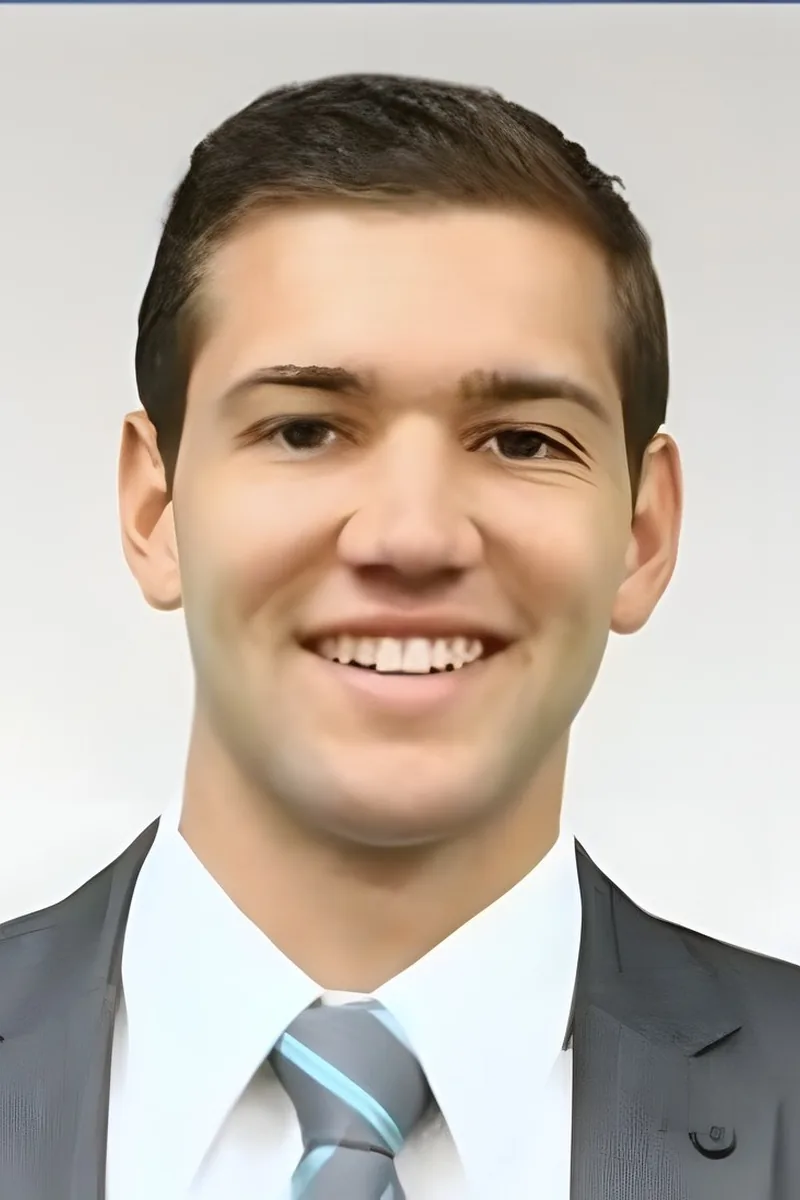
The jump to Pre-Calculus trips up students who've been getting by on memorized procedures — suddenly they need to actually understand function behavior, trigonometric identities, and limits conceptually. Taylor's engineering coursework at BYU means he works with these ideas constantly, and he walks through each concept by showing how the pieces link together rather than treating them as isolated formulas.

Currently studying applied and computational mathematics, Kacey is immersed in the exact material pre-calculus builds toward — so she teaches topics like parametric equations and trigonometric identities with a clear sense of where each concept is actually heading. She's particularly sharp at diagnosing which algebraic habits are holding students back when function behavior starts getting abstract. Her 33 ACT and 4.8 rating reflect consistent results across her math students.
Working in BYU's physics help lab since 2014, Matthew has watched hundreds of students stumble on the same pre-calculus sticking points — the jump from memorizing trig values to actually understanding the unit circle, or the moment when function transformations stop being a set of rules and start being visual intuition. His applied physics training means he teaches these concepts as tools he genuinely uses, connecting topics like polar coordinates and parametric equations to the physical systems that make them concrete. A 34 ACT confirms the quantitative instincts behind his approach.
I'm patient, personable, and have an incredible gift for explaining things in a way that makes sense. I majored in Math Education (with a minor in Computer Science), and I have more than eight years of experience teaching math and other STEM subjects.
Differential equations and Calculus II don't go well without rock-solid pre-calculus instincts — and since Eric teaches both, he knows exactly which gaps in trigonometric reasoning or function composition will derail a student later. He tackles the course by connecting each new concept back to the algebra underneath it, especially when topics like rational functions or logarithmic properties start feeling disconnected from anything familiar. Holds a 5.0 rating.
Mechanical engineering at the University of Utah means Samantha is constantly applying the trigonometric identities, polar coordinates, and function transformations that pre-calculus students are just learning to navigate — she's solving dynamics and thermodynamics problems that depend on this material daily. She tackles the course by connecting each new concept back to the algebra students already have down, then showing exactly where it leads in the calculus sequence she also teaches. Her 33 ACT confirms the quantitative skills behind that bridge-building approach.
Computational mathematics as a major means Joseph isn't just passing through pre-calculus — he's building on it every day, using the function behavior, trigonometric reasoning, and limit intuition that the course introduces as scaffolding for higher-level work. He zeros in on the moment where algebra stops being about solving for x and starts being about understanding how entire families of functions behave, which is exactly the conceptual shift that trips most students up. His 33 ACT and 5.0 rating back that up.
Chemical engineering at Georgia Tech means Aimee has been solving problems built on pre-calculus concepts — rational functions in reactor design, trigonometric models in thermodynamic cycles, logarithmic relationships in kinetics — since her first semester. She teaches the course by showing how each topic threads into the next, so the jump from polynomial behavior to limits feels like a natural step rather than a cliff. Her 33 ACT and 4.9 rating reflect the kind of structured, patient approach that makes that transition stick.
Most pre-calculus courses throw the unit circle, rational functions, and logarithmic properties at students in rapid succession without showing the thread connecting them — Kathleen's math degree from Washington University means she sees that thread clearly and teaches accordingly. She's especially sharp at bridging the gap between algebraic mechanics students already trust and the functional thinking calculus will demand, building each new concept as a natural extension rather than a separate topic to memorize. Her 35 ACT and 1550 SAT confirm the quantitative depth behind her approach.
A PhD in statistics and a biomedical engineering degree mean Sam has spent years where pre-calculus isn't a course — it's the scaffolding holding together regression models, signal processing, and experimental design. He digs into the transition points that trip students up most, like moving from polynomial arithmetic to analyzing rational function behavior or connecting trig identities to their geometric origins. Rated 4.9 by students.
Pre-calc is where math pivots from computation to conceptual thinking — suddenly students need to analyze function behavior, understand transformations, and reason about limits informally. Zofia's approach zeroes in on building that analytical shift, especially around trigonometric functions and their graphs, so that calculus feels like a natural continuation rather than a cliff.
Tutoring calculus students at Penn's Tutoring Center taught Brittany exactly which pre-calculus skills matter most — she saw firsthand where gaps in trigonometric reasoning or shaky function manipulation derailed students in Gen Chem and Physics. Her psychology training also gives her a sharp read on how students get stuck, letting her adjust explanations of topics like polynomial end behavior or composite functions on the fly. She's been teaching math since her Mu Alpha Theta days in high school and hasn't stopped since.
Jeffrey's mechanical engineering PhD work at Rice means he's spent years relying on the exact toolkit pre-calculus introduces — function composition, trigonometric modeling, and exponential behavior all show up constantly in dynamics and thermodynamics problems. He teaches these topics by walking through the engineering contexts where they actually matter, which gives students a concrete reason to care about each concept. His 34 ACT and 4.9 rating speak to the clarity he brings to quantitative subjects.
Trigonometric identities, logarithmic functions, and the behavior of rational expressions all land differently when a student can see what's happening on a graph. Dylan leans heavily on visual and graphical reasoning to make Pre-Calculus concepts intuitive rather than procedural — an approach sharpened by his physics and math coursework at Vanderbilt. He's particularly effective at bridging the gap between algebraic manipulation and the conceptual thinking calculus will demand.
The jump into limits, trigonometric identities, and composite functions can feel overwhelming without someone who knows how to sequence the ideas clearly. Pinelopi has tutored math from pre-algebra through calculus, which means she can pinpoint exactly which earlier concept a student is missing when pre-calc material stops making sense. Rated 5.0 by students.
Environmental engineering coursework — modeling pollutant dispersion, watershed flow rates, decay of contaminants — runs on exactly the exponential, logarithmic, and trigonometric functions that pre-calculus introduces. Kate teaches these topics with the instinct of someone who's built real models around them through both her bachelor's and master's work, connecting each function family to the physical behavior it describes. Her 1580 SAT and 4.9 rating confirm the precision she brings to every session.
A Cornell chemical engineering degree means Rahul spent years working with exponential decay, logarithmic scales, and trigonometric models before most students even encounter them in a textbook. He teaches pre-calculus by emphasizing the conceptual reasoning behind each topic — why a logarithm undoes an exponential, how the unit circle generates every trig value — so the mechanics actually make sense. Rated 4.9 by students, with a 36 ACT to back up the quantitative chops.
Second-year medical school at Baylor means Michelle is neck-deep in the quantitative reasoning that pre-calculus builds — rate-of-change intuition for physiology, logarithmic models for acid-base chemistry, and exponential functions for everything from bacterial growth to drug clearance. Her biochemistry degree from Rice cemented the algebraic and trigonometric groundwork she now draws on daily, so she teaches these topics as someone who genuinely needed them to stick. A 1570 SAT confirms the mathematical precision behind her approach.
Materials science relies heavily on the mathematics pre-calculus teaches — modeling crystal lattice structures with trigonometry, describing diffusion rates through exponential functions, analyzing stress-strain curves as polynomial behavior. Jennifer brings that applied perspective to her tutoring, connecting abstract function families to the physical phenomena they actually describe. Her 1550 SAT and 5.0 rating confirm the quantitative depth behind her explanations.
Testimonials
Because the right Pre-Calculus tutor makes all the difference.
Average Session Rating – Based on 3.4M Learner Ratings
Practice Pre-Calculus
Free practice tests, flashcards, and AI tutoring for Pre-Calculus
Nearby Pre-Calculus Tutors
Other Ogden Tutors
Related Math Tutors in Ogden
Frequently Asked Questions
Pre-Calculus shifts from memorizing procedures to understanding the deeper concepts behind them. You'll move beyond just solving equations to analyzing functions, exploring their behavior, and seeing how different mathematical ideas connect. This conceptual leap is where many students struggle, but personalized 1-on-1 instruction helps you build those connections at your own pace rather than trying to keep up with a classroom of 20+ students.
Trigonometry, function transformations, and logarithms tend to trip up Pre-Calculus students the most. Many students also struggle with word problems that require translating real-world situations into equations, and with understanding why certain algebraic steps work rather than just memorizing them. Tutors can break these topics into smaller pieces, show you the underlying patterns, and give you plenty of practice with immediate feedback—something that's harder to get in a classroom setting.
Showing work isn't just about getting the right answer—it's about demonstrating that you understand each step. A tutor can watch you solve problems in real time, ask you to explain your thinking, and help you identify where you're skipping steps or making assumptions. This builds the communication skills you'll need for calculus and beyond, where understanding the 'why' matters as much as the 'what.'
Graphing helps you visualize how functions behave—it's the bridge between algebra and calculus. Many students memorize transformation rules without truly seeing what's happening on the graph. A tutor can use visual tools and real examples to help you connect the equation to the picture, so you understand why shifting a graph left or right actually changes the equation the way it does.
Math anxiety often comes from feeling lost or rushed, which is exactly what personalized instruction addresses. Working with a tutor means you can ask questions without worrying about holding up the class, tackle problems at your own speed, and celebrate small wins as you master each concept. Over time, seeing yourself actually understand difficult topics rebuilds confidence in ways that group instruction often can't.
Varsity Tutors connects you with tutors who are experienced across different Pre-Calculus textbooks and approaches used throughout Utah schools. Whether your class uses a specific curriculum or your teacher emphasizes certain topics, tutors can align their instruction with what you're learning in class and help you catch up or move ahead as needed.
Your first session is about assessment and connection. The tutor will ask about topics you find challenging, review recent tests or assignments, and identify gaps in understanding—whether that's shaky algebra skills or confusion about a specific concept. From there, they'll create a personalized plan focused on your biggest needs, so every session after that is targeted and efficient.
Absolutely. Pre-Calculus is essentially the foundation for Calculus success, and many students struggle in Calculus because they have gaps in Pre-Calculus concepts like limits, function behavior, and trigonometry. A tutor can help you solidify these concepts now, identify and fill any remaining gaps, and build the problem-solving habits and conceptual understanding that make Calculus much more manageable.
Let’s find your perfect tutor
Answer a few quick questions. We’ll recommend the right plan and match you with a top 5% tutor.