Award-Winning Calculus Tutors
serving Amarillo, TX
Calculus
Tutors in Amarillo
Private 1-on-1 tutoring, weekly live classes for academic support, test prep & enrichment, practice tests and diagnostics, and more to elevate grades and test scores.
Based on 3.4M Learner Ratings
UniversitiesSchools & Universities
DeliveredHours Delivered
ProficiencyGrowth in Proficiency
Who needs tutoring?
No obligation. Takes ~1 minute.
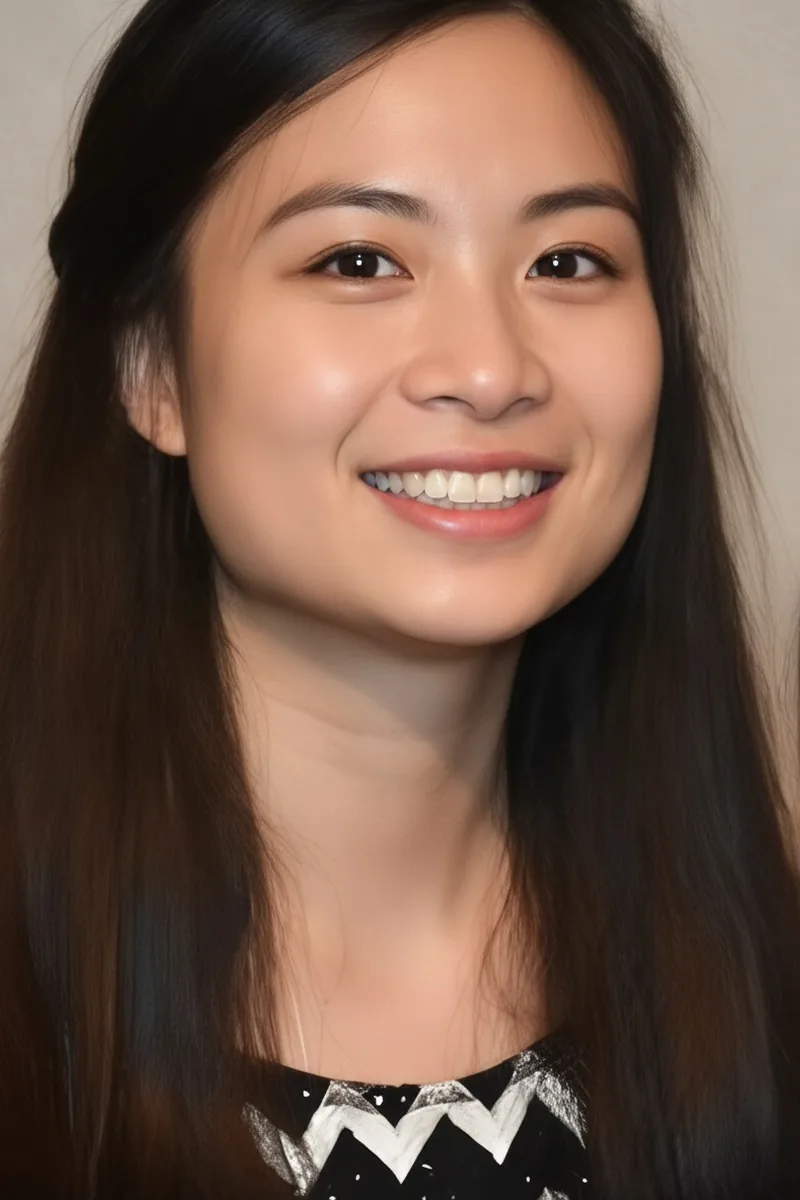
As a biochemistry major at Rice, Michelle used calculus constantly — modeling reaction rates, analyzing enzyme kinetics, interpreting area-under-the-curve problems with real lab data. She teaches derivatives and integrals by connecting the mechanics of each rule to the reasoning behind it, so students understand when and why to apply techniques like chain rule or u-substitution.
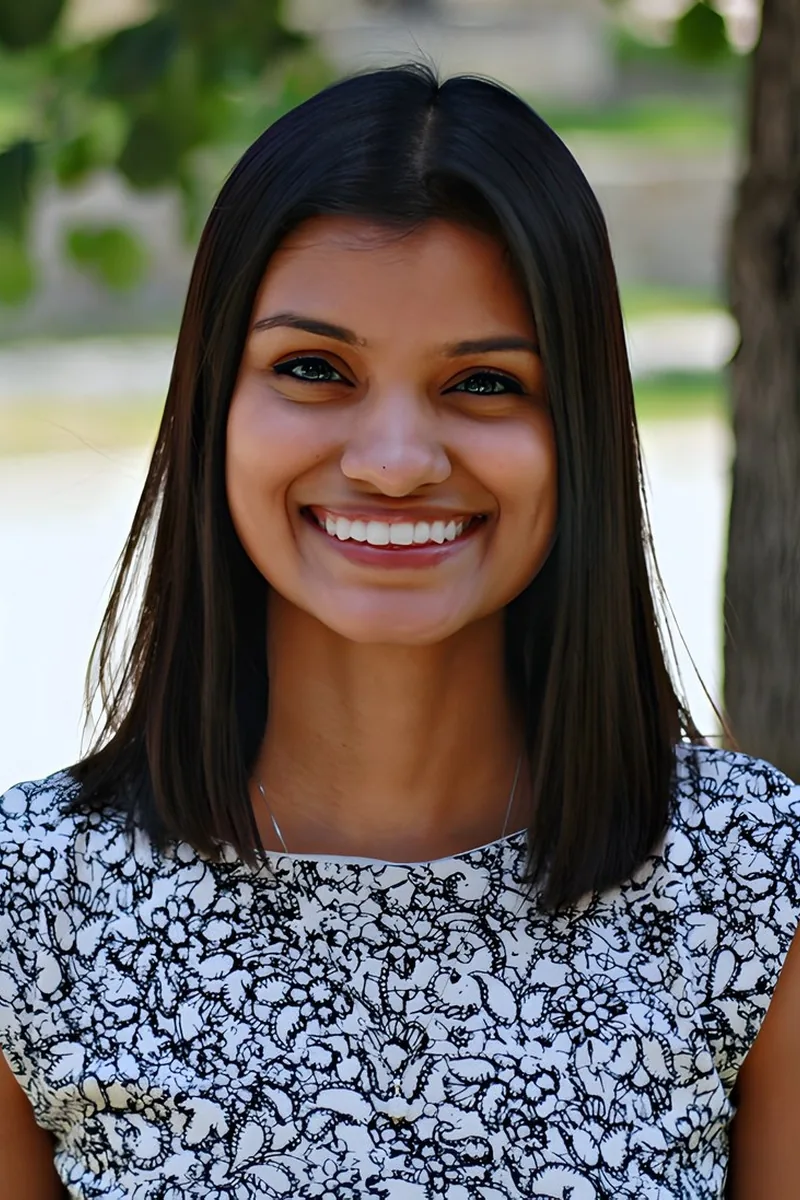
Limits, derivatives, and integrals each demand a shift in how students think about change and accumulation. Sugi's biochemistry background means she regularly used calculus to model reaction kinetics and enzyme behavior, so she can show students what these tools actually do beyond textbook exercises. She walks through each concept with concrete examples that make the abstraction tangible.
Pursuing an MD at Stanford after a double major in Economics and Molecular, Cellular, and Developmental Biology means Maggie has run through calculus from multiple directions — optimization problems in economic modeling, rate equations in cell biology, and the quantitative reasoning that underpins medical school coursework. A perfect 1600 SAT confirms her mathematical fluency, and she teaches integration and differentiation by connecting the mechanics to the real-world systems where she's actually used them. Rated 5.0 by students.
Biomedical engineering at Johns Hopkins means Bidyut didn't just take calculus — he kept using it, applying derivatives to model physiological systems and integrals to analyze signals in courses like biomechanics and medical imaging. That ongoing fluency with the material, from chain rule mechanics to series convergence in Calc BC, lets him teach the reasoning behind each technique instead of just the steps. Rated 5.0 by students with a perfect 36 ACT to back up the quantitative chops.
Human biology at Cornell meant Jonathan couldn't avoid calculus — modeling enzyme reaction rates, analyzing growth curves, and interpreting the quantitative side of physiology all required fluency with derivatives and integrals. That firsthand experience with calculus as a tool for understanding biological systems gives him a way to teach concepts like the chain rule or integration by parts through problems that connect to something tangible. Rated 4.9 by students.
Economics at the undergraduate level means Mackenzie has worked through calculus where it actually lives — marginal analysis, optimization of cost and revenue functions, and interpreting derivatives as real rates of change in markets. A 35 ACT composite backs up that quantitative fluency, and her approach leans on connecting each new rule to the economic intuition that made it click for her in the first place. Rated 4.8 by students.
Studying Human Biology at Stanford means Jake has encountered calculus where it actually lives — modeling enzyme kinetics, interpreting growth curves, and understanding how biological rates shift under changing conditions. That firsthand experience with derivatives and integrals in scientific contexts gives him a practical vocabulary for explaining the math, not just the mechanics. Rated 5.0 by students.
Art history and archaeology aren't typical math backgrounds, but Elena's 33 ACT composite shows she handles quantitative reasoning well, and her graduate-level research training at SMU sharpened the kind of precise, analytical thinking that early calculus demands. She breaks down the logic behind limits and derivatives methodically — the same way she'd walk through a visual analysis — making sure each concept earns its place before moving to the next.
Comparative literature and global policy studies don't scream calculus, but Chloe's 1540 SAT shows she's genuinely strong with quantitative reasoning, and her subject list spans algebra through calculus for a reason. She approaches early calculus the way she'd approach a dense text — methodically unpacking each layer of notation and logic until the relationship between a function and its derivative actually makes sense, not just as a rule but as an idea.
Biophysics at Rice means Aadith uses calculus daily — whether it's modeling protein folding dynamics, analyzing thermodynamic systems, or solving the differential equations that describe how molecules move through membranes. A 1590 SAT confirms the quantitative horsepower behind that applied experience, and he teaches integration techniques and multivariable concepts by connecting them to the physical systems where they originate.
An English and Computer Science double major at Carleton College, Meagen straddles the humanities and quantitative thinking in a way that's useful for early calculus — she can unpack the abstract logic of limits or the chain rule with the same precision she'd bring to analyzing a text. Her 34 ACT composite backs up that quantitative ability, and her coding background means she's comfortable with the kind of symbolic, step-by-step reasoning that makes derivative rules and function behavior feel less mysterious.
Rice University's Mathematical Economic Analysis program puts Rishi in calculus daily — optimization problems, marginal analysis, and the derivative-heavy modeling that underpins economic theory. With a 35 ACT composite backing his quantitative chops, he teaches calculus by connecting each rule to the bigger pattern it belongs to, so techniques like the chain rule or integration by parts stop feeling like isolated procedures.
Understanding why the chain rule works — not just when to apply it — changes how students approach every problem from related rates to integration by substitution. Alexander, an Applied Mathematics major at Rice, treats calculus as a framework for thinking about change rather than a collection of procedures. That perspective makes topics like the Fundamental Theorem click in a way that sticks long after the final exam.
Economics coursework gave Paul a working relationship with calculus — demand curves, marginal analysis, and optimization problems all run on derivatives, so the core concepts aren't abstract to him. He's heading to UT Law this fall, and that analytical rigor carries into how he breaks down integration techniques and limit problems: methodically, with an emphasis on why each step follows from the last.
Studying mathematics and computer science at Rice means William isn't just passing through calculus — he's built on it, using derivatives and integrals daily in contexts like algorithm analysis and multivariable optimization. That depth lets him teach everything from limit definitions through integration techniques and series convergence with the fluency of someone who actually uses the material, not just someone who once completed the course.
Economics at Brown meant Carter lived in calculus-adjacent territory — marginal analysis, optimization problems, and the derivative logic that underpins supply-and-demand modeling — before ever teaching it. He later broke down Game Theory concepts for advanced middle schoolers at a Johns Hopkins CTY program in Hong Kong, sharpening his ability to make abstract mathematical reasoning accessible to younger learners. Rated 5.0 by students.
Pre-med biosciences at Rice University means Tegan has pushed through the full calculus sequence in a context where it actually matters — reaction rates, growth models, and the quantitative backbone of upper-level biology courses. That firsthand experience with applied calculus lets her teach derivatives and integrals as tools with real purpose, not just abstract procedures to survive on an exam. Rated 4.9 by students.
Tackling limits, derivatives, and integrals requires comfort with every layer of math that came before — algebra, trig, and function behavior all converge at once. Sajel's biochemistry and molecular biology coursework at Rice put her through rigorous calculus sequences, so she understands both the mechanics of differentiation and the conceptual reasoning behind theorems like the chain rule and the Fundamental Theorem of Calculus.
Neuroscience and premed coursework at Rice means Aditi encounters calculus constantly — from modeling how drug concentrations decay over time to describing the rate at which neurons fire. That hands-on exposure to derivatives and integrals in biological contexts gives her a practical vocabulary for explaining what the math actually represents. Her 1570 SAT and 4.8 rating speak to the quantitative chops and teaching clarity she brings to the subject.
Premed coursework at Rice University means Jessy has pushed through calculus in the context of biological modeling — growth rates, concentration changes, and the quantitative reasoning that underpins upper-level science. Her 34 ACT composite backs up that math fluency, and she teaches derivatives and integrals by connecting each rule to the kinds of problems where the math actually does something. Rated 5.0 by students.
Cognitive science at Rice meant Adam didn't just take calculus — he used it, working through computational models of learning and decision-making where derivatives describe how the brain updates predictions in real time. That background lets him teach concepts like the chain rule and optimization by connecting them to systems that actually compute, rather than treating them as abstract symbol manipulation. His 34 ACT composite confirms the quantitative chops to back it up.
Patricia's math teaching spans middle school through calculus, and her environmental science background means she's used to applying derivatives and integrals to real problems — modeling pollution dispersion rates, analyzing resource depletion curves, interpreting change over time in ecological data. That applied context gives her a way into calculus concepts that purely abstract instruction often misses. Her 1580 SAT score reflects the quantitative fluency she brings to every session.
Cognitive Studies at Vanderbilt means Vy has worked through the quantitative modeling side of how the brain processes information — reaction time curves, signal detection theory, and the mathematical functions that describe learning and memory. That exposure to calculus in a behavioral science context gives her a way to explain derivatives and integrals as tools for describing real change, not just abstract procedures. Rated 5.0 by students.
Two semesters as a Calculus TA at Rice gave Sakibul a front-row seat to the mistakes students make most often — sign errors in chain rule applications, misunderstanding when to use substitution versus integration by parts, and treating limits as purely mechanical. He tackles each of these by connecting the procedure back to its graphical or physical meaning, so that solving a problem and understanding it become the same thing.
Two physics PhDs mean Zhengdong has spent years swimming in calculus — not as an abstract math exercise, but as the language for describing motion, fields, electromagnetic waves, and quantum behavior. He teaches integration techniques and differential equations by connecting them to the physical systems they were invented to describe, so the notation carries meaning instead of just procedure. Rated 4.8 by students.
Studying computational mathematics at Rice means Vinson isn't just tutoring calculus — he's immersed in it daily, from epsilon-delta proofs to the integration techniques that power applied math research. That fluency lets him break down topics like the chain rule or convergence tests by showing the underlying logic rather than handing students a formula sheet. His 36 ACT and 4.8 rating speak to the precision he brings to every session.
Sanjay's biochemistry and molecular biology training at Rice University meant heavy use of calculus — from modeling enzyme kinetics with differential equations to applying integration in thermodynamics problems. That science-rooted perspective lets him show students why concepts like derivatives and integrals matter beyond the textbook, making abstract rules click in concrete ways.
Liz holds a psychology degree rather than a math degree, so she's honest that calculus isn't her deepest subject — but her 32 ACT composite reflects real quantitative chops, and psychology's statistical backbone means she's comfortable with the kind of rate-of-change reasoning that underpins early derivatives. She takes a structured, step-by-step approach to demystifying limit notation and slope behavior, leaning on the same analytical habits that make her effective across her other subjects.
Having completed college-level math through calculus alongside a Spanish degree at Loyola Marymount, Iselee brings a humanities student's perspective to explaining early calculus — she remembers exactly where limits and derivative notation stopped being intuitive and what made them finally make sense. That firsthand experience with the conceptual hurdles, paired with her 1410 SAT and a 4.8 rating across subjects, makes her especially effective at walking through the "why" behind each rule before jumping to computation.
I am an Atlanta native. I hold an undergraduate degree in Business from Tennessee State University and graduated degree in Education from Cambridge College. I am a Georgia and Texas certified teacher. I have always enjoyed working with kids. I have taught kindergarten, first, second and fourth grade. I am a hard-worker, team player and passionate about my students succeeding in whatever they set their minds too. I currently hold endorsements in K-5 Mathematics, Teacher Support Specialist, and ESOL (English for Speakers of Other Languages). I am able to provide instruction that meets the needs of all students. I have the ability to differentiate instruction so that I cater to all learning styles and levels.
Behavioral biology at Johns Hopkins isn't just memorizing anatomy — Emmanuel's coursework and computational neuroscience research required modeling neural dynamics, fitting curves to experimental data, and thinking in terms of rates of change, all of which are calculus in practice. That hands-on fluency with derivatives and integrals means he teaches the material as a toolkit he's actually used, not a set of rules to memorize for an exam. Rated 5.0 by students.
Classics and Ancient History degrees don't scream calculus, but Emily's decade-plus of tutoring math across grade levels means she's spent real time walking students through the conceptual shifts that make early calculus intimidating — particularly the leap from algebraic manipulation to thinking about instantaneous rates. Her teaching instinct is to treat notation as a language problem, translating symbols into plain meaning the same way she'd approach a passage of Greek. Rated 5.0 by students.
Kendall's academic background is in the arts and humanities, not mathematics, so calculus isn't her deepest subject — but a 1580 SAT demonstrates she can handle rigorous quantitative reasoning. She's particularly good at translating dense notation into plain English, walking through what a derivative or integral is actually saying before jumping into the mechanics of solving it.
Studying economics and biochemistry at Rice means Jennifer uses calculus constantly — modeling marginal cost curves, analyzing rates of enzyme reactions, interpreting integrals as accumulated quantities. That dual-subject fluency lets her explain derivatives and integrals through multiple lenses, which is especially useful for students who need to see *why* a concept matters before the notation makes sense.
Economics at Dartmouth means Eric uses calculus constantly — marginal cost, elasticity, and consumer surplus are all derivative and integral problems in disguise, so he teaches the material with those applications already baked in. A 1520 SAT and 34 ACT confirm the quantitative chops, and his 5.0 tutoring rating suggests the explanations actually land.
Studying mathematical economic analysis means Kenan uses calculus daily — optimization problems, rates of change in models, and integral applications are part of his core coursework, not abstract exercises. He's especially strong at walking through the conceptual leap from limits to derivatives, which is where most Calc I students first lose the thread.
Neuroscience at Rice demands heavy calculus — from modeling neural firing rates with differential equations to applying integrals in pharmacokinetics. Brett brings that applied perspective to topics like limits, derivatives, and integration techniques, connecting abstract rules to problems where calculus actually does something. Rated 5.0 by students.
Communication majors don't usually end up on a calculus page, and Molly is honest that this sits at the edge of her math tutoring range rather than its center. That said, her experience tutoring algebra through pre-calculus means she knows the buildup — she's especially useful for students who need someone to slow down and walk through the conceptual shift into limits and early derivative thinking before the notation starts piling up.
Working in a UTHealth research lab, Emily applies calculus daily — modeling rates of change in biological systems, interpreting integrals as accumulated quantities, and thinking about differential equations in real experimental contexts. She brings that applied perspective to limits, derivatives, and integration techniques, connecting each rule to a concrete reason it exists.
Decades of applying integration techniques and differential equations in chemical engineering give Steven an unusual advantage when teaching Calculus: he knows exactly where each concept leads. Whether a student is struggling with the fundamental theorem or optimization problems, he breaks the idea down through multiple explanations until the underlying logic — not just the procedure — becomes clear.
Testimonials
Because the right Calculus tutor makes all the difference.
Average Session Rating – Based on 3.4M Learner Ratings
Nearby Calculus Tutors
Other Amarillo Tutors
Related Math Tutors in Amarillo
Frequently Asked Questions
Varsity Tutors matches Amarillo students with expert Calculus tutors for 1-on-1 instruction. We pair each student with a tutor based on their specific needs, learning style, and goals.
Whether you need homework help, exam prep, or want to get ahead, our Calculus tutors are ready to help.
Common challenges include gaps from earlier material, difficulty with specific concepts, and trouble applying learning to new problems. These issues can snowball quickly in Calculus.
A tutor identifies where you're stuck, fills in gaps, and provides targeted practice. The 1-on-1 format means you get help exactly where you need it.
Tutors work with your student's actual coursework—homework assignments, class notes, and upcoming tests. This keeps tutoring directly relevant to what's happening in the classroom.
When you share information about your student's school and curriculum, we can match you with a tutor who has relevant experience.
All tutors complete background checks, credential verification, and teaching evaluation. Many of our Calculus tutors hold advanced degrees or have years of teaching experience.
You can review tutor profiles to find someone with the right background for your student's level and needs.
Many students see improved grades within a few weeks, along with better understanding of Calculus concepts and more confidence tackling challenging material.
Tutors track progress and adjust their approach to ensure continued improvement.
Most students benefit from 1-2 sessions per week. More frequent sessions help if your student is significantly behind or has an important exam coming up.
Your tutor can recommend a schedule based on your student's specific situation and goals.
Tutoring is purchased in packages of hours, with rates varying by tutor experience. Varsity Tutors offers several options to fit different budgets and needs.
You can discuss pricing during your consultation to find what works best.
Your tutor will assess where your student is, discuss goals, and start working on priority areas. Most students bring current homework or upcoming test material to focus on.
By the end, you'll have a clear sense of how the tutor can help and a plan for moving forward.
Let’s find your perfect tutor
Answer a few quick questions. We’ll recommend the right plan and match you with a top 5% tutor.