Award-Winning Science Tutors
serving Greenville, SC
Science
Tutors in Greenville
Private 1-on-1 tutoring, weekly live classes for academic support, test prep & enrichment, practice tests and diagnostics, and more to elevate grades and test scores.
Based on 3.4M Learner Ratings
UniversitiesSchools & Universities
DeliveredHours Delivered
ProficiencyGrowth in Proficiency
Who needs tutoring?
No obligation. Takes ~1 minute.

Mechanical engineering coursework means Saad spends his weeks applying physics, chemistry, and calculus to real systems — forces on a bridge, heat flow through a material, fluid dynamics in a pipe — so he can ground abstract science concepts in tangible examples that make them easier to retain. He's particularly strong on the quantitative side, walking students through unit conversions, graph interpretation, and the kind of multi-step problem solving that separates surface-level memorization from genuine understanding. Rated 4.9 by students.
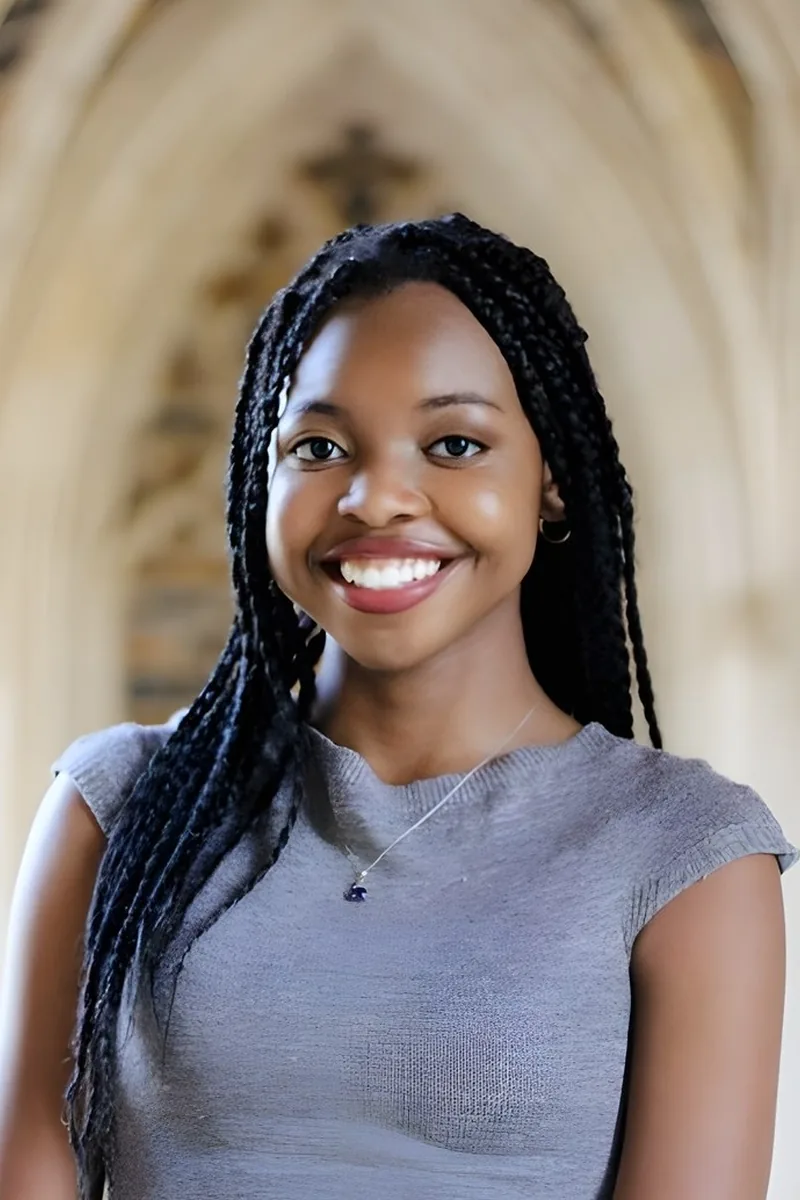
A Duke biology graduate heading to Yale Medical School, Lenique brings real scientific literacy to topics like the scientific method, ecosystems, and basic chemistry — connecting them to the bigger questions students are naturally curious about. She's taught everyone from kindergarteners to college students, so she adjusts how she explains concepts like energy transfer or cell structure depending on what clicks for each learner.
A chemistry degree from UGA gave Katheryn deep grounding in the scientific method, lab technique, and quantitative reasoning — skills that translate directly to any science course from biology to earth science. She spent multiple semesters instructing general chemistry classes and organic chemistry labs, so she's comfortable breaking down everything from balancing equations to interpreting experimental data.
Nursing school means Rachael lives in biology, anatomy, and chemistry every day — so when a student needs to understand cell structure, the scientific method, or how body systems interact, she's pulling from knowledge she uses constantly. She unpacks scientific vocabulary by linking terms to their Greek and Latin roots, which makes memorization far less painful. Her structured review techniques also translate well to science, where there's often a mountain of terminology to retain before an exam.
A biology degree means David didn't just study science — he lived it through lab work, dissections, and research design across both biological and physical sciences. That dual training makes him especially sharp when students need to connect concepts across disciplines, like understanding how chemistry drives cellular respiration or how physics explains fluid dynamics in the circulatory system. Rated 5.0 by students.
Kelly's broad teaching range — from math and calculus to writing and literature — means she can meet science assignments on multiple fronts, whether a student is struggling with the calculations in a chemistry problem or can't articulate what happened in a lab write-up. She breaks topics into manageable steps and checks understanding at each one, an approach that's earned her a 5.0 rating across twenty subjects.
Biomedical engineering at the University of South Carolina means Janay lives at the intersection of biology, chemistry, and physics every day — dissecting how living systems work using the same scientific principles her students are learning for the first time. She's especially strong at walking through concepts like cell biology, body systems, and experimental design, since her coursework requires applying all of them to real engineering problems. That firsthand connection between textbook science and how it's actually used makes her explanations concrete rather than abstract.
A math major who also tutors technology and coding, Garrick brings a quantitative toolkit to science that's especially useful when students hit the calculation-heavy parts — converting units, graphing relationships, or working through rate and proportion problems in chemistry or physics. He treats every formula as something to understand rather than memorize, walking through the logic behind equations so students can reconstruct them on a test instead of blanking.
A biochemistry degree from Rice and a current M.D. program at Baylor mean Michelle lives at the intersection of biology and chemistry every day. She unpacks concepts like cellular respiration, acid-base equilibria, and molecular genetics by tying them to how the body actually works — turning dense textbook material into something students can visualize and retain.
A statistics and machine learning certificate at Princeton means Julie spends her coursework building models, testing hypotheses against real data, and evaluating whether results are statistically meaningful — all of which is applied scientific reasoning. She brings that quantitative rigor to science tutoring, especially when students need to move from memorizing definitions to actually interpreting experiments, reading graphs, and explaining what their data means. Her 4.9 rating suggests the approach lands.
A Yale biochemistry degree, NIH lab research, and medical school at Penn give Matthew an unusually deep bench to draw from when teaching science — whether the topic is cell biology, chemical reactions, or physics concepts like energy and motion. He connects textbook material to real experiments and clinical examples that make abstract ideas click.
David's cognitive science training at Stanford sat squarely at the intersection of biology, psychology, and computational modeling, giving him a cross-disciplinary lens on science that most tutors don't have. He's particularly strong at explaining how to design experiments, interpret data, and connect scientific concepts back to underlying mechanisms.
Growing up in Malaysia before studying at Penn and completing a Master's in Education at Harvard, Yu picked up science through multiple educational systems — which means she's seen the same concepts taught in very different ways and knows which explanations actually land. She leans on that cross-cultural perspective to teach topics like the scientific method, experimental reasoning, and data interpretation by reframing them until they click. Her chemistry background also lets her go deeper when students hit the quantitative side of science.
Law school at the University of Chicago drills a specific kind of reasoning — isolating what the evidence actually proves versus what you assume it proves — and Elena applies that same discipline when walking students through scientific concepts like experimental design, variable control, and data interpretation. Her government and Spanish double major means she's used to synthesizing dense, unfamiliar material quickly, which is exactly the skill students need when a science unit throws new terminology and complex diagrams at them simultaneously.
Electrical engineering at Stanford required Jai to live inside physics and applied science — circuit analysis, electromagnetic theory, thermodynamics, and the math that ties them together. He approaches science tutoring by anchoring each concept to a physical intuition or real-world example before introducing the equations. Students studying for AP Physics, chemistry, or general science courses get someone who genuinely thinks in scientific terms daily.
An MIT math degree and a PhD track in operations research at Georgia Tech mean Isabella has spent years inside labs and classrooms where the scientific method isn't a textbook concept — it's a daily practice of modeling real systems, testing assumptions, and interpreting results. She's especially strong on the quantitative backbone of science: reading data tables, understanding units, and translating observations into precise claims. Rated 5.0 by students.
Henry's Harvard thesis on John Dewey's philosophy of education was fundamentally about how people learn through inquiry and experimentation — the same cycle of questioning, testing, and revising that sits at the heart of the scientific method. He teaches science by grounding abstract concepts in that inquiry process, pushing students to ask why an experiment is designed a certain way before worrying about memorizing the outcome. His 1530 SAT confirms he can handle the quantitative and analytical reasoning science coursework demands.
Applied math and computer science at Johns Hopkins means Sabira spends her days quantifying patterns and testing models — the same core loop students encounter in science when they're asked to measure, predict, and explain. She's particularly strong on the computational side of science: reading data tables, graphing relationships, and working through the math embedded in physics or chemistry problems. Holds a 5.0 rating.
Having earned a 1560 SAT — which requires sharp data interpretation and evidence-based reasoning across both sections — Sash can walk students through the analytical side of science that often trips them up: reading graphs, evaluating experimental setups, and explaining results in precise language. Her comparative literature training at Princeton also means she's unusually good at helping students decode dense scientific texts and write clear, well-structured lab reports.
Biochemistry, cell biology, neuroscience, physical chemistry — Sugi didn't just take these courses, she built a medical career on top of them. When a student struggles with something like cellular respiration or chemical equilibrium, she connects the textbook version to the larger story of why that process matters, which turns rote memorization into genuine understanding.
Testimonials
Because the right Science tutor makes all the difference.
Average Session Rating – Based on 3.4M Learner Ratings
Practice Science
Free practice tests, flashcards, and AI tutoring for Science
Nearby Science Tutors
Other Greenville Tutors
Related Science Tutors in Greenville
Frequently Asked Questions
Many students struggle with connecting abstract concepts to real-world applications, particularly in chemistry and physics where visualization is key. Others find it difficult to balance memorization of vocabulary and processes with deeper conceptual understanding. Personalized tutoring helps by breaking down complex topics into manageable pieces and using targeted explanations that match how each student learns best—something that's harder to achieve in a classroom with a 14.5:1 student-teacher ratio.
In a classroom setting, teachers must pace lessons for the average student, which can leave some students behind or unchallenged. Personalized tutoring allows tutors to focus entirely on your student's specific gaps—whether that's lab technique, problem-solving strategy, or conceptual understanding—and adjust the pace and depth in real time. This targeted approach has been shown to accelerate learning significantly compared to group instruction alone.
Yes, tutors work with students across Greenville's schools and are familiar with South Carolina science standards and the specific curricula used by both Greenville County Schools and Greenville City Schools. Whether your student is working through middle school physical science, high school biology, chemistry, physics, or AP-level courses, tutors can align their instruction with what's being taught in the classroom while providing the extra support needed to master the material.
Absolutely. Many students find lab work challenging because it requires both theoretical knowledge and practical technique. Tutors can help students understand the purpose behind experiments, walk through proper procedures, interpret results, and develop strong scientific reasoning skills. This hands-on support is especially valuable for students preparing for AP or honors-level science courses where lab proficiency directly impacts grades.
The first session focuses on assessment and relationship-building. Tutors will discuss your student's current science class, identify specific areas of struggle (whether it's a particular unit, problem-solving skills, or test anxiety), and learn about your student's learning style. From there, tutors create a personalized plan that targets the most impactful improvements and establishes a foundation for ongoing progress.
Tutors help students move beyond just studying facts to developing genuine understanding, which translates to better test performance. They teach effective study strategies, work through practice problems, help students recognize common question patterns, and build confidence in applying concepts under timed conditions. For standardized tests like the SAT or ACT science sections, tutors can provide targeted strategy coaching specific to those test formats.
Tutors work with students from middle school science through advanced high school courses, including biology, chemistry, physics, earth science, environmental science, and AP-level courses. Whether your student needs foundational support in middle school or is preparing for college-level science, Varsity Tutors connects you with tutors who have expertise in the specific course and can help your student succeed.
Many students see noticeable improvements within 3-4 sessions as tutors identify and address specific knowledge gaps. However, the timeline depends on the student's starting point and goals—some may need longer-term support to build foundational skills, while others might focus on test preparation over a few weeks. Tutors track progress regularly and adjust their approach to ensure steady, measurable advancement toward your student's goals.
Let’s find your perfect tutor
Answer a few quick questions. We’ll recommend the right plan and match you with a top 5% tutor.