Award-Winning Calculus Tutors
serving Greenville, SC
Calculus
Tutors in Greenville
Private 1-on-1 tutoring, weekly live classes for academic support, test prep & enrichment, practice tests and diagnostics, and more to elevate grades and test scores.
Based on 3.4M Learner Ratings
UniversitiesSchools & Universities
DeliveredHours Delivered
ProficiencyGrowth in Proficiency
Who needs tutoring?
No obligation. Takes ~1 minute.

Mechanical engineering coursework means Saad uses calculus every day — from setting up integrals for moment-of-inertia problems to applying differential equations in dynamics. He breaks down concepts like the chain rule, related rates, and integration by parts by connecting each one to a physical situation that makes the math feel purposeful. Rated 4.9 by students.
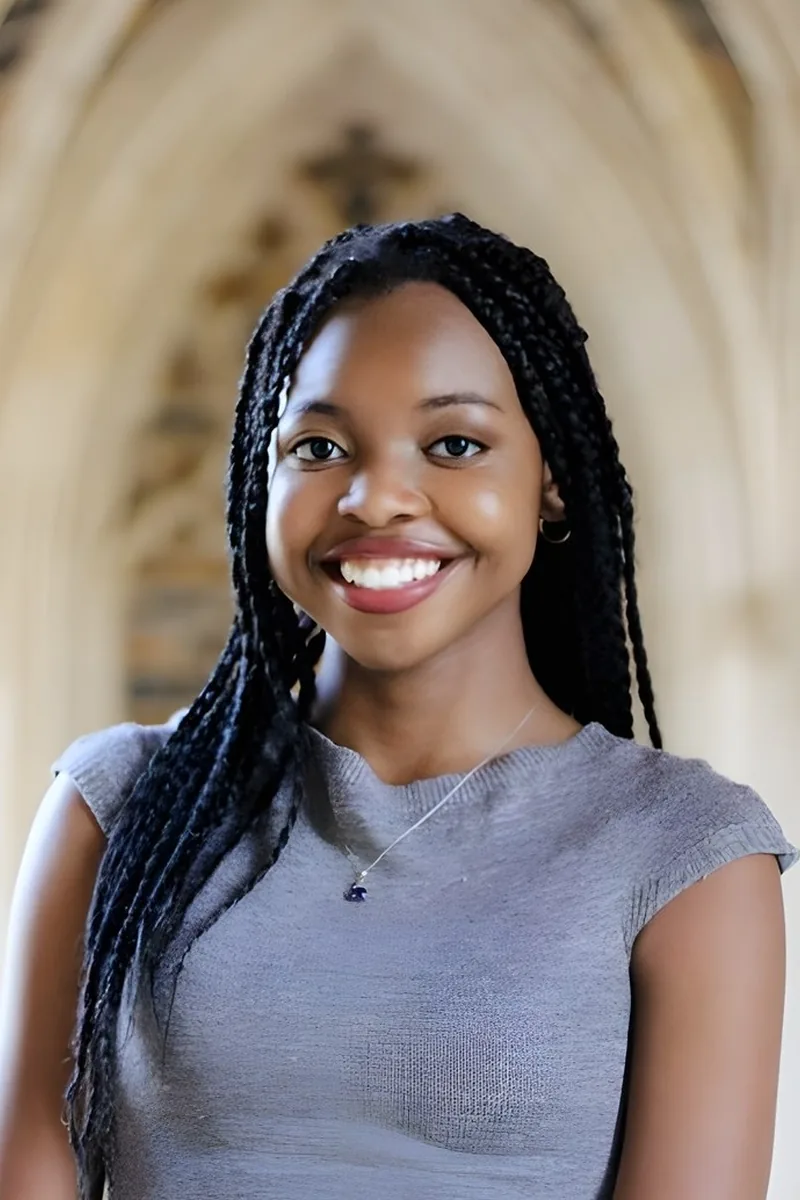
Pre-med biology at Duke means Lenique spent semesters applying calculus to real problems — enzyme kinetics, population growth models, and the rate equations that underpin pharmacology and physiology. That hands-on scientific context gives her a way to teach derivatives and integrals as tools that describe how biological systems change, not just abstract rules on a worksheet. Her upcoming medical training at Yale only deepens that connection between calculus and the life sciences.
Instructing general chemistry and organic chemistry labs at UGA meant Katheryn was constantly applying calculus — reaction rate equations, enthalpy curves, and the integration work behind kinetics all demand fluency with derivatives and integrals in a scientific context. That hands-on experience lets her teach calculus concepts by connecting them to the quantitative reasoning she used daily in the lab, making abstract rules feel purposeful. Rated 4.8 by students.
Biology coursework at the college level is full of calculus in disguise — growth rate equations, enzyme kinetics curves, diffusion models — and David's BS in Biological and Physical Sciences means he's worked through that material firsthand. He teaches derivatives and integrals by connecting them to the systems where they naturally appear, making the abstraction feel grounded. Rated 5.0 by students.
Nursing students don't just take calculus — they use it, calculating IV drip rates, modeling drug absorption curves, and interpreting how vital signs change over time. Rachael's BSN coursework at Seattle University means she can ground derivatives and integrals in the kind of applied, real-stakes problems that make abstract rules feel purposeful. Her 31 ACT composite confirms the quantitative chops to back up that clinical perspective.
Teaching across the full math sequence from pre-algebra through calculus gives Kelly an unusual vantage point — she knows exactly which algebra gaps cause students to stumble when they hit limits and derivative rules for the first time. Her approach tackles those weak spots directly, connecting new calculus notation back to the function behavior and slope concepts students already understand. Rated 5.0 by students.
Engineering majors don't just take calculus — they live in it, applying derivatives and integrals to model everything from fluid dynamics to bioelectric signals. Janay brings that applied perspective to limits, differentiation techniques, and integration, showing students how each concept connects to tangible problems. She's especially effective at walking through the chain rule and u-substitution in ways that make the logic transparent.
Garrick is the kind of math student who genuinely lights up when explaining why the chain rule works or how integration by parts connects to the product rule in reverse. He unpacks calculus concepts step by step, paying close attention to the algebra and trigonometry foundations that trip students up mid-problem. That combination of enthusiasm and precision keeps sessions productive even when the material gets dense.
I am currently pursuing a degree in Chemical Engineering and Spanish at Virginia Tech. I have a strong academic record in my fields. I enjoy sharing knowledge and helping others overcome learning challenges. Through previous tutoring, I have developed excellent communication, organization, and problem-solving skills. I am comfortable using online learning technologies and am committed to providing engaging, supportive lessons that help students reach their full potential.
I'm a Structural Engineering graduate from UC San Diego with a passion for helping students in the math and science fields, as well as SAT/ACT test prep. I've had experience tutoring all subjects up to the high school level, and I strive to create a fun and rewarding environment for students. I've worked with a variety of age groups as a member of the Big Brothers Big Sisters program, and I find it easy to relate to all types of students. When I'm not studying or tutoring, I enjoy playing chess and basketball.
Pre-med coursework threw Sydny into calculus with real stakes — understanding rates of change in drug concentration curves, modeling exponential decay in pharmacokinetics, and applying integration to biological systems. She breaks down limits, derivatives, and integrals by connecting each concept to a concrete problem rather than leaving students adrift in abstraction.
The jump to Calculus demands comfort with abstraction — understanding what a derivative actually represents, not just how to apply the power rule. Jessica tackles limits, integration techniques, and rate-of-change problems by connecting them to concrete scenarios, drawing on the quantitative reasoning she sharpened through her science-heavy coursework at Penn and in medical school.
Doctoral-level research in clinical psychology demands constant fluency with statistical modeling, derivatives, and rates of change — concepts that sit at the heart of calculus. Shelley breaks down problems like related rates and integration by connecting each step to a concrete, real-world scenario so the logic behind the math clicks. Rated 5.0 by students.
An MIT math degree followed by PhD work in Operations Research at Georgia Tech means Isabella has used calculus as a daily tool — optimization problems, convergence proofs, and the kind of rigorous analysis where understanding integration techniques and multivariable derivatives isn't optional. She's TA'd college-level math courses and taught gifted middle and high school students, so she can adjust the depth from first encounters with limits all the way through series and differential equations. Rated 5.0 by students.
Maya's Yale degree is in the arts and religious studies, not mathematics, so she's straightforward that calculus isn't her deepest subject. That said, her 34 ACT composite shows real quantitative ability, and her approach to tutoring — slowing down, finding what motivates each learner, and building from there — translates well to demystifying early concepts like limits and the intuition behind what a derivative actually represents.
Biology at the pre-health level is surprisingly calculus-heavy — enzyme kinetics, membrane transport rates, and the pharmacology models Shayan encounters in his Penn coursework all depend on derivatives and integrals behaving predictably. That daily exposure to calculus as a tool for solving real biological problems gives him a concrete vocabulary for explaining chain rules, related rates, and integration techniques without leaning on pure abstraction. Rated 5.0 by students.
Premed coursework at the level needed for a 1580 SAT and medical school admission means Nishad has pushed well past introductory calculus — working through the differential equations and integration techniques that underpin pharmacology dosing models and physiological rate problems. He teaches the chain rule, related rates, and optimization by connecting each concept to the quantitative reasoning that got him into Sidney Kimmel Medical College, so the math carries purpose beyond the problem set.
Frances's psychology background at Duke involved statistical modeling and data analysis — work that builds directly on the calculus concepts of rates of change and area under a curve. She teaches early calculus by connecting derivatives and integrals to the kind of quantitative reasoning she used in research, making notation feel purposeful rather than arbitrary. Rated 4.6 by students.
Harvard's rigorous liberal arts curriculum gave Henry exposure to quantitative reasoning across disciplines, and his 1530 SAT confirms he can handle the math — but he's straightforward that calculus is a supporting subject rather than his wheelhouse. Where he adds value is in the conceptual scaffolding: unpacking what a derivative actually represents as a rate of change, or why the fundamental theorem ties two seemingly different operations together, using the same analytical precision he brought to his senior thesis work.
Computer science at Stanford means David didn't just take calculus — he relied on it, using derivatives for gradient descent in machine learning and integrals for probability distributions in algorithms courses. That ongoing dependence on calculus as a working tool gives him a practical fluency with the material, and his 1570 SAT confirms the quantitative chops to back it up.
Keith's academic path runs through political science and law, not mathematics, so he's upfront that calculus is well outside his core expertise. His tutoring experience across multiple math levels means he can support students navigating early concepts like limits and basic derivatives, bringing the same structured, logical thinking that earned him a 1560 SAT and admission to Cornell Law.
Limits, derivatives, and integrals all click faster when a student sees the underlying logic instead of just memorizing formulas. Brian studied math and economics at Caltech, where calculus wasn't just a course but the daily language of nearly every discipline — so he teaches it with an emphasis on why the chain rule or integration by parts works, not just when to apply it.
Testimonials
Because the right Calculus tutor makes all the difference.
Average Session Rating – Based on 3.4M Learner Ratings
Nearby Calculus Tutors
Other Greenville Tutors
Related Math Tutors in Greenville
Frequently Asked Questions
Many students struggle with the transition from algebra and precalculus to calculus's conceptual focus on rates of change and limits. Word problems that require translating real-world scenarios into mathematical models are particularly challenging, as are multi-step derivative and integral problems that demand careful organization. Additionally, understanding why calculus techniques work—not just how to apply them—often takes time and personalized guidance to click.
Personalized 1-on-1 instruction allows a tutor to identify exactly where your understanding breaks down and rebuild it from the ground up. Rather than moving at a class pace, tutoring focuses on your specific gaps—whether that's limits, derivatives, integrals, or applications—and helps you see the underlying patterns and connections. This targeted approach builds both conceptual understanding and problem-solving confidence, which are essential for calculus success.
Yes. Greenville's schools use various calculus resources and approaches, and tutors are experienced working across different textbooks and teaching methods. Whether your course follows AP Calculus AB, AP Calculus BC, college-level calculus, or a specific district curriculum, Varsity Tutors connects you with tutors who understand your particular course structure and can align their instruction with your classroom materials.
Showing work is crucial in calculus—it's how you demonstrate understanding of each step and where graders can identify errors. A tutor helps you develop clear, organized problem-solving strategies and teaches you how to communicate your reasoning effectively on paper. This skill not only improves your grades but also strengthens your own understanding, since writing out each step forces you to think through the logic carefully.
Word problems require translating English into mathematical equations and then applying calculus concepts—a two-step challenge that trips up many students. Tutors break this process into manageable pieces: identifying what's being asked, setting up variables and equations, choosing the right calculus technique, and interpreting your answer in context. With guided practice, you'll develop a systematic approach that makes word problems feel less overwhelming.
Your first session is a chance for the tutor to understand your current level, learning style, and specific goals—whether you're aiming to improve your grade, prepare for an AP exam, or build confidence before a challenging unit. The tutor will likely review some of your recent work or assignments to identify where support would be most helpful, then begin working with you on concrete problems. This foundation helps create a personalized plan for your ongoing sessions.
Absolutely. Math anxiety often stems from feeling lost or unsupported, and personalized tutoring directly addresses that by providing a judgment-free space to ask questions and work through problems at your own pace. As you experience success with targeted help and begin to understand concepts that previously felt confusing, your confidence naturally grows. Many students find that one-on-one instruction transforms their relationship with math.
Varsity Tutors connects you with expert tutors who specialize in calculus and understand the specific needs of students in Greenville. Simply share your goals, availability, and any particular topics you'd like to focus on, and we'll match you with a tutor experienced in your curriculum. You can then start personalized sessions that fit your schedule and learning pace.
Let’s find your perfect tutor
Answer a few quick questions. We’ll recommend the right plan and match you with a top 5% tutor.