Award-Winning Geometry Tutors
serving Greenville, SC
Geometry
Tutors in Greenville
Private 1-on-1 tutoring, weekly live classes for academic support, test prep & enrichment, practice tests and diagnostics, and more to elevate grades and test scores.
Based on 3.4M Learner Ratings
UniversitiesSchools & Universities
DeliveredHours Delivered
ProficiencyGrowth in Proficiency
Who needs tutoring?
No obligation. Takes ~1 minute.
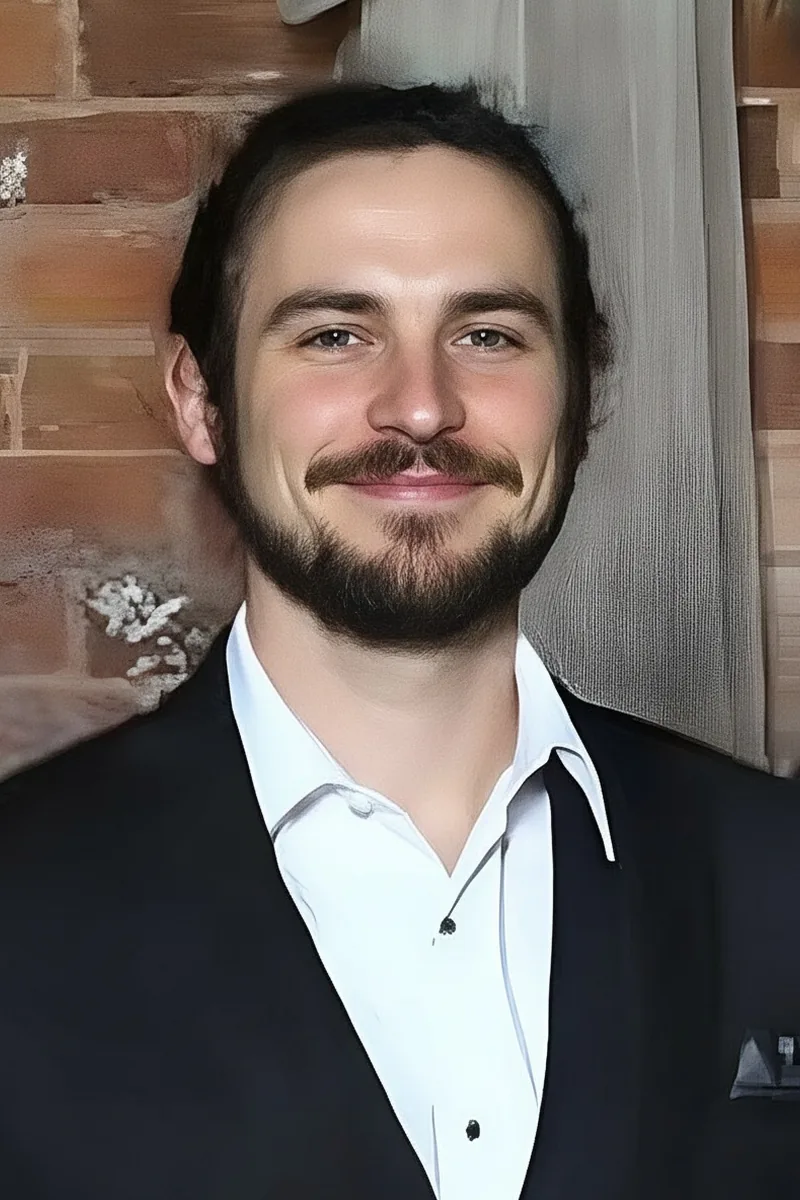
A biology degree might seem unrelated to geometry, but David's scientific training built the exact skill that trips most students up: constructing a logical argument from given information to a conclusion. He applies that reasoning to two-column proofs and theorem-based problems, breaking down why each step follows from the last rather than asking students to memorize proof templates. Rated 5.0 by students.
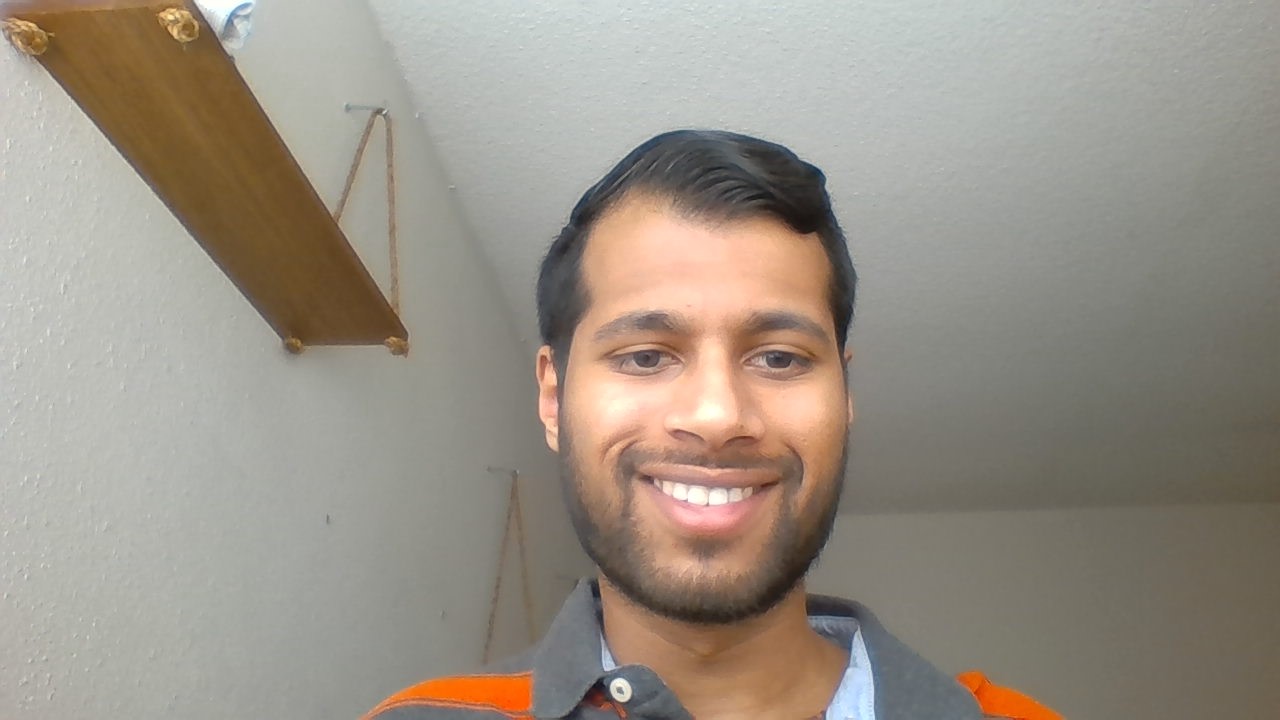
I'm a Structural Engineering graduate from UC San Diego with a passion for helping students in the math and science fields, as well as SAT/ACT test prep. I've had experience tutoring all subjects up to the high school level, and I strive to create a fun and rewarding environment for students. I've worked with a variety of age groups as a member of the Big Brothers Big Sisters program, and I find it easy to relate to all types of students. When I'm not studying or tutoring, I enjoy playing chess and basketball.
An MIT math major doing research in Spectral Graph Theory, Enrico brings a deep comfort with spatial structures and relationships that makes geometry's core ideas — congruence, similarity, transformations — feel like natural extensions of logical thinking rather than a pile of disconnected rules. He emphasizes building intuition around definitions so that when a problem asks students to prove two triangles congruent or reason about angle bisectors, the right approach surfaces on its own. Rated 5.0 by students.
Proofs are where most geometry students panic — the logic feels nothing like the arithmetic they're used to. Pinelopi breaks two-column and paragraph proofs into small reasoning steps, treating each one like a mini-argument rather than a memorization exercise. Her Duke psychology training actually lends itself well to teaching logical structure.
Dennis's research into quasicrystals and aperiodic tilings — like Penrose tilings of rhombuses — is geometry at its most fascinating, exploring how shapes fit together under unusual symmetry rules. That deep spatial intuition carries directly into high school Geometry, where he teaches proofs, congruence, and circle theorems by encouraging students to reason visually before writing anything formal.
An applied math major at Stanford, Alex approaches geometry problems the way a mathematician would — by asking what's actually true about a figure before deciding which tools to use. That habit is especially valuable when students face problems combining circle theorems, inscribed angles, and arc-length relationships, where jumping to formulas too early usually leads nowhere. Rated 4.8 by students.
Proofs are where most geometry students stall — the jump from calculating angles to constructing logical arguments feels like a completely different subject. Caroline's engineering training at WashU required rigorous spatial reasoning and formal proof techniques, so she teaches geometry as a system of logic rather than a collection of shape formulas. She unpacks each theorem step by step until the reasoning becomes second nature.
Proofs are where most geometry students start to struggle, because suddenly math requires building logical arguments instead of just computing answers. Margaret's background in both computer science and political science at Stanford means she thinks in structured logic all day — and she brings that same rigor to angle relationships, congruence, and circle theorems.
An English major might seem like an unlikely geometry tutor, but Ayako's 1540 SAT score speaks to serious quantitative chops — and she approaches geometric reasoning the way she approaches a close reading, breaking a complex figure into its component parts and asking what each piece tells you. She's especially effective at teaching students how to extract usable information from dense diagrams involving circles, inscribed angles, and overlapping triangles. Rated 5.0 by students.
Proofs are usually where geometry students panic, but they're really just logical arguments written in a specific format. Mackenzie teaches students to read a diagram like a puzzle — identifying congruent triangles, parallel-line angle relationships, or circle theorems before ever picking up a pencil. That visual-first strategy makes even two-column proofs and coordinate geometry problems feel approachable.
Having taught Geometry at a charter high school, Wamweni knows exactly where students get stuck — whether it's writing two-column proofs, applying triangle congruence theorems, or visualizing transformations on the coordinate plane. She approaches each topic by connecting it to something concrete before moving into formal reasoning. Her 5.0 rating speaks to how well that method lands with students.
Proofs are usually the make-or-break moment in geometry, and Brian teaches students to construct them by thinking like a detective — identifying what's given, what's needed, and which theorems bridge the gap. His Caltech training in analytical reasoning sharpens how he explains congruence, similarity, and circle theorems, turning proof-writing from intimidating to methodical.
Economics at UChicago is surprisingly proof-heavy — Ellie's coursework in mathematical economics requires the same kind of structured, step-by-step logical reasoning that geometry proofs demand. She applies that training to help untangle the visual-to-logical leap students struggle with, particularly when translating a diagram involving circle theorems or polygon properties into a written argument. Her 1520 SAT speaks to the broader math fluency she brings to the table.
Three years of tutoring math across elementary through high school gave Talia a clear picture of where geometry trips students up — and it's almost always the transition from calculating answers to constructing logical arguments in proofs. Her approach leans on breaking down each proof into plain-language reasoning first, then translating that thinking into formal geometric statements about congruence, angle relationships, or parallel lines. Rated 5.0 by students.
Testimonials
Because the right Geometry tutor makes all the difference.
Average Session Rating – Based on 3.4M Learner Ratings
Practice Geometry
Free practice tests, flashcards, and AI tutoring for Geometry
Nearby Geometry Tutors
Other Greenville Tutors
Related Math Tutors in Greenville
Frequently Asked Questions
Many students find the transition from algebra to geometric reasoning challenging, especially when it comes to proofs and spatial visualization. Common pain points include understanding why geometric properties work (not just memorizing them), setting up and solving multi-step problems, and connecting abstract concepts to real-world applications. A tutor can help students build conceptual understanding rather than relying on memorization, making the material stick.
Proofs require a specific way of thinking that many students haven't encountered before—moving from what you know to what you need to prove using logical reasoning. Tutors work with students to break down the proof-writing process, identify key theorems and properties to use, and develop strategies for approaching different types of problems. With personalized guidance, students gain confidence in their reasoning and learn to communicate mathematical ideas clearly.
Yes. Geometry is taught using various approaches and textbooks across Greenville's schools, and tutors are familiar with these different methods. Whether your student's class emphasizes coordinate geometry, transformations, classical proofs, or a combination of approaches, Varsity Tutors connects you with tutors who can align their instruction with your student's specific curriculum and teaching style.
Word problems require students to translate written descriptions into geometric diagrams and equations—a skill that takes practice. Tutors teach students to break problems into steps: identifying what's given, visualizing the geometry, and determining which properties or formulas apply. By working through problems systematically and discussing problem-solving strategies, students learn to approach unfamiliar problems with confidence.
The first session focuses on understanding where your student is struggling and what they've already mastered. The tutor will review recent assignments or test results, ask diagnostic questions, and identify specific concepts that need reinforcement—whether that's angle relationships, area and volume, coordinate geometry, or proof-writing. This assessment helps create a personalized plan tailored to your student's needs and learning style.
Absolutely. Many students experience anxiety around geometry because it feels abstract or because they've struggled with proofs or visualization. Working 1-on-1 with a tutor creates a low-pressure environment where students can ask questions, make mistakes, and build understanding at their own pace. As students see patterns emerge and solve problems successfully, their confidence grows and anxiety decreases.
In geometry, showing work isn't just about getting the right answer—it demonstrates logical reasoning and helps teachers identify where students' thinking breaks down. Tutors emphasize clear communication of mathematical ideas, teaching students to justify each step using theorems, properties, or definitions. This skill is essential for success on tests and builds the foundation for higher-level math courses.
Varsity Tutors makes it easy to get matched with an expert tutor who understands geometry and can work with your student's schedule and learning needs. Simply tell us about your student's current level, specific challenges, and goals, and we'll connect you with a tutor ready to provide personalized 1-on-1 instruction. You can get started quickly and adjust as needed based on progress.
Let’s find your perfect tutor
Answer a few quick questions. We’ll recommend the right plan and match you with a top 5% tutor.