Award-Winning Algebra Tutors
serving Greenville, SC
Algebra
Tutors in Greenville
Private 1-on-1 tutoring, weekly live classes for academic support, test prep & enrichment, practice tests and diagnostics, and more to elevate grades and test scores.
Based on 3.4M Learner Ratings
UniversitiesSchools & Universities
DeliveredHours Delivered
ProficiencyGrowth in Proficiency
Who needs tutoring?
No obligation. Takes ~1 minute.

Before a student can tackle engineering-level math, algebra has to be automatic — and Saad knows exactly which skills need to be airtight. He zeroes in on the reasoning behind manipulating expressions and solving systems of equations, so students build intuition instead of just memorizing steps.
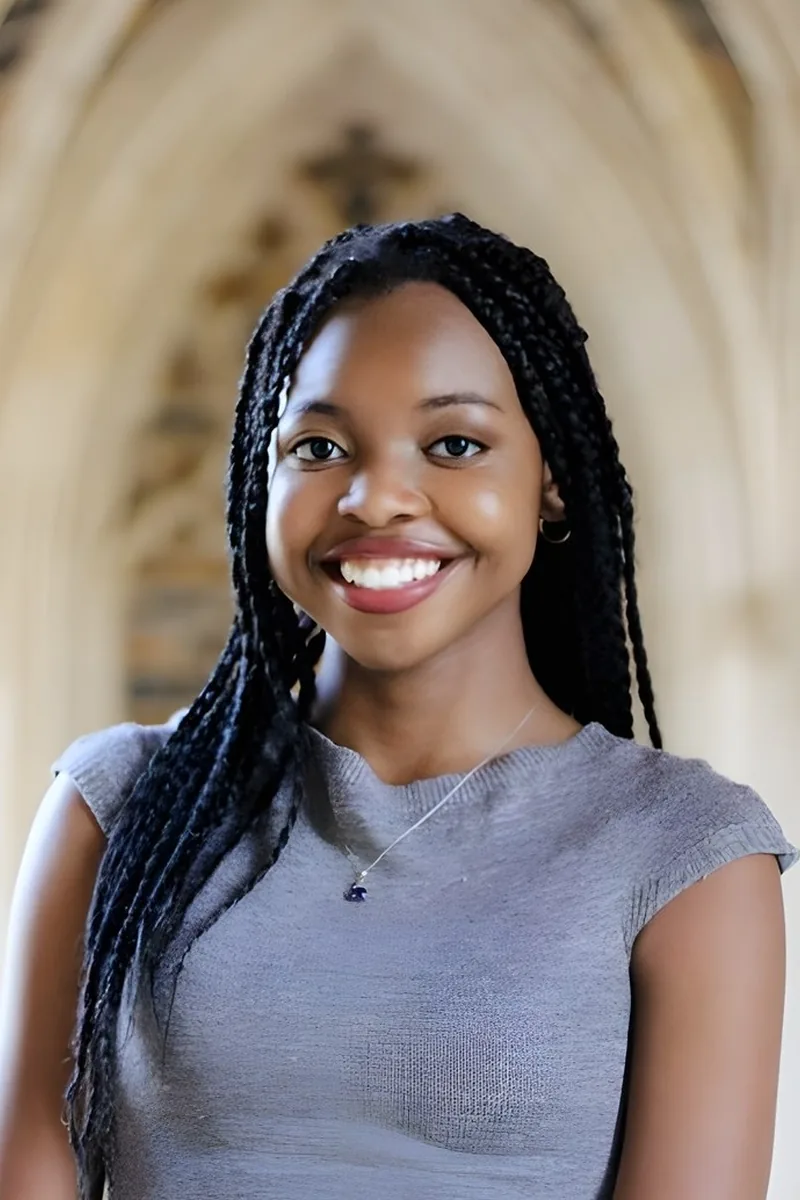
A strong algebra foundation is what made Lenique's advanced science coursework at Duke possible, and she draws on that perspective when teaching variables, linear equations, and systems of equations. She's especially effective at connecting algebraic reasoning to real-world scenarios, making abstract symbol manipulation feel purposeful rather than arbitrary.
Every equation-balancing and unit-conversion problem in chemistry is algebra in disguise, so Katheryn has spent thousands of hours applying variables, systems of equations, and algebraic manipulation in contexts that actually matter. She teaches students to translate word problems into equations step by step, building the kind of fluency that makes later math courses far less intimidating.
Solving equations is mechanical, but understanding *why* you isolate a variable or *when* to factor a quadratic is what separates students who memorize from students who actually get algebra. Rachael teaches the reasoning behind each step, using well-organized notes and real-life applications to make topics like systems of equations and inequalities stick long after the test is over.
Getting comfortable with variables is one thing; knowing what to do when an equation has two unknowns or a word problem buries the relationship in a paragraph is another. David zeroes in on translating real situations into algebraic expressions, a skill his research background reinforced constantly. He holds a 5.0 rating from students.
Factoring, graphing linear systems, working with inequalities — Kelly picks apart each algebra concept by tying it back to the concrete. She teaches students to read an equation as a story about quantities rather than a string of symbols to manipulate, which makes problem-solving feel less like guesswork. Rated 5.0 by students.
Biomedical engineering coursework throws algebra at you constantly — from solving systems of equations in circuit analysis to manipulating variables in biomechanics formulas. Janay uses that daily fluency to break down topics like factoring, inequalities, and linear modeling in ways that click. She's especially good at showing students why a technique works, not just the steps to follow.
I've helped several hundred students in a wide variety of subjects, from executive functioning to computer science to standardized testing. I also help students with general support in math and English. Most of my students are around 9-17, but I work well with students who are older and a little younger as well. I also work very well with students who have specific obstacles or requirements, such as neurodiversity support or schedules that change a lot. Most of my background is in computer science, from my college major to my experience hands-on over the past 10 years. Regardless of the subject, I believe every student's needs are unique and every student is able to achieve great things with the right preparation and support. My number one goal is to provide that whenever I can, both to the student and to their parents. I communicate with parents outside of sessions a lot to establish their expectations, better understand students, and recommend ways they can directly support their children in their journey as well.
Currently deep in a mathematics degree, Garrick teaches algebra as the language that powers every upper-level math course he's taking — from calculus to probability to finite math. That perspective lets him show students exactly why mastering something like quadratic equations or function notation matters three chapters from now, not just on Friday's quiz.
I am currently pursuing a degree in Chemical Engineering and Spanish at Virginia Tech. I have a strong academic record in my fields. I enjoy sharing knowledge and helping others overcome learning challenges. Through previous tutoring, I have developed excellent communication, organization, and problem-solving skills. I am comfortable using online learning technologies and am committed to providing engaging, supportive lessons that help students reach their full potential.
The moment variables enter the picture, many students feel like math changed the rules on them. Rachelle unpacks algebra by connecting new ideas — solving for x, graphing linear equations, factoring polynomials — back to the arithmetic reasoning students already trust. With over ten years of tutoring experience spanning elementary through college-level learners, she's adept at diagnosing whether a struggle is with the algebra itself or with a pre-algebra skill hiding underneath.
A philosophy background might seem unusual for an algebra tutor, but Justin's specialty is logical structure — exactly what students need when translating word problems into equations or reasoning through systems of inequalities. He teaches algebra as a language for modeling relationships, which makes topics like linear functions and factoring feel purposeful instead of mechanical.
A PhD in Computational Mathematics from the University of Chicago means Justin doesn't just teach algebra — he built an entire research career on top of it, from image processing algorithms to climate models that start with the same variable manipulation and equation-solving students encounter in class. He's especially good at unpacking why a technique like completing the square or distributing across parentheses works mechanically, drawing on the physicist's habit of never accepting a step without understanding the logic underneath. Rated 5.0 by students.
Jacob approaches algebra as a language — one with its own grammar of variables, expressions, and equations that follows consistent rules. His Columbia comparative literature training sharpened his ability to find patterns across systems, and he applies that same skill to unpacking word problems and translating real-world scenarios into algebraic expressions.
Most algebra struggles come down to one thing: students learn to mimic steps without understanding why factoring works or what a solution to a system of equations actually represents. Asta digs into that "why" — connecting symbolic manipulation to graphs and real scenarios so that quadratics, linear models, and inequalities make sense on multiple levels.
Most Algebra struggles come down to a handful of recurring mistakes — sign errors in distribution, confusion about when to flip an inequality, or losing track of variables in word problems. Christopher zeroes in on those patterns early so students stop repeating them. His engineering training at Harvard gives him a practical, problem-solving mindset that makes abstract topics like factoring and linear systems feel purposeful.
Solving equations is mechanical; knowing which equation to set up is where algebra gets hard. Phillip spends time on translating word problems into expressions and building comfort with variables as quantities that behave predictably. His engineering background means he treats algebra as a practical toolkit, not an abstract exercise.
Before medical school, Jessica earned her history degree at Penn — but her 1540 SAT tells a different story about her math chops, and algebra is where that analytical sharpness comes through most clearly. She unpacks word problems and equation setups with the same precision she once applied to dissecting clinical case studies, making the leap from a problem's language to its algebraic structure feel methodical rather than mysterious.
Most algebra frustration comes not from the new material itself but from shaky pre-algebra skills underneath it — and Liz, having taught middle schoolers for years, can spot those gaps fast. She zeroes in on the specific operation or concept causing the breakdown, whether it's distributing negatives, solving multi-step equations, or graphing linear functions, and rebuilds from there.
Factoring, systems of equations, and quadratic modeling all hinge on recognizing structure — seeing that a messy expression is really just a pattern in disguise. Valerie's analytical training at the University of Chicago sharpened her ability to teach students how to spot those patterns and translate word problems into solvable equations.
Factoring, quadratic equations, and systems of linear equations all have an internal logic that most textbooks bury under procedure. Sung digs into that logic so students see why completing the square works or what a solution to a system actually represents on a graph. His 1500 SAT score reflects the kind of mathematical fluency he brings to every session.
Emily treats algebra the way she treats legal arguments — every equation has a structure, and solving it means understanding why each move is valid, not just memorizing procedures. Her philosophy background at Northwestern makes her especially effective at walking through word problems and translating real situations into variables and expressions.
Elena's approach to algebra centers on listening to a student talk through a problem and pinpointing exactly where their reasoning breaks down — whether it's distributing a negative sign incorrectly or misreading what a word problem is actually asking. That diagnostic habit, sharpened by years of legal training at UChicago, makes her especially effective at clearing up the small misconceptions that snowball into bigger confusion around systems of equations or quadratic factoring.
Testimonials
Because the right Algebra tutor makes all the difference.
Average Session Rating – Based on 3.4M Learner Ratings
Practice Algebra
Free practice tests, flashcards, and AI tutoring for Algebra
Nearby Algebra Tutors
Other Greenville Tutors
Related Math Tutors in Greenville
Frequently Asked Questions
Many students struggle with the shift from arithmetic to abstract thinking—understanding why algebraic rules work, not just how to apply them. Word problems, multi-step equations, and graphing are frequent pain points, along with gaps in foundational skills like fraction operations. With a 14.5:1 student-teacher ratio across Greenville schools, personalized tutoring can help students bridge these gaps and build the conceptual understanding that makes algebra click.
The first session focuses on understanding your student's current level, learning style, and specific challenges—whether that's multi-step equations, graphing, or test anxiety. Tutors will assess which foundational skills might need reinforcement and create a personalized plan aligned with your student's school curriculum. This foundation ensures every session builds toward real progress.
Strong problem-solving in algebra requires clear, organized steps—not just the right answer. Tutors teach students how to break multi-step problems into manageable parts, explain their reasoning, and check their work. This builds both mathematical confidence and the communication skills teachers expect, helping students earn full credit and truly understand the "why" behind each step.
Yes. Greenville's schools use various textbooks and approaches, and tutors are experienced working with all of them. Whether your student's class uses traditional algebra sequences or integrated math programs, tutors can align their instruction with your school's specific curriculum and teaching style, making tutoring a natural extension of classroom learning.
Graphing connects abstract equations to visual patterns, which helps many students see algebra in a new way. Tutors use multiple representations—equations, graphs, and real-world contexts—to show how these concepts connect. This deeper understanding of patterns and relationships builds confidence and makes more advanced topics like systems of equations and functions much more accessible.
Absolutely. Math anxiety often stems from gaps in understanding or past frustration, and personalized tutoring addresses both. Working one-on-one with a tutor who can slow down, explain concepts multiple ways, and celebrate small wins rebuilds confidence. As students see themselves solving problems they once found overwhelming, anxiety naturally decreases and motivation grows.
Varsity Tutors connects students with expert tutors who have strong backgrounds in mathematics and proven experience teaching algebra. Tutors understand both the content and how students learn it best, and they're skilled at identifying exactly where confusion starts and building from there. Each tutor is carefully matched to your student's needs and learning style.
Many students show improved understanding and confidence within the first few sessions as gaps are identified and addressed. Measurable progress on tests and assignments typically follows within 4-6 weeks as foundational concepts solidify. The timeline depends on where your student is starting and how frequently tutoring happens, but consistent, personalized instruction accelerates learning significantly.
Let’s find your perfect tutor
Answer a few quick questions. We’ll recommend the right plan and match you with a top 5% tutor.