Award-Winning AP Physics C: Electricity and Magnetism Tutors
serving Greenville, SC
AP Physics C: Electricity and Magnetism
Tutors in Greenville
Private 1-on-1 tutoring, weekly live classes for academic support, test prep & enrichment, practice tests and diagnostics, and more to elevate grades and test scores.
Based on 3.4M Learner Ratings
UniversitiesSchools & Universities
DeliveredHours Delivered
ProficiencyGrowth in Proficiency
Who needs tutoring?
No obligation. Takes ~1 minute.
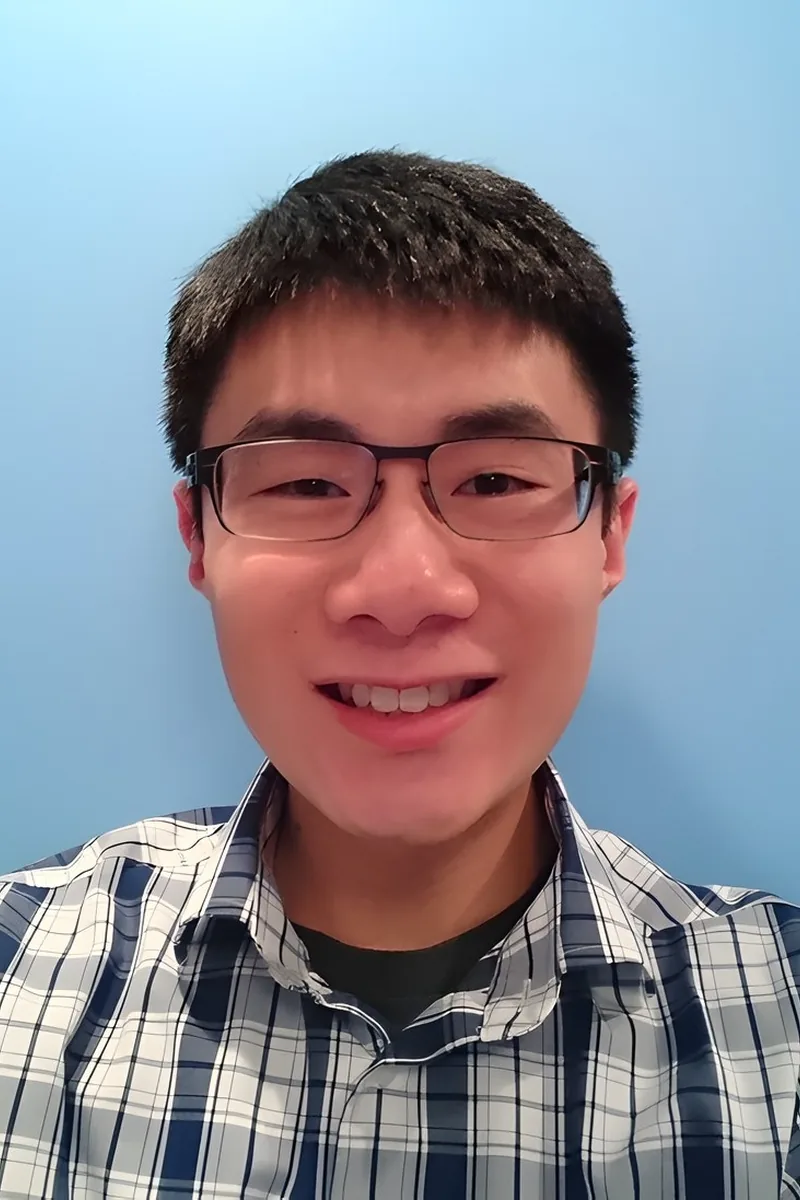
Gauss's law, Ampère's law, Faraday's law — AP Physics C: E&M throws vector calculus at students who are still getting comfortable with electric fields and circuits. Will breaks each law down to its physical meaning first, then layers in the integral formulations so students understand what they're computing and why. As a current Rice physics student, he's recently worked through this exact material at the college level.

AP Physics C: E&M is where calculus and physics genuinely merge — Gauss's law, Ampère's law, and Faraday's law all require setting up and evaluating integrals that many students haven't encountered outside a math class. Maxwell's dual degree in mathematics and physics means he tackles both the vector calculus and the physical intuition simultaneously, so concepts like electric flux and induced EMF actually click. Rated 5.0 by students.
Gauss's law, Ampère's law, Faraday's law — AP Physics C: E&M throws a wall of abstract vector calculus at students who were just getting comfortable with mechanics. Lillian tackles each law by grounding it in a concrete physical scenario first, then layering in the math. Her systematic approach to problem-solving, sharpened through years of STEM coursework, translates well to navigating complex circuit and field problems.
Gauss's law, Ampère's law, Faraday's law, RC circuits — AP Physics C: E&M asks students to wield vector calculus in physical contexts most haven't encountered before. Justin earned his bachelor's in physics and mathematics at Washington University in St. Louis before completing a PhD in Computational Mathematics at the University of Chicago, giving him the exact blend of mathematical rigor and physical intuition this course demands. He breaks down intimidating surface integrals and field superposition problems into clear, repeatable reasoning steps.
Gauss's law, Ampère's law, Faraday's law — AP Physics C: E&M asks students to choose the right tool for each field configuration and then execute the calculus cleanly. Sophia breaks each problem into two phases: identifying the symmetry that dictates the approach, then setting up and evaluating the integral. Her 5.0 rating speaks to how clearly she communicates concepts that most students find abstract.
Gauss's law, Ampère's law, and Faraday's law all require students to visualize invisible fields and reason through multivariable integrals — a combination that trips up even strong physics students. Dylan's coursework at Vanderbilt covers exactly this material, and his instinct is to sketch field lines, draw Gaussian surfaces, and build physical intuition before diving into the math. That graphical-first approach turns E&M from the most feared AP Physics exam into something manageable.
Gauss's law, Ampère's law, Faraday's law — E&M demands comfort with vector calculus that most high schoolers haven't fully developed yet. Sanjana's applied math training at Harvard means she can teach the calculus and the physics simultaneously, connecting flux integrals and field equations to physical intuition rather than leaving students to wrestle with two subjects at once.
AP Physics C: E&M is where calculus meets abstract field theory, and most students struggle not with the math itself but with visualizing what's happening inside capacitors, inductors, and current-carrying loops. Aleksandar pairs his UPenn physics coursework with a structured problem-solving method — breaking each scenario into a diagram, an equation selection, and a calculus setup — that turns intimidating free-response questions into repeatable steps.
Gauss's law, Ampère's law, and RC circuits can feel impossibly abstract until someone connects the math to something tangible. Matthew's engineering coursework in electrical systems gives him practical fluency with E&M concepts, and he teaches students to visualize field lines and charge distributions rather than just grinding through integrals. His 5.0 rating speaks to how well that approach lands.
I am pursuing a career in dentistry/oral surgery and will be beginning dental school at Boston University this fall. For this reason I recently took the DAT, which I am capable of assisting you with as well. During my undergraduate education, which I completed this past December, I worked in my school's tutoring center, helping my peers succeed in mathematics and science courses. Outside of my academic life, I am a big sports fan and I mostly follow the New York sports teams. For fun, I like to play basketball and golf with my friends. I am looking forward towards getting to know you and helping you with your academic needs.
Gauss's law, Ampère's law, RC circuits — AP Physics C: E&M demands comfort with vector calculus applied to invisible fields, which is a steep jump for most students. David's engineering coursework at UCLA keeps him immersed in this material, and he excels at translating abstract field equations into concrete, visual reasoning.
Gauss's law, Ampère's law, Faraday's law — AP Physics C: E&M asks students to think in three dimensions with vector calculus tools they've barely learned. Taha breaks down each Maxwell equation into physical intuition first, then builds up the mathematical formalism around it. His deep background in both calculus and physics lets him bridge the gap between what students see in their math classes and what the E&M exam actually demands.
Testimonials
Because the right AP Physics C: Electricity and Magnetism tutor makes all the difference.
Average Session Rating – Based on 3.4M Learner Ratings
Practice AP Physics C: Electricity and Magnetism
Free practice tests, flashcards, and AI tutoring for AP Physics C: Electricity and Magnetism
Nearby AP Physics C: Electricity and Magnetism Tutors
Other Greenville Tutors
Related Science Tutors in Greenville
Frequently Asked Questions
AP Physics C: Electricity and Magnetism focuses on electrostatics, conductors and insulators, electric potential, capacitance, current and resistance, magnetic fields, and electromagnetic induction. The course emphasizes calculus-based problem solving and requires strong foundational understanding of vectors, derivatives, and integrals. Most students find the transition from introductory physics to this calculus-heavy approach challenging, especially when connecting abstract concepts like electric fields and magnetic flux to real-world applications.
This exam combines conceptual physics with rigorous calculus, requiring students to both understand why phenomena occur and mathematically derive solutions. Common challenges include visualizing three-dimensional electric and magnetic fields, mastering Gauss's law and Ampère's law, and managing time during the exam when problems demand multi-step calculations. Many students struggle with the transition from algebra-based physics, where plug-and-chug formulas work, to calculus-based physics, where deep conceptual understanding is essential.
Personalized 1-on-1 instruction is particularly effective for physics because tutors can identify exactly where your understanding breaks down—whether it's the math, the concepts, or test-taking strategy—and target those gaps. Students who work with tutors typically see score improvements of 1-2 points on the 1-5 scale, though the exact gain depends on your starting point and how consistently you apply feedback. The key is addressing weak areas early and building confidence through practice with immediate feedback.
Your first session focuses on assessment and planning. A tutor will review your current understanding of key concepts, identify specific areas where you're struggling (like Gauss's law applications or electromagnetic induction problems), and learn your learning style and goals. Together, you'll create a personalized study plan that prioritizes the topics most likely to appear on the exam and matches your timeline before test day.
Practice tests are critical because they reveal both content gaps and timing issues—the exam allows 45 minutes for 35 multiple-choice questions and 45 minutes for 3 free-response problems, and many students underestimate how quickly time passes. Taking full-length, timed practice tests helps you develop pacing strategies, identify question types that trip you up, and build test-day confidence. Tutors can help you review practice test results to pinpoint exactly which concepts need more work versus which are just execution errors.
Students frequently misapply Gauss's law and Ampère's law by choosing the wrong Gaussian or Amperian surface, struggle with the direction of magnetic force using the right-hand rule, and make sign errors when calculating electric potential and potential energy. Many also rush through free-response problems without showing all steps, losing points even when their final answer is correct. Additionally, weak calculus skills—particularly with integration and vector dot products—often cause students to miss points on problems they conceptually understand.
Most students benefit from 3-4 months of consistent preparation, with 5-8 hours of study per week, though this varies based on your starting level and background in calculus. If you're starting from a weaker foundation or juggling multiple AP courses, you may need to begin earlier or increase weekly study time. Working with a tutor helps you use study time more efficiently by focusing on high-impact topics and avoiding wasted time on concepts you've already mastered.
Varsity Tutors connects you with expert tutors in Greenville who specialize in AP Physics C and understand the specific challenges of this calculus-based course. When matching with a tutor, you can specify your goals (score target, areas of weakness, timeline), and tutors will customize instruction to your needs. Whether you're looking to strengthen fundamentals early in the year or intensively prep in the weeks before the exam, you'll get personalized 1-on-1 instruction designed to fit your schedule and learning style.
Let’s find your perfect tutor
Answer a few quick questions. We’ll recommend the right plan and match you with a top 5% tutor.