Award-Winning AP Computer Science A Tutors
serving Providence, RI
AP Computer Science A
Tutors in Providence
Private 1-on-1 tutoring, weekly live classes for academic support, test prep & enrichment, practice tests and diagnostics, and more to elevate grades and test scores.
Based on 3.4M Learner Ratings
UniversitiesSchools & Universities
DeliveredHours Delivered
ProficiencyGrowth in Proficiency
Who needs tutoring?
No obligation. Takes ~1 minute.
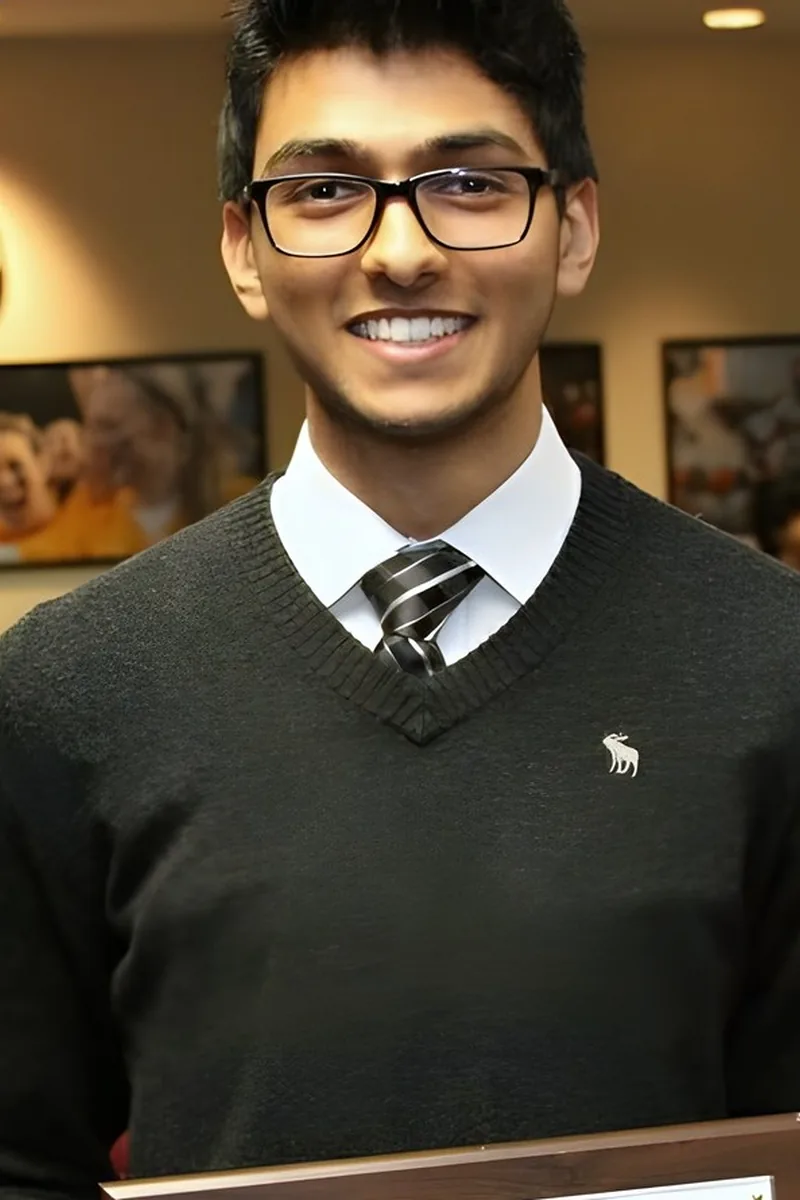
Object-oriented programming trips students up when inheritance hierarchies and polymorphism go from simple examples to complex, layered problems. Srini tackles AP Computer Science A by connecting Java concepts like recursion, array manipulation, and class design to the computational modeling he does in his biophysics coursework at Brown. Rated 4.8 by students.

Economics at Brown means Clive spends more time in Python and Java than most people expect — building models, running simulations, and writing scripts that demand the same object-oriented thinking AP CSA tests on. He teaches topics like loop construction and array manipulation by tying them to real data problems, which gives the abstract stuff a concrete purpose. His 35 ACT speaks to the kind of careful, logical reasoning that pays off on exam day.
Having double-majored in computer science and English, Milan brings an unusual combination to AP CSA — he can write clean Java and then explain exactly what it's doing in language that doesn't sound like a textbook. That communication skill matters most on free-response questions, where students need to reason through array manipulation or recursive logic on paper before writing a single line of code.
After building projects in Java, Python, and web development as a computational science major at Harvard, Alliyah treats AP CSA's object-oriented concepts — inheritance, encapsulation, polymorphism — as tools she already uses rather than exam topics to memorize. She teaches students to sketch out how classes and methods connect before writing any code, turning free-response prompts into something closer to a design blueprint than a guessing game.
Kevin's Stanford CS master's work in biocomputation means he writes Python and C++ for AI systems daily — but Java's object-oriented model is the same design thinking in a different wrapper, and he teaches AP CSA students to see class hierarchies, polymorphism, and recursion as transferable patterns rather than Java-specific tricks. His 1590 SAT and 35 ACT signal the kind of precise, methodical reasoning that translates directly to tracing free-response code under pressure. Rated 5.0 by students.
Having TA'd three courses at Duke — including a databases class and a computer networking class — Florence knows how to spot the gap between students who can read Java and students who can actually write it under exam conditions. She drills the hand-tracing and class-design skills that AP CSA's free-response section punishes you for skipping, drawing on the same object-oriented thinking she uses in her own CS coursework and software development internships. Rated 5.0 by students.
Studying CS in Cornell's College of Engineering means Ravnoor writes Java alongside lower-level languages daily, giving him a clear sense of how object-oriented concepts like encapsulation and inheritance actually work in memory — not just on paper. He teaches AP CSA by having students build small programs piece by piece, adding complexity only after each layer makes sense, which turns intimidating free-response prompts into manageable steps. Rated 5.0 by students.
Java's object-oriented structure is where most AP Computer Science A students get stuck — inheritance hierarchies, polymorphism, and writing classes that actually do what the problem asks. Christina studied these concepts deeply during her CS degree and breaks them down by walking through real code examples line by line. She also drills the free-response question format so students know exactly how to earn partial credit even when a solution isn't perfect.
iOS and game development projects at Vanderbilt mean Kerr writes in Swift and C# regularly, but that cross-language fluency is exactly what makes Java's quirks — type casting, scope rules, the way interfaces differ from abstract classes — easier to explain from first principles. He digs into AP CSA's trickier free-response territory by having students build and trace small programs in real time, catching logic errors before they become habits. Rated 4.9 by students.
Between earning a 5 on the AP Computer Science exam and teaching recitation sections at Georgia Tech's College of Computing, Satvik knows AP CS A from both sides of the classroom. He digs into the topics that sink most students on the exam — recursive tracing, sorting algorithm analysis, and 2D array traversal — and builds the problem-solving instincts the free-response section demands.
MIT's architecture program requires serious computational work — and Alicia paired hers with a computer science minor, writing Java and Python to solve structural and design problems where the code had to actually produce something. That blend of CS fundamentals and applied problem-solving translates directly to AP CSA's free-response section, where she teaches students to architect their classes and methods with the same intentionality she'd bring to designing a building. Rated 5.0 by students.
Between simulating cosmic ray acceleration at Princeton and designing optical multiplexer components at Norfolk State, Dennis has written serious computational code in real research settings. He teaches AP Computer Science A concepts like object-oriented design, recursion, and array manipulation by connecting them to how software actually gets used — not just how it appears on the exam. That research experience means he can explain why a particular data structure matters, not just how to implement it.
Studying computer engineering at UIUC means David writes Java alongside hardware description languages and embedded systems code — so he sees object-oriented programming not as an abstraction but as something that eventually runs on real circuits. That perspective sharpens how he teaches AP CSA topics like class design and algorithm efficiency, because he's always asking what the code is actually *doing* under the surface. Holds a 5.0 rating.
Cornell's Chemical Engineering and Computer Science dual degree means Jonathan writes Java in the same program where he solves differential equations — so he treats AP CSA's class design and algorithm problems with an engineer's instinct for breaking systems into modular, testable pieces. He's particularly sharp on the free-response side, where knowing how to structure a solution before touching code separates fours and fives from threes.
Testimonials
Because the right AP Computer Science A tutor makes all the difference.
Average Session Rating – Based on 3.4M Learner Ratings
Practice AP Computer Science A
Free practice tests, flashcards, and AI tutoring for AP Computer Science A
Other Providence Tutors
Related Technology and Coding Tutors in Providence
Frequently Asked Questions
AP Computer Science A focuses on object-oriented programming and data structures using Java. The curriculum includes variables and data types, control structures, arrays and ArrayLists, object-oriented design, inheritance and polymorphism, and algorithms. Students also learn to write, test, and debug code while understanding computational thinking principles. Mastering these foundational concepts is essential for scoring well on the May exam.
Many students struggle with the transition from basic programming to object-oriented design, particularly understanding inheritance and polymorphism. Others find the free-response section challenging because it requires writing complete, working code solutions under time pressure. Additionally, debugging complex programs and understanding how different data structures impact algorithm efficiency can be difficult without targeted practice and explanation.
The impact depends on your starting point and consistency. Students who work with tutors typically see improvements by clarifying difficult concepts, practicing free-response questions, and developing stronger debugging skills. A personalized approach helps identify whether your challenges are conceptual (understanding classes and objects) or practical (time management during the exam), allowing you to focus on what matters most for your score.
The free-response section requires writing complete, functional Java code in 75 minutes across four questions. Success comes from practicing under timed conditions, learning to break problems into manageable pieces, and understanding common code patterns the College Board tests. Working through past AP free-response questions with feedback helps you recognize problem types quickly and avoid syntax errors that cost points.
Most students benefit from taking their first full practice test around mid-March, after covering the major curriculum topics. This gives you time to identify weak areas—whether that's array manipulation, inheritance, or algorithm analysis—and address them before the May exam. Taking practice tests every 2-3 weeks after that helps you track progress and build test-day stamina and pacing confidence.
Varsity Tutors connects you with expert tutors who specialize in AP Computer Science A and understand the specific challenges Providence students face. When you get matched with a tutor, you can discuss your current level, target score, and schedule to create a personalized study plan. Many tutors offer flexible availability and can focus on your biggest challenge areas, whether that's mastering object-oriented concepts or perfecting your free-response technique.
The multiple-choice section (40 questions in 90 minutes) requires about 2 minutes per question, while the free-response section (4 questions in 75 minutes) demands roughly 18-19 minutes per question. Effective pacing means reading questions carefully without overthinking, skipping difficult multiple-choice questions and returning to them later, and allocating time for testing your code in the free-response section. Practice tests help you develop a rhythm that works for your thinking style.
Test anxiety in computer science often stems from fear of syntax errors or running out of time. Building confidence through repeated practice with real exam questions, understanding that the graders focus on logic over perfect syntax, and developing a pre-exam routine all help. Working with a tutor to simulate exam conditions and discussing your thought process during practice sessions can reduce anxiety by making the test format feel familiar and manageable.
Let’s find your perfect tutor
Answer a few quick questions. We’ll recommend the right plan and match you with a top 5% tutor.