Award-Winning Calculus Tutors
serving Providence, RI
Calculus
Tutors in Providence
Private 1-on-1 tutoring, weekly live classes for academic support, test prep & enrichment, practice tests and diagnostics, and more to elevate grades and test scores.
Based on 3.4M Learner Ratings
UniversitiesSchools & Universities
DeliveredHours Delivered
ProficiencyGrowth in Proficiency
Who needs tutoring?
No obligation. Takes ~1 minute.

Brown's Program in Liberal Medical Education required Katie to push through quantitative coursework alongside her Medical Anthropology studies, and a perfect 1600 SAT confirms she has serious math chops even if her degree title doesn't scream calculus. She breaks down early concepts like limits and continuity by connecting the abstract notation to the real-world rate-of-change thinking that runs through her pre-med science courses — making the leap from algebra to calculus feel less like a cliff and more like a ramp.
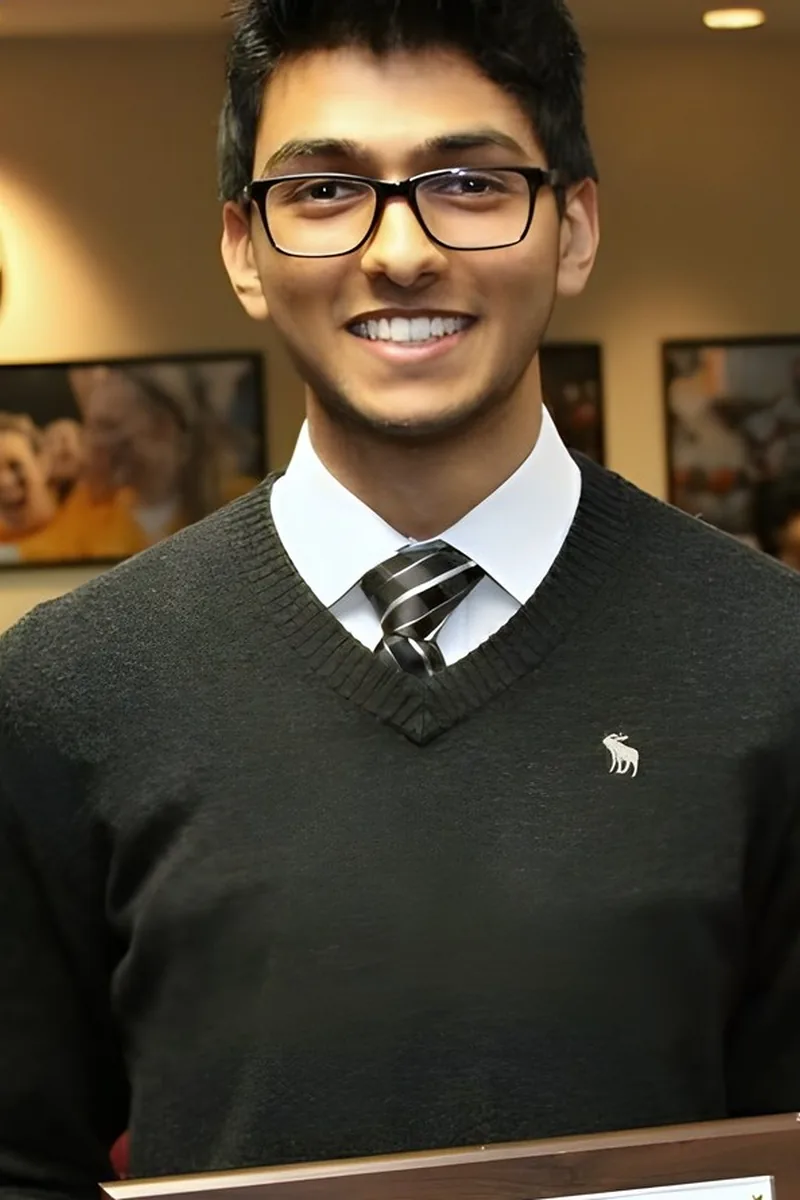
Integration techniques like u-substitution and integration by parts become second nature once a student understands what they're actually doing geometrically. Srini teaches calculus by linking every derivative and integral back to the physical meaning — rates of change, accumulated quantities — which is exactly how he applies these tools in molecular biophysics research at Brown.
Economics at Brown means working with derivatives and integrals constantly — optimization problems, marginal analysis, and modeling change over time are Clive's daily toolkit. That applied fluency translates directly into teaching limits, differentiation rules, and integration techniques in ways that feel purposeful rather than abstract.
Literary arts and visual arts at Brown isn't the typical path to calculus, but Hasan's 1540 SAT and his current role as a lead teacher at a classical academy mean he's comfortable with quantitative material and knows how to make dense concepts accessible. He tackles early calculus — limits, slope as a rate of change, the intuition behind derivatives — by slowing down the reasoning and making sure each logical step is airtight before moving forward.
Electrical engineering at Brown means June doesn't just use calculus — she lives in it, from analyzing circuit behavior with integrals to modeling signal processing with differential equations. Her 1580 SAT confirms the quantitative horsepower, but it's the daily application in labs and robotics challenges that makes her explanations concrete. She teaches concepts like the chain rule or integration by parts by connecting them to the physical systems where they actually matter.
Education Studies at Brown isn't a math degree, so Abby is honest that calculus isn't her deepest subject — but her 1590 SAT demonstrates serious quantitative chops, and she's tutored math across multiple grade levels. Her teaching instinct is to unpack the reasoning behind each step, which works especially well for early calculus topics like limits and differentiation where understanding the logic matters more than memorizing rules.
Joshua's home turf is the liberal arts — Classics and Slavic Studies at Brown — but his 1530 SAT shows he's no stranger to quantitative problem-solving, and he's the first to say he genuinely enjoys the challenge of working through math. He approaches early calculus concepts like limits and derivative rules as puzzles to be reasoned through step by step, bringing the same close-reading instinct he applies to ancient texts to unpacking what's actually happening inside a formula.
Neuroscience at Brown doesn't let you skip calculus — Sophie's coursework required modeling neural signal propagation, synaptic transmission rates, and the kind of continuous change problems that make derivatives and integrals feel necessary rather than abstract. That firsthand experience with calculus as a scientific tool means she teaches the material by connecting it to systems where rates of change actually describe something real. Rated 5.0 by students.
Computational neuroscience runs on calculus — derivatives model how neurons fire, integrals quantify signals over time — so Kahini uses these concepts daily in her PhD work at Columbia. She walks students through limits, differentiation, and integration with real applications in mind, connecting each rule to the intuition behind it so the formulas don't feel arbitrary.
Math is actually Ariel's favorite subject to tutor — she's spent years teaching students to see the logic underneath procedures they'd previously just memorized, which is exactly the shift calculus demands when limits and derivatives enter the picture. Her psychology training at Brown sharpens that instinct for diagnosing where a student's understanding breaks down, whether it's the conceptual leap from average to instantaneous rate of change or the mechanics of the chain rule. Rated 5.0 by students.
Anna's concentration is Education and American Studies at Brown, not mathematics, so she's straightforward that calculus isn't her deepest subject — but a 1550 SAT demonstrates she can handle rigorous quantitative work. Her training in education gives her a deliberate, scaffolded approach to teaching, which is especially useful for early calculus topics like limits and continuity where building each idea carefully on the last one makes the difference between confusion and clarity.
Limits, derivatives, and integrals each require a different kind of thinking, and rushing past the conceptual foundation of one makes the next nearly impossible. Geraldine earned her engineering degree working through applied calculus problems — optimization, rates of change, area under curves — and she unpacks each technique with concrete examples that show what the math actually describes.
Neuroscience at Brown means Oladele has used calculus as a working tool — modeling action potential propagation, analyzing rates of neurotransmitter diffusion, and interpreting the curves that describe synaptic behavior. As head math coach for a SAT prep program, he built a teaching style around showing students how to reason through a problem's structure rather than rely on memorized steps, which is exactly the skill that separates students who survive early calculus from those who thrive in it.
History and literature are where Serena lives academically, so she's honest that calculus is far from her wheelhouse — but her 1410 SAT shows she can handle quantitative reasoning, and her tutoring roster includes both algebra and general math. She's best suited for students in the early stages who need someone patient and methodical to walk through foundational ideas like limits and slope before the material accelerates.
Engineering at Brown means Kashish isn't just studying calculus — she's applying it daily, from modeling stress distributions in materials to analyzing fluid dynamics and signal processing. That constant exposure to derivatives, integrals, and differential equations in real engineering contexts lets her teach the subject with the fluency of someone who uses it as a working tool, not just a classroom exercise. Rated 5.0 by students.
Limits, derivatives, and integrals all demand comfort with the algebra and trigonometry underneath them — and Bintou's chemistry degree from Penn required her to use calculus constantly, from reaction rate equations to thermodynamic modeling. She unpacks each new calculus concept by first making sure the prerequisite skills are solid, then connecting the math to tangible problems so the abstraction has somewhere to stick.
Evolutionary biology at Brown meant Alyna spent real time with calculus — population growth models, logistic curves, and the differential equations that describe how species compete for resources all require fluency with derivatives and integrals. That science background gives her a way to teach rate-of-change problems through systems that actually behave the way the math predicts, grounding abstract rules in ecological scenarios where they do real work.
Project management at Kraft Heinz meant William spent his days working with rate-based metrics — throughput changes, cost curves, and efficiency models that are fundamentally calculus concepts in a business wrapper. His English degrees won't appear on a math résumé, but that professional comfort with quantitative reasoning lets him walk through early derivative and integration ideas by connecting them to the kind of real-world optimization problems he's actually solved on the job.
Limits, derivatives, and integrals each build on the last, so a shaky grasp of one concept can derail everything that follows. Katharine tackles calculus by making sure students actually understand the "why" behind each rule — why the chain rule works, what an integral geometrically represents — so problem-solving feels logical rather than formulaic.
History majors don't usually list calculus on their résumé, and Ankita is honest that it's not her primary discipline — but her 1510 SAT shows she handles quantitative reasoning well, and she tutors math across multiple levels. She tackles early calculus concepts like limits and continuity by slowing down the logic behind each step, treating a proof the way she'd treat a historical argument: every claim needs evidence before you move forward.
Having tutored everything from elementary arithmetic through Calculus II and Linear Algebra, Alexandra understands exactly which algebra and pre-calc skills students need to have locked down before derivatives and integrals make sense. She's a math major at Brown who walks through concepts like the chain rule, related rates, and integration techniques by tying each one back to its geometric or physical meaning. That layered understanding is what turns calculus from a memorization exercise into something intuitive.
Going from hating math to loving it — thanks to a great tutor — gave Leah a firsthand understanding of exactly where calculus students get stuck and why. Her pre-med track at Brown means she's worked through derivatives and integrals in contexts like rate-of-change problems in biology and chemistry, and her PPE coursework adds economic optimization models to the mix. That combination lets her ground abstract calculus rules in real applications rather than treating them as formulas to memorize.
Biology undergrad coursework puts Christopher squarely in calculus territory — modeling population growth with differential equations, analyzing enzyme kinetics through rate curves, and interpreting the exponential decay behind radioactive tracers. His 33 ACT composite backs up that quantitative ability, and he teaches derivatives and integrals by anchoring them in the biological systems where they naturally appear.
Between pre-med physics and the pharmacokinetics coursework in her MD program at Boston University, Victoria has used calculus as a working tool — computing rates of change in drug absorption, modeling motion in mechanics, and applying integrals to real physical systems. That hands-on fluency means she teaches derivatives and integration techniques as intuitive ideas with tangible meaning, not just symbol-pushing on a page.
Literary analysis and calculus share more DNA than most people think — both require you to track how something changes across a structure, whether it's a narrative arc or a curve's slope at a point. Kareem's comparative literature and writing background trained him in exactly that kind of close, sequential reasoning, and his 1550 SAT confirms the quantitative chops to back it up. He's at his best breaking down the logic of limits and early derivatives into language that actually makes sense on first read.
Philosophy PhD work at Harvard trains you to follow long chains of abstract reasoning and know exactly where each logical step depends on the last — which is precisely what calculus demands when moving from limits through derivatives to integration. Breond applies that same rigor to breaking down the structure of a proof or walking through why the fundamental theorem connects two seemingly different operations. His math tutoring draws on an analytical discipline most math-only tutors simply don't have.
Belmary's background is in social work and education rather than mathematics, so calculus isn't her primary lane — but her experience tutoring math at multiple levels means she can support students working through the foundational ideas that make or break early calculus, like understanding what a derivative actually represents before jumping to computation. Her 5.0 rating speaks to a teaching style that keeps students from shutting down when material feels overwhelming.
Derivatives and integrals stop being mysterious when you see them as tools for describing change — something Orlando does naturally as a medical student analyzing drug absorption curves and physiological rate equations. He teaches Calculus by grounding each rule (chain rule, integration by parts, related rates) in problems that show why the math was invented in the first place.
Limits, derivatives, and integrals each demand a different kind of thinking, and many students struggle because they never fully grasped the underlying algebra and trig. Jacob's deep comfort with both subjects means he can diagnose exactly where a calculus problem breaks down — whether it's a chain rule application or a trigonometric substitution — and address the root issue.
An English lit and creative writing background isn't the typical path to calculus tutoring, and Daniel is honest about that — this isn't his deepest subject. That said, his analytical training in close reading and structural argument translates surprisingly well to unpacking the logic of limits and early derivative concepts, where understanding *why* a formula behaves a certain way matters more than grinding through computations.
An English MA doesn't scream calculus, and Devon would be the first to say this isn't her wheelhouse — but years of tutoring math alongside her core humanities subjects mean she's comfortable walking through the early conceptual territory like limits and slope as rate of change. Her instinct is to treat unfamiliar notation the way she'd treat a dense passage: slow down, define every piece, and make sure the meaning lands before moving on.
Anne's Liberal Arts background means calculus isn't her deepest subject, but she teaches it alongside algebra and broader math, so she knows how to bridge the gap between algebraic manipulation and the conceptual leap that limits and derivatives demand. Her SAT score of 1410 confirms solid quantitative chops, and her strength is in slowing down the notation — walking through what dx actually represents before rushing to compute it.
Studying biology at Brown requires heavy calculus — modeling population growth with differential equations, calculating rates of enzyme reactions, analyzing area under curves for pharmacokinetics. Uloma tackles limits, derivatives, and integrals by tying each concept to tangible applications, which tends to unlock understanding for students who find pure abstraction frustrating.
I am a senior at the University of Massachusetts Amherst studying Applied Mathematics and Economics, two fields that require outstanding analytical and problem-solving skills. I have experience teaching with positive results in different areas, including several years as a sailing instructor. My personal results on important exams (5 on AP Calculus AB, BC, and 780 on SAT Math section) are proof of my methods, which I am excited to share with you!
Teaching high school social studies full-time means Julio regularly uses quantitative reasoning to walk students through data interpretation, trend analysis, and demographic modeling — skills that share DNA with calculus concepts like rates of change and area under a curve. His Swarthmore and Brown training emphasized rigorous analytical thinking across disciplines, and he applies that same methodical precision when breaking down derivatives or integral setup problems. His strength is making abstract notation feel approachable by connecting it to real-world patterns students already understand.
Political science and social work aren't math disciplines, but Virginia's years tutoring algebra and middle school math mean she understands the conceptual scaffolding students need before calculus notation starts making sense. She's strongest at bridging the gap between algebraic reasoning and the early ideas of calculus — what a limit is actually saying, how slope becomes a derivative — by slowing down and making each logical step explicit. Rated 5.0 by students.
Limits, derivatives, and integrals each build on the one before — so a shaky grasp of limits can snowball through an entire semester. Marty's approach to calculus leans heavily on making sure each conceptual layer is solid before stacking the next one, especially when students hit chain rule applications or related rates problems where multiple skills converge at once.
Licensed to teach secondary math and holding a bachelor's in mathematics, Lee has the formal training to take students well beyond early calculus — through integration techniques, series convergence, and the conceptual reasoning behind theorems like the Fundamental Theorem of Calculus. That math-specific depth, sharpened by full-time tutoring, means he can diagnose exactly where a student's understanding breaks down and rebuild the logic from that point. Rated 4.9 by students.
Physics majors don't just take calculus — they breathe it, using derivatives to describe motion and integrals to calculate work, energy, and flux across every course in the program. Dale's BS in Physics from URI means he learned calculus as the language of the physical world, which gives him a way to teach concepts like the chain rule or integration by parts through problems where the math actually describes something tangible. His 1480 SAT confirms the quantitative chops to back it up.
Ellie doesn't just study calculus — she teaches it. As a weekly tutor for a Differential Equations course at Yale, she regularly walks students through integration techniques, series convergence, and the conceptual leaps that textbooks tend to rush past. Her engineering background means she can show exactly where derivatives and integrals appear in real modeling problems, giving abstract rules a concrete purpose.
Testimonials
Because the right Calculus tutor makes all the difference.
Average Session Rating – Based on 3.4M Learner Ratings
Other Providence Tutors
Related Math Tutors in Providence
Frequently Asked Questions
Many students struggle with the transition from algebra and precalculus to the conceptual thinking that Calculus requires. Common pain points include understanding limits and continuity, applying derivative and integral rules to complex problems, tackling word problems that require translating real-world scenarios into mathematical models, and visualizing how graphs relate to their equations. Personalized tutoring helps students move beyond memorizing procedures to truly understanding the underlying concepts and how different topics connect.
During an initial session, a tutor will assess your current understanding of foundational concepts, identify specific areas where you're struggling, and learn about your learning style and goals. Whether you're working toward a higher grade, preparing for the AP Calculus exam, or aiming for college placement, the tutor will create a personalized plan tailored to your needs. This foundation ensures that every subsequent session builds on what you actually understand rather than what you think you should know.
Showing work isn't just about getting the right answer—it demonstrates your understanding and helps tutors identify exactly where misconceptions occur. Expert tutors teach you how to organize multi-step problems clearly, explain your reasoning at each stage, and recognize when a solution method makes sense. This skill is especially valuable on exams and in college courses, where partial credit depends on demonstrating your thought process.
Word problems require you to translate English into mathematical language, identify which Calculus concepts apply, set up equations correctly, and then solve them—that's a lot of steps where confusion can happen. Tutors break this process down by teaching you to annotate problems, ask clarifying questions, sketch diagrams, and recognize patterns in problem types. With practice and feedback, students develop confidence in tackling unfamiliar scenarios rather than feeling stuck before they even start.
Yes. Whether your school uses AP Calculus AB or BC, IB Higher Level Mathematics, or a standard college-prep Calculus course, tutors understand the different approaches and can align their instruction with your specific curriculum. Some textbooks emphasize graphical understanding first, others focus on algebraic manipulation, and some integrate technology—a good tutor adapts to your course's philosophy while helping you build a complete understanding.
Math anxiety often stems from past experiences where concepts felt rushed or confusing, creating a cycle of avoidance and falling further behind. Personalized tutoring breaks this cycle by moving at your pace, celebrating small wins, and showing you that Calculus concepts are learnable and logical. When you understand *why* a method works rather than just memorizing it, and when you see yourself successfully solving problems you once thought were impossible, confidence naturally builds.
AP Calculus exam success requires mastery of both procedural skills and conceptual understanding, plus strategic test-taking skills. Tutors help you identify your weak topics, practice problems at the difficulty level of the actual exam, review multiple-choice and free-response strategies, and manage time effectively during practice tests. With Providence's 14.3:1 student-teacher ratio, personalized tutoring provides the focused attention that classroom instruction alone often can't offer for exam preparation.
Varsity Tutors connects you with expert tutors who have strong backgrounds in Calculus and experience teaching students at your level. You'll describe your goals and challenges, and we'll match you with someone whose teaching style fits your learning needs. The process is straightforward—once matched, you can start working together on the topics that matter most to you right away.
Let’s find your perfect tutor
Answer a few quick questions. We’ll recommend the right plan and match you with a top 5% tutor.