Award-Winning Organic Chemistry Tutors
serving Providence, RI
Organic Chemistry
Tutors in Providence
Private 1-on-1 tutoring, weekly live classes for academic support, test prep & enrichment, practice tests and diagnostics, and more to elevate grades and test scores.
Based on 3.4M Learner Ratings
UniversitiesSchools & Universities
DeliveredHours Delivered
ProficiencyGrowth in Proficiency
Who needs tutoring?
No obligation. Takes ~1 minute.
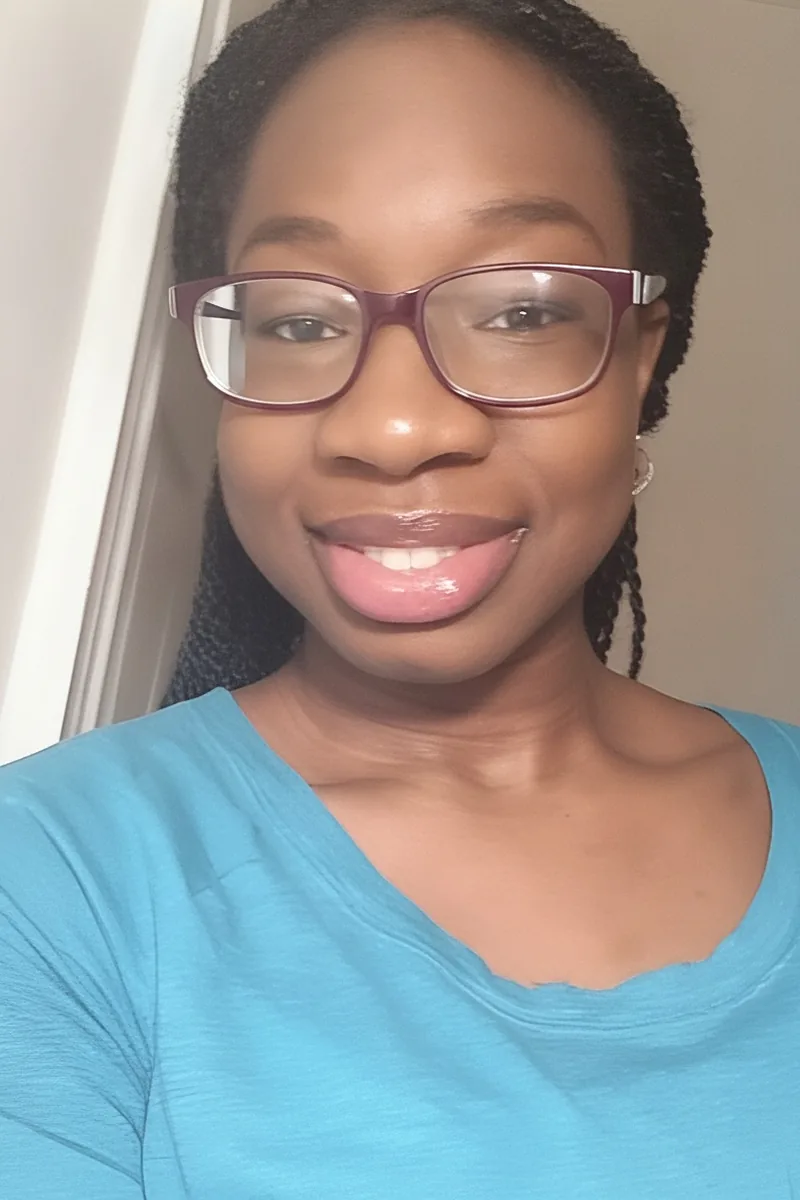
Reaction mechanisms are the backbone of organic chemistry, and students who try to memorize each one individually run out of mental storage by the second exam. Bintou's chemistry training at Penn taught her to classify reactions by electron behavior — nucleophilic attack, leaving group stability, carbocation rearrangement — so patterns emerge instead of isolated steps. She teaches students to predict products by reading the mechanism, not by recognizing a specific example they've seen before.

Pre-med coursework at Brown plus a PPE degree means Leah has wrestled with organic chemistry from the student side recently enough to remember exactly where concepts like nucleophilic addition and carbonyl reactivity start to blur together. She teaches arrow-pushing by slowing down at those sticking points — building the logic of each mechanism step by step so the patterns become recognizable, not just memorized. Rated 4.7 by students.
Biology majors often have a secret advantage in organic chemistry: they've already seen the molecules in action — amino acid side chains, lipid bilayers, sugar ring conformations — before they ever push an arrow on paper. Uloma's biology degree from Brown means she teaches reaction mechanisms and functional group behavior by connecting them back to the biomolecular context where they matter, turning abstract electron flow into something students can picture. Rated 5.0 by students.
Cornell's biology curriculum threw Raphael into organic chemistry as the bridge between general chemistry and the biochemistry he needed for his pre-med track — meaning he learned reaction mechanisms through the lens of biological relevance, not just isolated transformations on an exam. He tackles arrow-pushing and functional group reactivity by zeroing in on the "why" behind electron movement, building each mechanism step from nucleophile-electrophile logic so students can reason through unfamiliar problems on their own. Holds a 5.0 rating.
Reaction mechanisms click once you stop memorizing arrow-pushing patterns and start understanding why electrons move the way they do — nucleophilicity, sterics, leaving group stability. Mitchell's neuroscience degree required extensive organic chemistry coursework, and he breaks down everything from substitution and elimination reactions to carbonyl chemistry by connecting each mechanism to the electronic principles driving it.
Having earned a chemistry degree from Yale, Zosia spent years immersed in the subject well past the introductory orgo sequence — which means she can contextualize tricky topics like electrophilic aromatic substitution and acyl chemistry within the broader landscape of how molecules actually behave. She walks students through spectral analysis and multi-step synthesis by building from first principles of electronegativity and sterics, so each new reaction type feels like an extension of what they already know rather than a fresh page to memorize. Rated 4.9 by students.
Most students dread organic chemistry because it feels like a new language, but the logic underneath reaction mechanisms is surprisingly consistent once someone lays it out clearly. Ade approaches each reaction type — substitution, elimination, addition — by teaching students to read electron movement and predict products rather than memorize hundreds of individual reactions.
Reaction mechanisms become far more intuitive when you understand the electron-level logic behind each arrow push. Andrew earned his biochemistry degree and continues working in biochemical laboratories, so he teaches organic chemistry as a language of molecular behavior — connecting nucleophilic substitutions, elimination pathways, and carbonyl chemistry to the biological contexts where they actually matter.
As an MD/PhD student at Northwestern doing doctoral research in organic synthesis, Austin lives in the world of reaction design — figuring out which bonds to form, which protecting groups to use, and why one retrosynthetic route beats another. That daily immersion means he teaches mechanisms and stereochemistry with the fluency of someone who actually builds molecules, not just someone who once passed the course.
Reaction mechanisms in organic chemistry are less about memorizing hundreds of arrows and more about recognizing a handful of recurring patterns — nucleophilic attacks, leaving group stability, and electron density shifts. Aidan studied organic chemistry as part of Notre Dame's premed track and teaches students to predict products by understanding why electrons move, not just where.
I am a freshman at Vanderbilt University studying biochemistry and involved in analytical chemistry research. Despite my studies being very science oriented, I also enjoy studying English and the humanities. I'd be happy to tutor you in any of these areas!
Jacob lists organic chemistry among his favorite subjects to teach, and his economics-trained habit of tracing systems through chains of cause and effect gives him a structured way to walk through multi-step mechanisms — particularly carbonyl chemistry and aromatic substitution patterns. He approaches each reaction type by building the logic from scratch: what's electron-rich, what's electron-poor, and why that determines everything. Rated 5.0 by students.
Reaction mechanisms are the backbone of organic chemistry, and most exam mistakes trace back to shaky arrow-pushing fundamentals. Abhinav teaches students to classify reactions by nucleophile-electrophile interactions first, then layer on stereochemistry and regiochemistry — an approach that turns a seemingly infinite number of reactions into a manageable set of patterns.
A bio-organic chemistry degree means Alex didn't just pass orgo — the entire major was built around understanding how molecular structure dictates reactivity, from substitution and elimination selectivity to multi-step synthesis design. He breaks down each mechanism by identifying the nucleophile, electrophile, and driving force first, so students develop a repeatable framework instead of a growing pile of flashcards. That same logic scales directly into spectroscopy interpretation and retrosynthetic analysis when exams get harder.
Reaction mechanisms are the backbone of organic chemistry, and Natasha teaches them the way she learned them in her biomolecular engineering program — by tracing electron movement step by step until the logic feels inevitable rather than arbitrary. She digs into arrow-pushing, stereochemistry, and functional group reactivity by asking students to predict products before revealing answers, building real intuition for how molecules behave.
Testimonials
Because the right Organic Chemistry tutor makes all the difference.
Average Session Rating – Based on 3.4M Learner Ratings
Practice Organic Chemistry
Free practice tests, flashcards, and AI tutoring for Organic Chemistry
Other Providence Tutors
Related Science Tutors in Providence
Frequently Asked Questions
Organic chemistry challenges typically fall into two categories: understanding reaction mechanisms and visualizing molecular structures in three dimensions. Many students try to memorize reactions rather than grasping the underlying principles of how electrons move and bonds form. Additionally, balancing equations, predicting products, and understanding stereochemistry require both conceptual understanding and spatial reasoning skills that don't always develop naturally from lectures alone.
A tutor can break down complex mechanisms step-by-step, help you visualize molecular structures using models and drawings, and teach you to think like an organic chemist rather than memorize reactions. Personalized 1-on-1 instruction allows tutors to identify whether you're struggling with foundational concepts (like hybridization or resonance) or with application, then target practice accordingly. This approach transforms organic chemistry from a memorization challenge into a logical problem-solving skill.
Your first session is a chance for a tutor to understand your current level, identify specific pain points, and learn how you learn best. They'll likely review recent exams or problem sets, ask diagnostic questions about concepts you find confusing, and start building a personalized plan. You'll leave with clarity on what to focus on and concrete strategies for tackling organic chemistry problems more effectively.
Visualization improves with practice using molecular models, drawing mechanisms by hand repeatedly, and working with tutors who can show you how to mentally rotate structures in 3D space. Many students benefit from learning to use wedge-dash notation consistently, drawing chair conformations for cyclohexane, and practicing arrow-pushing until it becomes automatic. A tutor can provide targeted practice and immediate feedback on your drawings, helping you build spatial reasoning skills faster than studying alone.
Understanding reaction mechanisms deeply helps you predict what will happen in the lab, troubleshoot when experiments don't go as planned, and write better lab reports that explain the chemistry behind your observations. Tutors can help you connect theoretical concepts—like nucleophilicity, leaving groups, and reaction conditions—to the actual reactions you're performing. This bridge between theory and practice makes both your lab work and your lecture material more meaningful and memorable.
Ideally, starting 4-6 weeks before an exam gives you time to build foundational understanding and practice problem-solving under pressure. However, even 2-3 weeks of focused tutoring can significantly improve your performance if you're struggling with specific topics. The key is consistent, targeted practice rather than last-minute cramming—a tutor can help you prioritize the highest-impact concepts and practice the types of problems most likely to appear on your exam.
Look for tutors with strong chemistry backgrounds—ideally a degree in chemistry or biochemistry, or significant coursework and teaching experience in organic chemistry. Beyond credentials, the best tutors can explain complex concepts clearly, are patient with students who struggle, and have experience teaching the specific curriculum or textbook you're using. Varsity Tutors connects you with expert tutors who have been vetted for both their subject knowledge and their ability to teach effectively.
Tutoring rates vary based on the tutor's experience, your location in Providence, and the intensity of instruction you need. Varsity Tutors offers flexible options to fit different budgets, and many students find that even a few sessions focused on their biggest weak spots can make a meaningful difference in their grade. We can help match you with tutors at different price points so you can find an option that works for you.
Let’s find your perfect tutor
Answer a few quick questions. We’ll recommend the right plan and match you with a top 5% tutor.