Award-Winning Pre-Calculus Tutors
serving Providence, RI
Pre-Calculus
Tutors in Providence
Private 1-on-1 tutoring, weekly live classes for academic support, test prep & enrichment, practice tests and diagnostics, and more to elevate grades and test scores.
Based on 3.4M Learner Ratings
UniversitiesSchools & Universities
DeliveredHours Delivered
ProficiencyGrowth in Proficiency
Who needs tutoring?
No obligation. Takes ~1 minute.
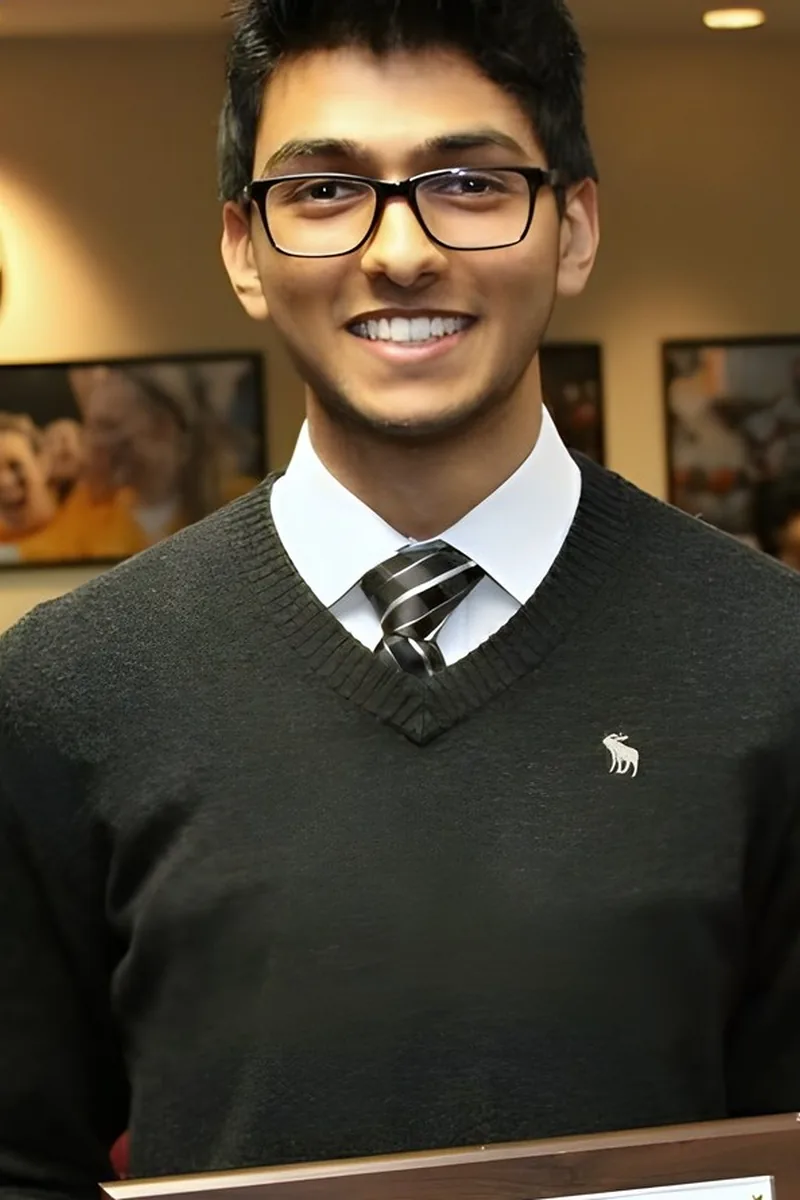
Molecular biophysics at Brown throws Srini into the deep end of mathematical modeling — fitting protein folding kinetics to exponential curves, analyzing oscillatory molecular dynamics with trig functions, mapping multivariable relationships through composition. That daily immersion means he teaches pre-calculus topics like function transformations and logarithmic properties as tools he actively uses, not abstract concepts he's reciting from a textbook. A 1600 SAT and 35 ACT confirm the mathematical fluency behind his approach.
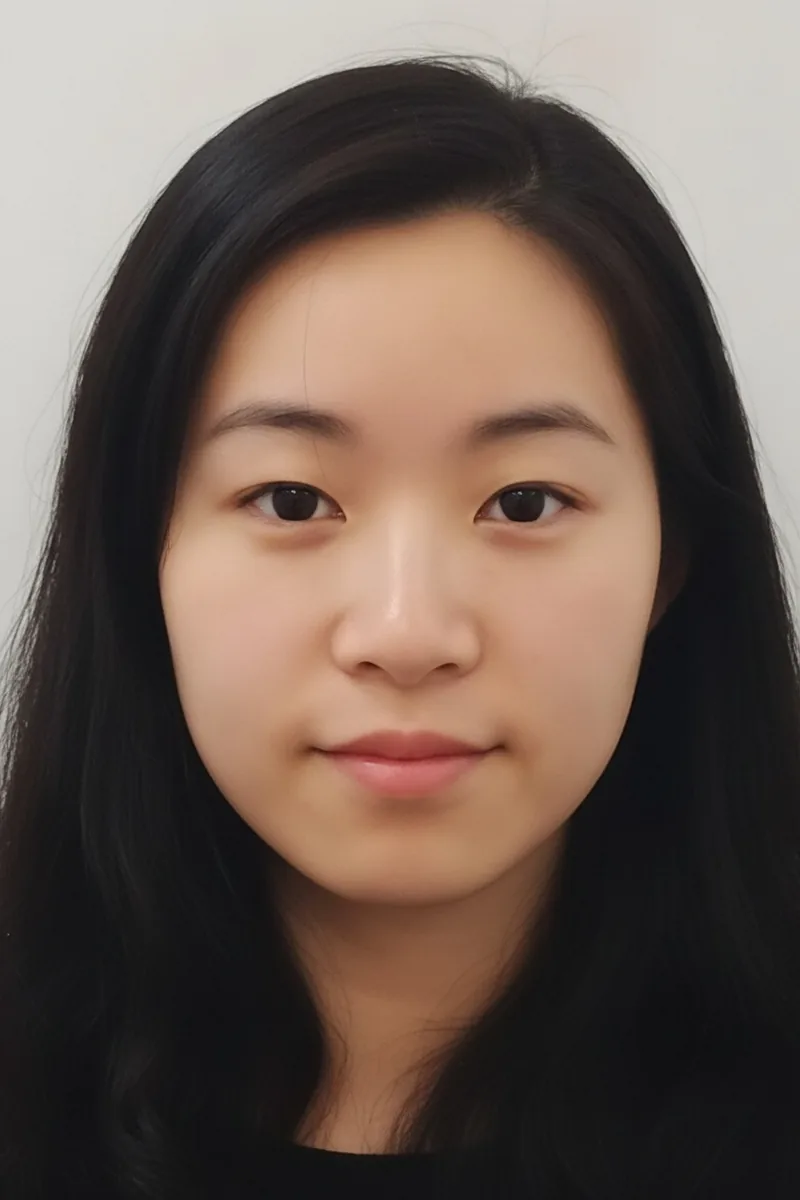
Building circuits and analyzing signals in Brown's electrical engineering program means June lives in the world of complex exponentials, phasor diagrams, and trigonometric decomposition — all concepts rooted directly in pre-calculus material like the unit circle, polar form, and function composition. She unpacks these topics by showing how each piece feeds into the next, so students develop genuine fluency with transformations and identities rather than a patchwork of memorized steps. Her 1580 SAT speaks to the quantitative precision she brings to every session.
Neuroscience at Brown means Oladele regularly encounters the math that pre-calculus is actually building toward — modeling neural firing rates with exponential decay, analyzing oscillatory signals through trigonometric functions, and interpreting dose-response curves on logarithmic scales. He teaches graph transformations and function composition by walking through the reasoning behind each step, so students can reconstruct the logic under pressure instead of blanking on a memorized shortcut. His 1430 SAT and experience as a head math coach for a college prep program ground his approach in both the math itself and how to communicate it clearly.
Taking advanced university math courses while still in high school gave Kashish early exposure to the exact moment pre-calculus gets hard — when students shift from manipulating expressions to reasoning about how entire function families behave under transformations, compositions, and inverses. Her engineering program at Brown keeps those skills sharp daily, and she zeroes in on building the bridge between comfortable algebraic techniques and the more abstract thinking calculus will demand. A 1570 SAT and 5.0 rating from students back up that approach.
Because she teaches calculus, Calculus II, and everything below, Alexandra sees pre-calculus from both sides — she knows which gaps in trigonometric reasoning, function composition, and logarithmic properties will cause real problems later, and which skills students can afford to sharpen as they go. Her 1570 SAT and ongoing math coursework at Brown mean she's working with these concepts constantly, not recalling them from years ago. She's especially effective at untangling the unit circle and inverse trig functions, two areas where rushed instruction tends to leave students guessing.
Orlando's neuroscience concentration and medical training at Brown mean he's been solving problems built on exponential decay, logarithmic scaling, and trigonometric modeling since undergrad — pre-calculus wasn't a stepping stone he passed through, it's a toolkit he still uses. He zeroes in on the moment where students stop seeing isolated formulas and start recognizing how function families relate to each other, particularly around rational expressions and asymptotic behavior. Rated 4.8 by students.
A biology major at Brown might seem like an unlikely pre-calculus tutor, but Uloma's coursework in cell and molecular biology demands constant work with exponential growth models, logarithmic dose-response curves, and the periodic functions that describe biological rhythms. She teaches those function families by connecting them to the living systems she studies daily, which makes the algebra-to-calculus bridge feel less abstract. Rated 5.0 by students.
Applied mathematics at UMass Amherst means John is actively working with the polynomial, rational, and trigonometric structures that pre-calculus students are building for the first time — and his 780 SAT Math score shows he locked those foundations down early. He zeroes in on the transition points where students typically stall, like connecting algebraic manipulation of logarithms to their graphical behavior or making sense of why composite functions transform the way they do. His dual focus in economics adds a practical modeling instinct that keeps abstract function analysis grounded.
Cognitive science at Penn blends psychology, philosophy, and a surprising amount of mathematical modeling — Samantha's coursework has kept her actively working with the function families, transformations, and analytical reasoning that define pre-calculus. She's especially sharp at bridging the gap between algebraic mechanics and the conceptual shift pre-calc demands, like understanding why a rational function behaves near its asymptotes or how composite functions layer operations in a specific order. Her 1460 SAT reflects the quantitative grounding behind that clarity.
Computer science at Harvard means Parita thinks in functions all day — composition, recursion, domain restrictions, input-output logic — which is exactly the mental framework pre-calculus demands when students hit rational functions, piecewise definitions, and sequences. She tackles the course by making the abstract behavior of function families feel as concrete and debuggable as a line of code. Her 35 ACT and 5.0 rating back that up.
Mechanical engineering at the undergraduate level means Andrea spent semesters grinding through the exact transition pre-calculus prepares students for — mastering polar coordinates, parametric equations, and trigonometric identities before they became essential tools in dynamics and thermodynamics courses. She teaches that material as someone who knows precisely where each concept resurfaces, breaking down topics like composite functions and rational expressions by connecting them to the engineering problems they eventually power. Her 32 ACT and 4.8 rating reflect consistent results across a wide range of students.
As a Course Assistant for Harvard's introductory calculus sequence, Sanjana sees exactly where pre-calculus gaps — shaky grasp of limits intuition, weak trigonometric identities, or incomplete understanding of function transformations — trip students up once the pace accelerates. She teaches those topics with that forward view, building each concept so it holds weight in the calculus course that's coming next. Holds a 5.0 rating and a 1560 SAT.
A Cornell chemical engineering degree means Rahul spent years working with exponential decay, logarithmic scales, and trigonometric models before most students even encounter them in a textbook. He teaches pre-calculus by emphasizing the conceptual reasoning behind each topic — why a logarithm undoes an exponential, how the unit circle generates every trig value — so the mechanics actually make sense. Rated 4.9 by students, with a 36 ACT to back up the quantitative chops.
Andrew's PhD in biomedical engineering means he's pushed well past calculus into differential equations and multivariable territory — so he teaches pre-calculus with a clear map of where every topic is headed and why it matters. He's particularly sharp on the transition points that trip students up, like moving from memorizing trig ratios to actually understanding the unit circle as a geometric argument. Rated 4.9 by students.
Until age 16, Viktor saw math as mindless formula memorization — then a series of great teachers revealed the deeper logic underneath, and he ended up majoring in mathematics at UChicago. That conversion story shapes how he teaches pre-calculus: he digs into *why* the unit circle works or what a logarithm actually means, so students build real understanding instead of a formula sheet they'll forget by finals. His 1600 SAT and 35 ACT confirm the mathematical fluency behind that approach.
Most pre-calculus courses throw the unit circle, rational functions, and logarithmic properties at students in rapid succession without showing the thread connecting them — Kathleen's math degree from Washington University means she sees that thread clearly and teaches accordingly. She's especially sharp at bridging the gap between algebraic mechanics students already trust and the functional thinking calculus will demand, building each new concept as a natural extension rather than a separate topic to memorize. Her 35 ACT and 1550 SAT confirm the quantitative depth behind her approach.
The jump into pre-calculus — trigonometric identities, limits, and complex functions — trips up even strong math students who breezed through earlier courses. Julia breaks these topics into logical building blocks, connecting each new idea back to the algebra and geometry students already know. Her Stanford coursework in economics and quantitative methods keeps her sharp on exactly the kind of function analysis pre-calc demands.
The leap from trig identities to limits can feel abrupt if the underlying logic of functions isn't solid. Pranav tackles Pre-Calculus by connecting topics like rational functions, polar coordinates, and sequences back to the graphical intuition students already have. As a Biomedical Engineering student at Johns Hopkins, he uses these tools daily and can show students why each concept matters beyond the textbook.
Mechanical and aerospace engineering at Princeton means Matthew is constantly applying the trigonometric relationships, parametric equations, and function transformations that pre-calculus introduces — they're the building blocks of orbital mechanics and fluid dynamics problems he tackles in coursework. His teaching style is deliberately hands-on: he walks through a concept step by step, then puts students in the driver's seat with progressively harder problems, catching misunderstandings in real time. A 34 ACT confirms the quantitative instincts behind that approach.
UCLA's computer science curriculum drills recursion, function composition, and algorithmic thinking — skills Michael now channels into teaching pre-calculus topics like sequences, rational functions, and graph transformations. He zeroes in on the logical structure underneath each problem, showing students how to trace a function's behavior step by step the way a programmer would debug code. His 1560 SAT confirms the quantitative muscle behind that approach.
Testimonials
Because the right Pre-Calculus tutor makes all the difference.
Average Session Rating – Based on 3.4M Learner Ratings
Practice Pre-Calculus
Free practice tests, flashcards, and AI tutoring for Pre-Calculus
Other Providence Tutors
Related Math Tutors in Providence
Frequently Asked Questions
Pre-Calculus bridges algebra and calculus by covering functions, polynomial and rational equations, exponential and logarithmic functions, trigonometry, sequences, series, and conic sections. The specific curriculum can vary depending on your school's textbook and approach, but these core topics prepare students for calculus by developing both procedural skills and deeper conceptual understanding of how mathematical functions behave.
Many students struggle with the shift from procedural problem-solving to understanding underlying concepts—especially with trigonometry, function transformations, and word problems that require multiple steps. Others find it difficult to connect different topics or to see why certain techniques work. Personalized 1-on-1 instruction helps students identify gaps in foundational skills and build the conceptual connections that make advanced topics click.
Expert tutors work with you to break down complex problems into manageable steps, teach you how to identify key information, and show you how to translate words into mathematical equations. Rather than just showing you the answer, tutors help you develop problem-solving strategies and reasoning skills so you can approach unfamiliar problems with confidence. This approach builds both competence and independence.
Graphing connects algebraic equations to visual patterns, helping you see how functions behave and why certain solutions make sense. Many students struggle to interpret graphs or to sketch them accurately. Tutors help you understand the relationship between equations and their graphs, teach you how to identify key features like intercepts and asymptotes, and show you how graphing can be a powerful problem-solving tool in calculus.
Math anxiety is common, especially as material becomes more abstract. Personalized instruction allows tutors to work at your pace, celebrate small wins, and help you see that struggling with a topic doesn't mean you're not capable—it means you're learning. By breaking concepts into smaller pieces, showing you multiple ways to solve problems, and focusing on your strengths, tutors help rebuild confidence and shift your mindset about what's possible.
Your first session is about getting to know each other and understanding your specific needs. The tutor will ask about your current Pre-Calculus topics, what's challenging you most, your learning style, and your goals. This helps the tutor create a personalized plan tailored to your situation rather than following a one-size-fits-all approach. You'll leave with a clear sense of how tutoring can help you.
Showing work reveals your reasoning process, helps teachers identify where misunderstandings happen, and is essential for success in calculus and beyond. Tutors teach you how to organize your work clearly, explain your steps logically, and check your reasoning—skills that boost both your grades and your actual understanding. This practice also makes it easier to catch and correct your own mistakes.
Varsity Tutors connects you with expert tutors who have deep knowledge of Pre-Calculus and experience teaching students in Providence. When you get matched with a tutor, you can discuss your specific challenges, curriculum, and learning goals to ensure a good fit. The personalized matching process means you work with someone who understands both the subject and your needs.
Let’s find your perfect tutor
Answer a few quick questions. We’ll recommend the right plan and match you with a top 5% tutor.