Award-Winning Geometry Tutors
serving Providence, RI
Geometry
Tutors in Providence
Private 1-on-1 tutoring, weekly live classes for academic support, test prep & enrichment, practice tests and diagnostics, and more to elevate grades and test scores.
Based on 3.4M Learner Ratings
UniversitiesSchools & Universities
DeliveredHours Delivered
ProficiencyGrowth in Proficiency
Who needs tutoring?
No obligation. Takes ~1 minute.
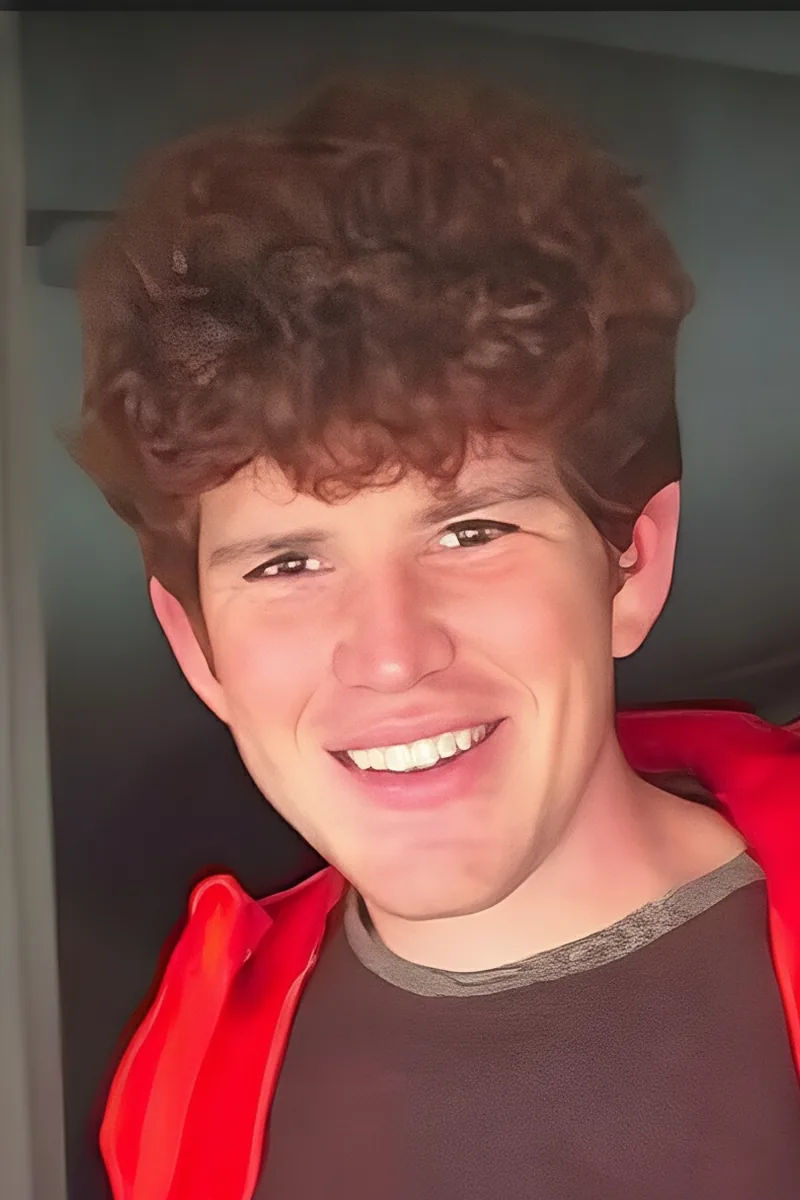
Economics at Brown trains you to build arguments from axioms and assumptions — a process that maps almost perfectly onto geometric proof-writing, where each statement has to follow logically from definitions, postulates, or previous results. Clive applies that structured reasoning to congruence and similarity proofs, and his 35 ACT suggests the kind of precise, timed problem-solving that keeps students from freezing on test-day geometry questions.
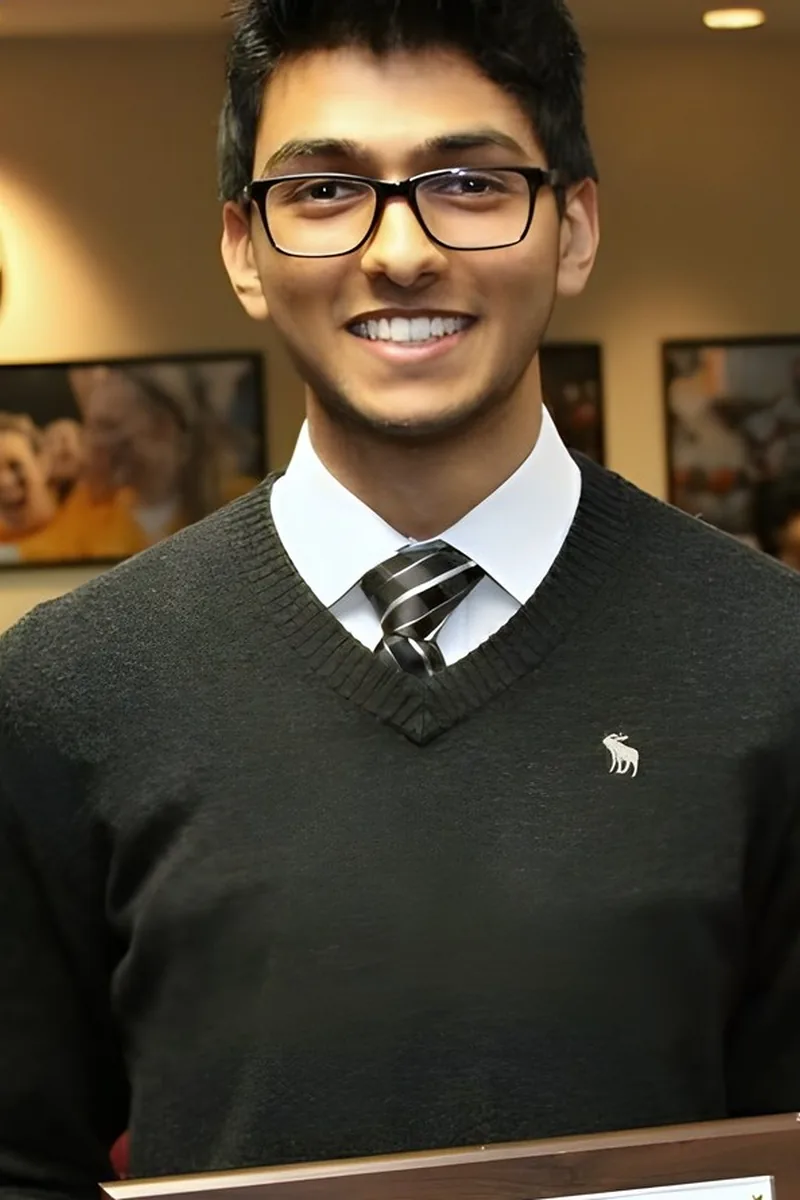
Proofs trip up most geometry students because they require a completely different kind of thinking than computation. Srini approaches them as logical arguments: identifying givens, mapping out what needs to be shown, and selecting the right theorems — a structure that mirrors the scientific reasoning he practices in his Brown biophysics program.
Proofs are usually the first place geometry students panic, because suddenly math requires structured written arguments instead of just computation. June teaches proof-writing as a logical skill — identifying given information, selecting the right theorem, and building a chain of reasoning — which aligns naturally with how she thinks as an engineering student. She also digs into coordinate geometry and triangle congruence with an emphasis on visualization over rote memorization.
A psychology honors student from Brown with a 4.0 GPA, Kahini built her research skills in a UPenn lab where computational thinking and structured reasoning were daily requirements — exactly the mental toolkit that makes geometric proofs and multi-step spatial problems manageable. She approaches geometry as a logic exercise, breaking down how postulates and definitions chain together in two-column proofs before students ever worry about memorizing theorems.
Most geometry classes front-load formulas for area and volume but save the real challenge — coordinate geometry and transformations — for later, when students are already mentally checked out. Ariel flips that by connecting coordinate proofs and rigid motions to the visual intuition students already have, making the abstract feel concrete. Her 5.0 rating and psychology training at Brown mean she's sharp at spotting exactly where a student's reasoning breaks down.
Proofs are where Geometry stops feeling like simple shape recognition and starts demanding logical argumentation — and that's exactly where Oladele excels. He teaches students to construct proofs by identifying what they know, what they need, and which postulates or theorems bridge the gap. His background leading math coaching sessions at Brown gave him a sharp eye for the specific reasoning steps students tend to skip.
Growing up in Bolivia and studying engineering gave Geraldine two things that matter in geometry: comfort with precise technical drawing and measurement, and the habit of thinking through problems in multiple languages — which turns out to be useful when translating between a diagram, a written theorem, and an algebraic expression. She tackles the visual-reasoning side especially well, teaching students to read and annotate figures so that relationships between angles, arcs, and segments become obvious before any calculation starts.
Proof-based reasoning is where most geometry students stall, unsure how to move from a diagram to a logical argument. Bintou teaches students to treat each proof like a chain of small claims, identifying given information, marking congruent parts, and choosing the right theorem before writing a single line. Her classroom teaching experience means she knows how to pace explanations so the reasoning actually lands.
Competition math gave Kashish early exposure to the kind of geometric puzzles that demand more than formula application — problems where you have to construct auxiliary lines, spot hidden similar triangles, or chain together circle theorems in unexpected ways. That competition instinct, combined with the engineering rigor she's building at Brown, makes her especially effective on problems that require creative geometric reasoning rather than just plugging into area and volume formulas. Rated 5.0 by students.
Where most geometry tutors on this page emphasize proofs, Alexandra's math coursework at Brown gives her a strong handle on the computational and visual side — calculating areas and volumes of composite figures, applying trigonometric ratios to right triangles, and working through coordinate geometry problems that bridge algebra and spatial reasoning. She's especially useful for students who can follow the logic just fine but keep getting tripped up by the actual calculations and constructions.
Testimonials
Because the right Geometry tutor makes all the difference.
Average Session Rating – Based on 3.4M Learner Ratings
Practice Geometry
Free practice tests, flashcards, and AI tutoring for Geometry
Other Providence Tutors
Related Math Tutors in Providence
Frequently Asked Questions
Many students struggle with the shift from algebra's procedural focus to geometry's emphasis on reasoning and proof. Common pain points include visualizing 3D shapes, understanding why geometric theorems work (not just memorizing them), writing formal proofs, and applying geometry concepts to word problems. Personalized tutoring helps students build conceptual understanding so they can tackle these challenges with confidence rather than just memorizing formulas.
Proofs require a different kind of thinking than most math students have encountered—you need to justify every step and understand the logical connections between theorems. Tutors work with you to break down the proof-writing process, identify which theorems apply, and develop strategies for organizing your reasoning clearly. With guided practice and personalized feedback, students move from feeling confused about where to start to confidently constructing logical arguments.
Spatial reasoning is a skill that improves with practice and the right strategies. Tutors use concrete tools—drawings, manipulatives, and step-by-step visualization techniques—to help you build mental models of 2D and 3D shapes. Over time, you'll develop stronger intuition about how shapes relate to each other, making it easier to solve problems involving angles, area, volume, and coordinate geometry.
Word problems require translating real-world scenarios into geometric diagrams and equations—a skill that takes practice. Tutors teach you a systematic approach: identifying what you know, sketching the situation, choosing the right geometric concepts, and working through the problem step-by-step. With personalized instruction, you'll learn to see patterns in different problem types and build confidence tackling unfamiliar scenarios.
Yes. Providence schools use various geometry programs, and tutors are familiar with different approaches and textbook organizations. Whether your course emphasizes coordinate geometry, transformations, or classical Euclidean proofs, Varsity Tutors connects you with tutors who can support your specific curriculum and teaching style, making tutoring seamless with what you're learning in class.
Your first session focuses on understanding where you are and what you need. The tutor will assess your current understanding of key concepts, identify specific challenges (whether it's proofs, visualization, or problem-solving strategies), and learn about your learning style. Together, you'll create a personalized plan to build confidence and improve your geometry skills.
Absolutely. Math anxiety often stems from feeling lost or unsupported—personalized tutoring addresses this directly. Working one-on-one with a tutor who can slow down, explain concepts clearly, and celebrate progress builds both understanding and confidence. Many students discover that geometry makes sense when it's taught in a way that matches how they learn, which naturally reduces anxiety.
Geometry is fundamentally about recognizing patterns and understanding how concepts connect—from angles and triangles to coordinate systems and transformations. Tutors help you move beyond isolated formulas to see the bigger picture: how theorems relate to each other, why certain properties always hold, and how different approaches to a problem reveal the same truth. This deeper understanding makes geometry feel coherent rather than like random rules to memorize.
Let’s find your perfect tutor
Answer a few quick questions. We’ll recommend the right plan and match you with a top 5% tutor.