Award-Winning Middle School Math Tutors
serving Providence, RI
Middle School Math
Tutors in Providence
Private 1-on-1 tutoring, weekly live classes for academic support, test prep & enrichment, practice tests and diagnostics, and more to elevate grades and test scores.
Based on 3.4M Learner Ratings
UniversitiesSchools & Universities
DeliveredHours Delivered
ProficiencyGrowth in Proficiency
Who needs tutoring?
No obligation. Takes ~1 minute.

Fractions, ratios, and proportional reasoning click faster when students see how numbers actually relate to each other instead of just following steps. Clive breaks down middle school math concepts by connecting them to real-world logic — the same quantitative thinking his economics training at Brown demands daily.
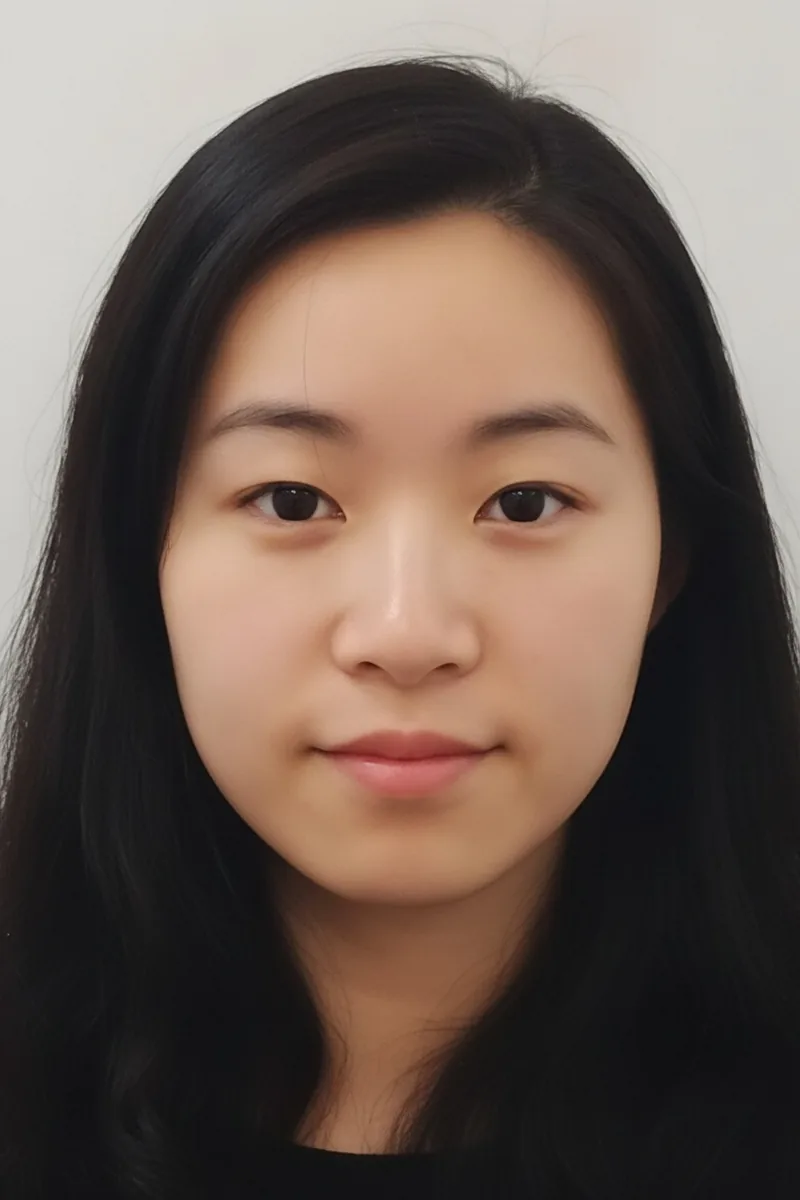
Fractions, ratios, proportions, early graphing — middle school math is where students either develop genuine number sense or start faking their way through procedures. June approaches each topic by asking students to explain their reasoning out loud, catching misconceptions before they calcify. Her curiosity-driven style, shaped by a wide-ranging education at Brown, keeps sessions from feeling like homework rehash.
Teaching after-school math daily at Archway Classical Academy means Hasan sees in real time which middle school concepts — negative numbers, fraction division, basic variable manipulation — trip students up most often, and he's built quick, repeatable strategies for each one. His literary arts background at Brown might seem like an odd fit, but it trained him to break down complex structures into their components, which is exactly what solving a multi-step equation requires. Rated 5.0 by students.
There's a real satisfaction in cracking a tough math problem, and Joshua brings that same energy to middle school topics like fractions, ratios, and pre-algebraic thinking. His broad academic background at Brown means he can connect math concepts to real-world contexts that make them click for younger learners.
The jump from fifth-grade math to middle school topics like ratios, proportional reasoning, and introductory geometry can feel enormous. Abby has direct experience tutoring this age group and understands that building confidence matters as much as building skills. She makes abstract ideas concrete, turning a problem about percent change into something a student can visualize and reason through independently.
Fractions, ratios, and proportional reasoning trip up a lot of middle schoolers because the concepts feel disconnected from anything real. Anna's Education concentration at Brown trained her to build lessons around concrete examples that make abstract math click — she's the tutor who gets students to that "aha" moment with integers and pre-algebra. Rated 5.0 by students.
Between her 4.0 at Brown and her current PhD work at Columbia, Kahini has spent years translating complex quantitative ideas into plain language. She applies that same skill to middle school math, whether a student is wrestling with proportional relationships, coordinate graphing, or their first encounter with negative numbers.
The jump from elementary math to middle school math catches a lot of students off guard, especially when ratios, proportions, and negative numbers enter the picture. Ariel starts each session by asking what's clicked and what hasn't, then builds from there — turning shaky understanding of, say, fraction operations into genuine confidence. Her 5.0 rating speaks to how well that approach lands.
The jump from elementary math to middle school math introduces ratios, proportional reasoning, and early algebraic thinking all at once. Geraldine tackles each of these threads individually so students can see how they connect, turning what feels like a flood of new topics into a logical progression.
Fractions, proportional reasoning, and the transition into variables — middle school math is where students either build real number sense or start falling behind. Kashish has tutored math across K-12 grades and knows that this age group needs concrete examples before abstract rules will stick. She walks through each concept with visual models and real-world scenarios that make pre-algebra and ratios feel intuitive.
A year of teaching 10th and 11th graders gave Bintou sharp instincts for where math gaps start — and most of them trace back to middle school concepts like fraction operations, proportional reasoning, and integer rules. She tackles these fundamentals by connecting them to real scenarios students actually encounter, building the numerical fluency that makes high school math far less intimidating.
Ratios, proportions, and integer operations click faster when a student sees how they connect to real scenarios — something Jasmine's biology background makes second nature. She breaks down pre-algebra concepts like solving for unknowns and working with negative numbers in ways that build genuine number sense, not just procedural shortcuts.
The jump from arithmetic to algebraic thinking is one of the biggest conceptual shifts in all of math, and it happens in middle school. Alexandra tackles topics like integer operations, proportional reasoning, and early equation-solving by connecting each new idea to concrete examples before moving to abstraction. Her experience as a Brown math major means she sees the bigger picture of where these skills lead — and communicates that trajectory to students.
The jump from elementary arithmetic to middle school math — proportions, negative numbers, basic geometry, introductory equations — can feel overwhelming when several new ideas land at once. Victoria tackles this by isolating one concept at a time and showing students how each piece connects to the next, building genuine number sense rather than rote procedures. Her psychology background also gives her a sharp eye for where a student's confidence is stalling and how to get momentum back.
I have studied Painting at the Rhode Island School of Design, a top art school in the US. I have also studied Modern Culture and Media at Brown University, an Ivy League School. I have a breadth of experience working with youth of all ages, in particular students aged 12-20. I was teacher's assistant for 5 intro level drawing courses at RISD, and frequently lead sessions. I have also tutored 6th and 8th grade math for City Year.
Testimonials
Because the right Middle School Math tutor makes all the difference.
Average Session Rating – Based on 3.4M Learner Ratings
Other Providence Tutors
Related Math Tutors in Providence
Frequently Asked Questions
Providence schools across the 17 districts use various curricula, including traditional textbook-based programs and standards-aligned approaches. Since different schools may emphasize different concepts or pacing, tutors can assess your student's specific curriculum and teaching style to ensure alignment. This personalized approach helps bridge any gaps between what's taught in class and what your student needs to master.
Students often struggle with the transition from basic arithmetic to abstract thinking—especially with multi-step equations, word problems, and graphing. Many also find proofs and geometric reasoning challenging, or they rush through problems without showing their work. Building strong problem-solving strategies and conceptual understanding (not just memorizing procedures) helps students overcome these hurdles and develop lasting confidence in math.
Math anxiety often stems from feeling lost or falling behind, which creates a cycle of avoidance. Personalized 1-on-1 instruction breaks material into manageable steps, celebrates small wins, and helps students see patterns and connections they might miss in a classroom of 14+ students. When students experience success in a low-pressure environment, confidence builds naturally and anxiety decreases.
Showing work reveals your student's thinking process and helps identify exactly where misunderstandings happen—whether it's a conceptual gap or a simple computational error. Tutors use this to guide students toward correct reasoning rather than just correcting answers. This skill also prepares students for high school and standardized tests, where partial credit depends on demonstrating mathematical thinking.
Word problems require students to translate language into mathematical operations—a skill that takes practice. Effective strategies include identifying key information, drawing diagrams, breaking the problem into smaller steps, and checking whether the answer makes sense in context. Tutors work with students to build these problem-solving habits systematically, so word problems become less intimidating over time.
The first session focuses on understanding your student's strengths, challenges, and learning style. Tutors assess current skills, identify specific gaps (like struggling with fractions or graphing), and discuss goals—whether that's catching up, building confidence, or preparing for high school. This foundation allows tutors to create a personalized plan tailored to your student's needs.
Procedural understanding means knowing the steps to solve a problem (like the algorithm for long division), while conceptual understanding means knowing *why* those steps work and when to use them. Middle school is when students transition from primarily procedural to conceptual thinking. Tutors emphasize both—teaching students not just how to solve equations, but why the operations work—which leads to better retention and flexibility in problem-solving.
Tutoring costs vary based on the tutor's experience, your location in Providence, and how frequently your student meets with a tutor. Varsity Tutors connects you with tutors at different price points, so you can find an option that fits your budget. Many families find that investing in tutoring early in middle school prevents larger gaps later and reduces overall academic stress.
Let’s find your perfect tutor
Answer a few quick questions. We’ll recommend the right plan and match you with a top 5% tutor.