Award-Winning Economics Tutors
serving Portland, OR
Economics
Tutors in Portland
Private 1-on-1 tutoring, weekly live classes for academic support, test prep & enrichment, practice tests and diagnostics, and more to elevate grades and test scores.
Based on 3.4M Learner Ratings
UniversitiesSchools & Universities
DeliveredHours Delivered
ProficiencyGrowth in Proficiency
Who needs tutoring?
No obligation. Takes ~1 minute.
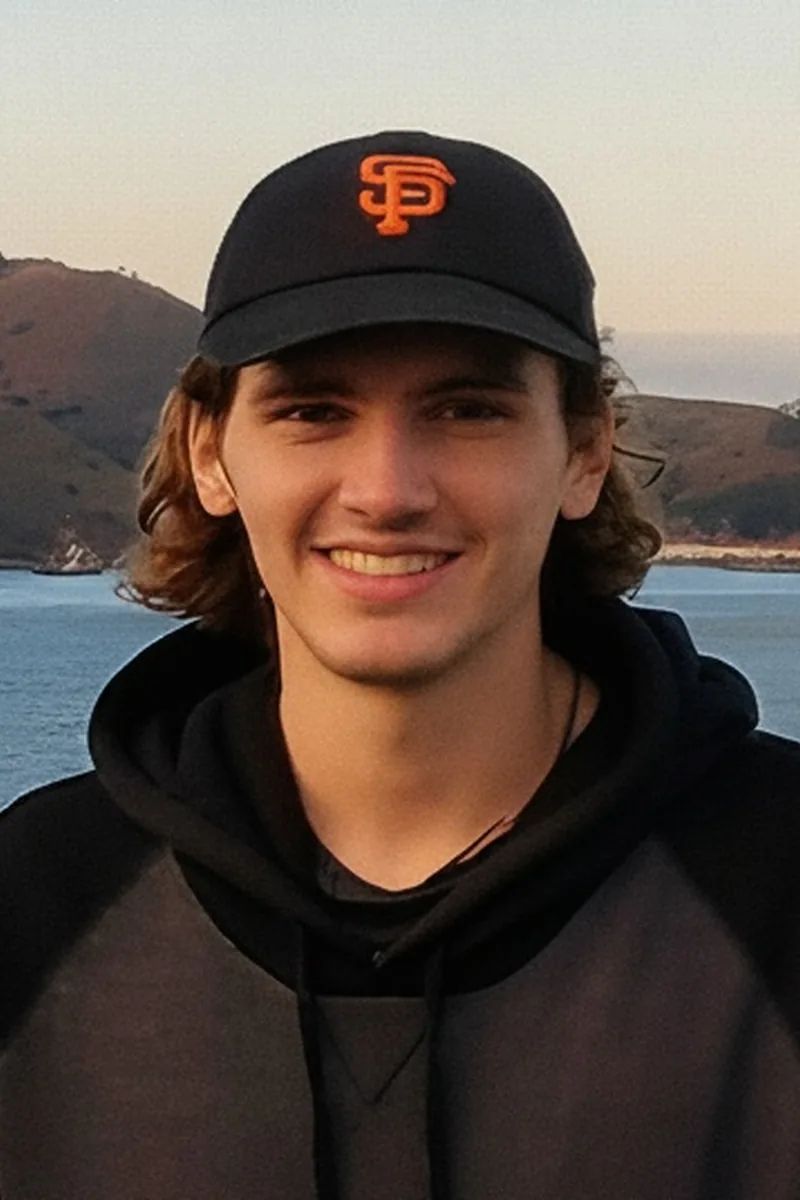
I am a TEFL certified English language teacher, with multiple years of experience teaching English overseas, having lived in both Thailand and Laos, and worked with students of all ages and skill levels. My lessons have ranged from language activation and phonics in kindergarten, to grammar instruction with teens, to conversational business English with adults.

I am a graduate of Luther College, a liberal arts school in Decorah, IA. I received my Bachelor of Arts in Mathematics and Religion, with a minor in Social Welfare. Throughout college, I tutored many students in high school and college level math. I loved the process of helping people through math problems, so after graduating I served in the MN Math Corps as a Math Enrichment Tutor, where I learned research based teaching methods to tutor middle school students who were below proficiency in math. Currently, I am certified to tutor a broad range of math subjects ranging from elementary math to pre-calculus, as well as ACT Math and GRE Math/Verbal test prep. Through my experience, I've found that the best method of tutoring is to tailor it to each student's learning style (every concept can be taught/understood in multiple ways), and make sure the student actually understands what he/she is doing versus just learning equations and methods to complete assignments. I am very passionate about tutoring math as I love empowering people, and I believe mathematics is a vital subject to learn and understand. In addition to tutoring, I have worked as a data analyst for a market research firm near Chicago. In my free time, I enjoy keeping up on current events, reading (I love Harry Potter and Hunger Games!), Ultimate Frisbee, playing guitar and piano, and learning economics.
I'm currently majoring in bioengineering/pre-med at Rice University. I graduated as the valedictorian of my high school class. My interests include biology, math, and violin performance. I've done neuroscience research at the Jungers Center for Neuroscience Reseach and the Oregon National Primate Research Center. I've also done molecular biology research at the Oregon Stem Cell Center.
Studying both History and Economics at Harvard, Finley tackles economics the way it actually works — as a discipline shaped by real-world policy decisions and historical context. He breaks down concepts like supply-and-demand elasticity, market structures, and game theory by grounding them in concrete examples rather than abstract graphs alone. Rated 5.0 by students.
Kevin's Philosophy, Politics, and Economics major at the University of Pennsylvania means he studies economics not as an isolated discipline but as something deeply entangled with policy decisions and ethical trade-offs. He breaks down concepts like market equilibrium, elasticity, and game theory by connecting them to real political and social questions that make the logic behind the models click.
Studying economics at Yale means Conor is working through the same problem sets, models, and exam formats that many of his students are currently facing — from micro concepts like elasticity and market structures to macro topics like GDP accounting and monetary policy. That proximity to the material, paired with a 1590 SAT that signals serious quantitative chops, makes him especially sharp at walking through the graphs and algebra that tend to separate students who memorize definitions from those who actually understand how economic models work.
Double-majoring in Economics and History at UCLA meant Christopher studied economic models alongside the policy debates and institutional shifts that produced them — so concepts like fiscal multipliers or trade deficits come with built-in context, not just formulas. His post-college work at Deutsche Bank gave him a front-row seat to how macroeconomic forces actually ripple through financial markets, which keeps his explanations grounded in observable outcomes.
Elasticity, marginal analysis, market equilibrium, game theory — economics is ultimately about building models and knowing when they break down. Kelly studied Financial Economics at Duke and brings that analytical depth to both micro and macro concepts, unpacking the math behind the intuition so students can tackle problem sets and essays with equal confidence.
Jack earned his economics degree at Northwestern, where he studied everything from game theory to monetary policy in both micro and macro contexts. He connects abstract models — supply and demand curves, GDP calculations, elasticity — to real-world scenarios that make the reasoning behind each graph intuitive rather than mechanical.
Matt's finance degree means he learned economics not as an isolated academic subject but as the engine behind investment decisions, corporate strategy, and market behavior — so when he teaches concepts like elasticity or market structures, he can show students where the theory actually lands. His SAT score of 1530 also signals the kind of sharp analytical reading that economics coursework demands, especially when students need to interpret dense graphs or parse tricky problem setups.
Physics training builds a specific habit that transfers directly to economics: modeling complex systems with graphs, equations, and simplifying assumptions. Avram's three physics degrees mean he's deeply practiced at translating real-world behavior into formal models — exactly the skill students need when working through supply-and-demand curves, elasticity calculations, or equilibrium analysis.
Supply and demand curves are straightforward until you layer in elasticity, market failures, and government intervention — then economics gets interesting. Eliza earned her economics degree from Penn and tackles concepts like comparative advantage and marginal analysis by tying them to real-world examples students actually recognize, from streaming service pricing to minimum wage debates.
Studying finance at UGA means Vignesh works with economic concepts as living inputs — interest rates, market structures, consumer behavior — not just textbook diagrams, since his coursework requires applying micro and macro reasoning to actual corporate and investment decisions. He also teaches AP Micro and AP Macro, so he knows exactly where introductory students get tripped up on topics like elasticity, market failures, and the mechanics of fiscal versus monetary policy. Rated 5.0 by his students.
Clive is currently studying economics at Brown, where he's immersed in everything from microeconomic theory and market structures to macroeconomic policy and econometric modeling. That active coursework means he knows exactly which concepts — opportunity cost, elasticity, game theory, aggregate demand — tend to trip students up and how current professors frame them.
Three engineering degrees — including one in applied mathematics — mean Rahi is fluent in the quantitative side of economics that often catches students off guard: optimization problems, marginal analysis, and the calculus lurking behind supply and demand curves. He also tutors macroeconomics and accounting, so he can connect microeconomic theory to the bigger fiscal picture and the financial statements where these forces show up in practice.
Testimonials
Because the right Economics tutor makes all the difference.
Average Session Rating – Based on 3.4M Learner Ratings
Nearby Economics Tutors
Other Portland Tutors
Related Business Tutors in Portland
Frequently Asked Questions
Economics requires students to think abstractly about systems, incentives, and trade-offs—concepts that don't always feel intuitive at first. Many students struggle with graphing supply and demand curves, understanding macroeconomic principles like inflation and GDP, or applying economic theory to real-world scenarios. Personalized tutoring helps break down these complex ideas into manageable pieces, allowing students to build confidence in problem-solving and critical thinking rather than just memorizing definitions.
In a typical Portland classroom with a 17.2:1 student-teacher ratio, teachers must pace instruction for the whole group, which means some students move too quickly while others need more time to grasp concepts. Personalized 1-on-1 instruction lets tutors focus entirely on your learning style, identify specific gaps (like understanding elasticity or comparative advantage), and adjust explanations until concepts click. This targeted approach often leads to faster progress and deeper understanding than classroom learning alone.
Varsity Tutors connects you with expert tutors who understand Oregon's standards and the specific Economics courses taught across Portland's 6 school districts—whether you're in AP Microeconomics, AP Macroeconomics, or a foundational Economics class. Tutors work with your course materials, textbooks, and assignments to ensure instruction directly supports what you're learning in class while filling knowledge gaps that may be holding you back.
Your first session is an assessment and goal-setting meeting. The tutor will discuss your current challenges (whether that's understanding market structures, interpreting economic data, or preparing for the AP exam), review your course materials, and understand your learning style. From there, they'll create a personalized plan focused on your specific needs—whether you need foundational concept review or advanced problem-solving practice.
Yes. Tutors work with students across Portland preparing for both AP Microeconomics and AP Macroeconomics exams. They focus on high-yield topics like supply and demand, elasticity, production possibilities, monetary and fiscal policy, and international trade—then use practice problems and released exams to build test-taking confidence. Many students improve their understanding of complex economic models and data interpretation significantly with targeted exam preparation.
Economics is most meaningful when you see how it explains real decisions—from why housing prices fluctuate to how interest rates affect your future, or why countries trade with each other. Expert tutors help you connect abstract concepts to current events, news stories, and personal financial decisions, making the subject more relevant and memorable. This application-focused approach deepens understanding and helps you retain concepts long after the course ends.
Many students see noticeable improvement in understanding and grades within 4-6 weeks of consistent tutoring, especially when addressing specific weak areas like graphing or data interpretation. However, the timeline depends on your starting point, how frequently you meet, and how actively you engage with practice problems between sessions. Regular tutoring combined with your own practice accelerates progress significantly.
Varsity Tutors connects you with tutors who have strong backgrounds in Economics—many hold degrees in Economics, Business, Finance, or related fields, and many have taught or tutored Economics at the high school or college level. All tutors are vetted for expertise and teaching ability, ensuring you work with someone who understands both the subject matter and how to explain it clearly to students at your level.
Let’s find your perfect tutor
Answer a few quick questions. We’ll recommend the right plan and match you with a top 5% tutor.