Award-Winning Biology Tutors
serving Portland, OR
Biology
Tutors in Portland
Private 1-on-1 tutoring, weekly live classes for academic support, test prep & enrichment, practice tests and diagnostics, and more to elevate grades and test scores.
Based on 3.4M Learner Ratings
UniversitiesSchools & Universities
DeliveredHours Delivered
ProficiencyGrowth in Proficiency
Who needs tutoring?
No obligation. Takes ~1 minute.
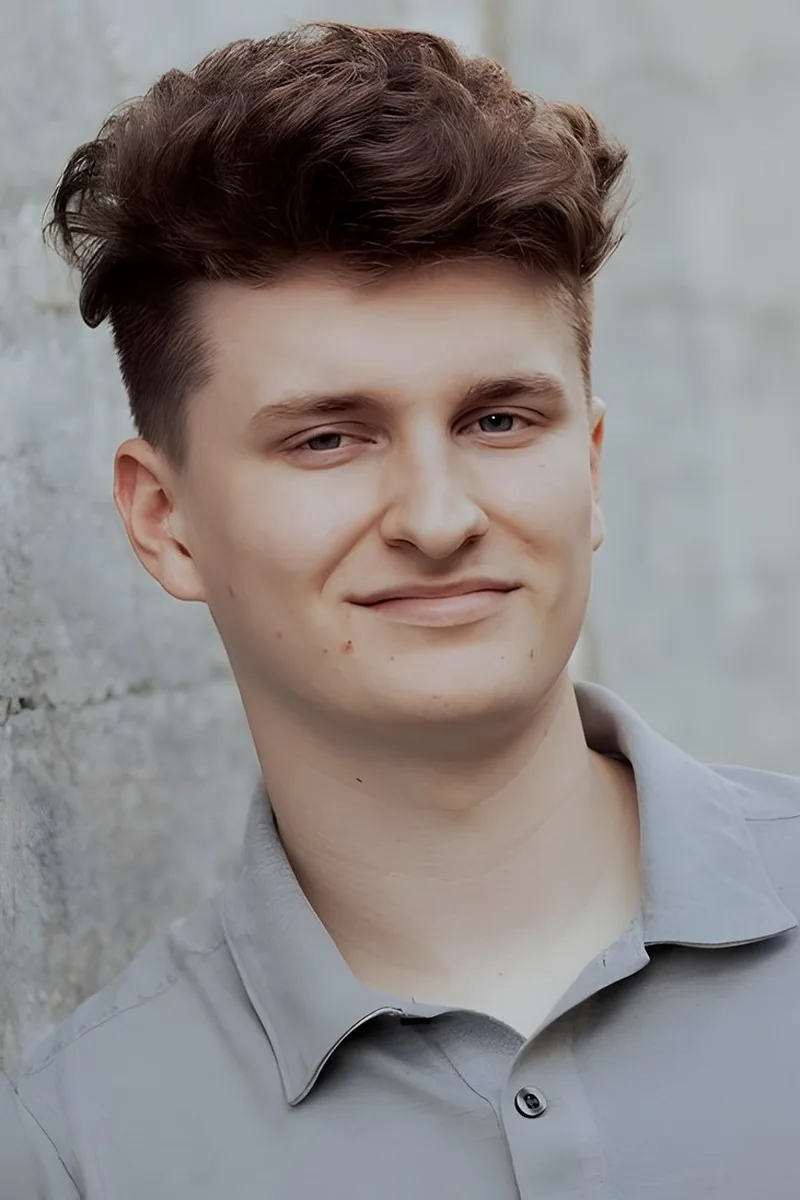
Studying neuroscience at Brown means Owen lives in the biology weeds daily — tracing how molecular signals at a synapse scale up into the genetics, cell biology, and physiology that introductory courses test on. That perspective makes him especially good at unpacking processes like cellular communication or gene expression as cause-and-effect chains rather than disconnected vocabulary lists. His 33 ACT reflects the same systematic thinking he brings to breaking down dense biological material.
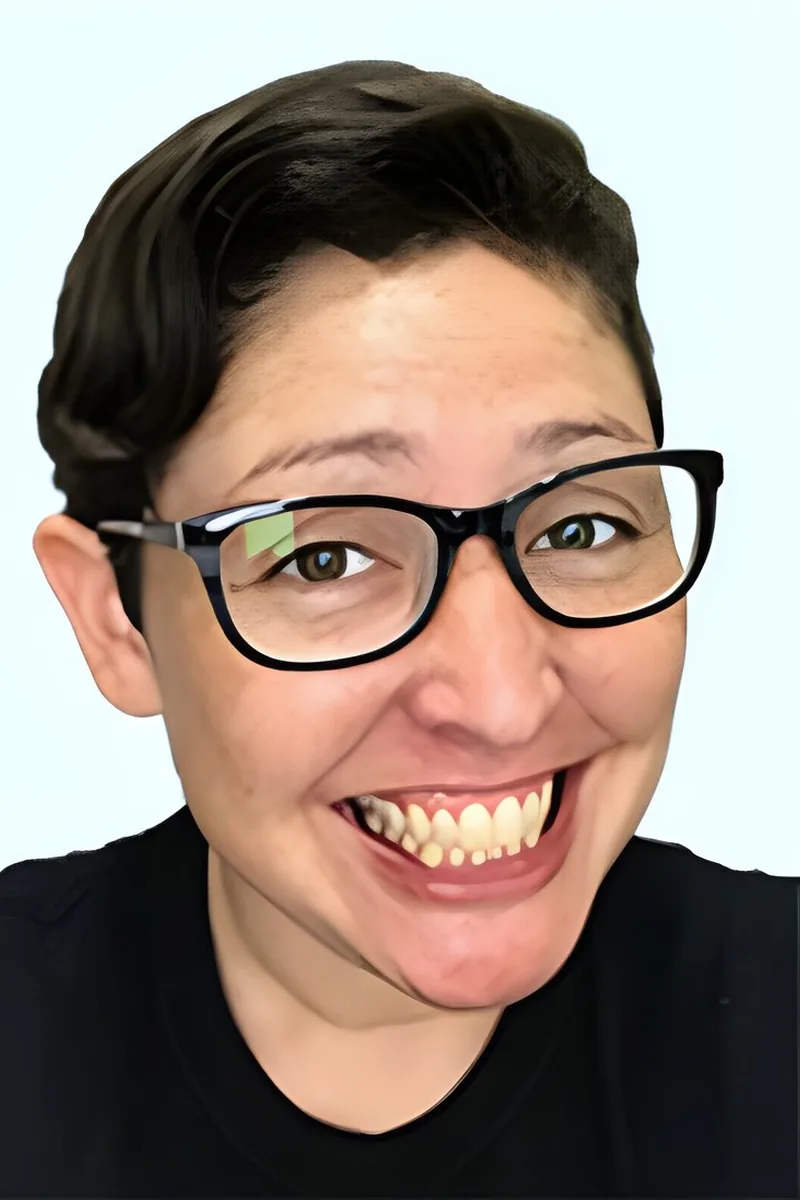
Studying membrane fusion proteins for her PhD at UC Davis — specifically how sperm and egg cells merge during fertilization — Beth brings a researcher's granular understanding of biological processes to her teaching, particularly when it comes to cell biology, protein structure, and molecular interactions. Her Stanford Human Biology degree and Master's in Education mean she's both deeply trained in the content and unusually deliberate about how she explains it, breaking down topics like signal transduction or membrane dynamics into steps that build on each other. Rated 5.0 by students.
Rohan earned his biology degree from the University of Oregon with a chemistry minor, giving him a dual-lens perspective on topics like cellular respiration, enzyme kinetics, and molecular genetics. He breaks down complex biological systems by connecting them to the underlying chemistry — making processes like signal transduction and metabolic pathways click rather than feel like rote memorization. Rated 5.0 by students.
Years of hands-on research — from environmental monitoring in Puget Sound to wildlife refuge work in Nevada — gave Kevin a way of teaching biology that starts with observable phenomena and works backward to the underlying mechanisms. Whether the topic is cellular transport, DNA replication, or natural selection, he connects it to something a student can picture happening in the real world.
From cell structure and genetics to ecology and evolution, biology rewards students who can see how systems connect rather than treating each chapter as a separate vocabulary list. Timothy's science education training and broad biology teaching experience let him unpack processes like cellular respiration or DNA replication in layered, logical steps. He also coaches students on reading scientific diagrams and data tables — skills that transfer across every biology course.
A dual background in English and biology gives Allyson something most science tutors lack: the ability to explain dense biological concepts in clear, memorable language. Her fieldwork with the American Kestrel Partnership citizen science initiative means she can ground topics like population dynamics, animal behavior, and ecological relationships in actual research rather than textbook diagrams alone.
Yuni's Human Biology, Health and Society degree means she studied living systems through the lens of how they actually affect people — nutrition, disease, public health — which gives her a practical angle on topics like metabolism, homeostasis, and human physiology that pure science majors sometimes lack. She also teaches across IB Biology SL and HL, so she's comfortable scaling explanations from foundational cell biology up through the more rigorous ecological and evolutionary concepts those curricula demand.
Daniel's Socratic teaching style — asking layered questions until the student arrives at the answer themselves — turns out to be surprisingly effective for biology, where understanding *why* a process like osmosis or natural selection works matters more than memorizing diagrams. He teaches biology across high school and college levels, and his philosophy training gives him an unusual edge at breaking down the logic of experimental design and hypothesis testing. His 33 ACT composite reflects the kind of cross-disciplinary sharpness that keeps science concepts from feeling siloed.
Real lab experience changes how someone teaches biology. Daniel has conducted neuroscience research at the Oregon National Primate Research Center and molecular biology research at the Oregon Stem Cell Center, so when he explains topics like cell division, DNA replication, or ecology, he draws on experiments he's actually run — not just diagrams from a textbook.
I am applying to medical schools to attend Fall 2016 and I like to play basketball, go backpacking and volunteer with youth in my free time.
A PhD in Botany means Alison has spent years thinking about biology at every scale, from cellular respiration and photosynthesis to population ecology and evolutionary adaptation. She teaches the subject by anchoring abstract processes — like enzyme kinetics or gene expression — in concrete examples students can actually picture.
Currently finishing medical school at Georgetown, June has spent the last eight years going deeper into biology — from cellular respiration and genetics in undergrad to organ-system physiology and pathology in her clinical training. That depth means she can explain DNA replication or the immune response with the kind of layered understanding that makes introductory concepts click. She adapts her explanations to each student's level, whether they're tackling AP Bio or a college-level course.
Kelsey earned her BA in Biology from Willamette University, where she also conducted field research on poison dart frog behavior in Panama. That hands-on experience with ecology, animal behavior, and experimental design gives her a perspective on biology that goes well beyond textbook diagrams — she unpacks concepts like cellular respiration, genetics, and evolution through the lens of how scientists actually study living systems.
Few biology tutors can say they've worked on HIV vaccine development — Karl can, and that research experience shapes how he teaches everything from cell signaling pathways to genetics and evolution. He unpacks biological systems the way a researcher would, asking students to trace cause and effect through mechanisms rather than just labeling diagrams.
I am currently working on earning my Medical Assistant certification and studying for the MCAT in anticipation of applying to medical school.
I am a PhD student at Johns Hopkins Bloomberg School of Public Health. In 2025, I completed my Masters of Science student at Georgetown University studying Infectious Disease with a 4.0 GPA. In 2024, I graduated from Vanderbilt University with my bachelors degree as a triple major in Molecular and Cellular Biology, Political Science, and Communications of Science and Technology. While at Vanderbilt, I was a Teaching Assistant in both the Department of Biology where I taught Introduction to Biology, and the Department of Political Science where I worked with students studying Middle East Politics. In these roles, I directly engaged with students to enhance their comprehension of each subject, refine their written communication abilities, and bolster their note-taking and test-taking skills. I was also captain of Vanderbilt's Debate Team for two years and am extremely passionate about effective communication and respectful discourse. In this role, I taught college and elementary school students the art of argumentation and debate while emphasizing the significance of public speaking in contemporary society. While I am qualified to tutor a broad range of subjects and students, I am most passionate about tutoring mathematics and science. Through my experience as a high school tutor and college teaching assistant, I've directly observed the challenges students face in grasping these subjects, particularly at early education levels or among those with learning differences. Without sufficient practice and assistance, students can fall behind and lose their love of learning. I firmly believe that our natural curiosity and love of learning should be harnessed in the classroom, not dampened down. In pursuit of this, I encourage creative thinking and problem-solving and use various pedagogy techniques, such as active recall, to engage students in my classroom and tutoring sessions. I try to instill in all of my students that they are capable of great things and that learning is beautiful, because I truly believe that it is. I have been a tutor for over seven years, and have just reached my one-year anniversary with Varsity Tutors. I am excited to work with you and your child to unlock their fullest potential both inside and outside the classroom!
I'm an undergraduate student at the University of Oregon! I have been an exceptional learner all my life. Yet, it's my experience in working with children and in tutoring others that makes me an effective teacher. As a Child Care Assistant at Play Boutique and a Youth Soccer Coach at the Lake Oswego Soccer Club, I learned valuable skills in how to effectively teach young learners. I've had experience with tutoring, too, as a volunteer with the National Honors Society. This made me realize how rewarding it can be to help others to understand a topic with which they may be struggling. Overall, my exceptional academic abilities, combined with my experience instructing young learners, make me an outstanding tutor. My general tutoring philosophy is to allow the student to be as hands-on as possible in the learning process. Psychology shows that learning is much more efficient if you exercise your own neural pathways through doing (rather than watching). I excel in tutoring Elementary/Middle-School level Science and Math, Biology, Psychology, Chemistry, Math, first-year Spanish and Music Theory, and Piano. I'd love to work with you!
I am eager to work with you in achieving your academic goals!
Paula's psychology background gives her a useful entry point into biology — she understands behavioral and cognitive systems well enough to trace them back to their biological roots, from neurotransmitter activity to hormonal feedback loops. That perspective makes her especially effective at teaching the life science topics where behavior meets physiology, like the nervous system, endocrine signaling, and basic genetics. Rated 4.8 by students.
Brittany's pre-health track at the University of Pennsylvania meant her psychology degree came loaded with rigorous biology coursework — the kind where understanding how cellular processes connect to physiological systems isn't optional. She spent her undergraduate years tutoring peers and volunteering at a West Philly middle school, which gave her practice translating topics like heredity, ecology, and organ-system function for students at very different levels of readiness.
Jessica's cancer biology coursework at the University of Chicago means she's studying topics like tumor suppression, cell cycle regulation, and gene expression in their most consequential context — which sharpens how she teaches the fundamentals those concepts rest on. She's especially strong at connecting ecology and microbiology back to core cellular processes, making the kind of links that turn a sprawling subject into something coherent for students preparing for exams.
A human biology degree from Cornell means Jonathan didn't just study biology — he lived in it, from cellular respiration and DNA replication to organ system physiology and evolutionary theory. He teaches by connecting molecular-level details to big-picture biological questions, which is exactly the skill that separates students who understand biology from those who merely memorize it. Currently pursuing graduate work in human development, he keeps that knowledge sharp and current.
Ten years of teaching biochemistry to 10th graders and chemistry to 12th graders at a Philadelphia magnet school means Kathleen has watched thousands of students wrestle with the exact points where biology gets confusing — the shift from memorizing organelle names to actually understanding how photosynthesis and cellular respiration connect as mirror-image processes. Her chemistry background is the secret weapon: she teaches biological reactions by unpacking the molecular logic underneath, so concepts like enzyme function or ATP production feel inevitable rather than arbitrary. Rated 5.0 by students.
Two advanced degrees in cellular and molecular biology mean Akarsh doesn't just recite textbook definitions — he explains how DNA replication, cell signaling, and ecological relationships actually work at a mechanistic level. Students come away understanding the "why" behind biological processes, which makes exam questions far easier to reason through.
An English major might seem like an unusual fit for biology, but Ayako's well-rounded academic profile — including SAT Subject Test prep in Biology E/M — means she's comfortable breaking down topics like ecology, evolution, and cellular processes for high school students who need concepts explained clearly rather than clinically. Her 5.0 rating speaks to a teaching style that translates dense scientific vocabulary into language that actually sticks.
Reading dense biology material is a lot like reading a classical text — you have to slow down, parse the structure, and figure out how each part connects to the whole. Austin's background in classics and philosophy trained him in exactly that kind of close analytical reading, which he now applies to everything from cell biology to genetics and ecology.
JF's math and computer science training at Stanford might seem unrelated to biology, but it actually sharpens how he teaches the subject — genetics problems become probability exercises, population ecology clicks through mathematical modeling, and enzyme kinetics suddenly makes sense when you treat it like a rate equation. That quantitative lens gives students a second way into topics that feel overwhelming when approached through pure memorization alone. Rated 5.0 by students.
Between his molecular biochemistry major and hands-on lab work with gene-editing technology, Matthew lives biology at a level that makes high school and introductory concepts second nature to explain. He's particularly effective at walking through cellular respiration and photosynthesis as interconnected energy systems rather than two separate chapters to memorize.
Phillip's biomedical engineering studies at Brown mean he encounters biology through the lens of design — how tissues are engineered, how physiological systems can be modeled, how feedback loops in the body mirror control systems in machines. That perspective makes him especially effective at teaching topics like homeostasis, organ system integration, and cell membrane transport, where engineering intuition clarifies what pure memorization can't. Rated 5.0 by students.
Cellular and molecular biology was Pranav's original academic focus before he moved into Biomedical Engineering at Johns Hopkins, so he brings genuine depth to topics like gene expression, cell signaling, and membrane transport. He approaches biology as a set of interconnected systems rather than isolated facts, which makes dense material like metabolic pathways or the immune response easier to retain. That dual perspective — biology plus engineering — gives him a unique way of explaining how biological mechanisms actually work.
Testimonials
Because the right Biology tutor makes all the difference.
Average Session Rating – Based on 3.4M Learner Ratings
Practice Biology
Free practice tests, flashcards, and AI tutoring for Biology
Nearby Biology Tutors
Other Portland Tutors
Related Science Tutors in Portland
Frequently Asked Questions
Portland students often struggle with connecting abstract cellular and molecular concepts to real-world applications—like understanding how photosynthesis works at the molecular level, or visualizing how DNA replication actually functions. Beyond memorization, many students find it challenging to apply the scientific method to lab work, interpret experimental data, and understand how biological systems interact. Personalized tutoring helps students move beyond memorizing facts to truly grasping the "why" behind biological processes.
Tutors help students design experiments, understand the scientific method, and interpret results—skills that go beyond just getting the right answer. They can work through lab reports, explain how to control variables, and connect experimental observations to underlying biological principles. This support is especially valuable for students preparing for AP Biology or college-level courses where experimental design and scientific reasoning are critical.
Strategic memorization matters, but understanding is what truly helps you succeed in biology. A tutor can help you build mental models—like visualizing how the Krebs cycle works or how immune cells recognize pathogens—so terms stick because they're connected to concepts, not isolated facts. When you understand the underlying logic, you'll retain information longer and be able to apply it to new situations on exams and in upper-level courses.
Many biology concepts—like molecular structures, cellular processes, or ecosystem interactions—are hard to picture from a textbook alone. Tutors use diagrams, analogies, and step-by-step explanations to help you build a clear mental image of how cells divide, how proteins fold, or how photosynthesis converts light energy. Once you can visualize these processes, the content becomes much more manageable and memorable.
In your first session, a tutor will assess your current understanding of biology, identify specific topics where you're struggling, and learn about your learning style and goals. Whether you're working on cell biology, genetics, ecology, or preparing for the AP exam, the tutor will create a personalized plan to address your needs. This foundation ensures that every session after that is focused and productive.
Look for tutors with strong backgrounds in biology—ideally with college-level coursework, teaching experience, or advanced degrees in biology or related sciences. They should be able to explain complex concepts clearly, help you think like a scientist, and adapt their teaching to your learning style. Varsity Tutors connects you with expert tutors who have the knowledge and teaching skills to help you succeed.
Absolutely. Tutors can help you master the content, practice free-response questions, analyze your mistakes, and develop test-taking strategies specific to biology exams. They'll help you understand not just the facts, but the connections between topics—something AP Biology exams specifically test. With focused preparation, you'll build both content knowledge and the scientific reasoning skills that standardized tests require.
Varsity Tutors connects you with expert biology tutors who work with you to find a schedule and format that fits your needs. Pricing varies based on the tutor's experience and your specific goals, and we offer flexible options to fit different budgets. Once matched with a tutor, you'll have personalized 1-on-1 instruction tailored to your learning style and biology challenges.
Let’s find your perfect tutor
Answer a few quick questions. We’ll recommend the right plan and match you with a top 5% tutor.