Award-Winning GMAT Integrated Reasoning
Tutors
GMAT Integrated Reasoning
Tutors
Private 1-on-1 tutoring, weekly live classes for academic support, test prep & enrichment, practice tests and diagnostics, and more to elevate grades and test scores.
Based on 3.4M Learner Ratings
UniversitiesSchools & Universities
DeliveredHours Delivered
ProficiencyGrowth in Proficiency
Who needs tutoring?
No obligation. Takes ~1 minute.
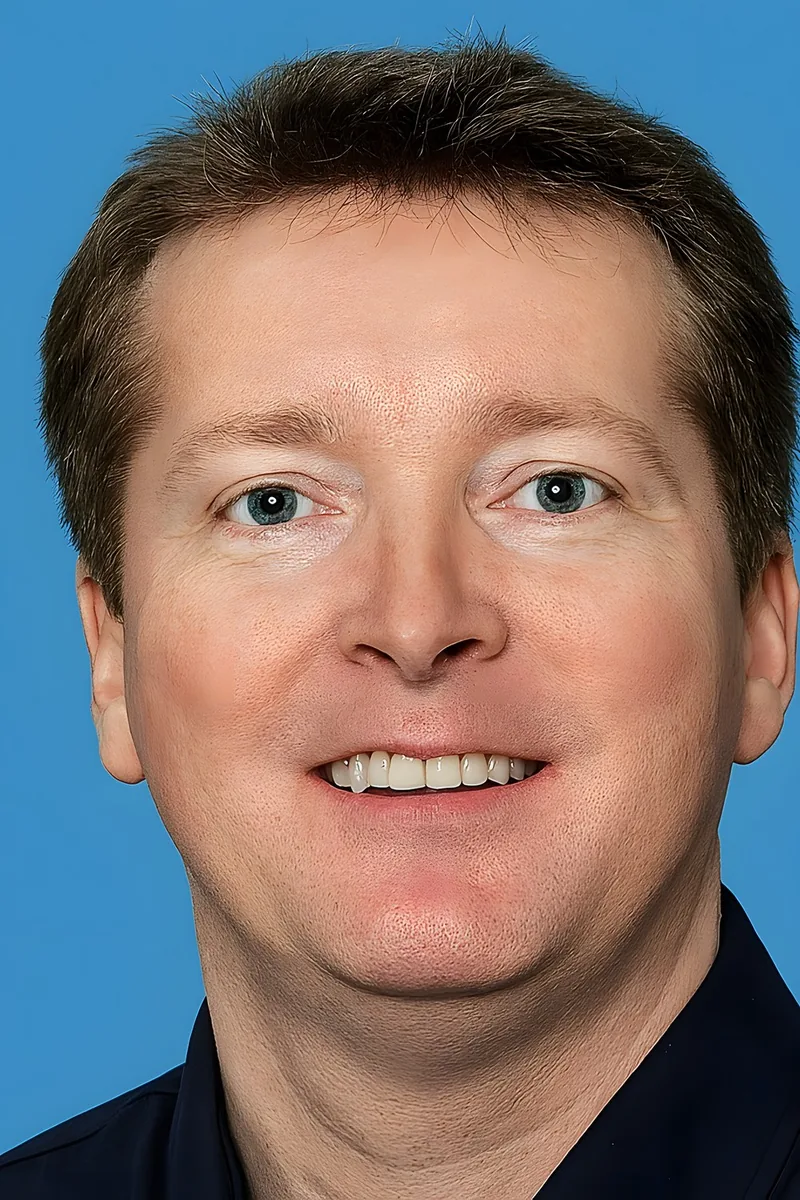
I have tutored students for the GMAT, GRE, SAT, ACT and LSAT for more than 15 years. I love it! As I tailor my instructions toward the unique needs of each student, my goal is to improve not only the student's performance but also the student's confidence as test day approaches.
I specialize in high-level GMAT diagnostic and execution coaching for stalled high-achievers. I don't just teach content; I identify the execution, timing, and decision-making patterns preventing score improvement and build customized strategies to break through plateaus under time pressure. After years of coaching GMAT students across a wide range of score levels, I've found that many advanced students underperform not because they lack ability, but because they approach questions inefficientlytreating each problem like a new puzzle instead of recognizing recurring execution patterns quickly and systematically. I earned my MBA from Georgetown University and worked as a former Sony engineer, bringing a data-driven and strategic mindset to every session. With 100+ five-star reviews, I've guided GMAT students to break barriersnot just raising scores, but shifting their confidence and thinking. As a result, many of my students have earned admission to elite MBA programs, including UCL
I enjoy helping students by explaining concepts in ways that make sense to them, by eliciting their feedback and tailoring my approach to their individual needs, and by conveying my enthusiasm for the learning process. It's great to see the light come on and to see their progress. I have an undergraduate degree in Politics from Princeton, a post-baccalaureate certificate in Quantitative Studies for Finance from Columbia, and an MBA from London Business School. I served as an officer in the Marine Corps and have worked in a number of academic and private-sector positions. I founded and am currently running an analytics-focused consulting practice.
A PhD candidate at Yale, Carl brings a medievalist's core skill to GMAT Integrated Reasoning: synthesizing information from multiple conflicting sources and drawing defensible conclusions under constraints. His teaching across six universities sharpened his ability to break down complex, multi-format material for different learners, and he applies that same clarity to IR's table analysis and two-part analysis questions. Rated 4.9 by students.
Education is not one-size-fits-all. Every student deserves a stimulating environment that encourages intellectual risk-taking. As a facilitator, I guide students step-by-step to overcome obstacles, master difficult material, and unlock their full potential. My academic background reflects deep analytical versatility: I graduated from Tulane University with a triple major in Mechanical Engineering, Mathematics, and Philosophy. This rigorous foundation allows me to expertly tutor advanced STEM topics and high-stakes exams. My passion for teaching began earlytutoring peers in high school and teaching a class in college. Whether you are aiming to ace the quantitative and verbal sections for the GRE or GMAT, or tackling complex coursework in math or engineering, I provide the strategic framework you need. Let's work together to crush your target scores!
I enjoy empowering students by making learning fun and believe that everyone has an "inner genius" that just takes the right technique to unlock. I bring a patient and friendly approach to teaching, specializing in the sciences, technology and math, and believe in teaching students to "learn for themselves".
I am an interdisciplinary educator with an Ed.M. from the Harvard Graduate School of Education and a B.A. from Dartmouth College. My background is primarily in integrated arts learning and museum education and I specialize in visual arts, history and art history, and object-based learning. In all subjects, I take a creative, inquiry-based and learner-centered approach, designing opportunities for each unique individual to meet their learning goals.
I'm not tutoring or buried in my textbooks, you will either find me rock climbing at the Triangle Rock Club, playing Ultimate Frisbee, working on my car, or enjoying the great outdoors (beaches, mountains, forests--you name it, I love it). On rainy weekends I enjoy tinkering with computers and old electronics, playing Pokemon, or picking at my guitar.
I am a recent graduate from a masters program in biostatistics at Columbia University. I received my Bachelor of Arts in biological sciences, with a focus in neurobiology at Northwestern University. In August, I will be starting a doctoral program in biostatistics at NYU. I was a teaching assistant at Columbia University in my department and also have tutored graduate students and undergraduates privately as well. My primary areas of tutoring are math and statistics coursework in addition to math sections on standardized tests such as the GRE and GMAT. I am very passionate about helping students feel more confident and excited about math. In my spare time, I enjoy running, playing piano, and spending time with friends and family.
I am a graduate of Wesleyan University, where I received my Bachelor of Arts in Sociology with High Honors. With eight years of experience working in education, I've tutored students in math, science, history, and English, as well as helped students prepare for standardized tests. I've guided adults towards passing the US Citizenship Exam and taught English in India, where I lived for six months. Whenever I work with a student I personalize the lessons to fit their particular learning style, since I know every student is unique and having the right fit can make all the difference in making learning fun and effective. My strengths are tutoring the social sciences and humanities, as well as making math and standardized tests approachable to students that normally don't like those subjects. In my spare time I like traveling, spending time in the outdoors (climbing & backpacking), meditation, and playing soccer. Next fall I will be beginning my PhD in Education at Harvard University.
I am a rising sophomore at Harvard College and am about to declare as a Mechanical Engineering concentrator, working towards a Bachelor of Science degree. I've always enjoyed sharing my knowledge with my peers and those around me and have done so in both formal and informal settings. I've been a tutor for both Math and Spanish programs in high school and enjoyed the strides I made with students. I am willing to tutor any subject I have a background in, but am strong in mathematics, the sciences, Spanish, history, writing, and ACT prep. I enjoy teaching mathematics most due to the joy I can see in children once they master a topic and can answer even pointed questions meant to stump them, and maybe even put their knowledge to real world use. As a tutor, I like to give a strong foundation to orient my student, and then gradually grant them more freedom and independence until they can feel themselves grasp the concept, pointing out pitfalls or common errors along the way; teachers who used these methods on me always left the most lasting impressions. Outside of my studies, I really enjoy listening to music, both old favorites and new interests, reading classics, and gaming/playing basketball with my friends.
I'm Solange - a recent graduate from Harvard where I studied Sociology & Women's Studies. I've been tutoring for eight years now, and have worked with a wide range of ages and in a wide range of subjects. Some of my specialties are college prep/test taking II worked in the admissions office on campus); social sciences; and literature/writing.
I am a graduate of Washington University in St Louis, where I received my Bachelor of Arts in History with minors in Humanities and Anthropology. Since graduation, I have worked as a tutor, teacher, and director of tutors at a charter public middle school in Boston. During this time I also received my Masters in Mild to Moderate Disabilities from Simmons College. I have worked extensively with students with a range of abilities, including students with specific learning disabilities, emotional impairments, dyslexia, and ADHD. My teaching experience has given me a deep understanding of the knowledge and habits essential to academic success and has given me the opportunity to hone a variety of strategies that ensure students at each level can achieve their academic goals. While I tutor a broad range of subjects, my favorite ones are Reading, Elementary/Middle School Math, History, and Test Prep. In my experience, tutoring is the most rewarding when a student has that "aha!" moment and achieves a new level of understanding and confidence in his/her abilities. I am a firm believer in the transformative power of education, and I see my role to be that of a facilitator and coach who is there to help the student reach his/her goals through individualized support and rigorous practice. In my free time, I enjoy reading, running, practicing my Spanish, and discovering new music. I am also an avid traveler and just got back from a 3 month trip to South America. I look forward to the opportunity to work with you!
I am proud to be a part of Varsity Tutors! I am originally from San Antonio, TX; I completed my undergraduate education at Rice University in Houston where I received a bachelor's degree in Biochemistry and Cell Biology. Currently, I am in my second year of medical school at Baylor College of Medicine.
I am a junior Mechanical Engineering major at Yale, and I hope to become a Naval Aviator after college. I am also a varsity sailor, and enjoy playing music with friends when I can get some free time. I have been tutoring my fellow students throughout my entire academic career, and I would best describe my tutoring style as one that adapts to each students' needs. For example, I have always tried to frame questions in a different way so that the student can better understand the question. Some students need visual representations of numbers and systems to understand them, and others benefit more by understanding the concepts behind each formula. I prefer to tutor in math and physics, and especially with real world application problems. I hope to help students improve their standardized test scores and their understanding of the math and sciences so that they can achieve their academic goals!
I am an aspiring applied mathematician, with particular interest in image processing and climate science. I graduated in May 2017 from Washington University in St. Louis with a bachelor's in physics and mathematics, and am beginning a PhD program in September 2017 at the University of Chicago in Computational and Applied Mathematics. I've tutored introductory physics students for three years and enjoyed it thoroughly, as a chance to help other students while revisiting fundamental concepts to enhance my own knowledge. I'm eager to continue reaching out and helping students of math and physics to succeed and, furthermore, to appreciate the beauty and power of these subjects.
I am currently a senior at Harvard College where I study chemistry, and I'll be attending Columbia Medical School next year. I have years of experience tutoring college students in math (mostly calculus) and chemistry including both general and organic chemistry. In addition, I am very familiar with all sections of the SAT and ACT having prepared several high school students for these tests. I believe that every student is capable of boosting his or her baseline score on these tests, so long as he or she works hard to get to know the format of the tests and the most popular types of questions. I tutor because I love seeing students develop a genuine passion for the subjects they once disliked (such as math and science), once they understand the power of these subjects and their applications to the real world.
I am excited to be home and help fellow straphangers on their educational paths! My largest wealth of tutoring experience is in foreign languages--particularly French--but I also feel very comfortable editing essays of any kind and working through standardized test concepts. My availability is extremely flexible, and anywhere in New York City works for me. I look forward to working with you.
I am comfortable tutoring math subjects up to multivariable calculus and differential equations, as well as college physics.
I am currently attending Johns Hopkins University, pursuing a dual degree in Computer Science and Applied Math and Statistics. I love helping students and I love the feeling I get knowing that I was able to use my knowledge to make someone else happier. My favorite subject to teach is math because there are so many ways to learn it and if one way does not help I can use another. I used to teach taekwondo and interacted with all kinds of students, and I'm excited to help out more!
I am a graduate of MIT. I received my Bachelor of Science in Mathematics with minors in Management Science and Ancient and Medieval Studies. Since graduation, I have started my PhD at Georgia Tech in Operations Research. Throughout my career I have TA'd several math and computer science courses at the college level. I have also taught at summer programs for gifted middle school and high school students. I am passionate about tutoring kids in math and science because I think that a strong foundation in STEM at an early age can set the tone for their future. In my spare time I like to engage in athletics, and was a Division 1 rower in college.
I am a graduate of the University of Chicago where I received my Bachelor of Arts in Philosophy. Currently, I am in the master's program at the University of New Mexico where I am continuing my education in philosophy. Ultimately, I hope to go on to earn a PhD in Philosophy so that I can continue engaging in my passions for learning and teaching. While in school, I have spent countless hours coaching high school speech and debate both in person and working online with students across the country. My focus in coaching has been to emphasize philosophy and critical thought to prepare students to think through novel arguments on their own. I am passionate about teaching and tutoring because I love seeing students learn to be intellectually independent and think through problems on their own terms by developing their critical thinking skills. I have devoted my life to education because I am passionate about it, and I try to share some of my passion for learning with the students I work with. I tutor all sorts of Standardized Tests, and I particularly enjoy working on logic-based problems like analogies and math sections. When I am not tutoring or reading for school, I enjoy strategy games (both board games and video games), listening to music, hiking, playing basketball, and just relaxing with friends.
I am a graduate of the University of Chicago where I received my undergraduate degree in political science. Right after graduation, I worked as an academic and test prep tutor as well as admissions consultant in Hong Kong. For the past two years, I worked with a number of students to help prepare them for college in the United States.
I am a graduate of McGill University (BA First Class Honors) and the University of Edinburgh (MSc First Class Honors with Distinction) with over eight years of tutoring experience. I am currently a curriculum developer for a company which creates relatable and culturally-literate courses for middle and high-schools, and am particularly adept at communicating and explaining concepts in a quirky, engaging, and intelligent manner. I was named Scotland International Young Thinker of the Year 2014 for exactly that sort of work. Much of my tutoring background is in test-prep and essay coaching, which I enjoy because it allows the tutor and student to think strategically together, and work as a team to achieve concrete results. I have worked with students ranging in age from 6-32, and believe that, in an educational context, a few jokes never hurt anybody. I love reading and learning, and my educational approach is centered around making the material just as engaging to students as it is to me. I think J.K. Rowlings, the writer of Harry Potter, is just as brilliant as Stephen Hawking, and in my free time, I manage my (terrible) fantasy baseball team, write songs for my comedy band, and crack jokes about terrible science-fiction movies with my friends.
I'm eager to help you in your education. I'm a recent graduate of Harvard College looking to apply to law school. My senior thesis was written on John Dewey's ideas of education, which I deeply believe has incredible power to transform individuals and society.
I am exploring my creativity by pursuing a double major in Asian Languages and Cultures with a focus in Korean, studying abroad in South Korea as a Benjamin A. Gilman Scholar, leading workshops that teach 3D printing and CAD for undergraduate students as the president of 3D4E, advocating for the first-generation and low-income student community as the Outreach Chair of the Quest+ Scholars Network, and getting involved with the Society of Women Engineers' outreach committee. I currently hold a work-study position as an administrative clerical aide in the Institute of Sustainability and Energy at Northwestern and was an undergraduate researcher in the John Rogers Lab. As I look forward with aspirations of applying to graduate school, areas of research in biomedical engineering and biotechnology that I am particularly interested in include biomaterials, pharmaceuticals, and drug delivery systems. Outside of the classroom, I enjoy learning on my own and sharing my experience and knowledge with my peers and other students. I hope to make use of my experiences with academics and learning in high school and so far in my undergraduate career in order to effectively tutor students who may be experiencing the same struggles in learning that I also experienced.
I am a doctoral candidate in Clinical Psychology at Duke University. My job requires excellent mathematics, analytic, and writing skills, which are also my favorite subjects to teach. I have experience teaching kids in elementary, middle, and high school, as well as college-aged students. My particular expertise is in managing attention and assisting with executive functioning (e.g., time management and planning).
I am an undergraduate student at the University of Pennsylvania. I have been tutoring for over 6 years now, and I have found it to be an extremely rewarding and enjoyable experience. I specialize in mathematics, particularly at the high school level, and I also have experience tutoring other subjects. I also have done SAT prep for the mathematics section of the New SAT and am very familiar with the recent changes to the exam. My belief is that everyone is capable of learning with enough time, explanation, and practice, and I hope to pass this on to all the students I work with. For this reason, I believe in teaching students how to think and problem solve, rather than just having them memorize patterns or facts.
I'm a graduate of Princeton University (2009), with a degree in Comparative Literature. I'll be receiving my masters degree in English from Grand Valley State University this fall and I'm looking forward to working with students like you! I've been teaching and tutoring students since 2008 and I specialize in English, Reading, Writing, Essays, and College Entrance Test Prep.
I am a graduate of the University of Chicago, with a bachelor's degree in psychology and linguistics. Currently, I am pursuing a master's degree in speech-language pathology at Teachers College, Columbia University. In the past, I have worked as a teacher's aide in a public school classroom, a mentor to middle school girls, an instructor and tutor at the literacy education organization 826, and a summer camp counselor. I tutor a diverse range of subjects, and I find that I especially enjoy tutoring language arts, reading, and writing at all levels, from elementary school all the way up to college/grad school test prep. As a tutor, I am committed to helping students reach their full potential as learners. Throughout my years as an educator, I have seen firsthand the remarkable academic growth that can occur when tutors provide students with the individualized support that they need. In my spare time, I enjoy reading, journaling, and learning about other languages and cultures.
I am a Yale graduate with over 8 years experience tutoring students from a variety of backgrounds. I recently graduated from the Yale School of Public Health with a MPH concentrating in Epidemiology and Global Health. I also received my B.S. from Yale with a double major in Molecular, Cellular, and Developmental Biology and French. I have experience both leading group classes and working with students one on one. I will respond to a student's strengths, weaknesses, and learning style in order to help them succeed and make the most of our time together. I earned a perfect score of 36 on the ACT, 2280 on the SAT, and qualified as a National Merit Scholar on the PSAT. I look forward to working with you!
I'm glad you've come to my page. I'm here as an experienced tutor and mentor who likes to listen to your specific needs and create an environment and plan ideal for your learning level and experience. Whether it's immediate assistance with an exam or long-term goals and improvement, I'm here to help!
I'm a pre-health student at the University of Pennsylvania, and have an extensive background in the sciences. I can also rock the SATs and MCAT, so I've got that going for me. I love learning with students and trying to make the tedious work of learning as fun as possible. I think and teach in examples and make abstract concepts easily understandable. I also love sports, adventures, travelling!
I am passionate about education, learning, teaching, and specifically literatures and languages. I have experience as an ESL teacher for young children and teens, as well as experience working as a Writing Consultant at my undergraduate institution. I also spent all four years of my undergraduate career volunteering as an SAT tutor for local high schoolers. Beyond this, I have experience both as a private and public Spanish tutor. I love to help students reach their educational and personal goals in any way that I can.
I am specializing in the ACT. My tutoring approach, while covering test-taking techniques, will also emphasize the wisdom and skills needed to understand the root of the test questions. I hope that I can come alongside you to help and encourage you in your life pursuits.
I am a recent graduate of Williams College, where I studied political science with sidelines in history and English. Next fall, I am headed to Ithaca to study at Cornell Law School. I have experience tutoring in all subjects for high school standardized tests and in writing and history at higher levels, and am excited to pass on the benefits of my study as a tutor for the LSAT. I look forward to working with you!
I am flexible and adaptive to different learning styles. I welcome students and/or parents to set their own goals/expectations, and I tailor the curriculum to suit those goals.
I am a very motivated individual that will ensure all my students succeed in their studies. I have a great teaching style that is unique to each student that I work with, and I work hard to make sure my students not only master the material they need to learn, but also understand how to study and prepare on their own.
I'm Ellie, and I am a junior at Yale University studying Biomedical Engineering (pre-med)! I have always considered myself a life-long student, and I strive to make learning exciting and empowering for everyone. On campus, I work as a graphic designer for the Center for Disease Control and Prevention (CDC), volunteer EMT, am the Arts Editor for the Yale Scientific Magazine, am the Layout Editor for the Yale Globalist Magazine, conduct autism research in the School of Medicine, and tutor a Differential Equations course to small groups of students weekly. Aside from my passion for science and math, I enjoy writing essays in my literature classes, designing in Photoshop, Illustrator, InDesign, and more and also have much experience writing application essays for colleges and jobs!
I'm a recent Stanford graduate (Electrical Engineering and Computer Science), and have been working at a major Management Consulting firm for a few years now. I personally scored a 2360 (out of 2400) on the SAT and 35 on the ACT and was successful in gaining admission to several top universities. I'm looking forward to helping you improve your scores towards improving your chances at getting in to your dream school.
Testimonials
Because the right GMAT Integrated Reasoning tutor makes all the difference.
Average Session Rating – Based on 3.4M Learner Ratings
Top 20 Graduate Test Prep Subjects


Top 20 Subjects
Frequently Asked Questions
The GMAT Integrated Reasoning section includes Graphics Interpretation, Two-Part Analysis, Table Analysis, and Multi-Source Reasoning. Most students struggle most with Multi-Source Reasoning because it requires synthesizing information across multiple documents or tabs, and Graphics Interpretation because it demands precise data extraction under time pressure. Two-Part Analysis often trips up test-takers who aren't comfortable with the interdependent logic required between the two parts. A tutor experienced in IR can help you identify which question type is your personal weak spot and develop targeted strategies for each.
With only 30 minutes for 12 questions, pacing is critical—you have roughly 2.5 minutes per question, but Multi-Source Reasoning questions often need 3-4 minutes while Graphics Interpretation might take 1.5-2 minutes. The key is not spending time perfecting every question; instead, identify quick wins first (usually Graphics Interpretation), then tackle Two-Part Analysis and Table Analysis, and save the most time-intensive Multi-Source Reasoning for last. A tutor can help you practice this sequencing strategy and build the instinct to skip and return to questions strategically rather than getting stuck.
GMAT IR questions deliberately hide relevant data in dense tables, graphs, and text to test your ability to filter signal from noise under pressure. Students often misread values, confuse axes on charts, or miss conditional statements that change how data should be interpreted. Improvement comes from practicing active annotation—marking key numbers and relationships as you read—and learning to pause briefly to confirm you're reading the correct data point before answering. Tutors can show you common data-extraction traps specific to each question type and help you develop a consistent system for organizing information quickly.
Two-Part Analysis questions test whether you understand how two related answers work together—often one part constrains or depends on the other. The trap is treating them as independent questions; instead, you need to recognize the logical relationship first (e.g., 'if Part A is true, what must Part B be?'). Start by identifying what each part is asking, then map out how the answer choices in one part affect the validity of choices in the other. Many students benefit from sketching out the logical dependencies before diving into answer choices, and a tutor can teach you to spot common relationship patterns (inverse relationships, sequential dependencies, etc.) that appear repeatedly on the GMAT.
Untimed practice is less useful for IR than timed practice because pacing is part of the skill. Instead, practice full 30-minute sections repeatedly to build speed and accuracy together, then review every single question—not just ones you missed—to understand the test maker's logic and identify patterns in how data is presented. After 3-4 full sections, you'll start recognizing question structures and data-extraction tricks, which directly improves your speed. A tutor can help you analyze your practice performance to spot whether your errors stem from misreading data, logical reasoning gaps, or time management, then adjust your study focus accordingly.
Graphics Interpretation questions require you to read charts, graphs, or diagrams accurately and often involve interpolation or extrapolation (estimating values between or beyond data points). Students typically rush through these, misidentifying axes, misreading scales, or overlooking units (percentages vs. absolute numbers, for example). The key is to slow down just enough to verify what each axis represents, check the scale, and confirm the units before answering—usually 90 seconds is enough if you're systematic. Tutors can walk you through the common pitfalls in scatter plots, bar charts, and line graphs, and show you how to estimate values confidently when exact numbers aren't available.
Multi-Source Reasoning is the most time-consuming IR question type because you're managing multiple information sources. The strategy is to read the question stem first to know exactly what information you need, then scan the tabs/documents for that specific data rather than trying to absorb everything upfront. Many students waste time reading irrelevant information; instead, use the question as your roadmap. If a question asks about 'companies with revenue above $500M,' scan for that threshold rather than reading every company's data. A tutor can help you practice this targeted scanning approach and teach you to recognize when you need to cross-reference information across tabs versus when one source contains everything you need.
Most students see 2-4 point improvements (on the 1-8 IR scale) within 4-6 weeks of targeted practice, particularly if they identify specific weak spots like data extraction or pacing. Larger improvements (5+ points) typically require 8-12 weeks and a systematic approach to all four question types. Your starting point matters—students scoring 3-4 often improve faster than those at 6+ because there are more low-hanging fruit to address. A tutor can help you set realistic expectations based on your current performance, identify which question types offer the quickest wins, and create a study plan that prioritizes high-impact improvements.
Let’s find your perfect tutor
Answer a few quick questions. We’ll recommend the right plan and match you with a top 5% tutor.