Award-Winning College Chemistry Tutors
serving Cleveland, OH
College Chemistry
Tutors in Cleveland
Private 1-on-1 tutoring, weekly live classes for academic support, test prep & enrichment, practice tests and diagnostics, and more to elevate grades and test scores.
Based on 3.4M Learner Ratings
UniversitiesSchools & Universities
DeliveredHours Delivered
ProficiencyGrowth in Proficiency
Who needs tutoring?
No obligation. Takes ~1 minute.

Alexander earned his PhD in Chemical Engineering, which means college chemistry concepts like equilibrium, thermodynamics, and reaction kinetics aren't abstract ideas to him — they're tools he's used daily in research. He breaks down topics like electrochemistry and molecular orbital theory by connecting them to real applications students can visualize. Rated 4.9 by students.
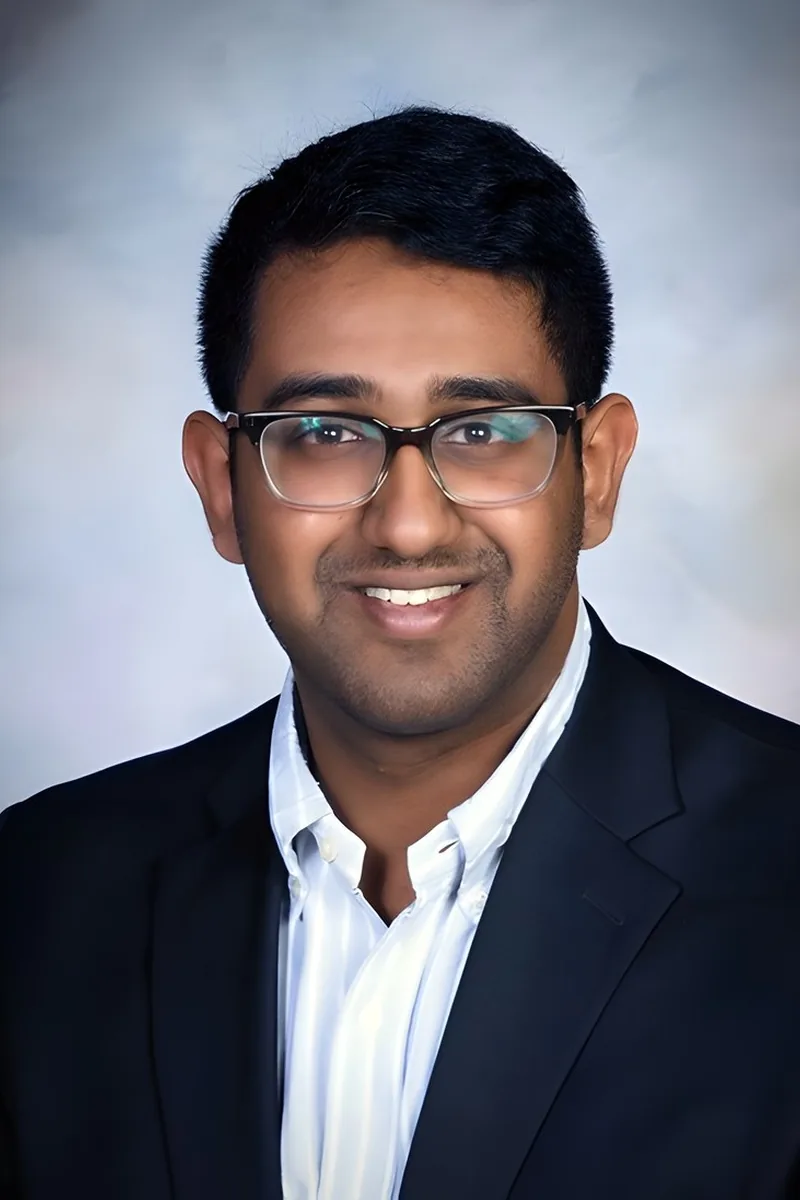
Thermodynamics is Rahul's favorite corner of chemistry — and as a Cornell chemical engineering graduate (magna cum laude), he's applied concepts like enthalpy, Gibbs free energy, and reaction spontaneity far beyond the gen chem textbook, through upper-level coursework in physical chemistry and process design. He pushes students to grasp the conceptual reasoning behind each problem before touching the math, so topics like calorimetry and equilibrium stop feeling like disconnected formula exercises. Rated 4.9 by students.
Forty-plus students tutored in general and AP Chemistry, a bachelor's in chemistry, and a master's in environmental toxicology — Amy has seen college-level chemical concepts from the classroom side and the research side, where sloppy equilibrium reasoning or shaky thermodynamics understanding actually costs you results. She walks through problems like calorimetry, solution preparation, and reaction stoichiometry with an emphasis on dimensional analysis and unit tracking, which is where most gen chem mistakes quietly start. Rated 5.0 by students.
Data analytics coursework at Ohio State forced Vishank through the quantitative side of chemistry — the stoichiometry, molarity math, and equilibrium expressions that feel more like algebra problems than science to most students. His database management background means he's wired to organize information systematically, which translates directly to tackling multi-step problems where students lose track of units, sig figs, or conversion factors halfway through. Rated 4.9 by students.
Biomedical engineering training means Kevin has wrestled with college chemistry concepts like reaction thermodynamics, solution equilibria, and molecular bonding in contexts where getting the chemistry wrong meant getting the engineering wrong — so he teaches gen chem with an emphasis on genuine understanding over formula memorization. He's particularly effective at breaking down multi-concept problems where students can't tell if they're stuck on the chemistry or the math underneath it. Holds a 5.0 rating.
Biochemistry at the undergraduate level means Lyndsey didn't just pass gen chem — she immediately had to apply concepts like reaction kinetics, acid-base equilibria, and thermodynamics in upper-level biochem courses where shaky foundations get exposed fast. That gives her a sharp sense of which college chemistry topics need the most careful attention early on, especially for students heading into biology or pre-med tracks. Rated 5.0 by students.
Five years of tutoring chemistry at Ohio State — where he's also pursuing his chemistry degree — means Ricardo has seen firsthand which gen chem topics send students to office hours: Lewis structures that contradict formal charge rules, calorimetry problems where sign errors cascade, and equilibrium expressions that fall apart when solids or liquids sneak in. He teaches each concept by rebuilding the reasoning from scratch rather than patching over confusion with shortcuts. Rated 4.6 by students.
Having taken AP Chemistry and AP Biology before pursuing a psychology degree with neuroscience coursework, William knows college chemistry from the life-sciences student's perspective — where topics like molecular polarity, acid-base reactions, and solution chemistry feel abstract until you see them drive biological processes. He teaches gen chem by anchoring each concept to something tangible, whether that's how electronegativity shapes drug interactions or why buffer systems matter in physiology. Rated 4.5 by students.
Working as a research associate before medical school, Sunny applies gen chem concepts like reaction kinetics and acid-base chemistry in a lab setting daily — so when a student gets stuck on something like buffer calculations or Le Chatelier's principle, he can ground the explanation in how those ideas actually behave at the bench. His biology and economics double major means he's comfortable switching between quantitative problem-solving and conceptual reasoning, which is exactly the split college chemistry demands. Rated 5.0 by students.
Thermodynamics, kinetics, acid-base equilibria — college chemistry demands that students think quantitatively and conceptually at the same time. Ryan's graduate training in medical physiology keeps him immersed in applied chemistry daily, and his prior experience teaching general chemistry at the undergraduate level means he knows how to unpack dense material into clear, step-by-step explanations.
Susie's biochemistry major at Swarthmore meant she didn't just pass gen chem — she lived in it, applying concepts like reaction kinetics, acid-base chemistry, and thermodynamics daily through upper-level coursework and research at the Cleveland Clinic. Her NIH work reinforced that same quantitative thinking, so she teaches college chemistry by connecting each problem to the molecular-level reasoning behind it. Holds a 5.0 rating.
Currently enrolled in Biochemistry and navigating medical school applications, Robert tackles college chemistry with the perspective of someone actively using it — from thermodynamics and equilibrium calculations to reaction kinetics and acid-base titrations. He connects general chemistry concepts to the biological systems they underpin, which makes abstract ideas like Gibbs free energy and Le Chatelier's principle click faster.
Chad holds a master's degree in chemistry, which means he's tackled college-level coursework from thermodynamics and quantum mechanics to electrochemistry and kinetics — not just once as a student, but repeatedly as a tutor. He breaks down intimidating topics like molecular orbital theory and equilibrium calculations into steps that actually make sense on an exam.
I am always willing to help and I will try my best to help students who desire further understanding of the subject at hand.
General chemistry at the college level moves at roughly double the pace of high school, and Jennifer knows exactly where that speed causes problems because she's the one teaching it. She digs into the topics that derail the most students — thermochemistry calculations, orbital theory, and multi-step equilibrium problems — and builds the quantitative reasoning skills that carry through organic chemistry and beyond. Rated 4.9 by students.
Exercise physiology coursework at Ohio University put Adam through the full gen chem gauntlet — stoichiometry, solution chemistry, acid-base equilibria — alongside biological sciences classes that showed him how those principles actually apply in living systems. That dual exposure means he can explain something like molarity or reaction energetics in concrete, physiological terms that make the abstract math feel grounded. He's especially strong at walking through multi-step calculation problems where units and conversions tend to trip students up.
A physics teaching degree and a master's in technology and engineering education mean Heather has spent years working at the intersection of math-heavy science and clear instruction — exactly what college chemistry demands when students hit quantitative topics like kinetics rate laws or Hess's law calculations. She teaches the problem-solving logic behind each step rather than letting students white-knuckle their way through formulas. Rated 5.0 by students.
Biochemistry forced Emeric to internalize gen chem — not just pass it — because every upper-level course assumed fluency with concepts like molecular bonding, reaction thermodynamics, and acid-base chemistry. He teaches college chemistry by pulling from that deeper context, showing students how a topic like electronegativity or Le Chatelier's principle actually behaves when the material gets more advanced. Rated 5.0 by students.
College-level chemistry demands a jump in rigor — suddenly, approximations matter, sig figs aren't optional, and problems layer multiple concepts like thermodynamics and kinetics into a single question. Aaron's B.S. in Chemistry prepared him for exactly this level of complexity, and he's especially effective at breaking down multi-step quantitative problems that trip students up on exams.
First-year med students don't forget what tripped them up in gen chem — and Nishad, currently at Sidney Kimmel Medical College at Thomas Jefferson University, uses that recent memory to zero in on the conceptual breaks that derail students in topics like electron configuration, chemical bonding, and equilibrium. His premed background means he's taken college chemistry with the same stakes his students face, and he teaches it by connecting the molecular-level reasoning to the calculations so neither piece feels like it's floating on its own.
Leading weekly peer mentor sessions for General Chemistry at WashU means Sarah doesn't just know college chemistry — she's actively teaching it, walking small groups through problem sets on equilibria, stoichiometry, and solution chemistry every week. That hands-on repetition sharpens her ability to spot exactly where a concept falls apart for each student and rebuild understanding from that point. Rated 5.0 by students.
Neuroscience at Vanderbilt means Blake has been neck-deep in college chemistry — gen chem concepts like molecular bonding, reaction energetics, and acid-base systems are the scaffolding for everything from neuropharmacology to membrane biophysics. His approach leans on building intuition for why a reaction behaves the way it does, drawing on his interest in how people actually learn and retain complex material. Rated 5.0 by students.
I've been working with students for over seven years, from middle school all the way through college, across subjects like math, calculus, statistics, linear algebra, chemistry, and physics, with a lot of SAT and ACT prep mixed in. My background is perhaps a little unconventional. I have two bachelor's degrees, one in Engineering and one in Communication Studies, plus a Master's in Design. That combination means I can guide you through challenging technical material and communicate it in a way that is easy to grasp. What I care most about is helping students get to a place where they don't need me anymore. I know that sounds like a strange thing for a tutor to say, but I think it's the right goal. I'm not here to walk you through steps to copy down. I want you to understand why something works, because that's what holds up under pressure, on a test you haven't seen before. If you're ready to ace that test or prove that theorem that's been bugging you, reach out and let's work together
Thermodynamics, equilibrium constants, and electrochemistry all click faster when the tutor has spent years applying them in engineering contexts. Abismael earned his B.S. in Chemical Engineering, so he teaches college-level concepts through real reaction systems rather than abstract formulas. He's known for pushing students with spontaneous, exam-level questions until the material becomes second nature.
Samantha studied Chemistry & Chemical Biology at Cornell with a food science concentration, so she's tackled everything from organic reaction mechanisms to thermodynamics and spectroscopy at the college level. She teaches tricky concepts like equilibrium constants, electrochemistry, and molecular orbital theory by building visual models that connect the math to what's physically happening at the molecular scale.
General chemistry at the college level lives or dies on whether you actually understand what's happening at the molecular level — equilibrium shifts, thermodynamic spontaneity, orbital hybridization — or just memorize formulas. Mosab's health sciences graduate work means he uses these concepts constantly and can connect them to real biochemical applications. Rated 5.0 by students.
Pre-med coursework at Duke forced Camille through the full gen chem gauntlet — stoichiometry, equilibrium, acid-base chemistry — while simultaneously juggling a humanities major, so she knows what it's like to learn dense quantitative material without the luxury of focusing on nothing else. That experience makes her especially effective with students who aren't pure STEM majors but still need to master college chemistry for their degree track. Rated 5.0 by students.
Working in Duke's Bilbo lab on neuroimmune interactions means Lauren applies gen chem principles — reaction kinetics, molecular polarity, acid-base behavior — in a research setting where getting the chemistry wrong has real consequences for experimental design. That hands-on context, paired with her neuroscience and chemistry coursework, gives her a practical read on which concepts students need to truly internalize versus which ones they're just memorizing long enough to pass the exam. Rated 4.8 by students.
Between his physics training and years of hands-on biochemistry research, Matthew tackles college chemistry from both the theoretical and applied sides. He's especially effective with thermodynamics, molecular orbital theory, and kinetics — topics where students often struggle to bridge lecture material and problem sets. His lab experience at Columbia gives him concrete examples that make abstract concepts like enthalpy and entropy click.
Engineering coursework at Harvard means Christopher regularly uses chemistry concepts like thermodynamics, equilibrium, and reaction kinetics in applied settings. He teaches college chemistry by connecting abstract ideas — say, Gibbs free energy or electrochemical cells — to tangible problems, making the material easier to internalize before exams.
Dual-majoring in biomedical and chemical engineering at Vanderbilt means William encounters gen chem concepts like reaction thermodynamics, equilibrium, and stoichiometry not as isolated textbook chapters but as tools he actively uses in engineering coursework — which gives him a sharp sense of what "good enough" understanding looks like versus what actually holds up under pressure. He scored a 5 on the AP Chemistry exam and now tackles college chemistry by connecting the molecular-level reasoning to the quantitative problem-solving, so students see why the math works instead of just memorizing setups. Rated 4.8 by students.
Testimonials
Because the right College Chemistry tutor makes all the difference.
Average Session Rating – Based on 3.4M Learner Ratings
Other Cleveland Tutors
Related Science Tutors in Cleveland
Frequently Asked Questions
College Chemistry requires mastering both abstract concepts and practical problem-solving skills. Students often struggle with balancing chemical equations, unit conversions, and understanding how microscopic molecular behavior connects to observable reactions. Many find it challenging to move beyond memorization to develop the conceptual understanding needed for exams and labs—especially when visualizing molecular structures and reaction mechanisms that can't be seen with the naked eye.
Personalized 1-on-1 instruction lets a tutor focus on your specific gaps—whether that's stoichiometry, thermodynamics, or lab report writing. A tutor can break down abstract concepts using visual explanations and real-world examples, help you develop problem-solving strategies for different question types, and work through practice problems at your pace. This targeted approach builds both content mastery and the scientific reasoning skills that make chemistry click.
Yes. Beyond lecture content, tutors can help you understand the scientific method, interpret experimental data, and write clear lab reports that connect your results to theory. They can also help you prepare for lab practicals, review safety protocols, and troubleshoot common experimental errors. This support strengthens both your hands-on skills and your ability to communicate scientific findings effectively.
Your first session focuses on understanding where you are and where you need to go. A tutor will ask about your current coursework, review recent exams or assignments, and identify your biggest challenge areas—whether that's equilibrium, acid-base chemistry, or organic chemistry fundamentals. From there, they'll create a personalized plan tailored to your goals, whether you're aiming to improve your grade, prepare for an exam, or build a stronger foundation.
Varsity Tutors connects you with expert tutors in the Cleveland area who specialize in College Chemistry and understand the specific curriculum demands of local universities. When you get matched with a tutor, you can review their background, experience with chemistry students, and teaching approach. This personalized matching ensures you work with someone who can explain concepts in a way that makes sense to you.
Understanding concepts is far more valuable than memorization alone. While you do need to know key formulas and reactions, College Chemistry success comes from grasping *why* reactions occur and *how* to apply principles to new problems you haven't seen before. A tutor helps you build this conceptual foundation so you can tackle unfamiliar problems on exams and labs with confidence, rather than relying on rote memorization.
The sooner you get support, the better. If you're struggling early in the semester, tutoring can help you build a solid foundation before concepts get more complex. If you're already behind, a tutor can help you catch up while staying current with new material. Many students also benefit from tutoring before midterms and finals to review and strengthen weak areas before high-stakes exams.
A tutor can help you review all major topics, work through practice problems similar to what you'll see on the exam, and identify patterns in question types. They can also help you develop test-taking strategies, manage time during exams, and understand where you tend to make mistakes. By practicing retrieval and spacing out review sessions, you'll retain information better and approach exam day with genuine confidence.
Let’s find your perfect tutor
Answer a few quick questions. We’ll recommend the right plan and match you with a top 5% tutor.