Award-Winning College Chemistry Tutors
serving Akron, OH
College Chemistry
Tutors in Akron
Private 1-on-1 tutoring, weekly live classes for academic support, test prep & enrichment, practice tests and diagnostics, and more to elevate grades and test scores.
Based on 3.4M Learner Ratings
UniversitiesSchools & Universities
DeliveredHours Delivered
ProficiencyGrowth in Proficiency
Who needs tutoring?
No obligation. Takes ~1 minute.
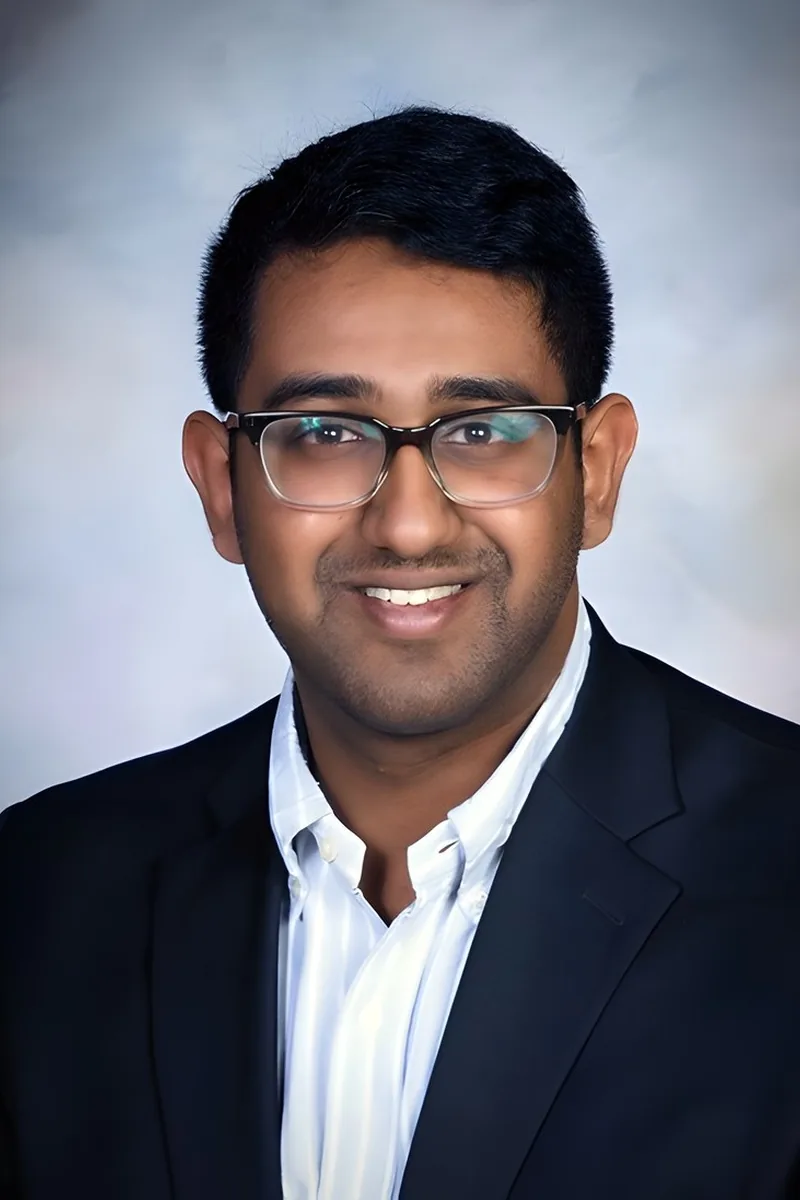
Thermodynamics is Rahul's favorite corner of chemistry — and as a Cornell chemical engineering graduate (magna cum laude), he's applied concepts like enthalpy, Gibbs free energy, and reaction spontaneity far beyond the gen chem textbook, through upper-level coursework in physical chemistry and process design. He pushes students to grasp the conceptual reasoning behind each problem before touching the math, so topics like calorimetry and equilibrium stop feeling like disconnected formula exercises. Rated 4.9 by students.
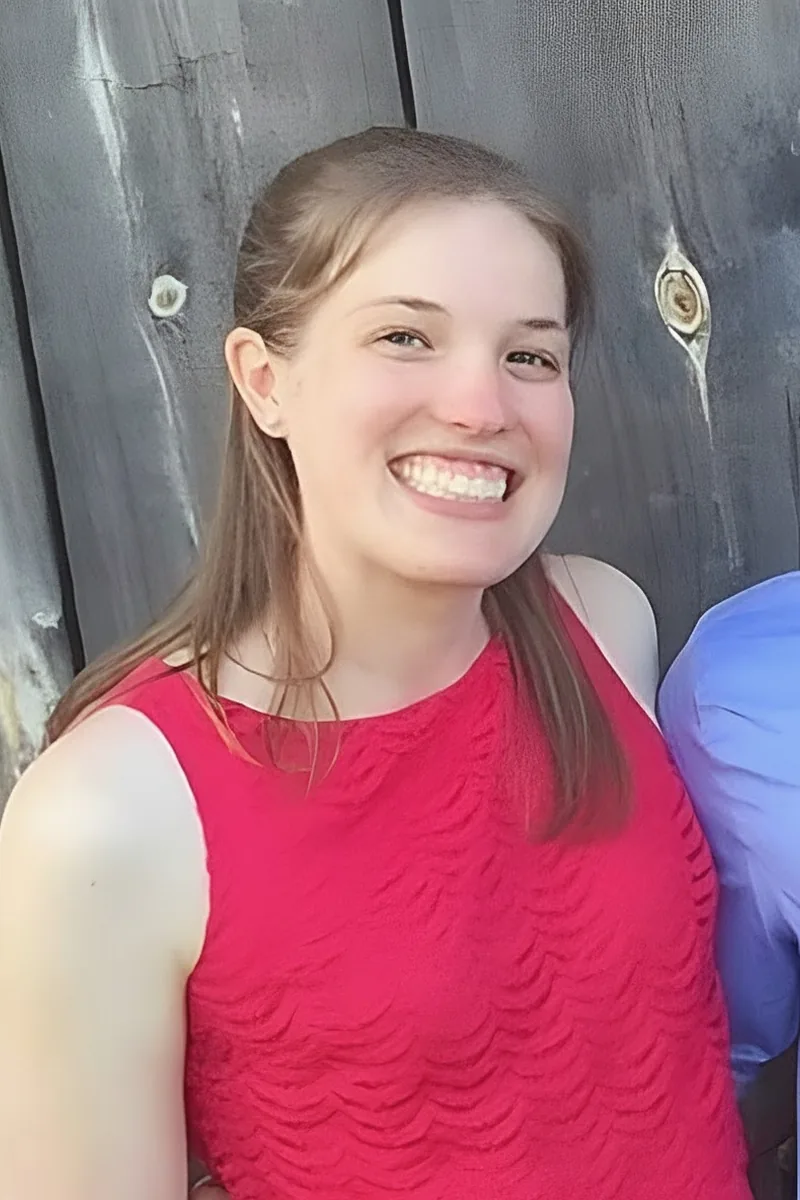
Forty-plus students tutored in general and AP Chemistry, a bachelor's in chemistry, and a master's in environmental toxicology — Amy has seen college-level chemical concepts from the classroom side and the research side, where sloppy equilibrium reasoning or shaky thermodynamics understanding actually costs you results. She walks through problems like calorimetry, solution preparation, and reaction stoichiometry with an emphasis on dimensional analysis and unit tracking, which is where most gen chem mistakes quietly start. Rated 5.0 by students.
Data analytics coursework at Ohio State forced Vishank through the quantitative side of chemistry — the stoichiometry, molarity math, and equilibrium expressions that feel more like algebra problems than science to most students. His database management background means he's wired to organize information systematically, which translates directly to tackling multi-step problems where students lose track of units, sig figs, or conversion factors halfway through. Rated 4.9 by students.
Biomedical engineering training means Kevin has wrestled with college chemistry concepts like reaction thermodynamics, solution equilibria, and molecular bonding in contexts where getting the chemistry wrong meant getting the engineering wrong — so he teaches gen chem with an emphasis on genuine understanding over formula memorization. He's particularly effective at breaking down multi-concept problems where students can't tell if they're stuck on the chemistry or the math underneath it. Holds a 5.0 rating.
Biochemistry at the undergraduate level means Lyndsey didn't just pass gen chem — she immediately had to apply concepts like reaction kinetics, acid-base equilibria, and thermodynamics in upper-level biochem courses where shaky foundations get exposed fast. That gives her a sharp sense of which college chemistry topics need the most careful attention early on, especially for students heading into biology or pre-med tracks. Rated 5.0 by students.
Working as a research associate before medical school, Sunny applies gen chem concepts like reaction kinetics and acid-base chemistry in a lab setting daily — so when a student gets stuck on something like buffer calculations or Le Chatelier's principle, he can ground the explanation in how those ideas actually behave at the bench. His biology and economics double major means he's comfortable switching between quantitative problem-solving and conceptual reasoning, which is exactly the split college chemistry demands. Rated 5.0 by students.
Five years of tutoring chemistry at Ohio State — where he's also pursuing his chemistry degree — means Ricardo has seen firsthand which gen chem topics send students to office hours: Lewis structures that contradict formal charge rules, calorimetry problems where sign errors cascade, and equilibrium expressions that fall apart when solids or liquids sneak in. He teaches each concept by rebuilding the reasoning from scratch rather than patching over confusion with shortcuts. Rated 4.6 by students.
Having taken AP Chemistry and AP Biology before pursuing a psychology degree with neuroscience coursework, William knows college chemistry from the life-sciences student's perspective — where topics like molecular polarity, acid-base reactions, and solution chemistry feel abstract until you see them drive biological processes. He teaches gen chem by anchoring each concept to something tangible, whether that's how electronegativity shapes drug interactions or why buffer systems matter in physiology. Rated 4.5 by students.
Alexander earned his PhD in Chemical Engineering, which means college chemistry concepts like equilibrium, thermodynamics, and reaction kinetics aren't abstract ideas to him — they're tools he's used daily in research. He breaks down topics like electrochemistry and molecular orbital theory by connecting them to real applications students can visualize. Rated 4.9 by students.
Susie's biochemistry major at Swarthmore meant she didn't just pass gen chem — she lived in it, applying concepts like reaction kinetics, acid-base chemistry, and thermodynamics daily through upper-level coursework and research at the Cleveland Clinic. Her NIH work reinforced that same quantitative thinking, so she teaches college chemistry by connecting each problem to the molecular-level reasoning behind it. Holds a 5.0 rating.
Thermodynamics, kinetics, acid-base equilibria — college chemistry demands that students think quantitatively and conceptually at the same time. Ryan's graduate training in medical physiology keeps him immersed in applied chemistry daily, and his prior experience teaching general chemistry at the undergraduate level means he knows how to unpack dense material into clear, step-by-step explanations.
Chad holds a master's degree in chemistry, which means he's tackled college-level coursework from thermodynamics and quantum mechanics to electrochemistry and kinetics — not just once as a student, but repeatedly as a tutor. He breaks down intimidating topics like molecular orbital theory and equilibrium calculations into steps that actually make sense on an exam.
Currently enrolled in Biochemistry and navigating medical school applications, Robert tackles college chemistry with the perspective of someone actively using it — from thermodynamics and equilibrium calculations to reaction kinetics and acid-base titrations. He connects general chemistry concepts to the biological systems they underpin, which makes abstract ideas like Gibbs free energy and Le Chatelier's principle click faster.
I am always willing to help and I will try my best to help students who desire further understanding of the subject at hand.
General chemistry at the college level moves at roughly double the pace of high school, and Jennifer knows exactly where that speed causes problems because she's the one teaching it. She digs into the topics that derail the most students — thermochemistry calculations, orbital theory, and multi-step equilibrium problems — and builds the quantitative reasoning skills that carry through organic chemistry and beyond. Rated 4.9 by students.
Exercise physiology coursework at Ohio University put Adam through the full gen chem gauntlet — stoichiometry, solution chemistry, acid-base equilibria — alongside biological sciences classes that showed him how those principles actually apply in living systems. That dual exposure means he can explain something like molarity or reaction energetics in concrete, physiological terms that make the abstract math feel grounded. He's especially strong at walking through multi-step calculation problems where units and conversions tend to trip students up.
A physics teaching degree and a master's in technology and engineering education mean Heather has spent years working at the intersection of math-heavy science and clear instruction — exactly what college chemistry demands when students hit quantitative topics like kinetics rate laws or Hess's law calculations. She teaches the problem-solving logic behind each step rather than letting students white-knuckle their way through formulas. Rated 5.0 by students.
Biochemistry forced Emeric to internalize gen chem — not just pass it — because every upper-level course assumed fluency with concepts like molecular bonding, reaction thermodynamics, and acid-base chemistry. He teaches college chemistry by pulling from that deeper context, showing students how a topic like electronegativity or Le Chatelier's principle actually behaves when the material gets more advanced. Rated 5.0 by students.
College-level chemistry demands a jump in rigor — suddenly, approximations matter, sig figs aren't optional, and problems layer multiple concepts like thermodynamics and kinetics into a single question. Aaron's B.S. in Chemistry prepared him for exactly this level of complexity, and he's especially effective at breaking down multi-step quantitative problems that trip students up on exams.
Thermodynamics, equilibrium constants, electrochemistry — college chemistry demands that students juggle quantitative problem-solving with conceptual reasoning at the same time. Raj tackles both sides, drawing on his biochemistry training at Rice to show how general chemistry principles connect to larger molecular behavior. His 5.0 rating speaks to how well that approach lands.
Pursuing a Doctorate of Physical Therapy means James encounters chemistry in a context most gen chem tutors don't — understanding how buffer systems maintain blood pH, how electrolyte concentrations drive cellular processes, and how thermodynamic principles govern metabolic reactions. His economics background also gave him strong quantitative reasoning, so he's comfortable walking through the math-heavy side of topics like stoichiometry and gas laws without losing sight of what the numbers actually represent. Rated 4.9 by students.
Matt's neuroscience degree with a chemistry minor means he didn't just pass gen chem — he built on it through upper-level coursework in biochemistry and physiology, where concepts like molecular bonding, reaction energetics, and equilibrium stop being abstract and start explaining how biological systems actually function. That applied perspective lets him teach college chemistry topics by anchoring them to something concrete, which tends to make the leap from lecture notes to problem sets much less painful. Rated 5.0 by students.
Neuroscience at Brown meant Crony couldn't just skim gen chem — courses in neurochemistry and cellular biology demanded real fluency with topics like electrochemistry, molecular interactions, and reaction energetics long after the introductory sequence ended. That background gives him a sharp sense of which college chemistry concepts actually need to be internalized versus merely memorized, especially for students heading into upper-level STEM work. Rated 4.6 by students.
Predentistry at Columbia means Erica is preparing for a career where gen chem concepts like acid-base chemistry, molecular bonding, and solution properties aren't abstract — they're clinically relevant every day. Her Harvard history of science background also gives her an unusual knack for explaining *why* chemical models were built the way they were, which makes memorizing periodic trends and electron configurations feel less arbitrary. Rated 4.9 by students.
Organic reaction mechanisms, thermodynamic versus kinetic control, and multi-step synthesis problems demand more than memorization — they require a framework for thinking through electron movement and molecular behavior. Maggie studied Molecular, Cellular, and Developmental Biology as an undergraduate and now applies that foundation daily in her Stanford medical program. She unpacks each mechanism by tracing exactly why electrons move where they do, making complex transformations feel logical.
Having served as an undergraduate teaching assistant at Cornell for introductory biochemistry, Josef has spent real time diagnosing where students get stuck on foundational chemistry — electron configurations bleeding into bonding theory, or mole concepts falling apart during stoichiometric conversions. He teaches college chemistry with a life sciences backbone, connecting topics like solution chemistry and reaction energetics to the biological applications his students will actually encounter next semester. Rated 5.0 by students.
Dental school entrance exams and a microbiology degree meant Daniel had to master gen chem twice — once as an undergrad learning the fundamentals, and again at a higher level when topics like acid-base chemistry, solution concentration, and molecular interactions became the foundation for clinical science. That repetition gives him a sharp sense of which concepts students need to truly internalize versus which ones they can reference, and he teaches accordingly — spending more time on the reasoning behind equilibrium and bonding than on memorizing formulas that won't stick.
A bio-organic chemistry degree means Alex has lived through the full gen chem sequence and then pushed those concepts further — into reaction mechanisms, molecular orbital theory, and the quantitative problem-solving that upper-level chemistry demands. That depth shows up when tackling topics like chemical kinetics or periodic trends, where he can explain not just how to solve a problem but why the underlying chemistry behaves the way it does.
General chemistry at the college level demands comfort with both conceptual reasoning and quantitative problem-solving — balancing redox half-reactions one day, then interpreting molecular orbital diagrams the next. Kate's master's work in environmental engineering required deep fluency in chemical thermodynamics and kinetics, and she brings that applied perspective to topics like enthalpy calculations, acid-base equilibria, and electrochemistry.
Studying chemistry at Harvard while preparing for Columbia Medical School means James has taken college chemistry far past the introductory level — he knows which early concepts like electron configurations, VSEPR theory, and reaction stoichiometry quietly become load-bearing walls for everything from organic mechanisms to biochemical pathways. He teaches gen chem by flagging those high-stakes fundamentals early, so students aren't blindsided when later courses assume fluency. Rated 4.9 by students.
Working in a Yale research lab with tools like CRISPR-Cas9 means Matthew encounters gen chem principles — reaction kinetics, molecular interactions, buffer systems — in live experimental contexts, which sharpens how he explains them back at the introductory level. His biochemistry and molecular biology coursework built fluency with the bridge between general chemistry and its applications, so he can show students exactly why mastering something like equilibrium or thermochemistry pays off two courses down the road. Holds a 5.0 rating.
Testimonials
Because the right College Chemistry tutor makes all the difference.
Average Session Rating – Based on 3.4M Learner Ratings
Other Akron Tutors
Related Science Tutors in Akron
Frequently Asked Questions
College Chemistry requires mastering abstract concepts like molecular structure and bonding while also developing strong problem-solving skills. Students often struggle with balancing chemical equations, unit conversions, and connecting theoretical concepts to real-world applications—especially when lab work is involved. Many find the pace faster than high school chemistry, with less time to absorb foundational concepts before moving to more complex topics like thermodynamics and equilibrium.
Personalized 1-on-1 instruction allows tutors to identify exactly where your understanding breaks down—whether it's visualizing molecular structures, mastering stoichiometry, or applying concepts to lab scenarios. Rather than moving at a class pace, tutors can slow down on challenging topics, use multiple explanations, and connect abstract concepts to concrete examples. This targeted approach builds both content knowledge and scientific reasoning skills, which translates to better exam performance and confidence in the lab.
Yes. Tutors can help you understand the scientific method, predict lab outcomes based on theory, interpret experimental results, and troubleshoot when results don't match expectations. Many students find that understanding the chemistry behind what they're doing in the lab—rather than just following steps—makes the work more meaningful and helps you write better lab reports. Tutors can also help you prepare for lab practicals and data analysis components.
Your first session focuses on understanding your specific challenges and goals. Tutors will assess your grasp of foundational concepts, identify which topics are causing the most difficulty, and learn about your learning style. From there, you'll work together to create a plan that targets your weak areas—whether that's equation balancing, thermodynamics, or connecting lab work to theory—so your sessions are efficient and focused on what matters most for your success.
Understanding concepts is far more valuable than memorization alone. While you'll need to know some key formulas and constants, College Chemistry exams test your ability to apply concepts to new problems—something memorization won't help with. Tutors focus on building genuine understanding: why reactions occur, how to predict outcomes, and how to solve unfamiliar problems using core principles. This approach not only improves exam scores but also prepares you for advanced chemistry courses and real-world applications.
Tutors use multiple strategies to make abstract concepts concrete: drawing detailed molecular structures, using 3D models or animations, connecting bonding to observable properties (like why some compounds are soluble and others aren't), and working through step-by-step electron configurations. Many students find that once they can visualize what's happening at the molecular level, topics like bonding, polarity, and reactivity become much clearer. Tutors can also recommend tools and resources that help you practice visualization on your own.
Varsity Tutors connects you with experienced tutors who have strong backgrounds in chemistry and understand the College Chemistry curriculum. When you reach out, you'll be matched with a tutor whose expertise and teaching style fit your needs—whether you need help with general concepts, exam prep, or lab preparation. Tutors work with students across Akron and can personalize their approach based on your specific course and challenges.
Many students see noticeable improvement within 3-4 sessions once they start getting personalized help with their specific weak spots. However, the timeline depends on how much time you've fallen behind and how frequently you meet with your tutor. Consistent, focused tutoring combined with your own practice between sessions leads to the fastest progress. Some students work with tutors throughout the semester for ongoing support, while others focus on intensive help before exams or before major lab projects.
Let’s find your perfect tutor
Answer a few quick questions. We’ll recommend the right plan and match you with a top 5% tutor.