Award-Winning Microeconomics Tutors
serving Cincinnati, OH
Microeconomics
Tutors in Cincinnati
Private 1-on-1 tutoring, weekly live classes for academic support, test prep & enrichment, practice tests and diagnostics, and more to elevate grades and test scores.
Based on 3.4M Learner Ratings
UniversitiesSchools & Universities
DeliveredHours Delivered
ProficiencyGrowth in Proficiency
Who needs tutoring?
No obligation. Takes ~1 minute.
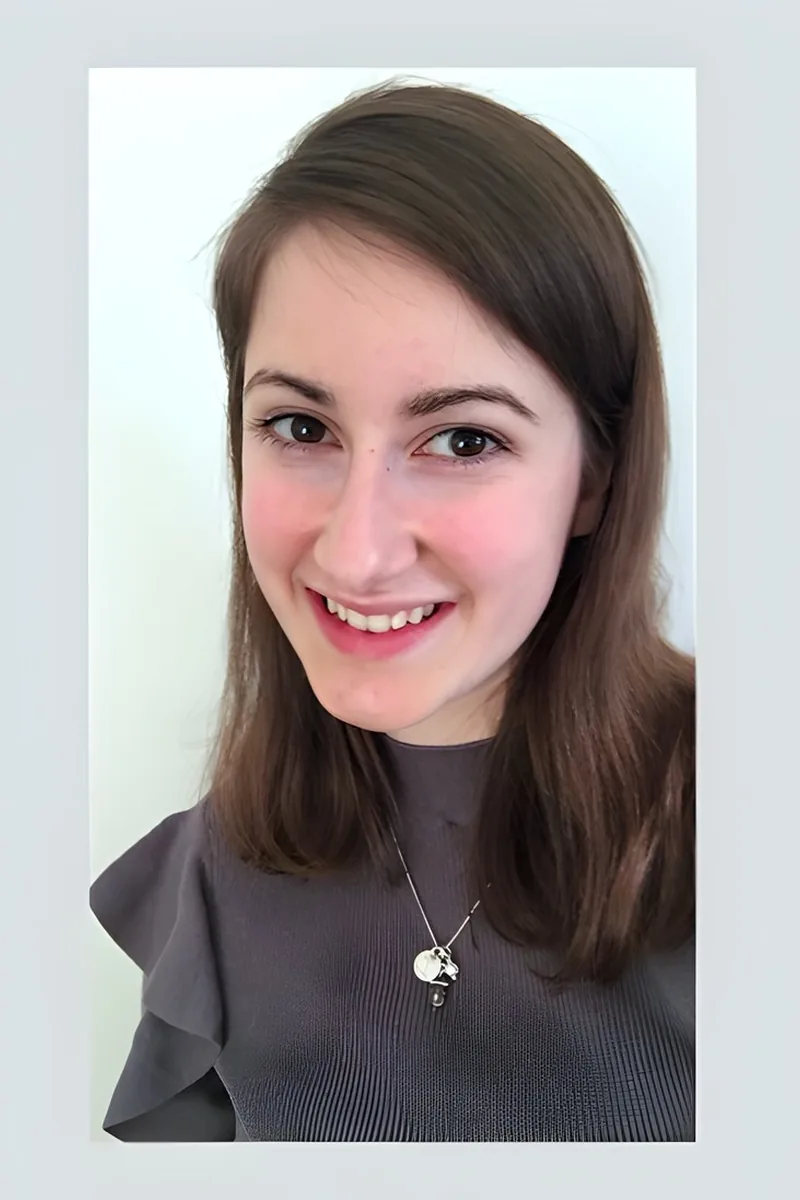
I am currently a P1 pharmacy student. I have had numerous opportunities to tutor students of various ages primarily in subjects that pertain to my program of study, especially chemistry. Throughout my years of study, I have come to the realization that only after meticulous examination of all the possible scenarios and exceptions of a particular phenomenon can we recognize patterns that may have facilitated our initial attempt to understand it in the first place. As a tutor, I hope to serve as a guide that aids students in discerning such patterns and integrating concepts to achieve a thorough and holistic understanding of the subject being studied. Besides tutoring, I enjoy playing the piano and cello, biking, and reading.

I'm a senior at Indiana Wesleyan University, studying Economics, Political Science, and Humanities. I'm a student of the economic way of thinking and an aspiring teacher of the same, hopefully in a university setting someday. The economic way of thinking is valuable to anyone who will learn it and applies to everyday life.
Supply and demand curves are just the starting point — microeconomics gets interesting when students dig into elasticity, market structures, and game theory. Christopher's finance studies at Ohio State mean he tackles these concepts with real market examples, connecting abstract models to how firms actually price products and allocate resources.
An economics degree means Alexander has worked through the full micro toolkit — elasticity, game theory, surplus analysis — with enough depth to explain not just how the models work but why they're set up the way they are. He's especially sharp at connecting supply-and-demand intuition to the trickier intermediate topics where students start second-guessing themselves, like distinguishing between different market structures or tracing how a tax wedge redistributes surplus.
I'm looking forward to helping your student find personal success in their academic lives!
I'm a student at a small liberal arts college studying Economics and Environmental Studies. I currently tutor 9th-12th grade students at a local high school. I love math and science!
I'm a rising sophomore from Yale University. There I am studying to pursue a degree in either economics or computer science, and possibly both. I took the ACT a time or too and know my way around the exam, and I think I have a strong handle on the college admissions process.
I am a high school graduate currently attending Case Western Reserve University as a junior where I am double majoring in economics and physics. Although economics and physics are my majors, mathematics is my favourite subject. The reason I am tutoring is that I want to provide help in mathematics and other subjects which I did not have for myself when I was in high school. Not only do I want to tutor because I have a feeling it will be beneficial for students but I also enjoy teaching. Whenever I show teenagers something cool about physics or math, they seem to enjoy the subject more now that they know how it works and they also do better in their classes which is a great feeling for me and beneficial for the students. This friendly but passionate tutoring style is what will make the session enjoyable by both parties but also result in better grades. I also love sports(especially soccer and basketball), reading, writing and speedcubing.
I am a rising sophomore at Kenyon College, a small liberal arts school an hour out of Columbus, Ohio, majoring in Philosophy. It is difficult to identify a specialty of mine because I have worked with students from 1st grade through high school on topics ranging from elementary science to trigonometry test prep, but my foremost strength is the three sections of the SAT. I have roughly three years of experience tutoring and last year taught a test prep class. My approach to tutoring is to identify a students strengths and build upon them through frequent quizzes and reflective analysis. Additionally, having just gone through the college admissions process, I am privy to its length and complexity so can lend advice on anything, namely essays. I have plenty of experience writing and have been published in a local newspaper. While I think math is the easiest subject for me to teach, writing and writing skills are my favorite to teach because to see a writers progress is an extraordinary sight and, further, challenge.
Supply and demand curves are just the starting point — the real challenge in microeconomics is applying optimization logic to consumer choice, firm behavior, and market structures. Darin's engineering background means he's comfortable walking through the calculus behind marginal analysis and showing students how each graph tells a precise quantitative story.
I am currently working in a Bronx Public School as a teaching apprentice in Algebra. I have four years of experience tutoring one on one with students of all ages.
Marginal cost curves, consumer surplus, and Cournot competition all demand comfort with derivatives and optimization — skills Romeo has sharpened through years of advanced mathematics study. He teaches microeconomics by making the math transparent: once a student can set up and solve the constrained optimization problem, the economic intuition follows naturally.
Elasticity, consumer surplus, market structures, deadweight loss — microeconomics is full of concepts that seem intuitive until you're asked to graph them or solve for equilibrium mathematically. Hans pairs his Northwestern economics training with a knack for walking through the algebra behind the graphs, making sure students understand both the visual and quantitative sides of each model. He holds a 5.0 rating.
Elasticity, marginal cost curves, market structures, welfare analysis — microeconomics is built on deceptively simple ideas that get complicated fast. Stephen's PhD research at Rice and his current teaching at Fordham keep him immersed in exactly these concepts, and his market research career means he can show students how firms actually use pricing strategy and cost analysis outside the classroom.
Being inside Michigan Ross's BBA program means Kerry encounters microeconomic thinking in nearly every class — how firms decide what to produce, why pricing strategies differ across market structures, and what drives consumer decision-making under scarcity. That daily immersion in business case analysis gives her a way of teaching concepts like elasticity and profit maximization that's grounded in how companies actually behave, not just how curves shift on a whiteboard.
Elasticity, consumer surplus, and market structures like monopolistic competition can feel abstract until someone maps them to decisions you actually make. Sheena, who is pursuing an accelerated Master's in Economics, teaches microeconomics by anchoring each concept in concrete scenarios — why airlines price-discriminate, how a tax shifts deadweight loss, what drives firm entry in the long run. She makes the graphs tell a story rather than just sit on the page.
Consumer choice theory, production functions, and game theory matrices each demand a slightly different way of thinking — and that's where most micro students get stuck. Albert tackles each framework on its own terms, drawing on his MBA economics training to show why firms price-discriminate, how externalities distort market outcomes, and what happens when you shift from perfect competition to oligopoly.
From elasticity calculations to the nuances of monopolistic competition, microeconomics requires students to think graphically and verbally at the same time. David breaks down each market structure by walking through the firm's decision-making process step by step — where marginal cost meets marginal revenue, why profits shrink in the long run, and what happens when assumptions change. His entrepreneurship background means these aren't hypothetical firms to him.
With an applied math degree and PhD-level engineering work, Professor Florence tackles microeconomics from a deeply quantitative angle — the kind that makes optimization problems, constrained utility maximization, and cost function analysis feel like natural extensions of calculus rather than foreign territory. She teaches the mathematical machinery behind economic models so students understand what they're solving, not just how to push symbols around on an exam.
Supply and demand curves are just the starting point — Conor digs into the trickier microeconomic territory like elasticity calculations, consumer and producer surplus, and game theory models where students tend to struggle. As an Economics major at Yale, he's actively working through these concepts at an advanced level and can break down how firms make pricing decisions in different market structures.
Introductory microeconomics is where Reed cut his teeth as a tutor — he served as a prefect and TA for Carleton College's micro courses, running both classroom sessions and one-on-one reviews. He digs into consumer and producer theory, cost curves, and market structures with an emphasis on connecting the graphs to the underlying math so each concept reinforces the other.
Testimonials
Because the right Microeconomics tutor makes all the difference.
Average Session Rating – Based on 3.4M Learner Ratings
Other Cincinnati Tutors
Related Business Tutors in Cincinnati
Frequently Asked Questions
Microeconomics focuses on how individuals, households, and businesses make economic decisions—from pricing strategies to consumer behavior to market competition. Students study it to understand real-world economic principles like supply and demand, elasticity, and market structures, which apply to everything from job negotiations to business decisions. It's a foundational course for economics majors, business students, and anyone seeking to understand how markets work.
Many students struggle with translating abstract economic concepts into practical applications, especially when working through supply and demand curves, elasticity calculations, and cost-benefit analysis. The mathematical components—graphing, optimization, and interpreting data—can feel disconnected from the theory. Additionally, students often find it difficult to build intuition about why markets behave the way they do, which makes problem-solving feel like memorization rather than understanding.
In a classroom with an 18.4:1 student-teacher ratio, instructors must move at an average pace that doesn't always match individual learning needs. Personalized 1-on-1 instruction allows tutors to identify exactly where your understanding breaks down—whether it's grasping elasticity concepts, setting up optimization problems, or connecting theory to real examples—and adjust explanations on the spot. Tutors can also focus on your specific weak areas rather than reviewing material the entire class has mastered, making study time far more efficient.
Your first session is designed to assess your current understanding and identify your specific challenges. Expect to discuss which topics feel most difficult, review recent assignments or exams, and work through a few practice problems together so the tutor can see your thought process. This helps Varsity Tutors connect you with a tutor whose teaching style matches your learning needs and who can create a focused plan for improvement.
Yes. Varsity Tutors connects students with tutors experienced in AP Microeconomics, college-level introductory microeconomics, and intermediate microeconomics courses. Whether you're preparing for the AP exam, working through a college course, or studying for a specific unit, tutors can align instruction with your school's curriculum, pacing, and exam format to ensure you're learning exactly what you need.
Many students see noticeable improvement in understanding within 3-4 sessions, especially when they're working on specific problem areas like graphing or optimization. However, building deeper intuition and confidence across multiple topics typically takes 8-12 weeks of consistent practice. The timeline depends on your starting point, how frequently you meet with your tutor, and how actively you practice between sessions.
Tutors support all core microeconomics topics, including supply and demand, elasticity, consumer and producer surplus, market structures (perfect competition, monopoly, oligopoly), production costs, profit maximization, game theory, and factor markets. Whether you need help understanding foundational concepts or working through advanced problem sets, Varsity Tutors can connect you with a tutor who specializes in the areas you're studying.
Absolutely. Tutors experienced with AP Microeconomics can help you master the exam's multiple-choice section, free-response questions, and the specific graphing skills the exam requires. They can review released exams, practice problems, and help you develop strategies for time management and tackling unfamiliar scenarios—all critical for scoring well on test day.
Let’s find your perfect tutor
Answer a few quick questions. We’ll recommend the right plan and match you with a top 5% tutor.