Award-Winning Middle School Math Tutors
serving Cincinnati, OH
Middle School Math
Tutors in Cincinnati
Private 1-on-1 tutoring, weekly live classes for academic support, test prep & enrichment, practice tests and diagnostics, and more to elevate grades and test scores.
Based on 3.4M Learner Ratings
UniversitiesSchools & Universities
DeliveredHours Delivered
ProficiencyGrowth in Proficiency
Who needs tutoring?
No obligation. Takes ~1 minute.
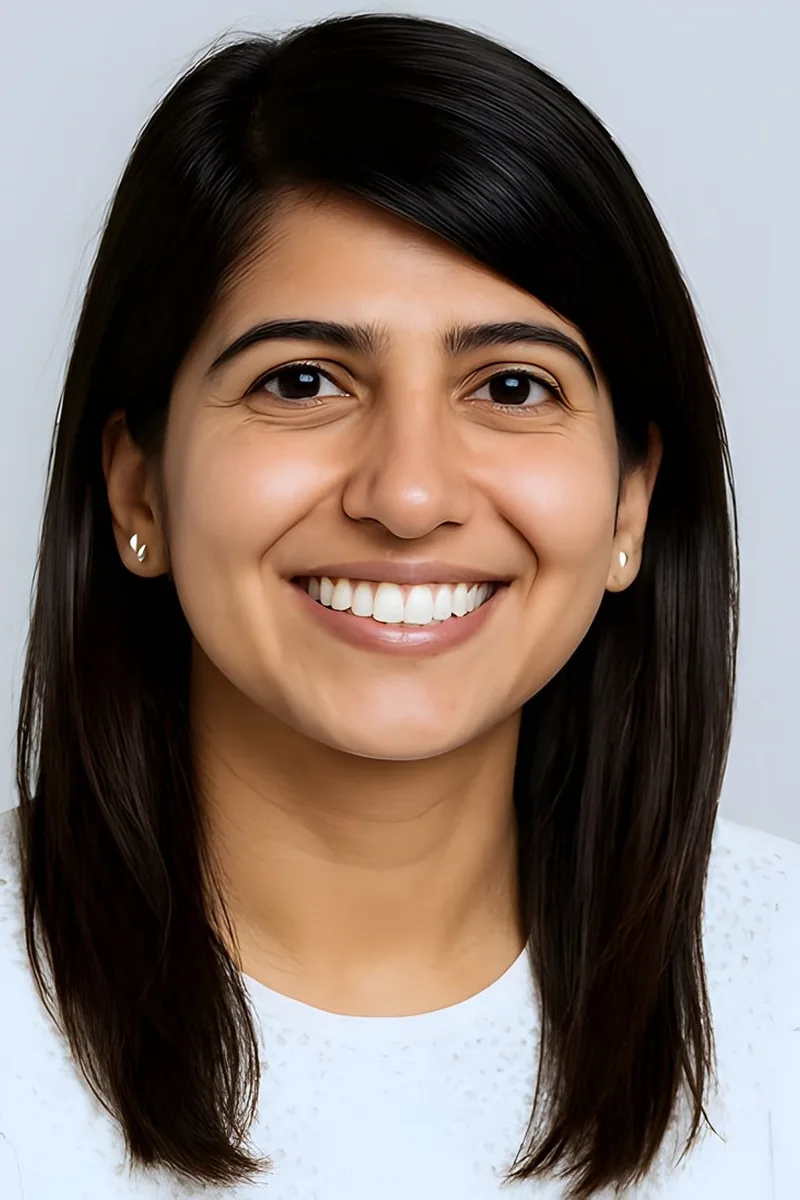
At the middle school level, math starts asking students to think abstractly for the first time: proportional reasoning, negative numbers, basic graphing on a coordinate plane. Eshita is still a student herself, which means she remembers what it's like to encounter these ideas fresh — and she turns that into explanations that actually land with younger learners. Rated 5.0 by her students.

Between fractions, ratios, and early equation-solving, middle school math piles on concepts fast enough that one shaky topic can snowball into months of confusion. Josh's approach is to pinpoint exactly where understanding broke down — whether it's proportional reasoning or coordinate graphing — and rebuild from that specific spot. His science background means he's constantly tying math back to real scenarios that make the "why" click.
Fractions, ratios, and proportional reasoning can feel abstract until someone connects them to problems that actually make sense. William breaks these concepts into concrete steps, building the kind of number sense that carries students through pre-algebra and beyond. His psychology background gives him a sharp eye for where a student's understanding breaks down.
An electrical engineering degree means Judith spent years where getting the algebra wrong had real consequences — circuit analysis, signal processing, and system design all depend on the same proportional and variable-based thinking that middle schoolers are encountering for the first time. She brings that engineering precision to topics like integer operations and basic equation-solving, showing students how each step follows logically from the last. Rated 5.0 by students.
Fractions, ratios, and proportions trip up more middle schoolers than almost any other topic — and Henry tackles these by connecting them to real scenarios students actually care about. His four years of tutoring younger learners, combined with his mathematics background at Vassar, means he knows how to make abstract number relationships click. Rated 4.9 by students.
The jump from elementary arithmetic to middle school math trips up a lot of students because suddenly they're juggling ratios, proportions, negative numbers, and basic graphing all at once. Troy tackles each of these topics by tying them back to concrete examples — splitting a pizza bill, reading a map scale — so the logic clicks before the procedure. His 5.0 rating speaks to how well that approach lands with younger learners.
Fractions, ratios, and proportional reasoning trip up a lot of middle schoolers because the concepts feel abstract until someone connects them to something concrete. Manuel breaks these ideas down using real-world examples — recipes, sports stats, budgeting — so the logic clicks before the formulas even come out. His biology background means he's comfortable with numbers and knows how to make them accessible.
The jump from elementary arithmetic to middle school topics like ratios, proportional relationships, and basic geometry catches a lot of students off guard. McKenna earned her degree in Middle Childhood Education with a focus on exactly this age group, so she understands both the math content and the developmental shifts happening in grades 4-9. Rated 4.5 by students.
Emily's biology training at Yale — where molecular and cellular coursework meant constant work with ratios, concentrations, and quantitative modeling — gives her a fluency with the math middle schoolers are formalizing that goes well beyond textbook drills. She's particularly strong at helping kids see how fractions, decimals, and early variable work connect to each other as one coherent system rather than a pile of disconnected rules. Rated 5.0 by students.
The jump from elementary arithmetic to middle school math — ratios, proportional reasoning, negative numbers, intro to linear equations — is one of the steepest in a student's entire math career. Vinay tackles these topics by anchoring abstract ideas in concrete examples before moving to symbolic notation. Ten years of tutoring K-12 students means he's seen every version of where kids get stuck and knows how to get them unstuck.
From ratios and proportions to basic geometry and early equation-solving, middle school math covers a lot of ground in a short time. Emma's education training at Cornell gave her structured methods for identifying exactly where a student's understanding breaks down and addressing that gap before moving forward.
Nathan tutors middle schoolers weekly and has developed a knack for making the jump from arithmetic to algebraic thinking feel natural. He breaks down topics like ratios, proportional reasoning, and basic geometry proofs into concrete steps that build real number sense. Rated 4.7 by students.
The jump from arithmetic to pre-algebra is where many middle schoolers start to feel lost, especially around fractions, ratios, and early equation-solving. Emma takes a patient, structured approach that builds number sense and confidence before layering on more abstract concepts. Her diverse background — Duke biology major, classical studies minor, marching band member — also makes her easy for younger students to connect with.
The jump from fifth-grade math to middle school can feel sudden — fractions become ratios, shapes get measured with formulas, and word problems start requiring multi-step reasoning. Peter's Master's in Education gives him a sharp sense of where students get stuck in that progression and how to get them unstuck. Rated 4.7 by families he's worked with.
Every concept in middle school math — ratios, proportional reasoning, basic linear relationships — becomes a building block for algebra and beyond. As a high school math teacher, Dillon sees firsthand what happens when students arrive with shaky foundations, so he's deliberate about making sure ideas like fraction operations and variable expressions genuinely make sense. He connects each topic to everyday situations that make the math feel purposeful.
Fractions, ratios, and pre-algebra concepts click faster when a student understands the reasoning behind each step — not just the procedure. Cynthia started teaching elementary and middle school math at Kumon Learning Center, where she built a knack for breaking multi-step problems into manageable pieces. Rated 5.0 by students.
Fractions, ratios, and early equation-solving are the building blocks that determine whether a student thrives or struggles in high school math. John breaks these concepts down using concrete examples and visual models, making sure the reasoning clicks before moving on to the next skill. Rated 5.0 by students.
From ratios and proportions to coordinate graphing, middle school math piles on new concepts fast. Lilian's approach is to anchor each topic to something concrete — using percentages in a mock budget or plotting data from a real scenario — so the reasoning clicks before the procedures get drilled. Rated 4.7 by students.
I am an upbeat and patient tutor. I like to make learning as fun as possible, and I'm constantly learning new things.
Whether it's ratios, proportions, or early work with negative numbers, Bryan treats middle school math as the foundation everything else builds on. As a math major at the University of Pennsylvania, he knows exactly which skills need to click now to prevent headaches in algebra and beyond. Rated 4.9 by students.
The jump from arithmetic to pre-algebra trips up a lot of middle schoolers, especially when variables and negative numbers enter the picture. Emma tackles these transitions by building number sense first — using visual models for fractions, proportions, and integer operations before moving into more abstract problem-solving.
Three years of teaching 5th through 8th grade math gave Michelle a detailed map of where middle schoolers struggle most — whether it's fraction operations, decimal conversions, or the jump into negative numbers. She approaches each topic by connecting it to what a student already understands, then layering in the new complexity. Her classroom experience means she's seen virtually every misconception and knows how to untangle it quickly.
Fractions, decimals, proportions, basic graphing — middle school math introduces a dozen new tools at once, and it's easy for a student to fall behind on one and lose confidence across the board. Kevin diagnoses exactly where the confusion starts by having students walk him through their thinking on a few problems before jumping into instruction. That diagnostic approach, paired with his patience, has earned him a 5.0 client rating.
The jump from arithmetic to middle school math trips up a lot of students, especially when fractions, ratios, and proportional reasoning all show up at once. Delaney's biology background means she's constantly using these skills in real contexts — calculating concentrations, scaling measurements — and she brings that practicality into her teaching.
Medical school runs on math that started in middle school — fractions in drug dosages, ratios in lab work, proportions in anatomy. Sanjul connects topics like decimals, percentages, and pre-algebra to real scenarios from his science background, making abstract operations feel concrete and purposeful. Rated 5.0 by students.
At the middle school level, math starts asking students to think abstractly for the first time — variables replace specific numbers, and proportional reasoning replaces simple arithmetic. Kevin makes that transition less intimidating by connecting new concepts like ratios, percentages, and basic geometry back to concrete examples students already understand. His small-group tutoring experience means he's skilled at adjusting explanations on the fly.
The jump from elementary to middle school math catches a lot of students off guard — suddenly they're dealing with negative numbers, proportional reasoning, and basic geometry proofs. Patrick's special education coursework at UIC trained him to identify exactly where a student's understanding breaks down and rebuild from that point. He's especially effective at making fraction and ratio concepts click for students who've been getting by on memorization.
Ratios, proportional reasoning, and introductory linear equations form the backbone of middle school math — and they're also the skills students will lean on through every science and math class that follows. Rosalyn's chemistry and biochemistry training means she can show students exactly where these concepts show up in the real world, turning abstract practice problems into something that actually matters.
At the middle school level, math starts asking students to think in layers: a word problem about percentages might require converting fractions, setting up a proportion, and interpreting the answer in context. Ishaan is especially good at slowing down multi-step problems and showing students how to identify what each step is actually asking. His 5.0 rating speaks to how well that approach lands with younger learners.
Years of working with middle schoolers — first at Kumon, then through independent tutoring — gave Catherine a sharp sense of where students typically get stuck, whether it's fractions, decimals, or early equation-solving. She teaches the reasoning behind each step so that skills like converting between fractions and percentages become intuitive. Her neuroscience background also means she understands how younger minds learn and retain mathematical concepts.
Fractions, ratios, and proportional reasoning trip up a lot of middle schoolers because the numbers stop being concrete and start representing relationships. Mackenzie tackles these concepts by tying them to real-world scenarios — budgeting, cooking, sports stats — that make abstract ideas click. Her marketing background means she's constantly translating numbers into stories people understand.
Fractions, ratios, proportions, and introductory equation-solving form the backbone of middle school math — and they're the exact skills that determine whether algebra feels manageable later. Ricardo zeroes in on the specific operation or concept a student struggles with, then uses varied practice problems to turn hesitation into fluency.
Certified to teach math in grades 6-12, Jane has experience adapting lessons for a wide range of learners, including students with IEPs and those still building English fluency. She tackles the full middle school math landscape — ratios, proportional reasoning, intro to linear equations — by connecting each concept to problems students can visualize. Her 4.9 rating speaks to how well that approach lands.
The jump from arithmetic to pre-algebraic thinking is where a lot of middle schoolers start feeling lost, especially around ratios, proportions, and integer operations. Seung breaks these topics into concrete steps and connects them to the algebra concepts students will encounter next, so the transition feels natural rather than overwhelming.
I'm entering my senior year at Case Western Reserve University. I'm happy to provide tutoring services for those interested in improving their academic performance or exam preparation. The subjects which I am most proficient include SAT Math, Algebra 1 , Algebra 2, Middle School Math, Pre-Algebra, Pre-Calculus, and Trigonometry.
Sunny's biology and economics training means he's constantly working with the exact skills middle schoolers are building — interpreting data, setting up equations, and reasoning through multi-step problems. He zeroes in on whatever concept is creating friction, whether that's operations with integers or translating a word problem into an algebraic expression, and walks through it until the logic is airtight. Rated 5.0 by students.
Whether a student is wrestling with proportional reasoning, basic equation solving, or interpreting graphs for the first time, Sunay keeps middle school math sessions structured and confidence-building. He's tutored underprivileged students as a volunteer, which sharpened his ability to explain concepts multiple ways until one sticks.
From fractions and ratios in sixth grade to linear equations and basic geometry in eighth, middle school math covers a huge range in a short time. Olivia's biology coursework at Ohio State keeps her fluent in applied math daily, and she's skilled at showing students how each new topic connects to the ones they've already learned.
Brian's philosophy is straightforward: you learn math by doing math. For middle schoolers wrestling with expressions, order of operations, or early equation-solving, he assigns targeted practice problems that build fluency through repetition rather than passive note review. His 5.0 client rating and computer science training at Case Western Reserve speak to an analytical, no-nonsense style that clicks with students who just need to get reps in.
Neuroscience training means John spent his undergraduate years quantifying behavior — running calculations, interpreting data sets, and thinking in variables — so the pre-algebraic concepts middle schoolers encounter (expressions, ratios, basic equations) are tools he's used hands-on, not just studied in a textbook. He's particularly good at slowing down multi-step problems and showing students how to check their own reasoning at each stage, which builds the kind of self-correction habits that pay off once high school math accelerates.
Testimonials
Because the right Middle School Math tutor makes all the difference.
Average Session Rating – Based on 3.4M Learner Ratings
Other Cincinnati Tutors
Related Math Tutors in Cincinnati
Frequently Asked Questions
Tutors work with students across Cincinnati's 44 school districts, which may use different textbooks and pacing guides. During the first session, tutors learn about your student's specific curriculum, current unit, and teaching approach—then tailor instruction to reinforce what's happening in the classroom while filling gaps in understanding. This alignment ensures tutoring complements rather than conflicts with what teachers are emphasizing.
Procedural math is following steps (like the algorithm for long division), while conceptual understanding means grasping *why* those steps work. Middle school is where this shift becomes critical—students move from "just do it this way" to understanding the reasoning behind it. Personalized tutoring helps students see the patterns and connections underneath the procedures, which makes advanced topics like algebra and proofs much more manageable.
Word problems require students to translate language into math, identify relevant information, and choose the right strategy—all at once. Many students can solve equations but freeze when those same concepts are wrapped in a story. Tutors help break this down by teaching students to annotate problems, ask clarifying questions, and build a toolkit of problem-solving strategies that work across different scenarios.
Showing work is essential—it helps teachers (and tutors) understand your student's thinking, catch errors early, and build the communication skills needed for algebra and beyond. Many middle school students rush through steps or skip reasoning, which masks gaps in understanding. Tutors emphasize clear, organized work habits that not only boost grades but also help students catch their own mistakes and develop stronger problem-solving skills.
Absolutely. Math anxiety often stems from past struggles, negative experiences, or feeling rushed—and personalized 1-on-1 instruction directly addresses this. Working at a comfortable pace, asking "dumb questions" without judgment, and celebrating small wins rebuilds confidence. Many students discover they actually *can* do math once they have space to think and a tutor who meets them where they are.
The first session focuses on understanding your student's current level, learning style, and specific challenges—whether that's multi-step equations, graphing, fractions, or test anxiety. Tutors assess what's working and what isn't, then build a personalized plan from there. You'll leave with a clear sense of goals and how tutoring will support your student's progress in Cincinnati's middle school curriculum.
Graphing and proofs are conceptual leaps that trip up many middle schoolers—they require visualizing abstract ideas and explaining reasoning clearly. Tutors break these down into manageable steps, use concrete examples, and help students build intuition before jumping into formal notation. Regular practice with immediate feedback helps students move from confusion to confidence in these critical pre-algebra and algebra skills.
Frequency depends on your student's needs and goals. Some students benefit from weekly sessions to stay on track and build strong fundamentals, while others do well with bi-weekly check-ins or targeted help before tests. Tutors can recommend a schedule based on your student's pace, the difficulty of current topics, and how quickly you're seeing progress—and that can always be adjusted as needs change.
Let’s find your perfect tutor
Answer a few quick questions. We’ll recommend the right plan and match you with a top 5% tutor.