Award-Winning AP Psychology Tutors
serving Wilmington, NC
AP Psychology
Tutors in Wilmington
Private 1-on-1 tutoring, weekly live classes for academic support, test prep & enrichment, practice tests and diagnostics, and more to elevate grades and test scores.
Based on 3.4M Learner Ratings
UniversitiesSchools & Universities
DeliveredHours Delivered
ProficiencyGrowth in Proficiency
Who needs tutoring?
No obligation. Takes ~1 minute.
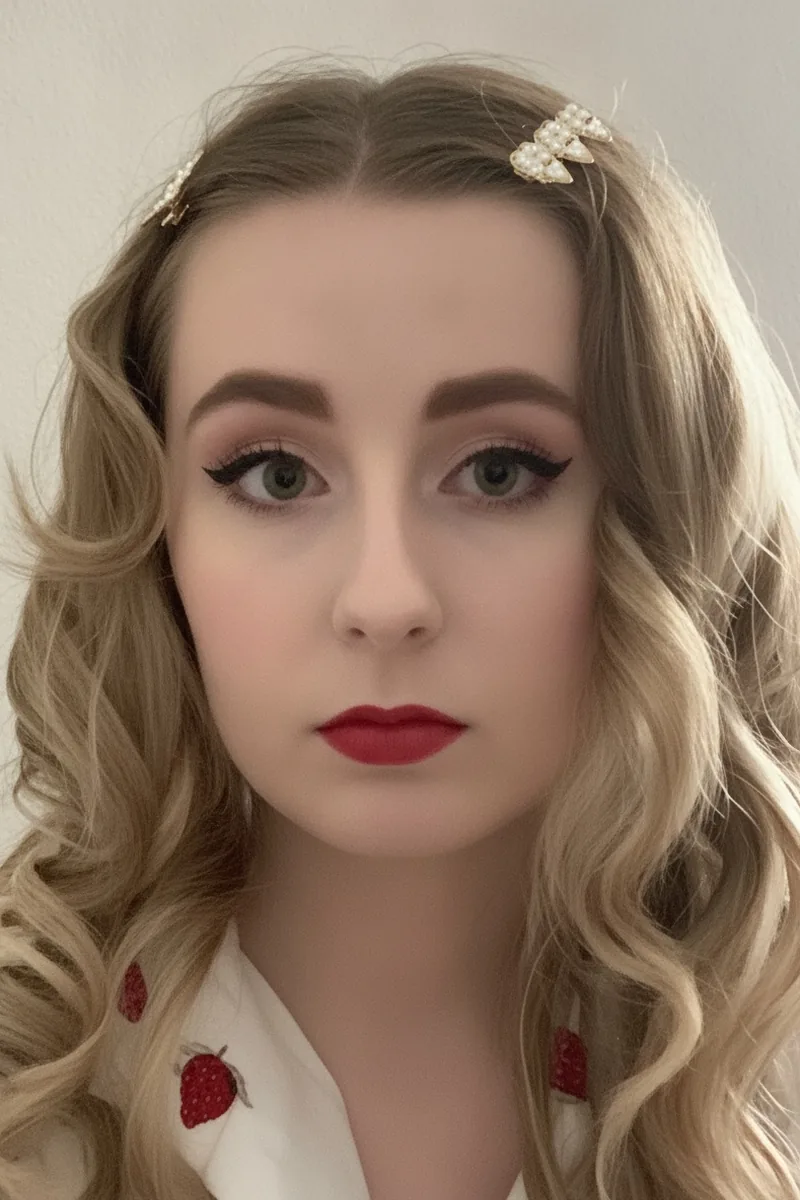
Having earned both a psychology degree and a Doctor of Medicine, Sydny has studied the AP Psych curriculum from two distinct angles — the theoretical frameworks in units like developmental and abnormal psychology, and the biological underpinnings of behavior that her medical training made tangible. She breaks down the interplay between neurotransmitters, brain structures, and clinical diagnoses with the specificity of someone who carried those concepts from a psych lecture hall into anatomy labs and clinical rotations.

Economics at Duke teaches you to model how people make decisions under uncertainty — which is essentially what AP Psychology's cognition, motivation, and social psychology units are about, just with different vocabulary. Devanshi leans on that behavioral economics overlap to make concepts like heuristics, cognitive biases, and group decision-making feel intuitive rather than like a wall of flashcards. Her 35 ACT also signals the kind of precise, fast reading that pays off on the exam's dense multiple-choice passages.
With degrees in both mathematics and psychology from UCLA, Professor Florence teaches AP Psychology the way the exam actually tests it — connecting research methodology and statistical reasoning to every major unit, from learning theory to abnormal psych. That dual background means topics like experimental design, correlation vs. causation, and interpreting data feel intuitive rather than bolted on, which is exactly where many students quietly lose points on both multiple-choice and free-response sections.
Lisa's history training taught her to trace how ideas evolve across time periods — a skill that translates directly to AP Psychology, where understanding the progression from Freud to cognitive-behavioral frameworks makes dense theory units like personality and abnormal psychology far more intuitive than rote memorization allows. Her strong writing and editorial background also gives her a practical edge coaching students through free-response questions, where defining terms like "schema" or "self-serving bias" with precision and applying them to scenario prompts is what separates 3s from 5s. Rated 4.9 by students.
I am an enthusiastic and detail-oriented English and test prep tutor with a strong academic background in communications.
AP Psychology's free-response questions trip up students who know the concepts but can't articulate them clearly under time pressure. Brielle pairs her understanding of psychology content with the writing and reading analysis skills from her English Education degree, coaching students to define terms precisely, apply them to scenarios, and structure responses that earn full credit.
Hi! I am a second-year student at the University of Pennsylvania School of Dental Medicine after earning my bachelor's degree in Biology from Duke University. In high school, I tutored peers in math and science, and in college, I taught STEM subjects to elementary students through an after-school program. I also have experience reviewing and editing college application essays for friends and family. I am most qualified to tutor Algebra, Geometry, Biology, General Chemistry, Psychology, English/Grammar, Writing, and standardized tests such as the SAT and DAT. My goal is to create a supportive learning environment where students feel comfortable asking questions, building confidence, and strengthening their understanding of challenging material. Outside of academics, I enjoy spending time with friends and family, running, reading, volunteering, and traveling. Education has had a tremendous impact on my life, and I look forward to helping students achieve their goals.
Having studied psychology alongside microbiology and the biological sciences, Felix brings a dual lens to AP Psych — particularly in units like biological bases of behavior and sensation-perception, where his science training makes neurotransmitter pathways and neural signaling click rather than feel like rote vocabulary. He also teaches the research methods unit with the rigor of someone trained in scientific methodology, breaking down experimental design and variable identification in concrete terms. Rated 5.0 by students.
As a psychology major who currently directs a research study on sleep and academic performance in adolescents, Margaret brings AP Psychology concepts like experimental design, neuroscience, and developmental theory out of the textbook and into real-world context. She knows which free-response question formats the exam favors and teaches students to write answers that earn full credit by hitting every scoring rubric point.
Pharmacy school forces you to learn the biological bases of behavior from the inside out — neurotransmitter pathways, drug mechanisms, receptor interactions — which gives Lillian unusual depth in the AP Psych unit most students find most abstract. She also draws on her chemistry and statistics background to demystify the research methods unit, where interpreting experimental design and data analysis trips up students who treat it as pure memorization. Rated 4.9 by students.
Matthew's pre-med track at Yale pairs biochemistry with philosophy — a combination that pays off in AP Psychology, where the biological bases of behavior unit demands real science fluency and the free-response section rewards precise, logically structured arguments. His hands-on work with tools like CRISPR-Cas9 in a research lab gives him a concrete way to explain neural signaling, genetics of behavior, and neurotransmitter pathways that most students only encounter as textbook diagrams. Rated 5.0 by students.
Architecture school at Columbia demands understanding how people perceive, navigate, and emotionally respond to spaces — which means Allison has spent years thinking about sensation-perception, cognition, and motivation in applied contexts that bring AP Psych concepts off the page. Her physics background also gives her a structural approach to the biological bases of behavior unit, where she breaks down neural signaling and brain anatomy with the precision of someone trained in systems thinking. Rated 5.0 by students.
Medical school immerses Evelyn in the very systems AP Psychology tests — neurotransmitter pathways, brain anatomy, stress physiology, abnormal behavior classifications — so she teaches the biological bases and abnormal psychology units with clinical specificity rather than flashcard-level definitions. Her experience learning English as a second language also gives her a practical understanding of the language-and-cognition topics in the curriculum, from Whorfian linguistic relativity to how memory encoding shifts across languages.
Liana's biological sciences coursework gives her a running start on the AP Psych units that trip up most students — biological bases of behavior, sensation-perception, and the neuroscience threading through topics like memory and motivation. She tackles the terminology-dense sections by tying psychological concepts back to the underlying biology, turning flashcard-style definitions into something students can actually reason through on free-response questions. Rated 4.9 by students.
Jacob's biology degree from Wesleyan included deep study of behavioral science — he even conducted behavioral research on chimpanzees — which maps directly onto AP Psychology topics like learning theory, biological bases of behavior, and research methodology. He teaches students to think like scientists when designing experiments and interpreting data, skills that show up heavily on the AP exam's free-response questions.
Nicole's chemistry background gives her a tangible way to teach the biological bases of behavior unit — she explains neurotransmitter pathways and synaptic signaling with the precision of someone who studied those molecules, not just their psychological effects. Her English literature training then kicks in for the free-response section, where she coaches students to construct tight, definition-rich answers that don't waste words. Rated 5.0 by students.
A biology major at Cornell, Drishti brings genuine science fluency to the biological bases of behavior unit — but her edge in AP Psych is actually how she bridges that biology knowledge into the more conceptual units like memory, learning theory, and sensation-perception, where students often lose points by treating terms as disconnected vocabulary. She tackles free-response prep by drilling students on precise term application within scenario prompts, a skill her own 1500 SAT writing practice sharpened. Rated 5.0 by students.
Film production trains you to understand how audiences perceive, remember, and emotionally respond to information — skills that map surprisingly well onto AP Psychology units like cognition, sensation-perception, and social influence. Justine pairs that visual-storytelling intuition with strong writing chops honed through her arts coursework, which she brings to the free-response section where scenario-based answers need crisp definitions and clear structure to earn full marks.
Natalie's neurobiology major at Penn means she's studied the brain systems behind AP Psych's biological bases of behavior unit — neural signaling, neurotransmitter pathways, brain anatomy — in far more depth than the course requires, which lets her explain those concepts with real precision rather than surface-level definitions. That science backbone also sharpens how she approaches units like sensation-perception and memory, where understanding the underlying biology turns abstract terminology into something students can actually reason through on free-response questions.
Testimonials
Because the right AP Psychology tutor makes all the difference.
Average Session Rating – Based on 3.4M Learner Ratings
Practice AP Psychology
Free practice tests, flashcards, and AI tutoring for AP Psychology
Other Wilmington Tutors
Related Social Sciences Tutors in Wilmington
Frequently Asked Questions
Varsity Tutors matches Wilmington students with expert AP Psychology tutors for 1-on-1 instruction. We pair each student with a tutor based on their specific needs, learning style, and goals.
Whether you need homework help, exam prep, or want to get ahead, our AP Psychology tutors are ready to help.
Common challenges include gaps from earlier material, difficulty with specific concepts, and trouble applying learning to new problems. These issues can snowball quickly in AP Psychology.
A tutor identifies where you're stuck, fills in gaps, and provides targeted practice. The 1-on-1 format means you get help exactly where you need it.
Tutors work with your student's actual coursework—homework assignments, class notes, and upcoming tests. This keeps tutoring directly relevant to what's happening in the classroom.
When you share information about your student's school and curriculum, we can match you with a tutor who has relevant experience.
All tutors complete background checks, credential verification, and teaching evaluation. Many of our AP Psychology tutors hold advanced degrees or have years of teaching experience.
You can review tutor profiles to find someone with the right background for your student's level and needs.
Many students see improved grades within a few weeks, along with better understanding of AP Psychology concepts and more confidence tackling challenging material.
Tutors track progress and adjust their approach to ensure continued improvement.
Most students benefit from 1-2 sessions per week. More frequent sessions help if your student is significantly behind or has an important exam coming up.
Your tutor can recommend a schedule based on your student's specific situation and goals.
Tutoring is purchased in packages of hours, with rates varying by tutor experience. Varsity Tutors offers several options to fit different budgets and needs.
You can discuss pricing during your consultation to find what works best.
Your tutor will assess where your student is, discuss goals, and start working on priority areas. Most students bring current homework or upcoming test material to focus on.
By the end, you'll have a clear sense of how the tutor can help and a plan for moving forward.
Let’s find your perfect tutor
Answer a few quick questions. We’ll recommend the right plan and match you with a top 5% tutor.