Award-Winning AP Psychology Tutors
serving Raleigh, NC
AP Psychology
Tutors in Raleigh
Private 1-on-1 tutoring, weekly live classes for academic support, test prep & enrichment, practice tests and diagnostics, and more to elevate grades and test scores.
Based on 3.4M Learner Ratings
UniversitiesSchools & Universities
DeliveredHours Delivered
ProficiencyGrowth in Proficiency
Who needs tutoring?
No obligation. Takes ~1 minute.
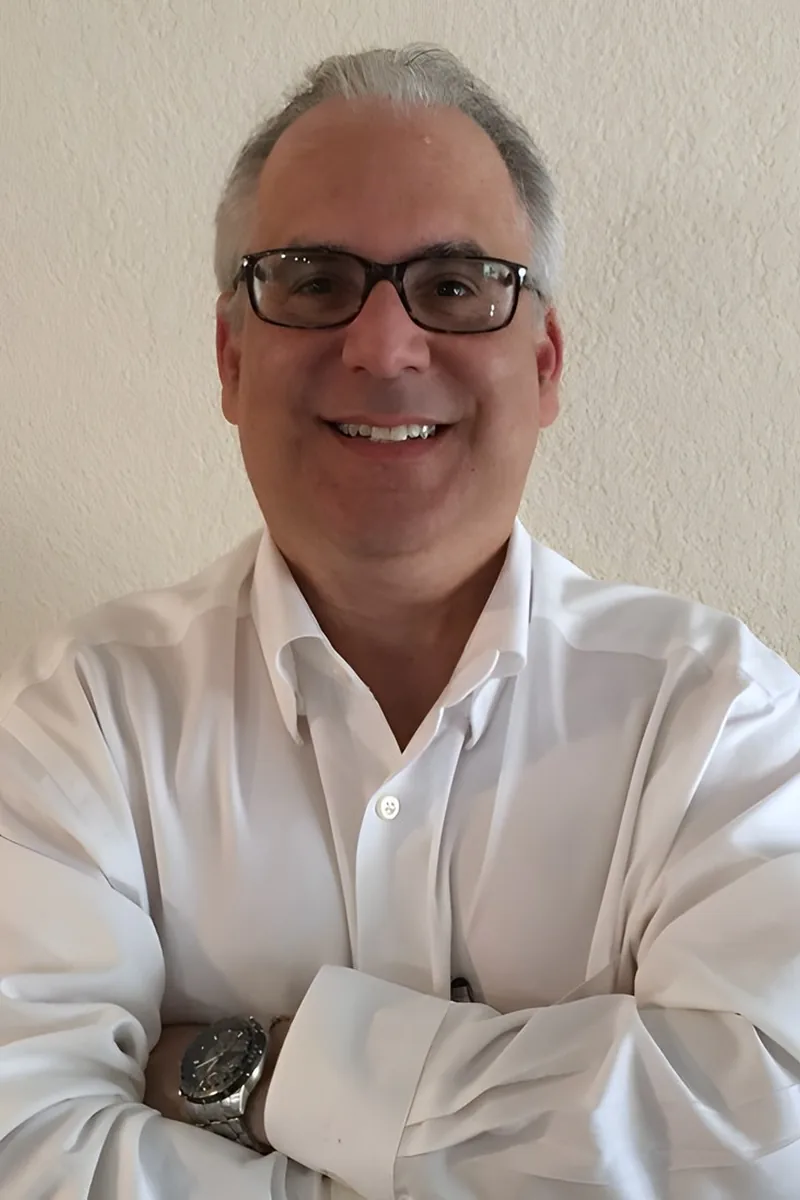
With degrees in both mathematics and psychology from UCLA, Professor Florence teaches AP Psychology the way the exam actually tests it — connecting research methodology and statistical reasoning to every major unit, from learning theory to abnormal psych. That dual background means topics like experimental design, correlation vs. causation, and interpreting data feel intuitive rather than bolted on, which is exactly where many students quietly lose points on both multiple-choice and free-response sections.

AP Psychology's free-response questions trip up students who know the concepts but can't articulate them clearly under time pressure. Brielle pairs her understanding of psychology content with the writing and reading analysis skills from her English Education degree, coaching students to define terms precisely, apply them to scenarios, and structure responses that earn full credit.
Having earned both a psychology degree and a Doctor of Medicine, Sydny has studied the AP Psych curriculum from two distinct angles — the theoretical frameworks in units like developmental and abnormal psychology, and the biological underpinnings of behavior that her medical training made tangible. She breaks down the interplay between neurotransmitters, brain structures, and clinical diagnoses with the specificity of someone who carried those concepts from a psych lecture hall into anatomy labs and clinical rotations.
Economics at Duke teaches you to model how people make decisions under uncertainty — which is essentially what AP Psychology's cognition, motivation, and social psychology units are about, just with different vocabulary. Devanshi leans on that behavioral economics overlap to make concepts like heuristics, cognitive biases, and group decision-making feel intuitive rather than like a wall of flashcards. Her 35 ACT also signals the kind of precise, fast reading that pays off on the exam's dense multiple-choice passages.
Lisa's history training taught her to trace how ideas evolve across time periods — a skill that translates directly to AP Psychology, where understanding the progression from Freud to cognitive-behavioral frameworks makes dense theory units like personality and abnormal psychology far more intuitive than rote memorization allows. Her strong writing and editorial background also gives her a practical edge coaching students through free-response questions, where defining terms like "schema" or "self-serving bias" with precision and applying them to scenario prompts is what separates 3s from 5s. Rated 4.9 by students.
I am an enthusiastic and detail-oriented English and test prep tutor with a strong academic background in communications.
Hi! I am a second-year student at the University of Pennsylvania School of Dental Medicine after earning my bachelor's degree in Biology from Duke University. In high school, I tutored peers in math and science, and in college, I taught STEM subjects to elementary students through an after-school program. I also have experience reviewing and editing college application essays for friends and family. I am most qualified to tutor Algebra, Geometry, Biology, General Chemistry, Psychology, English/Grammar, Writing, and standardized tests such as the SAT and DAT. My goal is to create a supportive learning environment where students feel comfortable asking questions, building confidence, and strengthening their understanding of challenging material. Outside of academics, I enjoy spending time with friends and family, running, reading, volunteering, and traveling. Education has had a tremendous impact on my life, and I look forward to helping students achieve their goals.
A biology major at Cornell, Drishti brings genuine science fluency to the biological bases of behavior unit — but her edge in AP Psych is actually how she bridges that biology knowledge into the more conceptual units like memory, learning theory, and sensation-perception, where students often lose points by treating terms as disconnected vocabulary. She tackles free-response prep by drilling students on precise term application within scenario prompts, a skill her own 1500 SAT writing practice sharpened. Rated 5.0 by students.
Liana's biological sciences coursework gives her a running start on the AP Psych units that trip up most students — biological bases of behavior, sensation-perception, and the neuroscience threading through topics like memory and motivation. She tackles the terminology-dense sections by tying psychological concepts back to the underlying biology, turning flashcard-style definitions into something students can actually reason through on free-response questions. Rated 4.9 by students.
Brian's economics training at Caltech — heavy on behavioral models, decision theory, and statistical reasoning — gives him a quantitative angle on AP Psychology that's especially useful in the research methods unit and anywhere the exam tests concepts like heuristics, framing effects, or rational choice. His 1580 SAT also means he's sharp on the reading-and-argument skills that drive free-response scoring, where students need to define terms cleanly and apply them to unfamiliar scenarios under time pressure.
A psychology major at the University of Chicago with a neuroscience specialization, Emerson lives and breathes the material that shows up on the AP Psychology exam — from Piaget's developmental stages to action potentials and neurotransmitter pathways. He connects textbook concepts to the actual research studies that College Board loves to test, making free-response questions far less intimidating. Rated 5.0 by students.
Neuroscience is Alex's self-described favorite subject, and that shows up most clearly in how she tackles AP Psychology's biological bases of behavior unit — breaking down neurotransmitter systems, brain regions, and neural pathways with the depth of someone heading into a doctorate program at Washington University's OT school this fall. Her psychology major and neuroscience minor mean the rest of the curriculum, from developmental theory to abnormal psychology, draws on coursework she's already completed with honors. Rated 5.0 by students.
Elliot's PhD in Neuroscience means the biological bases of behavior unit — neurotransmitter systems, brain lateralization, neural plasticity — is his actual research territory, not a chapter he's reviewing from a prep book. That depth reshapes how he teaches the rest of the AP Psych curriculum too: units like sensation-perception, memory, and abnormal psychology all snap into focus when a student genuinely understands the neural machinery underneath. Rated 5.0 by students.
Orlando's economics training built real fluency with statistical reasoning and data interpretation — skills that translate directly to AP Psychology's research methods unit, where students need to parse experimental designs, identify variables, and evaluate significance without getting lost in jargon. He also brings strong essay-writing chops from his arts background, which he applies to coaching free-response answers where precise term definitions and clean scenario application separate 4s and 5s from 3s.
Having studied psychology alongside microbiology and the biological sciences, Felix brings a dual lens to AP Psych — particularly in units like biological bases of behavior and sensation-perception, where his science training makes neurotransmitter pathways and neural signaling click rather than feel like rote vocabulary. He also teaches the research methods unit with the rigor of someone trained in scientific methodology, breaking down experimental design and variable identification in concrete terms. Rated 5.0 by students.
Having studied psychology as her actual college major, Julia teaches AP Psych concepts like classical conditioning, cognitive development, and abnormal behavior frameworks from firsthand academic experience rather than secondhand review guides. Her economics training also sharpens her approach to the research methods unit — interpreting data, spotting correlation-versus-causation traps, and reading experimental designs are skills she's practiced across both disciplines. Rated 4.5 by students.
Shant's psychobiology degree from UCLA means AP Psychology isn't a subject he studied adjacent to — it's the core of his training, from neural signaling and brain anatomy to research methodology and statistical analysis. He breaks down dense units like cognition, abnormal psychology, and sensation/perception by tying them to real biological mechanisms. Rated 5.0 by students, he knows exactly which free-response pitfalls cost points on exam day.
Sally's CLEP Introductory Psychology background and her science-technology-culture concentration at Georgia Tech give her a solid handle on the research methods, biological bases of behavior, and cognitive psychology concepts that dominate the AP exam. She teaches students to distinguish between similar-sounding theories — like the difference between classical and operant conditioning — so they can tackle free-response questions with confidence.
Political science trains you to analyze how people form beliefs, respond to authority, and behave in groups — which overlaps directly with AP Psychology's social psychology and cognition units, where concepts like obedience, conformity, and groupthink show up on nearly every exam. Linnea pairs that analytical background with strong writing and editing skills, coaching students to construct the kind of precise, term-rich free-response answers that separate 4s from 5s.
Testimonials
Because the right AP Psychology tutor makes all the difference.
Average Session Rating – Based on 3.4M Learner Ratings
Practice AP Psychology
Free practice tests, flashcards, and AI tutoring for AP Psychology
Other Raleigh Tutors
Related Social Sciences Tutors in Raleigh
Frequently Asked Questions
Score improvement depends on your starting point and study commitment, but most students who work with a tutor see meaningful gains within 4-8 weeks of consistent preparation. On the AP Psychology exam, about 60% of test-takers score a 3 or higher nationally, but personalized tutoring helps you target your weak areas—whether that's unit content mastery or exam strategy—to push beyond that baseline. Your tutor can help you identify which units (like research methods or states of consciousness) are holding you back and create a focused study plan.
Yes. AP Psychology covers nine major units—from scientific foundations and research methods through clinical psychology and social psychology—and a skilled tutor helps you master all of them. For students in Raleigh with varying schedules and learning paces, personalized instruction means your tutor can spend extra time on units like memory, learning, or abnormal psychology if those are challenging for you, while moving quickly through content you've already grasped. This targeted approach is much more efficient than classroom pacing.
The AP Psychology exam has two sections: 100 multiple-choice questions (90 minutes) and a free-response section with two essays (50 minutes). A tutor helps you develop pacing strategies so you don't rush through questions or leave essays incomplete, and teaches you how to identify what each question is really asking—a common source of mistakes. Practice tests under timed conditions are essential; your tutor can review your practice exams, pinpoint patterns in wrong answers, and help you refine your test-taking approach before exam day.
Students often struggle most with units involving research methods and statistics (understanding study design, validity, and data interpretation), memory and cognition (distinguishing between memory types and encoding processes), and abnormal psychology (memorizing disorders and their symptoms). Tutors who teach AP Psychology know these pain points well and use active recall, concept mapping, and real-world examples to make abstract ideas stick. If you're finding any unit overwhelming, targeted tutoring early in your preparation prevents those gaps from widening.
Most students benefit from starting tutoring 8-12 weeks before the exam, meeting 1-2 times per week for focused review and practice. If you're starting later or struggling with specific units, more frequent sessions can help you catch up. Beyond tutoring sessions, consistent independent study—reviewing flashcards, taking practice tests, and re-reading notes—is crucial. Your tutor can structure your study schedule and assign targeted practice between sessions to maximize your preparation time.
Test anxiety often stems from feeling unprepared or uncertain about what to expect on exam day. A tutor builds your confidence by ensuring you understand the material deeply, practicing with real AP exam questions, and familiarizing you with the test format and timing so nothing feels surprising. Regular practice tests in timed conditions also reduce anxiety—you'll know what to expect and have strategies ready. Many students find that mastering content and having a clear test-day plan transforms nervousness into readiness.
Varsity Tutors connects you with expert tutors in Raleigh who specialize in AP Psychology and understand the curriculum, exam format, and common student challenges. When you get matched with a tutor, you can discuss your current level, specific weak areas, and goals so they can tailor instruction to your needs. The personalized 1-on-1 format means your tutor adjusts pace and focus based on what helps you learn best.
Your first session is typically an assessment and planning meeting. Your tutor will gauge your current understanding of AP Psychology content, identify which units or skills need the most work, and learn about your learning style and goals. Together, you'll create a customized study plan that outlines which topics to focus on, how often to meet, and what to practice between sessions. This foundation ensures that every subsequent session builds directly toward your AP exam success.
Let’s find your perfect tutor
Answer a few quick questions. We’ll recommend the right plan and match you with a top 5% tutor.