Award-Winning AP Calculus AB Tutors
serving Wilmington, NC
AP Calculus AB
Tutors in Wilmington
Private 1-on-1 tutoring, weekly live classes for academic support, test prep & enrichment, practice tests and diagnostics, and more to elevate grades and test scores.
Based on 3.4M Learner Ratings
UniversitiesSchools & Universities
DeliveredHours Delivered
ProficiencyGrowth in Proficiency
Who needs tutoring?
No obligation. Takes ~1 minute.
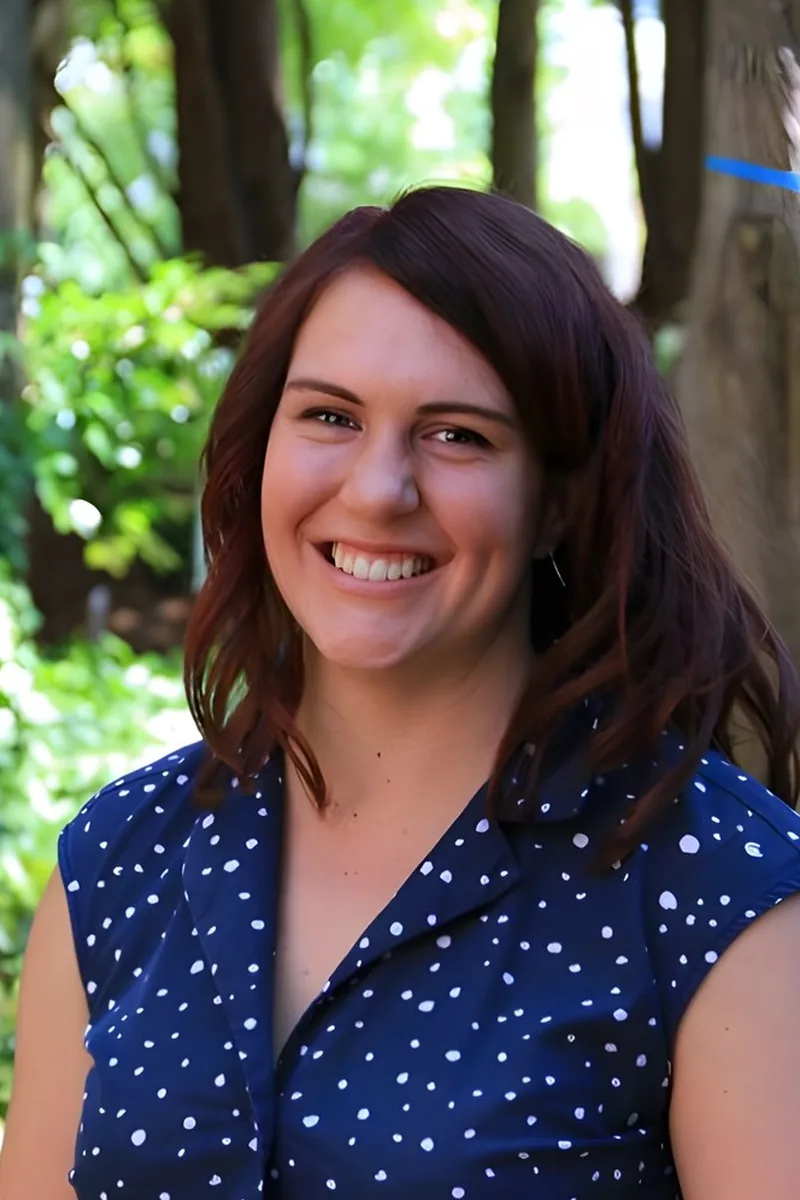
The jump from "find the derivative" to "explain what the derivative means here" is where most AP Calc AB students struggle, especially on free-response questions. Jordan's engineering background at Harvey Mudd and Georgia Tech means he's spent years applying limits, integrals, and rates of change to physical systems — and he unpacks those connections in ways that make the conceptual questions click.
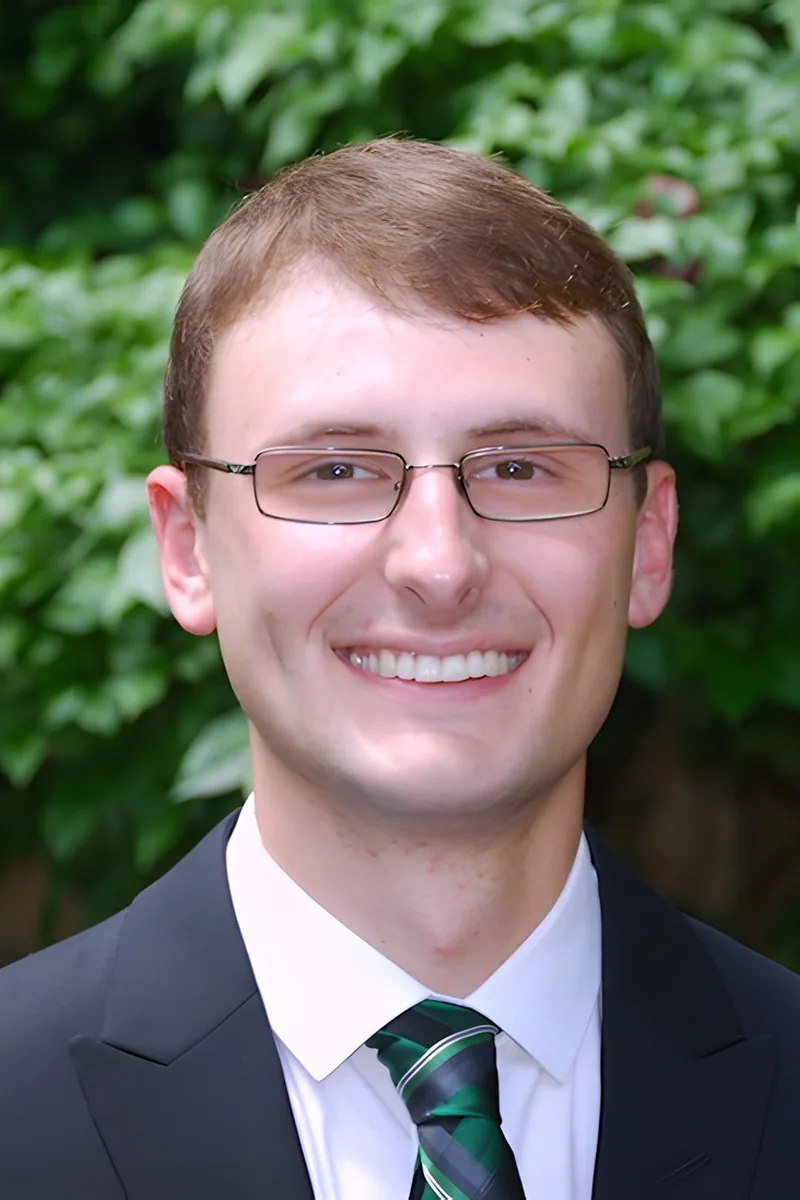
A math degree holder now studying quantitative policy analysis at Duke, Matt treats AB as more than a set of derivative rules and integral formulas — he teaches the reasoning behind the Fundamental Theorem so students can tackle free-response questions with genuine understanding. His approach to related rates and accumulation problems emphasizes translating word problems into mathematical setups, which is where most AP points are won or lost.
Chemical engineering coursework throws calculus at you daily — from modeling heat transfer to optimizing reaction rates — so Devin knows AB concepts like limits, derivatives, and integrals inside and out. He breaks down the chain rule and related rates problems by connecting them to real physical scenarios, which makes the logic behind each step click. Rated 5.0 by students.
Limits, derivatives, and the Fundamental Theorem of Calculus each represent a genuine shift in mathematical thinking — not just a new set of formulas. Elisa breaks down each concept by connecting it to tangible engineering scenarios, like how a rate of change describes real forces acting on a bridge. Her civil engineering background means she can answer the inevitable "when will I ever use this?" with actual examples.
The jump from Pre-Calculus to AP Calculus AB is where many students first encounter limits, derivatives, and the formal language of rates of change. Tanay breaks these concepts down visually and algebraically, drawing on his UNC Chapel Hill math training to make ideas like the chain rule or related rates feel logical rather than formulaic.
Limits, derivatives, and the fundamental theorem of calculus all click faster when a student understands *why* each concept matters, not just how to execute the steps. Rebecca studied economics and data science at UC Berkeley, where calculus was the backbone of nearly every course she took. She connects AB topics to real applications — optimization problems, rate-of-change modeling — that make the material stick.
Biology majors often encounter calculus in unexpected places — population growth models are differential equations, enzyme kinetics hinge on rates of change — and Daiven's coursework at Wofford gave him hands-on experience with those connections. He's especially useful for students who can follow derivative rules mechanically but struggle when the AB exam asks them to interpret what a rate of change means in a word problem. His 32 ACT reflects the quantitative reasoning he brings to breaking down limits, integration techniques, and the free-response setups that trip students up most.
The jump from memorizing derivative rules to actually applying them — related rates, optimization, the Fundamental Theorem — is where most AB students stall. Shourya approaches each of these as a problem-solving framework, teaching students to diagram situations and identify which calculus tool fits before diving into computation. His 4.9 rating speaks to how well that structured approach lands.
The jump from pre-calc to AP Calculus AB trips up students who can follow procedures but haven't internalized what a derivative actually represents. Corey breaks down limits, related rates, and the Fundamental Theorem by connecting each idea to the physical and economic models he studied at Duke. His 5.0 rating speaks to how well that approach clicks.
Teaching multivariable calculus, biostatistics, and neuroscience means Kathleen regularly circles back to the AB fundamentals — limits, differentiation, integration — from angles most high school curricula never touch. She's particularly sharp at helping students see how the chain rule and integration techniques connect to the statistical modeling and life science applications she teaches at higher levels, which makes abstract procedures feel purposeful. Her 35 ACT and 4.9 rating back up the depth behind that cross-disciplinary perspective.
When limits and continuity stop being intuitive — usually right around the epsilon-delta definitions — that's where Nicole's biology-trained precision with logical reasoning kicks in. She approaches AB topics like differential equations and accumulation functions the way a scientist reads data: methodically, always asking what the numbers actually mean before jumping to computation. Rated 5.0 by students, with a 1450 SAT backing up her quantitative chops.
The jump from Pre-Calc to AP Calculus AB trips up a lot of students right around limits and the formal definition of the derivative. Akshay's dual background in statistics and chemistry at UNC means he can connect abstract calculus concepts — Riemann sums, the Fundamental Theorem, related rates — to concrete applications that make them easier to internalize.
When AB students can compute a derivative but can't explain what it means on a graph — or set up an integral from a word problem — that's the gap Joseph targets. His biomedical engineering background at the University of Minnesota means he learned calculus by modeling real biological systems, so he teaches concepts like accumulation and rate of change through concrete scenarios rather than disconnected procedures. Rated 5.0 by students.
The jump from memorizing derivative rules to applying them — related rates, optimization, accumulation functions — is where most AP Calculus AB students get stuck. Artem breaks those multi-step problems into smaller logical pieces, drawing on the same problem-solving approach he uses in his electrical engineering program at NC State.
Limits, derivatives, and integrals each build on the last — so a shaky understanding of one concept tends to snowball through the entire AP Calculus AB curriculum. Sarah approaches each topic by tying it to concrete problems first, then layering in the formal notation and rules once the intuition clicks. Her math-statistics coursework keeps her sharp on exactly the kinds of applied problems the AP exam loves to test.
The jump from memorizing derivative rules to actually applying them — related rates, optimization, the Fundamental Theorem — is where most AP Calculus AB students stall out. Amanda breaks each problem type into a reasoning sequence: what's changing, what's fixed, and what the question is really asking. Her chemistry background means she's constantly using calculus in applied contexts, which keeps her explanations grounded.
Caleb's statistics degree at Duke means he doesn't just teach AP Calculus AB procedures — he understands where concepts like limits, derivatives, and the Fundamental Theorem of Calculus lead in higher math. That perspective lets him explain *why* the chain rule or related rates problems work the way they do, giving students a conceptual grip that pays off on the AP exam.
The jump from memorizing derivative rules to applying them on AP free-response questions is where most Calc AB students lose points. Adam breaks down each problem type — related rates, accumulation functions, slope fields — by teaching the reasoning behind setups so students can handle unfamiliar prompts on exam day.
The jump from "find the derivative" to "explain what the derivative means on this graph" is where most AP Calculus AB students lose points on free-response questions. Justin bridges that gap by teaching limits, Riemann sums, and the Fundamental Theorem as connected ideas rather than isolated procedures — an approach shaped by his dual background in physics and mathematics at Washington University in St. Louis.
The jump from memorizing derivative rules to actually understanding limits, the chain rule, and the Fundamental Theorem is where most AB students struggle. Anthony approaches calculus the way he learned it as a Yale physics and math major: every rule has a reason, and once students see that reason, problem-solving becomes intuitive rather than mechanical. He holds a 5.0 client rating.
Having tutored college students through calculus at Harvard while majoring in chemistry, James knows exactly where AB students hit friction — limits that seem pointless, the conceptual jump to integration, and free-response problems that demand more than mechanical differentiation. His approach leans on building the reasoning behind each technique, so when the exam asks students to justify a answer using the Mean Value Theorem or interpret a definite integral in context, the logic is already there. A 1570 SAT and 4.9 rating back up the precision he brings to every session.
Cognitive science at Penn might not scream calculus, but Samantha's coursework required enough mathematical modeling — derivatives for rate-of-change problems, integrals for cumulative distributions — that she teaches AP Calculus AB with real fluency. She's especially effective at walking through optimization and curve-sketching problems, where translating a word problem into the right function is half the battle. Her 1460 SAT reflects the quantitative precision she brings to exam prep.
Having already completed multivariable calculus and linear algebra as a freshman in Northwestern's engineering program, Dylan teaches AB concepts like limits, derivative rules, and integration techniques with the confidence of someone who uses them as building blocks for more advanced work every week. His 1500 SAT and 5.0 rating back up an approach grounded in making sure students understand the reasoning behind each step before moving on to the next application.
Kristi calls calculus her favorite subject to teach, and her AP Calculus AB sessions zero in on building real intuition for limits, derivatives, and the meaning behind the Fundamental Theorem — not just memorizing formulas for the exam. Her dual astrophysics degree from Harvard means she can show students how these tools actually describe the physical world, from rates of change to accumulation problems.
Limits, derivatives, and integrals each build on the last, so a shaky understanding of one concept compounds quickly in AP Calc AB. Ben unpacks each topic by tying it to its geometric meaning — the slope of a tangent line, the area under a curve — so that formulas feel intuitive rather than arbitrary. His 5.0 client rating speaks to how well that approach lands with students.
A PhD in statistics built on a biomedical engineering foundation means Sam has spent years where calculus isn't a course — it's the machinery underneath everything, from deriving probability distributions to modeling biological systems. That depth shows when teaching limits and the Fundamental Theorem, where he can trace each concept forward into the math students will actually use in college. Rated 4.9 by students.
Limits, derivatives, and integrals each represent a fundamentally new way of thinking about functions, and rushing past any one of them creates problems later. Rahi breaks down each concept visually and algebraically, drawing on his applied mathematics training to show students why the rules work — not just when to apply them. His 34 ACT composite reflects the same precision he brings to AP exam preparation.
Mechanical engineering at Yale means Charles builds things using calculus every week — computing moments of inertia, modeling fluid pressures, sizing structural loads — so when an AB student asks 'when will I ever use this,' he has actual answers. He's especially strong on optimization and related rates because those are engineering bread-and-butter problems where setting up the equation from a physical scenario is the whole challenge. His 34 ACT and varsity-athlete discipline keep his teaching sharp and structured.
Testimonials
Because the right AP Calculus AB tutor makes all the difference.
Average Session Rating – Based on 3.4M Learner Ratings
Practice AP Calculus AB
Free practice tests, flashcards, and AI tutoring for AP Calculus AB
Nearby AP Calculus AB Tutors
Other Wilmington Tutors
Related Math Tutors in Wilmington
Frequently Asked Questions
Varsity Tutors matches Wilmington students with expert AP Calculus AB tutors for 1-on-1 instruction. We pair each student with a tutor based on their specific needs, learning style, and goals.
Whether you need homework help, exam prep, or want to get ahead, our AP Calculus AB tutors are ready to help.
Common challenges include gaps from earlier material, difficulty with specific concepts, and trouble applying learning to new problems. These issues can snowball quickly in AP Calculus AB.
A tutor identifies where you're stuck, fills in gaps, and provides targeted practice. The 1-on-1 format means you get help exactly where you need it.
Tutors work with your student's actual coursework—homework assignments, class notes, and upcoming tests. This keeps tutoring directly relevant to what's happening in the classroom.
When you share information about your student's school and curriculum, we can match you with a tutor who has relevant experience.
All tutors complete background checks, credential verification, and teaching evaluation. Many of our AP Calculus AB tutors hold advanced degrees or have years of teaching experience.
You can review tutor profiles to find someone with the right background for your student's level and needs.
Many students see improved grades within a few weeks, along with better understanding of AP Calculus AB concepts and more confidence tackling challenging material.
Tutors track progress and adjust their approach to ensure continued improvement.
Most students benefit from 1-2 sessions per week. More frequent sessions help if your student is significantly behind or has an important exam coming up.
Your tutor can recommend a schedule based on your student's specific situation and goals.
Tutoring is purchased in packages of hours, with rates varying by tutor experience. Varsity Tutors offers several options to fit different budgets and needs.
You can discuss pricing during your consultation to find what works best.
Your tutor will assess where your student is, discuss goals, and start working on priority areas. Most students bring current homework or upcoming test material to focus on.
By the end, you'll have a clear sense of how the tutor can help and a plan for moving forward.
Let’s find your perfect tutor
Answer a few quick questions. We’ll recommend the right plan and match you with a top 5% tutor.